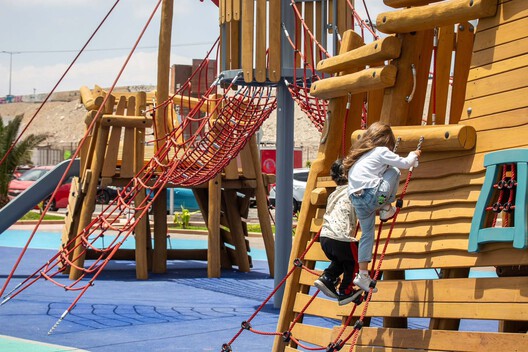
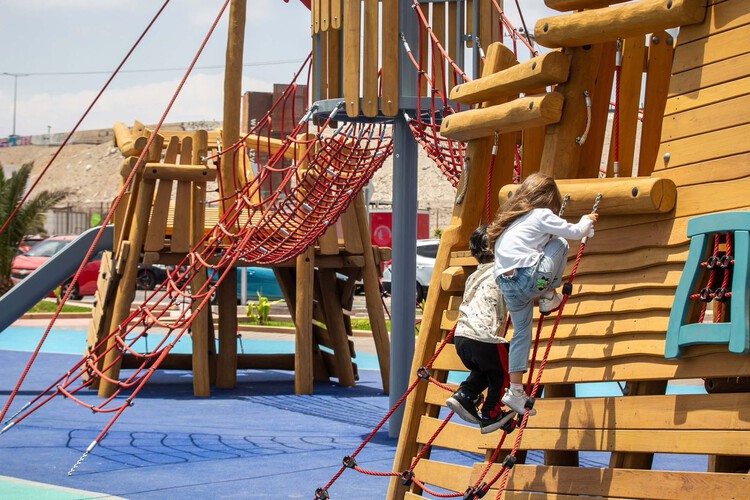
p>Understanding play as a social catalyst and an influential factor in defining public space, urban life is shaped by diverse individuals of different ages, cultures, ideologies, interests, classes, and social groups. Thinking about how play inhabits cities means thinking about all generations, and about the need to build public spaces with urban equipment designed to last and be maintained over time.
The performance of play structures invites us to review the different stages of their life cycle alongside their impact on shaping the urban environment. Analyzing the life cycle of urban play equipment involves understanding everything from materials, durability, and maintenance to the role of certifications and technologies applied in their production process, within environments that are increasingly conscious of their environmental impact.


The Life Cycle of Materials in Public Space
By integrating different materials, anchoring systems, and design formats, each piece plays a specific role, and its characteristics also define the behavior of those who use it. There is a bidirectional relationship between play and the environment: sometimes play shapes the place, and other times the place shapes the play. In either case, the maintenance, strength, and durability of each element are crucial to ensuring a safe and satisfying experience for all users.
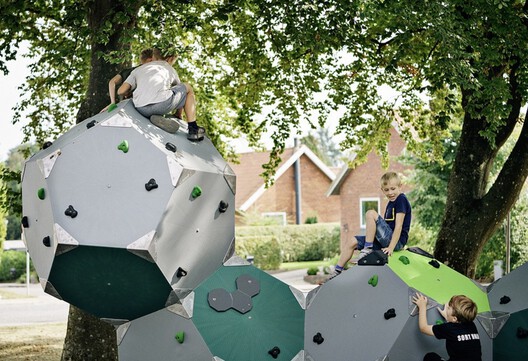
From the density of plastic materials or the quality of the steel used in manufacturing, to the application of anti-corrosive treatments or advanced tension systems, all urban equipment must be able to withstand weather conditions and wear and tear from use.
Urbanplay selects suppliers that develop, design, and produce urban play equipment with long life cycles. But what happens when they are no longer fit for use? Where do their parts go, and how do they impact the environment?
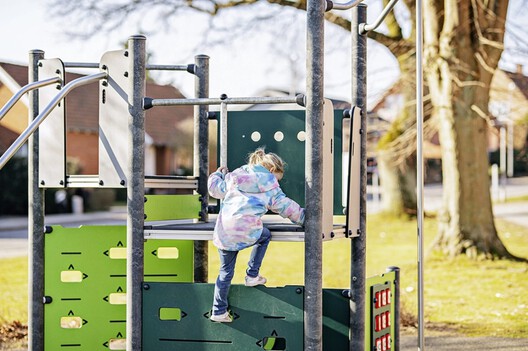
The End of the Life Cycle of Urban Play Equipment
A piece of urban equipment reaches the end of its useful life when it suffers damage that cannot be resolved through maintenance or part replacement, when it loses structural stability, or when it no longer meets current safety standards. Consequently, its removal becomes mandatory for safety and regulatory reasons.
In Chile, this process is regulated by national standard NCh 3340, which is based on the ASTM F1487 standard establishing safety criteria for play structures. Meanwhile, NCh 347 regulates waste management derived from interventions in public spaces.
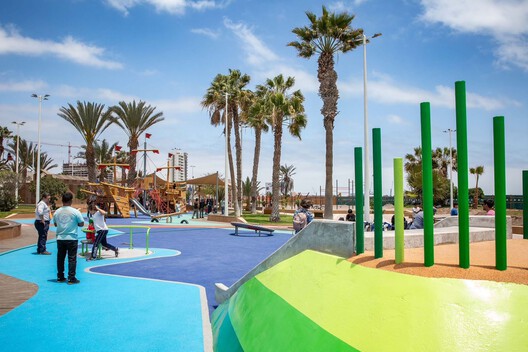
Once the equipment is removed, it must be dismantled and sorted by material: plastic (virgin or recycled), metal, and wood. Each category undergoes its own independent recycling process, while non-recyclable materials are sent to authorized landfills for proper disposal, in compliance with the REP Law and DS148, which regulate waste management in the country.
Actual Lifespan: The Durability Gap
But what is the actual lifespan of urban play equipment? How can we bridge the gap between how long it lasts and how long it should last?
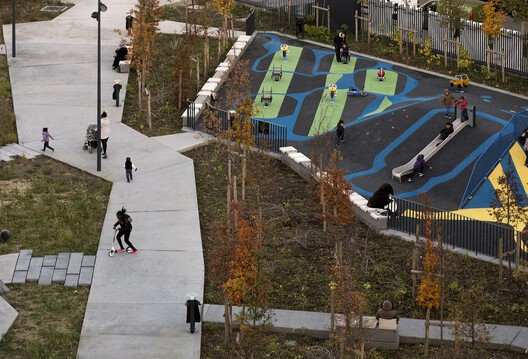
When quality standards and maintenance requirements are met, urban equipment is proven to achieve a long useful lifespan, matching the estimated lifecycle of a public plaza. However, uncertified equipment or low-quality imitations may have a lifespan of only one to five years, requiring repeated capital investments over time and generating a greater economic and environmental impact.
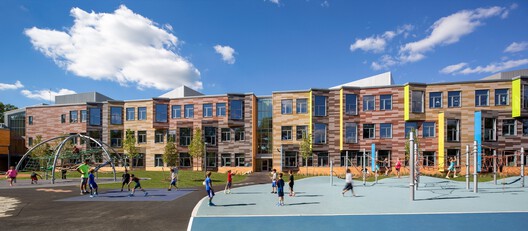
The Role of Certifications and Their Economic-Environmental Impact
As a result, specifying quality materials has a direct impact on the life cycle of urban play equipment. Beyond offering a safety guarantee, certifications also represent a promise of sustainability. Equipment certified under international standards like EN 1176 is designed to minimize failures and last longer by using quality-controlled materials such as certified wood, galvanized steel, or recycled raw materials. Furthermore, maintenance protocols and replacement parts ensure the equipment remains in optimal condition over time.
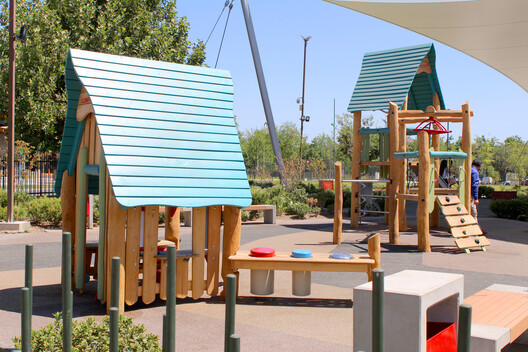
In essence, certified equipment offers:
- Greater durability: Quality-controlled materials and processes ensure a longer lifespan.
- Lower environmental impact: Recycled and certified materials reduce pollution at every stage of the product's life cycle.
- Fewer replacements: Each replacement involves manufacturing, transport, installation, and waste generation, increasing the project's carbon footprint over time.
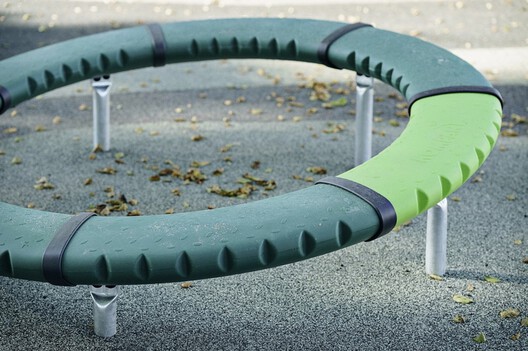
While the upfront cost of certified equipment may be higher, its extended life cycle makes it a highly cost-effective investment. Compared to uncertified options that must be replaced in less than five years, certified equipment with proper maintenance spreads its cost over more than a decade. This minimizes cumulative expenses and the environmental impact of successive manufacturing, transportation, and installation processes. Specifying quality urban equipment is a long-term investment, with tangible benefits for the user experience and a significantly reduced environmental footprint.
Maintenance as a Strategy for Life Cycle Extension
The most effective tool for extending the lifespan of urban equipment is maintenance. The components that deteriorate first are typically those subjected to the heaviest use, such as percussion play elements, plastic slides, and moving parts. The longevity of the remaining components depends directly on the intensity of use and the quality of the original materials. Within this context, modularity plays a fundamental role. Modular systems reduce waste generation and extend the lifespan of the overall installation, allowing individual components to be replaced instead of the entire structure.
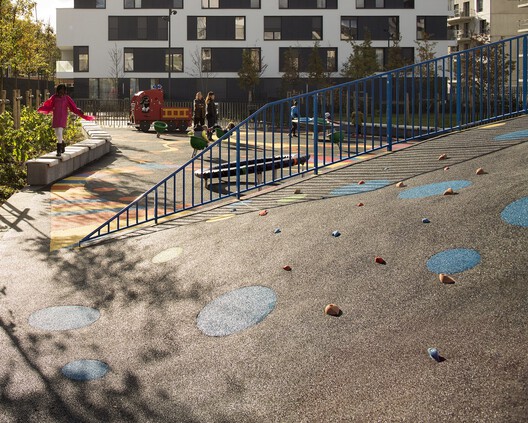
Just as a well-conceived public space establishes a gathering point that endures in a community's memory, the equipment within it must be built to last. By extending their useful lifespan, urban play structures touch the lives of generations. Applying safety regulations, diligent maintenance, and material care frames this cycle from day one. Caring for public spaces means caring for every single element within them—a responsibility that belongs to everyone.
This article was written by Agustina Iñiguez. The translation is powered by AI.


