

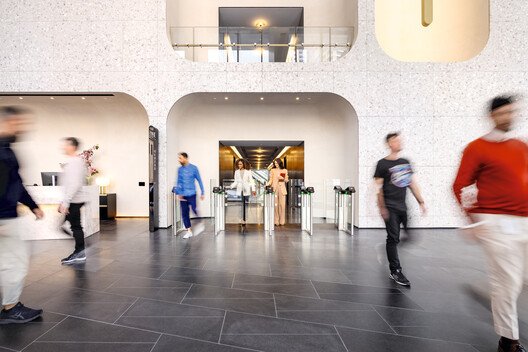
In 1743, a small cabin suspended by ropes was installed in a courtyard of the Palace of Versailles for the private use of King Louis XV. Manually operated by servants hidden from view, the so-called "flying chair" allowed movement between floors without stairs, and unknowingly introduced one of the central questions of modern architecture: how to move people vertically in a way that is efficient, safe, and integrated into the building.
The mechanization of this principle, with the introduction of a safety elevator in the early 1850s, paved the way for an unprecedented urban transformation. Without the elevator, the skyscrapers of Chicago and New York in the 1880s would have been unfeasible not because of structural limitations, but because of access. The elevator made it possible to build higher, and it also defined the logic of how these buildings would operate, where their cores would be placed, how their lobbies would be organized, and who could reach which spaces.
Even with widespread adoption of elevator call buttons in the 1950s, this logic remained relatively simple: press a button, choose a floor, arrive at your destination. In many buildings, that simplicity was reflected in the plan itself, with elevator cores acting as fixed points around which circulation, services, and usable floor area were organized. It was only when buildings became taller, denser, and more programmatically complex that vertical mobility began to require a radically different approach, one less focused on serving a static core and more centered on managing flows.
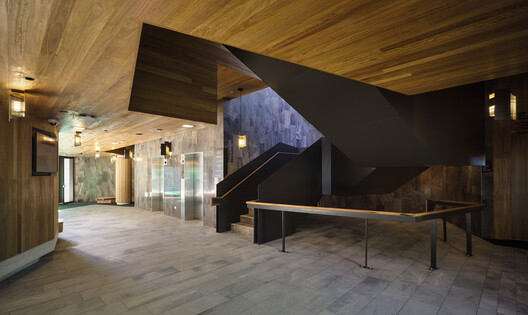
The Problem the Button Could Not Solve
In a 40-story corporate building with 3,000 employees, peak demand is easy to predict. Between 8 and 9 AM, and again around lunchtime, hundreds of people enter the lobby at nearly the same time and need to be moved vertically within minutes. A conventional system based only on "up" and "down" buttons cannot anticipate where passengers are going, group them according to nearby destinations, or reduce unnecessary stops. It can only respond after the demand has already appeared.
This limitation is built into traditional elevator logic: the system only learns each passenger's destination once they are already inside the cabin. As a result, every trip is treated almost independently, and small inefficiencies accumulate quickly, especially during the busiest periods.
This was what Schindler Miconic 10 sought to solve. Launched in 1990 and a pioneer in commercial destination control, the system introduced a seemingly small change: instead of pressing a button inside the elevator, passengers entered their destination floor before stepping in. With destinations known in advance, the system could group passengers with compatible routes, reduce unnecessary stops, and distribute flows more evenly across the available cabins. More than optimizing individual trips, this moved the point where decisions were made: from inside the cabin to the hallway outside. The lobby was no longer just a place to wait. With destination control, the assignment of cabins became part of the spatial experience. The elevator hall was no longer simply the leftover area in front of the doors, but a threshold where the building's internal logic had to become clear to its users.
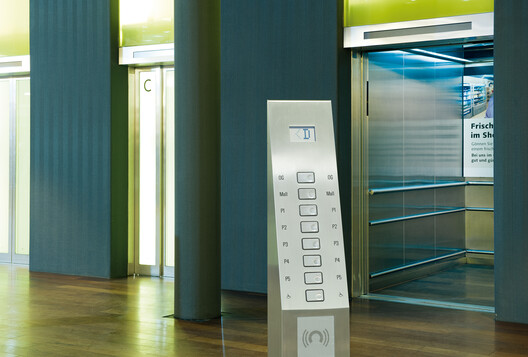
One of the most cited examples is the New York Marriott Marquis at Times Square, a 49-story hotel with a signature cylindrical elevator core housing 16 passenger units. When destination dispatch was introduced in this high-traffic environment, wait times dropped by more than 50 percent, and the atrium space could finally be used more as it was meant to be seen.
When the Building Starts Asking Questions
Destination control also introduced a second layer of intelligence: identifying where each passenger wants to go while also recognizing who they are and what areas they are allowed to access. In multi-tenant office towers, hospitals, hotels, residential buildings, and mixed-use complexes, access control can no longer rely solely on a reception desk. Different users may require different levels of permission within the same building, and those permissions can change throughout the day.
With Schindler ID, developed in the 2000s, elevator traffic management began to incorporate identity into the logic of vertical circulation. Through cards, tags, or other authentication methods, the system recognizes each user and connects their profile to a specific set of permissions. Visitors can be granted temporary access to the correct floor, residents can be directed automatically to their level, and employees can have their most frequent destination preconfigured.
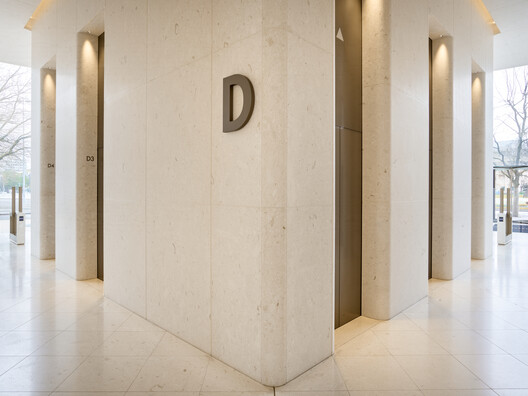
This integration between vertical mobility and access control once again changed the role of the lobby. It began to combine orientation, security, and arrival into a single spatial sequence. The relationship between terminals, turnstiles, reception areas, and circulation routes became an architectural decision with direct operational consequences. For architects, it introduced a new layer of freedom and possibilities: buildings could be organized through more fluid zones, without relying on rigid physical barriers on every floor.
Not surprisingly, Schindler ID met a lot of demand from busy multi-tenant towers – one notable example is the Messeturm in Basel, which was the tallest office building in Switzerland at its completion in 2003.
Schindler PORT, the next generation of destination control, extended this logic beyond "here and now", combining the real-time data from the network that includes terminals, smart doors, turnstiles, and access points, and using the predictive analytics to anticipate and preempt bottlenecks.
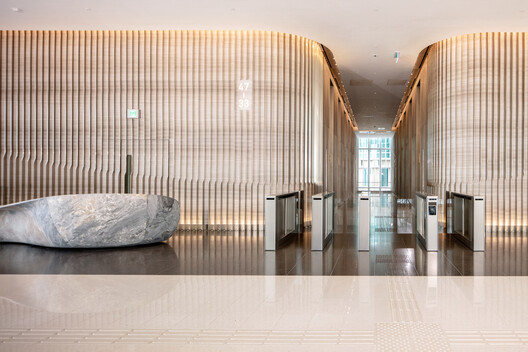
In a hospital, for example, this means coordinating the movement of patients, staff, visitors, and materials, - many different groups each with distinct rules. In a mixed-use tower, it allows residents, office workers, and hotel guests to move through the same building without their flows colliding, and without physical barriers that would compromise the spatial experience. In a business center, it can adapt elevator operation to the rhythm of the workday, increasing capacity during peak hours and shifting to energy saving when demand is lower.
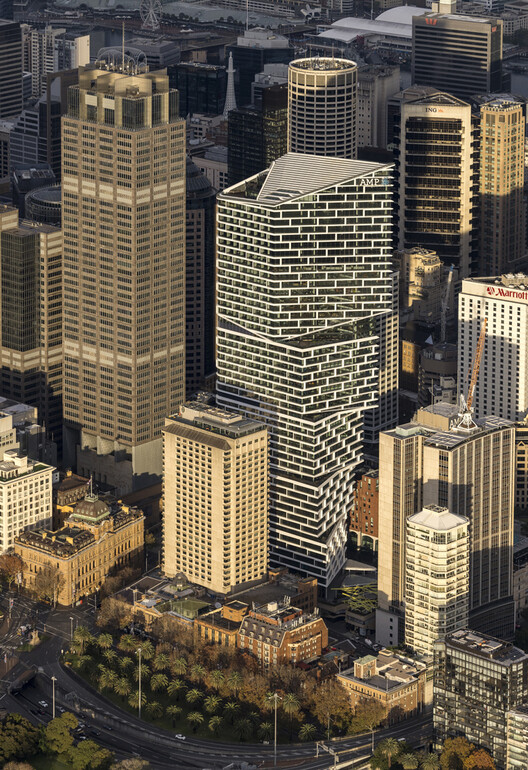
This shift further expands the freedom for architects and urban planners, opening new possibilities for the reuse and upscaling of existing buildings. The Quay Quarter Tower in Sydney drew considerable international attention as a rare modernization project that retained 65% of the original structure while managing to double the floor space through a reorganized building layout. One of the bigger challenges was reimagining vertical mobility within the same elevator core. Double-decker elevators paired with a destination dispatch system turned out to be the answer. Double-deckers can, of course, run on conventional up-down controls, but in a complex environment like a 54-floor tower, smart traffic management is really the only realistic option.
The Schindler myPORT smartphone app takes this logic a step further by making the process nearly seamless. As soon as a tenant enters the building, authentication and elevator calls can happen automatically, allowing the system to prepare a pre-programmed ride in advance. This ride can also account for individual needs, such as extended boarding time.
Mobility as Part of Building Performance
The most recent innovation, Schindler StratOS, expands destination dispatch into a broader ecosystem for digital vertical mobility. It connects elevator operation with maintenance, media, passenger convenience, and new categories of users, including service robots that can request elevator rides alongside people. The goal is no longer simply to reduce waiting times or optimize trips between floors. It is to increase the elevator's contribution to the overall performance of a building throughout its life cycle, moving beyond the basic task of transporting people and goods up and down.
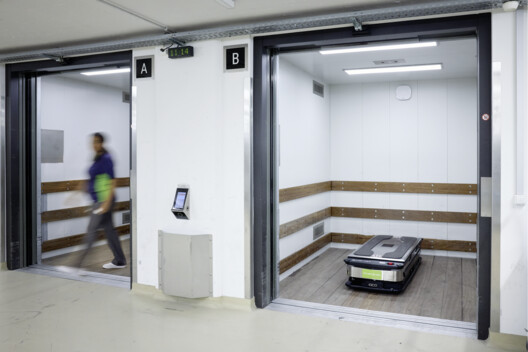
Within this ecosystem, different services operate through the same gateway and technological backbone, supported by a unified management portal for building operators and a single app for passengers. The app effectively brings features once reserved for high-end buildings to almost any elevator with cloud connectivity. Personalized rides, tailored to individual passenger needs, become possible in existing buildings that were never designed with that level of sophistication in mind. This is what Schindler FLUYD does: it takes what used to be a premium offer and makes it broadly available.
A Design Decision, Not Merely a Technical Specification
This entire trajectory shows that elevators have never been just pieces of equipment. They have always defined the viability of tall buildings, conditioned the size of cores, affected the efficiency of floor plans, organized the encounter between public and private spaces, and shaped both the arrival experience and the unique identity of a building.
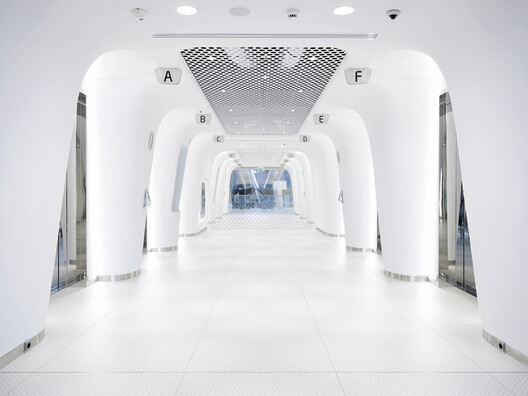
For architects, developers, and building managers, vertical mobility must be considered from the earliest stages of design as part of the building's spatial, operational, and experiential strategy. In a context of greater density, more hybrid uses, and rising expectations around efficiency, security, and comfort, designing good buildings also means designing good journeys.
If the small cabin at Versailles depended on ropes and manual effort to overcome the distance between floors, nearly three centuries later, vertical mobility still operates largely out of sight. Yet it has become an intelligent layer of data, access, decisions, and real-time adjustments. In the end, the evolution of elevators shows that the building itself has changed in nature, moving from a static object to a system of flows, users, and experiences in constant adaptation. And vertical mobility, far from being a technical detail, can bring these flows and experiences to life, standing at the center of this transformation.


