

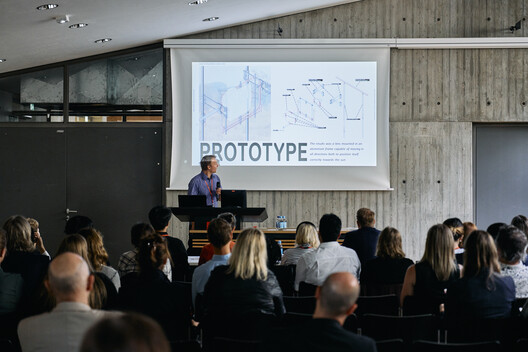
Long before it becomes a matter of performance, comfort, or energy efficiency, natural light is a way of giving presence to architecture. It reveals the texture of a wall, the depth of an opening, and the silent passage of time within a space. In works as distinct as those of Tadao Ando and Alvar Aalto, daylight appears as an essential material of design: in some cases, guiding the eye toward contemplation; in others, making spaces feel more human, welcoming, and connected to everyday life.
When handled with precision, natural light also guides the body, alters proportions, builds atmospheres, and can transform seemingly simple situations into experiences of almost transcendental intensity. A slit of light on a wall, the soft brightness of a reading room, or the changing path of the sun across a courtyard suggest that designing with light means thinking about perception, movement, and the time people spend in a space. Even in contemporary architecture's highly technological context, daylight remains one of the most direct ways to connect architecture, environment, and everyday experience.
This understanding of natural light as an active material of design is at the center of Light of Tomorrow by VELUX, a biennial international competition that, since 2004, has invited architecture students from around the world to explore the potential of daylight in the creation of more sensitive, sustainable spaces that are connected to their environment. In its 12th edition, held in 2026, the competition received 539 projects from 345 architecture schools across every continent. Demonstrating the global reach of the initiative, the numbers reveal the interest of a generation of architects in training in recognizing natural light as a tool for rethinking the relationship between architecture, well-being, climate, and everyday life.

Under the broad theme Light of Tomorrow, each participating team was free to interpret it from the perspectives they considered most relevant, including aesthetics, functionality, sustainability, and the interaction between the building and its surroundings. This openness allowed the projects to approach natural light not only as a physical phenomenon, but also as a cultural, environmental, and social experience. The result was a diverse range of proposals investigating how daylight can respond to different contexts, scales, and ways of inhabiting space.
From the full pool of submissions, eight projects were awarded: five with regional distinctions, following the UIA world regions, and three with special category prizes. They are:
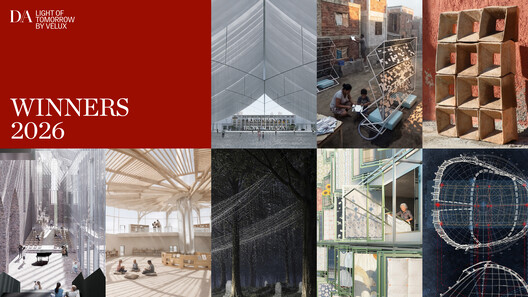
Regional Winners
Western Europe: Woven Light, Lund University, Sweden
Eastern Europe and the Middle East: Filtered Light, National Academy of Fine Arts and Architecture, Ukraine
The Americas: The Light as Memory, Pontificia Universidad Católica de Chile, Chile
Asia and Oceania: Sun the Quilt, Xi'an University of Architecture and Technology, China
Africa: Woven Time, Jomo Kenyatta University of Agriculture and Technology, Kenya
Special Prizes
Daylight in New Buildings: Reclaiming the Tropical Plaza, Chulalongkorn University, Thailand
Daylight in Building Transformations: Folding Light, Tsinghua University, China
Daylight Investigations: Evaporative Cooling Celosia, Royal Danish Academy, Denmark
Jury Notes
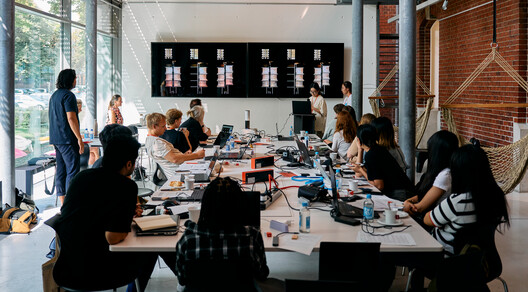
The international jury, composed of architects and educators from different countries, included James Carpenter, United States; Liene Jākobsone, Latvia; Níall McLaughlin, Ireland; Oya Atalay Franck, Switzerland; Elena Arregui Jaeger, Spain; and Doris Wälchli, Switzerland.
The collective reading of the projects revealed a shared direction that goes beyond technical quality or formal inventiveness. In many of the awarded works, natural light appears as a starting point for discussing broader themes: memory, climate, the transformation of existing buildings, collective spaces, environmental comfort, and forms of coexistence. In the words of the jury, the projects "face the challenges and show us the way forward."
Architect Niall McLaughlin was even more specific in describing what unified the awarded projects: "A very simple everyday experience, where people managed to capture the way daylight operates in an ordinary sense and weave it into everyday life through direct, objective, yet lyrical responses."
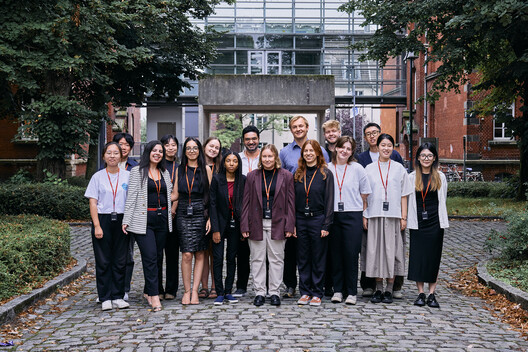
This combination of everyday simplicity and spatial intensity seems to summarize one of the competition's main contributions. The winning projects expand the role of natural light beyond technical performance or visual effect, showing how daylight can help create more sensitive connections between buildings, people, and their environments.
The eight winning projects will be presented live during the UIA World Congress of Architects in Barcelona. The session will take place on June 29, 2026, from 11:00 a.m. to 1:30 p.m. CEST, on Stage 12 at the Barcelona International Convention Centre (CCIB). Open to Congress-accredited attendees, the presentation will offer an opportunity to learn more about the ideas and design processes behind the works, accompanied by comments from the jury. Later that evening, the award ceremony will be held at the Three Chimneys, where the overall winner will be announced.
Visit the competition website for more information.

