During a ceremony held at the World Urban Forum (WUF) in Baku, Azerbaijan, on May 20, 2026, the International Union of Architects (UIA) and UN-Habitat announced the winners of the third cycle of the UIA 2030 Award. The biennial award recognizes built projects that make meaningful contributions to achieving the United Nations Sustainable Development Goals (SDGs). Architects were invited to submit architecture, landscape, and urban design projects addressing pressing environmental, social, and economic challenges across six categories: sustainable water management, the promotion of safe working environments, adequate and affordable housing, efficient and inclusive planning, access to green and public space, and climate resilience.
The third cycle launched in July 2025, and regional finalists from the UIA's five global regions were announced in January. In the final stage, the jury selected winning, highly commended, and commended projects in each category, recognizing works in China, Bangladesh, India, Thailand, Mexico, Peru, Colombia, Spain, Kenya, Morocco, and the United States.
Below, we present the winning and commended projects for each category, along with the jury's statements, which highlighted "the projects' capacity to combine technical performance with civic value while offering scalable and replicable models for resilient and inclusive urban futures."
Related Article
UIA 2026 Barcelona Announces Full Program, Detailing Formats, Exhibitions, and City-Wide ItinerariesMeishe River Restoration: Turning Grey Into Green (China) by Turenscape
Category 1: Ensure Availability and Sustainable Management of Water and Sanitation for All (SDG 6)
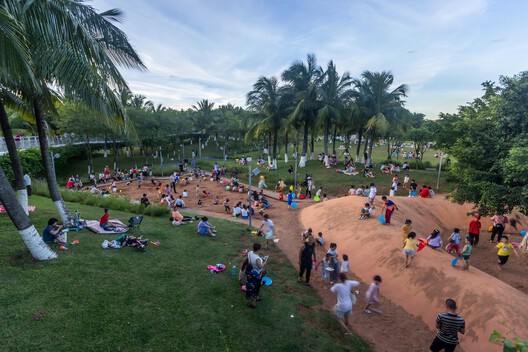
Designed by Turenscape, the Meishe River Restoration project in China has been awarded for transforming degraded water infrastructure into a high-performing ecological system integrating hydrological restoration, public space, and blue-green infrastructure into a replicable model for nature-based urban resilience. According to the jury, the design reflects "a deep understanding of local ecological processes and fauna and offers a replicable model for river restoration in urban contexts," while "particular merit lies in its integration of blue-green infrastructure with co-benefits for citizens' everyday urban life."
Commended Project for Category 1
- The Phi Phi Wastewater Management Ecological Park (Thailand) by Arsomsilp Community and Environmental Architect Co Ltd
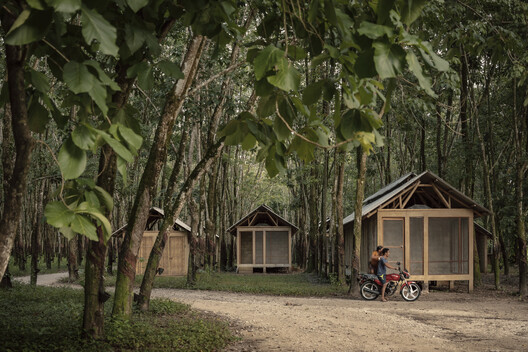
Tierras Temporary Housing Units in Palenque (Mexico) by Manuel Cervantes Estudio
Category 2: Protect Labour Rights and Promote Safe Working Environments (SDG 8)
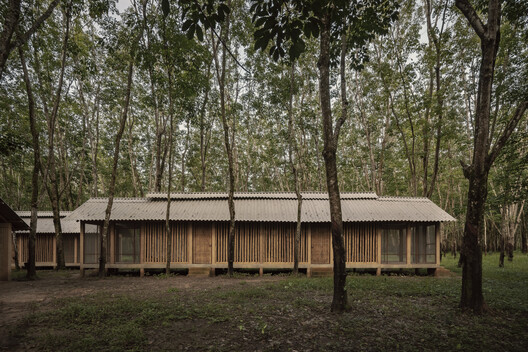
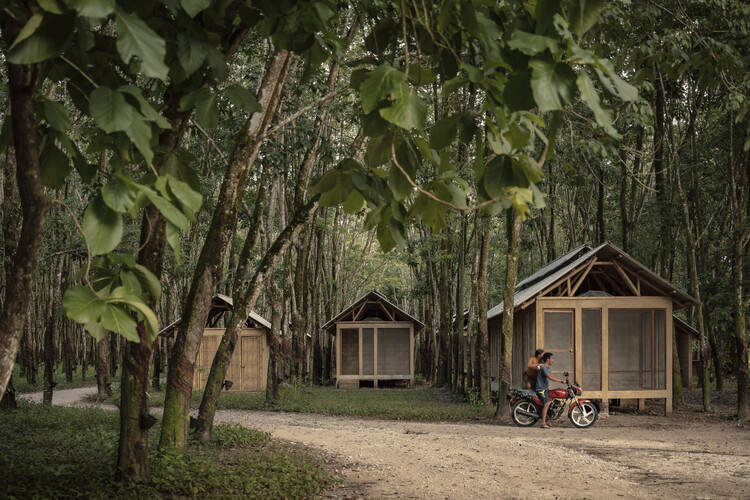
Designed by Manuel Cervantes Estudio, the Tierras Temporary Housing Units in Palenque, Mexico, provide a dignified and adaptable response to rural workers' housing needs, highlighting its efficient construction system and scalable approach to safe living and working environments. According to the jury, the project's strength lies in translating complex social and logistical requirements into a robust and efficient built project that prioritises residents' dignity, health, and wellbeing. A clear construction approach supports quality, speed, and replicability without compromising spatial standards.
Highly Commended Project for Category 2
- Taoli – Zhaoshan Village Center (China) by SUP Atelier of THAD
Sanjaynagar Slum Redevelopment (India) by Community Design Agency
Category 3: Adequate, Safe, and Affordable Housing (SDG 11.1)
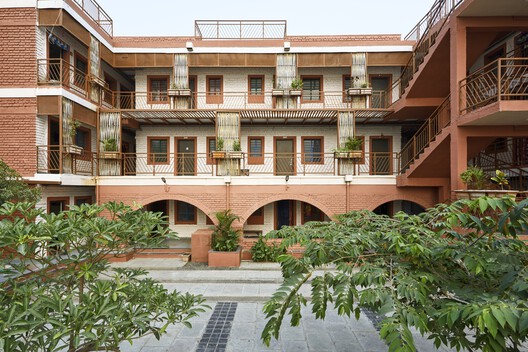
Sanjaynagar Slum Redevelopment by Community Design Agency for aligning community participation with formal redevelopment processes while integrating housing, social infrastructure, and economic opportunity without displacing existing communities. The jury highlighted the designers' understanding of informal settlement dynamics and their ability to bridge governance and delivery. Scalable and adaptable, the project was chosen as an example of how equitable redevelopment can be achieved without displacement.
Highly Commended Project for Category 3
- Inhabited Work in Huayruro (Peru) by INSITU Arquitectura
Commended Projects for Category 3
- Glass Brick Dwelling in Bayi Village, Weinan (China) by Xi'an University of Architecture and Technology Design and Research Institute
- 31 Social Housing in Torre Baró, Barcelona (Spain) by Aldayjover Architecture and Landscape + Burgos & Garrido
Hutong Community Renewal (China) by Architectural Design and Research Institute of Tsinghua University
Category 4: Participatory, Land-use-efficient and Inclusive Planning (SDG 11.3)
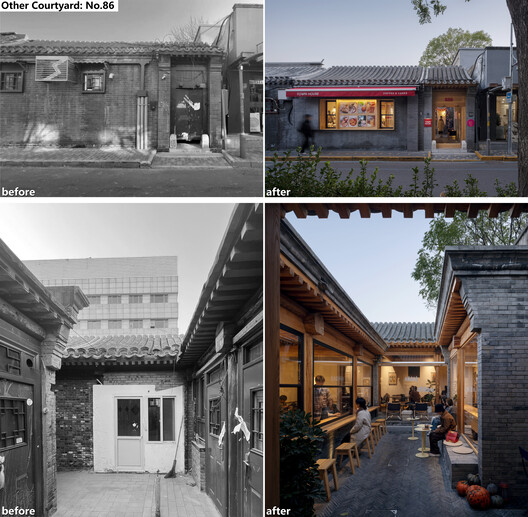
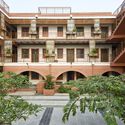
Hutong Community Renewal by Architectural Design and Research Institute of Tsinghua University for a sensitive approach to community-led renewal within Beijing's historic hutong fabric, demonstrating how incremental interventions can generate lasting urban transformation. The jury recognized the balance between conservation and adaptation, its emphasis on co-governance and resident participation, and the project's methodological clarity and replicability.
Kahawa West Health Centre (Kenya) by Kounkuey Design Initiative
Category 4: Participatory, Land-use-efficient and Inclusive Planning (SDG 11.3)
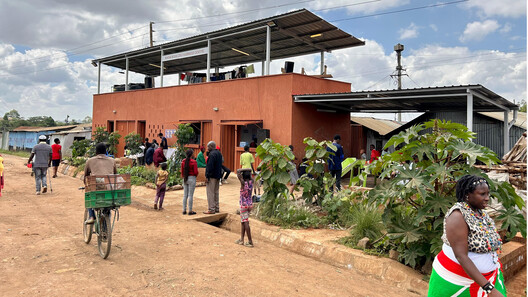
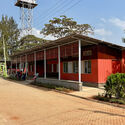
Kahawa West Health Centre by Kounkuey Design Initiative for the project's participatory design process and its role in extending beyond healthcare provision to become a civic, economic, and social anchor within the community. The jury highlighted the initiative to co-design and co-produce, the project's ability to translate informal practices into community-led systems, and a holistic approach to urban development. The project was highlighted as a scalable model of incremental intervention with a strong participatory framework for all phases.
Highly Commended Project for Category 4
- Stabilisation of Anthropogenic Urban Cave System in Tomelloso (Spain) by Aguado + Vellés + Aperte
Commended Projects for Category 4
- IDS Industrial Precinct Masterplan (Bangladesh) by Studio Morphogenesis Ltd
- "Designing?" (China) by YIIIE Architects
- E.CO Rotunda, Hong Kong (China) by The University of Hong Kong
Parque Prado (Colombia) by Connatural Arquitectura en el Paisaje
Category 5: Access to Green and Public Space (SDG 11.7)
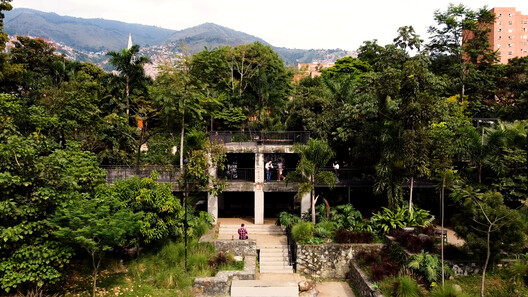
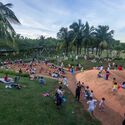
Parque Prado by Connatural Arquitectura for the project's integrated approach to water management, ecological restoration, and public space, recognising its contribution to resilient and inclusive urban regeneration. The jury highlighted its value as a replicable model, the reuse of materials and adaptation of existing structures as a resource-conscious approach, and the integration of diverse spatial typologies to foster inclusion and social cohesion.
A Floating Forest: Fish Tail Park in Nanchang City (China) by Turenscape
Category 5: Access to Green and Public Space (SDG 11.7)
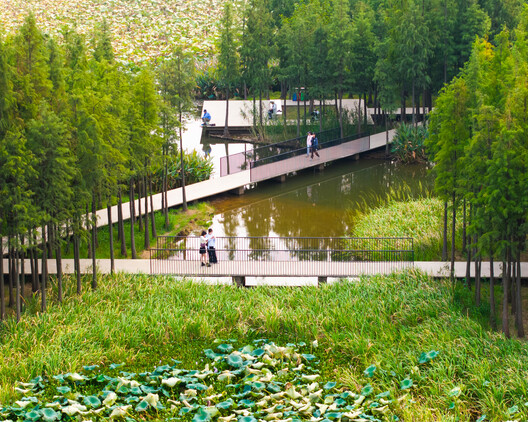
A Floating Forest: Fish Tail Park in Nanchang City by Turenscape for recasting a flood-prone landscape into a resilient public asset combining ecological restoration, water management, and public accessibility. The jury highlighted the project's capacity to reconcile environmental processes with human experience, creating a landscape that is both functional and engaging, along with its affordability and adaptability.
Highly Commended Projects for Category 5
- Śhālā Twam (A Space for You) (India) by Bhoomija Creations
- Espacio Modelo (Uruguay) by Intendencia de Montevideo
- La Jalquilla: A School for All (Peru) by Asociación Semillas Para El Desarrollo Sostenible
- Sanath Road, Gurugram (India) by Beyond Built Pvt. Ltd
- Ho Chi Minh City Book Street (Vietnam) by TA Landscape Architecture
- Al Hakoura Community Garden, Ramallah (Palestine) by Ramallah Municipality & UN-Habitat
- Nyhamnen Ferryterminal Park (Sweden) by ZITA
Commended Projects for Category 5
- Sweitat Sensory Garden (Palestine) by Al Ameed Architects and Engineers Company
- Mashiach Now Square, São Paulo (Brazil) by Natureza Urbana
- Community Plug (India) by Studio Aranya
- Atal Sarovar: A Water-Sensitive Urban Integration, Gujarat (India) by INI Design Studio
Les Mamas Belgues Flooding Park (Spain) by Calatayud + Mira + Parraga + Sanchis
Category 6: Strengthen Resilience and Adaptive Capacity to Climate-related Disasters (SDG 13.1)
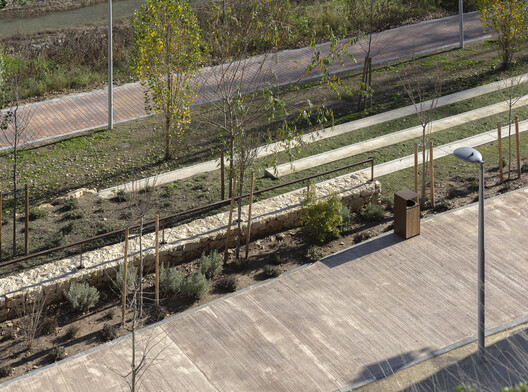
Les Mamas Belgues Flooding Park by Calatayud + Mira + Parraga + Sanchis for transforming flood risk into an opportunity for ecological enhancement and resilient public space through the integration of natural processes, biodiversity, and climate adaptation strategies. The project reconfigures a river corridor into a public landscape, accommodating periodic flooding while safeguarding urban life and infrastructure with terraces, pathways, and vegetation. The jury highlighted "its clarity of strategy and its response to increasing environmental uncertainty, alongside its ability to deliver strong social benefit," and declared the project offers a model for "cities seeking to live with water rather than resist it."
Highly Commended Projects for Category 6
- Revitalisation of the Citadel of Agadir Oufella (Morocco) by Studio Salima Naji
- Kon-Tigo, Acapulco de Juárez, Guerrero (Mexico) by Manuel Cervantes Estudio
Commended Project for Category 6
- Rockaway Resiliency and Coastal Adaptation (United States) by WXY Architecture + Urban Design
Detailed graphic material of the winning entries, full jury citations, and a gallery of the projects are available on the UIA website. The Fundació Mies van der Rohe and the European Commission also recently announced the two winners of the 2026 European Union Prize for Contemporary Architecture – Mies van der Rohe Awards, selected from a total of 410 nominated works. The 8th edition of the Tallinn Architecture Biennale 2026 (TAB 2026) also announced the winners of its Installation Programme Competition and Vision Competition, selecting one project per category, with one scheduled to be realized in August 2026 and inaugurated during the biennale's opening week. In more specialized competitions, Paul Raff Studio and Kengo Kuma & Associates were selected from a shortlist of five teams to design the new Banff National Park Visitor Centre in Canada, while the French Ministry of Culture recently announced the selection of Selldorf Architects, STUDIOS Architecture, and BASE Paysagiste to renovate the Louvre Museum.


