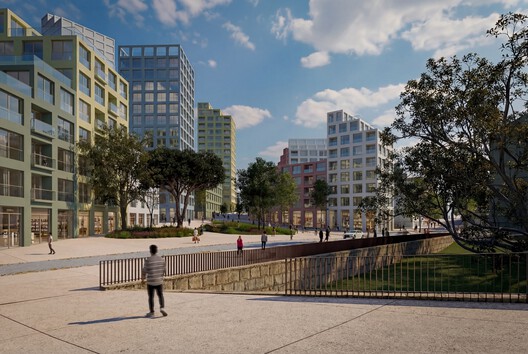
MVRDV and OODA have revealed a new masterplan for the regeneration of a vacant 28-hectare site between Marvila and Beato on Lisbon's riverfront. Recently approved by the Lisbon City Council, the project was developed in collaboration with LOLA Landscape Architects and Thornton Tomasetti to transform the area into a landscape-led urban district. Titled The Marvila Masterplan, the proposal establishes a framework for introducing 1,400 homes alongside public facilities, commercial spaces, and services within a fragmented and largely abandoned territory. The project is a private initiative led by the principal landowner and developed in coordination with the Lisbon City Council and Infraestruturas de Portugal.
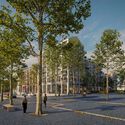
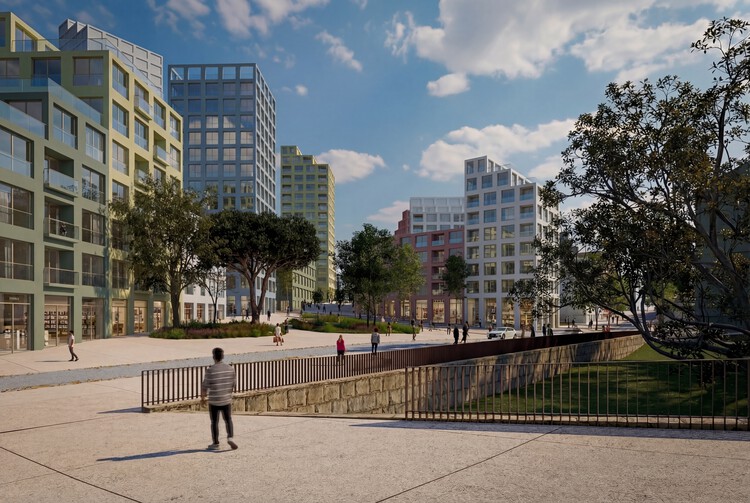
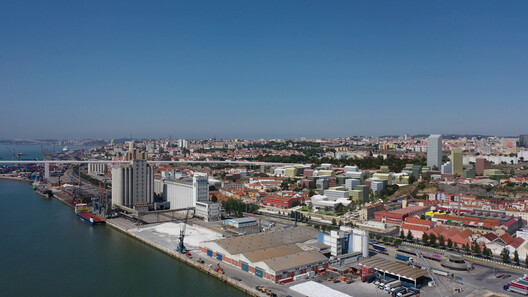
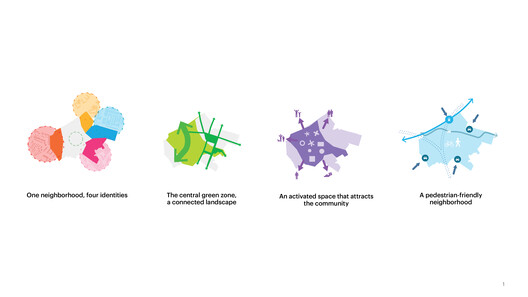
The Marvila Masterplan site is located on Lisbon's eastern riverfront, positioned between the city center and the Parque das Nações district. According to the architects, the site was originally agricultural land owned by wealthy Lisbon families before undergoing industrialization in the late eighteenth century. Today, railway lines crossing the area separate the underused site from its surroundings and from the Tagus River, contributing to its fragmentation. The regeneration strategy is organized around four distinct areas connected through a continuous network of public spaces, landscape, and mobility infrastructure. To ensure that the site remains active during construction, each phase of the masterplan includes the implementation of public spaces and green infrastructure.
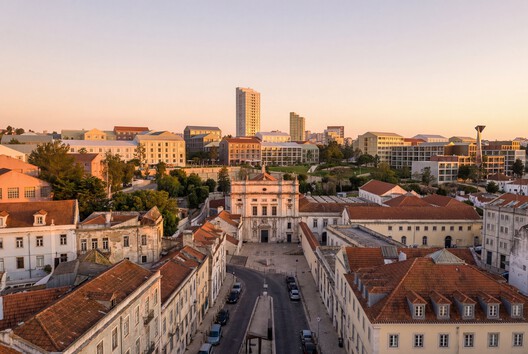
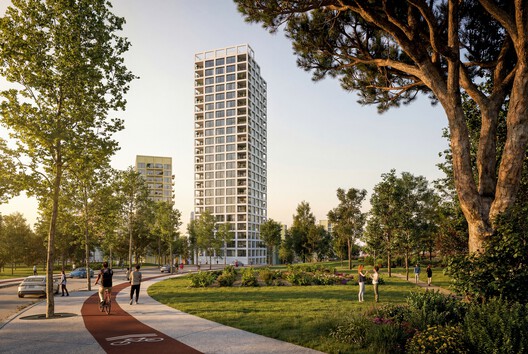
The four clusters are organized in relation to the surrounding neighborhoods of Açúcar, POLU, Beato, and Madre Deus. The plan includes approximately 1,400 homes in a range of typologies, including affordable and social housing. Residential areas are combined with public facilities such as a day center and a care home, as well as commercial and service spaces. Building sizes and placements respond to the site's topography, views, and surrounding urban fabric, creating gradual transitions in scale. Heights and densities vary across the four areas, while courtyards, open blocks, and public routes are designed to encourage permeability and continuity.
Related Article
MVRDV Obtains Construction Permit for Low-Carbon Mixed-Use Tour & Taxis Towers in BrusselsThe proposal also incorporates existing cultural and natural heritage elements, including the Convento do Beato and a centuries-old rubber tree that will become the focal point of a new public square. The landscape strategy introduces water retention and infiltration zones across the site, alongside drought-resistant planting and habitats for local species. A central urban park links the four clusters through a sequence of squares, courtyards, and green corridors.
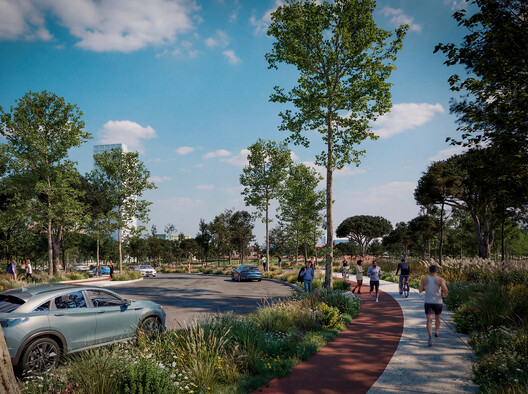
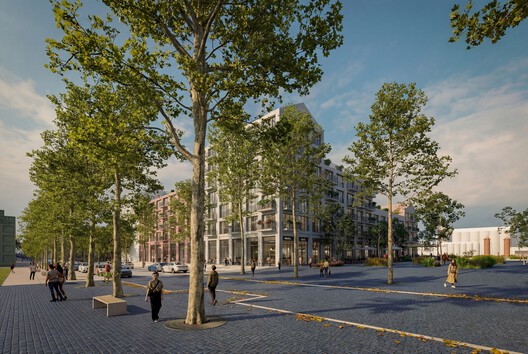
The park is also intended to mitigate the impact of the future Third Tagus Crossing bridge (TTT), which will pass through the site, by incorporating green buffers and covering portions of the infrastructure. In addition, a new public transport building for Marvila station and a deck spanning the Northern Line railway tracks are planned to reconnect the site with the city and restore pedestrian continuity, particularly between Chelas station and the waterfront.
A project of this scale is always a long-term commitment to a place and its people. What we set out to define was not just a plan, but a structure resilient enough to evolve, one that will serve Lisbon well beyond the first phase of development – Rodrigo Vilas-Boas from OODA
The masterplan has undergone two rounds of public consultation. Following its anticipated approval during the Execution Unit phase by the Lisbon City Council, the next steps include the Environmental Impact Assessment, urbanization works, and land subdivision, establishing the framework for the area's long-term transformation. The project shares similarities with other recently announced urban regeneration proposals worldwide, including MVRDV's low-carbon mixed-use Tour & Taxis Towers project in Brussels; a proposal for Rákosrendező in Budapest led by Coldefy together with CITYFÖRSTER, Sporaarchitects, TREIBHAUS.LAND, and Marko & Placemakers; and UNS and Settanta7 Design's proposal for a 32-station network in Turin.


