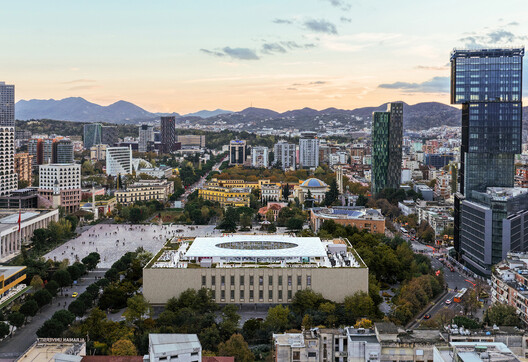
The initial phase of the complete renovation project for the National Historical Museum in Tirana is approaching completion. The project was commissioned by the Ministry of Economy, Culture, and Innovation of Albania and UNOPS, and financed by the European Commission through the EU for Culture (EU4C) program in Albania. The full restoration of the museum's 21,400 square meters is planned in two phases, led by Rotterdam-based Casanova + Hernandez Architects in collaboration with local partner iRI. The first phase consists of restoring the existing building in Skanderbeg Square and is expected to be completed this year, enabling the immediate start of the second phase, focused on implementing the new design for all interior spaces, the courtyard, and the roof.
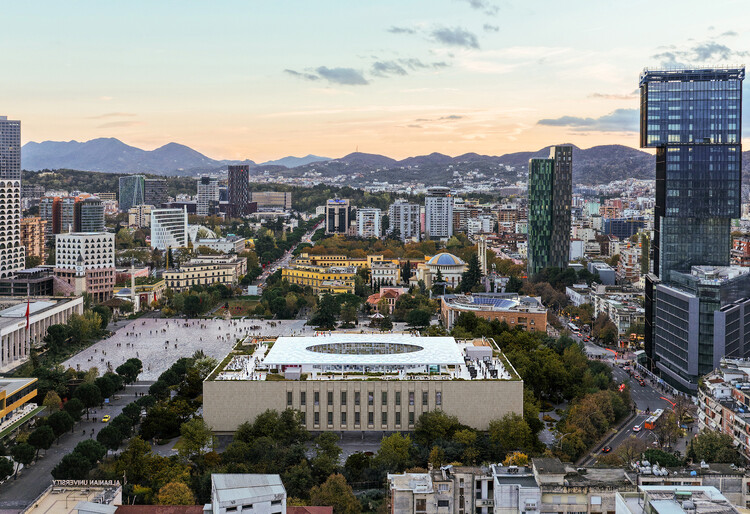
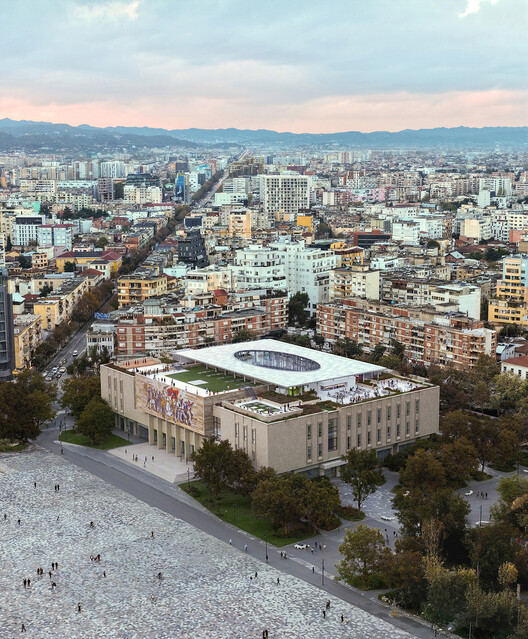
The project is part of Tirana's ongoing urban transformation. According to Casanova + Hernandez Architects, this transformation reflects Albania's transition from decades of communist isolation toward a contemporary Mediterranean capital. In recent years, this shift has materialized through towers designed by international architects, alongside public, institutional, and sports-related developments, resulting in a range of high-profile projects, from mixed-use vertical developments and pedestrian-oriented streets to eco-conscious campuses and civic facilities. Within this context, the renovation of the National Historical Museum represents a different type of intervention focused on the adaptation of an existing cultural institution.
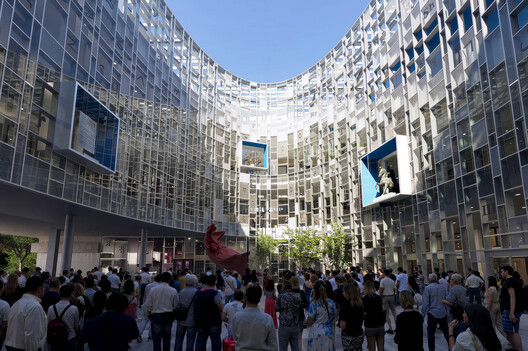
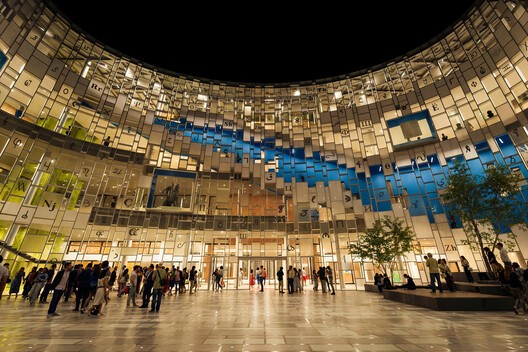
The National Historical Museum was originally built in the 1980s. According to the restoration architects, the institution initially presented "a linear, state-controlled narrative from prehistory to the Antifascist War." Spatially, this translated into an architectural sequence that guided visitors through a fixed narrative, which post-communist updates to the museum did not substantially alter. Titled "Albanian Kaleidoscope," the reconstruction and musealization project seeks not only to consolidate and restore the building following the November 2019 earthquake, but also to redefine the institution's role through plural, inclusive, and critically engaged narratives aligned with contemporary museology.
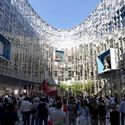
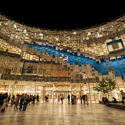
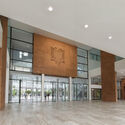
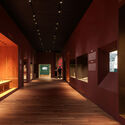
The intervention includes the renovation of the museum's interior spaces and courtyard, as well as the creation of a rooftop plaza and new public areas to strengthen the institution's cultural, educational, and economic role. The proposal introduces an open plinth, making parts of the building freely accessible to the public. The ground floor will contain a bookstore-café, library, and event spaces connected to multipurpose and educational areas on the upper levels. This area will also provide access to a new Events Courtyard conceived as a venue for concerts, workshops, and exhibitions. The roof will be adapted into a public cultural space organized into flexible "rooms" protected by a canopy for year-round use. Casanova + Hernandez Architects describe the intervention as a "plug-in architectural-museological intervention," conceived as an independent architectural insertion within the museum's courtyard that reconfigures the building's circulation, functions, and symbolic meaning through four key elements.
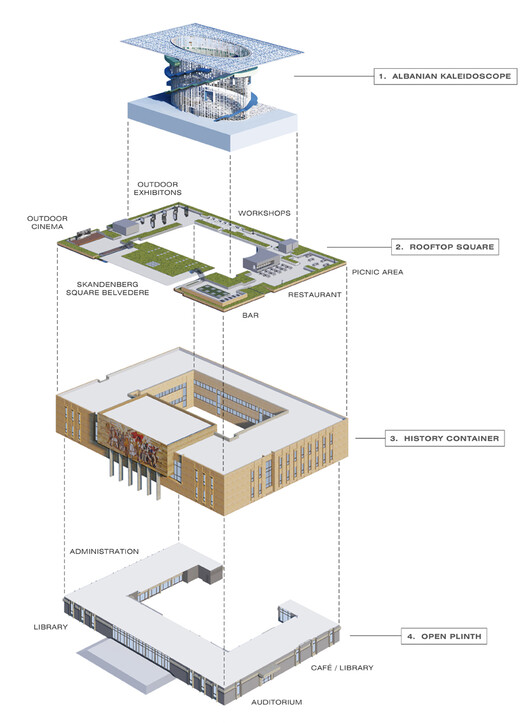
The project introduces a new circulation system known as the "Path of History," where changing selections of historical images and artifacts will be displayed, allowing flexible visitor movement independent of the exhibition galleries. A second intervention, the "Roof Path," connects the courtyard to the rooftop plaza through helical staircases leading to public amenities and views over the city. The proposal also includes a new underground archive accessible through curated visits, referred to as the "Albanian Black Box." Another key element is the "History Windows," an elliptical glazed wall displaying images and objects. Variations in the transparency of the surfaces create a light-responsive kaleidoscopic effect that gives the project its name, the "Albanian Kaleidoscope."
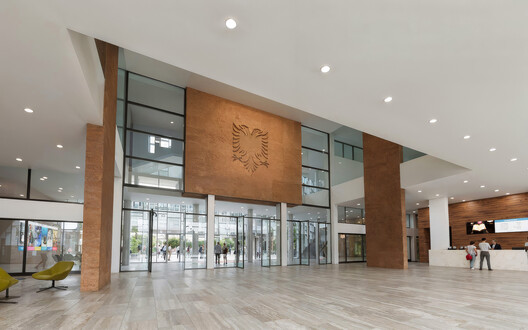
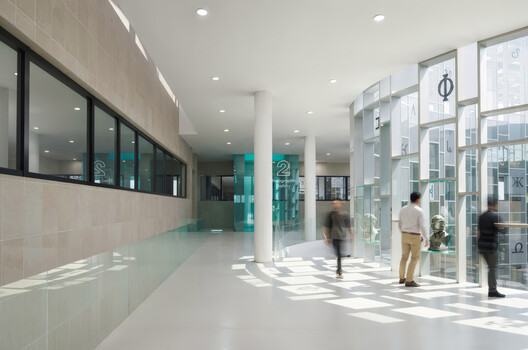
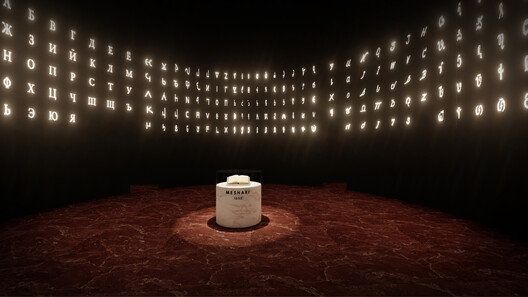
The museum's exhibition spaces are being reorganized into galleries connected by the new circulation system, allowing exhibitions to rotate without disrupting visitor movement. The transformation of the museum into a more dynamic institution is structured around four strategies. First, the permanent collection is reorganized around three thematic axes: Archaeology, Ethnography, and the Albanian Language, establishing a clearer curatorial framework. Second, a flexible programming strategy distributes temporary exhibitions across eight spaces, including the Black Box, the Path of History, rooftop areas, galleries, and immersive environments. Third, the project incorporates interactive and freely accessible educational spaces designed particularly for younger audiences. Finally, digital technologies such as augmented reality (AR), virtual reality (VR), and immersive installations will be integrated throughout the museum to support accessibility, interaction, and visitor engagement.
Other recently announced projects in Albania include the release of final images for a new resort in Dhërmi designed by Bofill Taller de Arquitectura and currently under construction. The firm had previously presented two additional projects in Tirana, Papuli Tower and Barcelona Tower, the latter located near the museum. Other recent developments in the capital include Rojkind Arquitectos' winning proposal for a mixed-use component within the redevelopment of the Zyber Hallulli site, designed in collaboration with Pedro Reyes, SON Architects, Motus Holdings, and ASAB. Rotterdam-based firm MVRDV recently won the international competition for Tirana's new Asllan Rusi Sports Palace, a spherical building more than 100 meters in diameter combining a 6,000-seat basketball and volleyball arena with residential apartments, a hotel, and ground-level retail spaces.


