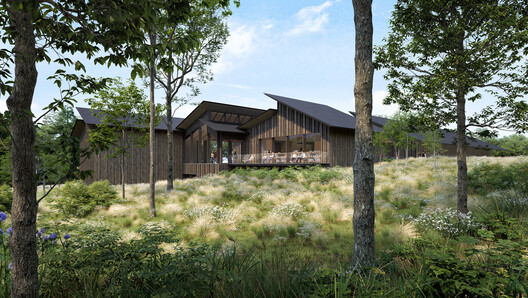
The Brandywine Conservancy & Museum of Art, located near Philadelphia, is dedicated to promoting the natural and cultural connections between the region's landscape, historic sites, and artists. The Conservancy protects land and waterways throughout the Brandywine Valley and other priority conservation areas, while the Museum houses a collection of American art, with particular strengths in landscape and still life painting, portraiture, and illustration. On May 6, 2026, the institution announced a project to transform its 15-acre campus, including the renovation of the historic museum building, a new museum building by Kengo Kuma & Associates, and conservation and landscape interventions by Field Operations that will create a publicly accessible 325-acre reserve with ten miles of trails.
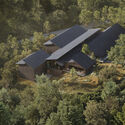
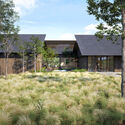
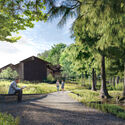
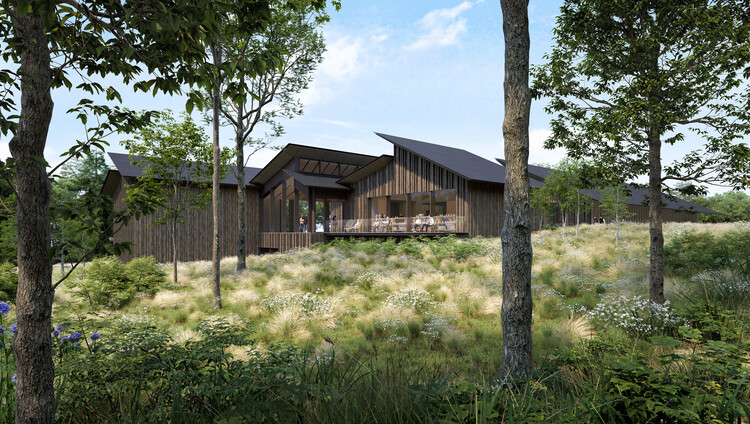
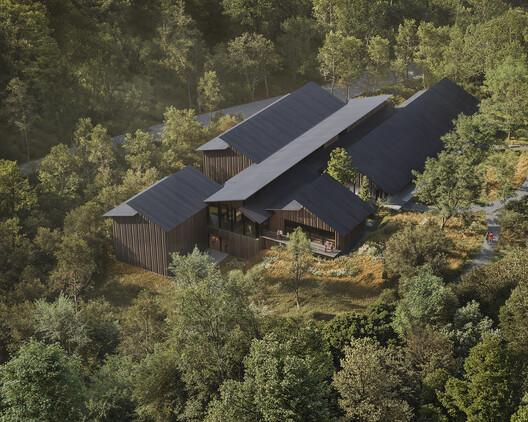
Our design seeks to honor the dynamic and evolving relationship between art and nature by creating a building that emerges from the landscape rather than imposing upon it. — Kengo Kuma
The project includes the construction of a 40,000-square-foot museum building, marking Kengo Kuma & Associates' first museum project in the United States. Designed in association with Schwartz/Silver Architects Inc., the building is envisioned as a series of four wood-clad pavilions arranged along a central axis, with long, low roofs rising into asymmetrical profiles. The new structure will add 14,000 square feet of gallery space, bringing the total exhibition area across both buildings to nearly 20,000 square feet, representing an 80 percent increase in the Brandywine's current exhibition capacity. Construction is scheduled to begin in spring 2027, with completion planned for fall 2029.
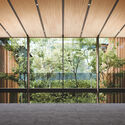
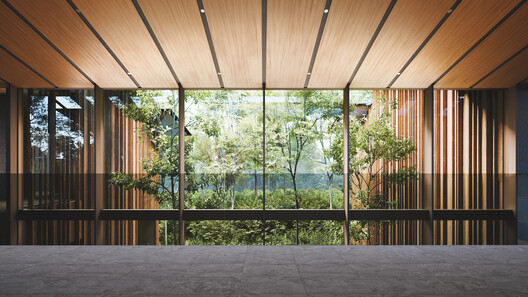
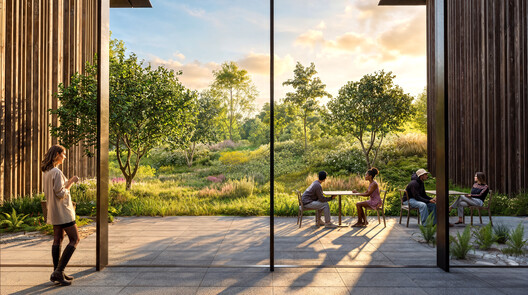
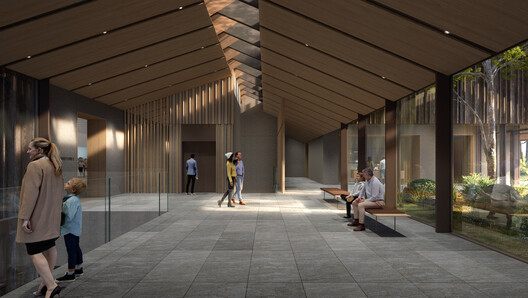
The main entrance will be located on the southeast side of the building's upper level, opening into a light-filled hall with views toward the surrounding nature preserve on three sides. From there, visitors will be able to access two large galleries positioned along the main axis, as well as a smaller gallery adjacent to the lobby. The lower level will include two additional galleries, a coffee bar, and a terrace overlooking the landscape. On the upper level, a 4,000-square-foot gallery will be dedicated to the Brandywine's collection of landscape paintings, another 4,000-square-foot gallery will host temporary exhibitions, and a 1,000-square-foot space will focus on the work of Andrew Wyeth. The lower level will contain an additional 1,000-square-foot temporary exhibition gallery and another 4,000-square-foot gallery. Offices and back-of-house functions will also be incorporated into the building.
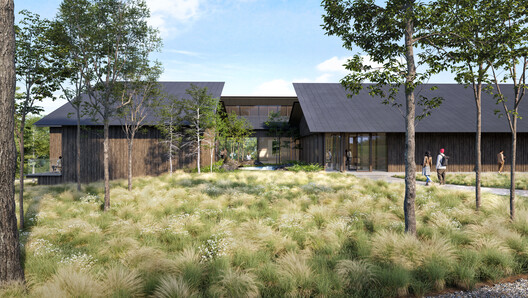
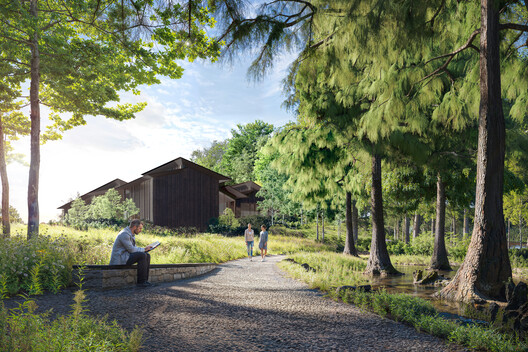
The design puts landscape at the heart of the experience, with the new building playing part of a much larger story of Brandywine's fused mission as a land conservancy and art museum. The landscape connects both museum buildings, encouraging all to find deeply personal paths from the surroundings to artwork and back again. We hope that visitors feel a meaningful sense of locale, following the footsteps of artists inspired by the place, immersed in histories, and surrounded by local materials, technique, and suffused forest light. The landscape and the art frame each other, and the new work offers considered spaces for that relationship. — Balázs Bognár from Kengo Kuma & Associates
In addition to the new building, significant renovations are planned for the Brandywine Museum of Art's Mill building, a converted mid-nineteenth-century grist mill located on the banks of the Brandywine Creek. The museum sustained major damage during the flooding caused by Hurricane Ida in 2021 and subsequently underwent a flood-hardening process using submarine-grade technology to make the lower level watertight. Other recent interventions include renovations to replace public programming spaces previously located on the lower floor, modifications to the museum's outdoor courtyard, and the addition of a barrier-free entrance to improve accessibility. Planned future renovations include an interactive exhibition dedicated to the Conservancy's land and water protection initiatives, a new studio art classroom, and expanded spaces for educational programming and special events. Once the new building is completed, the Mill building will retain three of its existing galleries, along with the café and the research and study centers.
Field Operations will lead the expansion of the current Chadds Ford campus into a 325-acre public preserve and garden. The proposal includes new trails forming a continuous loop through the landscape connecting both museum buildings. With ten miles of trails, the project will double the length of the existing path network and introduce a "learning landscape," including sections featuring boardwalks through wetlands. The expanded campus will incorporate additional native species and gardens, interpretive signage focused on local ecology, stormwater infrastructure to improve climate resilience, upgraded drop-off and parking areas, an outdoor classroom, and a nature play area. The expanded trail system will connect both museum buildings to the surrounding landscape and to two of the Brandywine's key assets: the original studios of N. C. Wyeth and Andrew Wyeth, both designated National Historic Landmarks and open to the public.
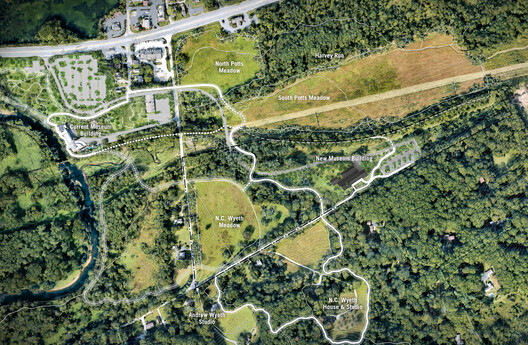
Every element of our landscape design, from the plantings to the interpretive moments along the trails, is intended to deepen visitors' understanding of stewardship and their connection to the natural world. The Brandywine Valley is a landscape of profound ecological significance, and our design for the expanded preserve and gardens seeks to reveal and celebrate both, while raising awareness of the essential, but often less visible, work of the Conservancy. Moreover, the additional miles of trails we are creating will immerse visitors in the surrounding environment in ways that allow people to experience firsthand the relationship between this land and the art it has inspired. —Sarah Weidner Astheimer from Field Operations.
Other recent developments in cultural architecture include OMA / Shohei Shigematsu's first public project in Japan at the newly renovated Edo-Tokyo Museum, consisting of scenographic interventions and installations as part of the broader renewal of the museum's building, designed by Metabolist architect Kiyonori Kikutake. Construction of The Whale cultural center by Dorte Mandrup is progressing along the coastline of Andenes, introducing a new cultural and scientific facility focused on marine ecosystems. Danish architecture studio Cobe also announced the transformation of a former IKEA warehouse in Älmhult into the new location of the Museum of Furniture Studies, which has been physically closed since 2022.


