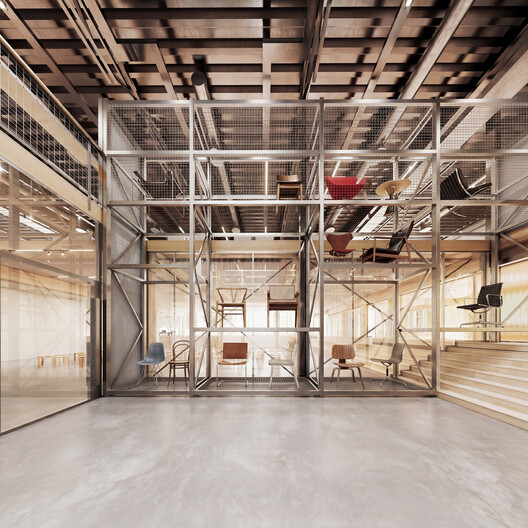
The Museum of Furniture Studies was founded in 2017 in Stockholm, showcasing a collection of more than 1,300 furniture pieces by over 44 international designers. The museum's physical location closed in 2022, maintaining its visibility through its Digital Archive for Design Furniture until it was acquired by IKEA in 2024. This week, Danish architecture studio Cobe announced the transformation of a former IKEA warehouse in Älmhult, Sweden, into a new home for the museum. The project involves converting a closed storage facility into an open and accessible space for design while preserving its industrial structure. The building is scheduled to open in early February 2027.
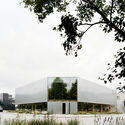

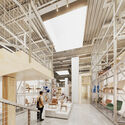
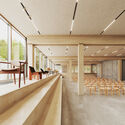
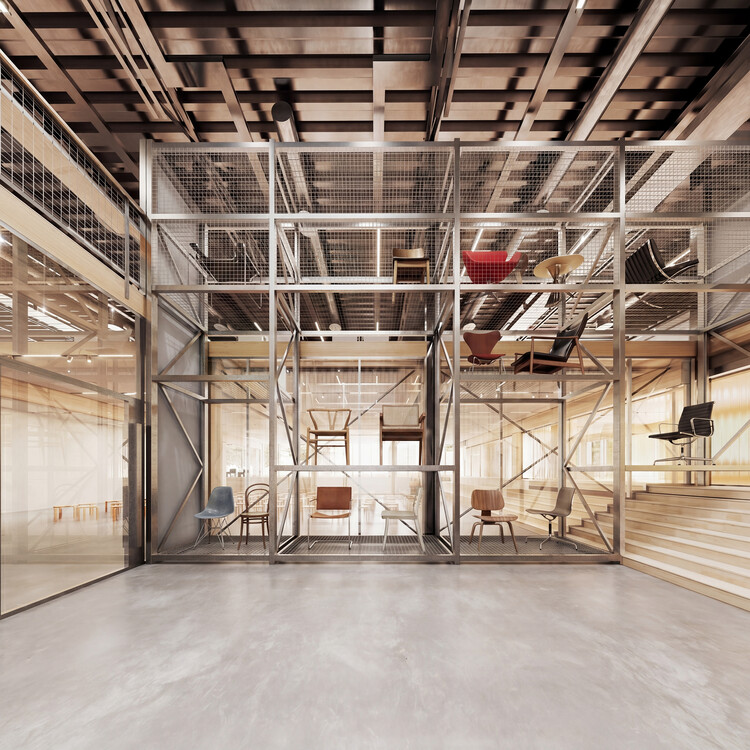
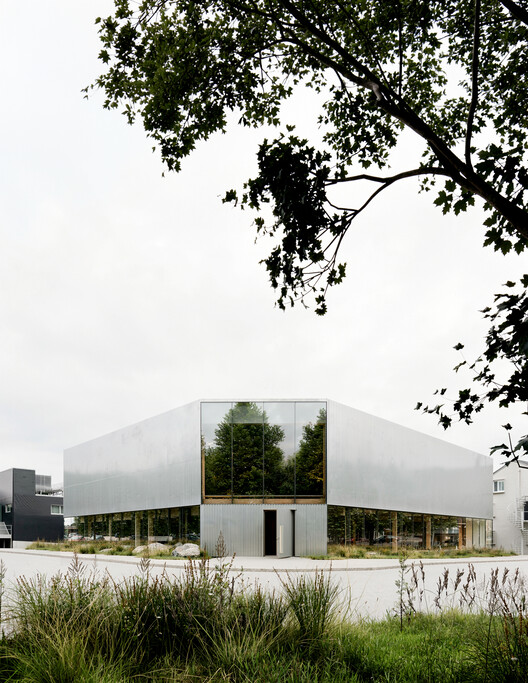
The collaboration between Cobe, IKEA, and the Museum of Furniture Studies aims to transform the industrial warehouse into a museum spanning furniture design history to the contemporary scene, serving as an educational platform for future designers. The design seeks to foster interaction, connection, and dialogue around heritage, contemporary, and future design by exhibiting international objects from the 19th century onward, illustrating the evolution of functions, materials, and techniques. By engaging with both historical and contemporary furniture in educational and recreational settings, the project aims to contribute to the positive development of furniture design, both technically and aesthetically.
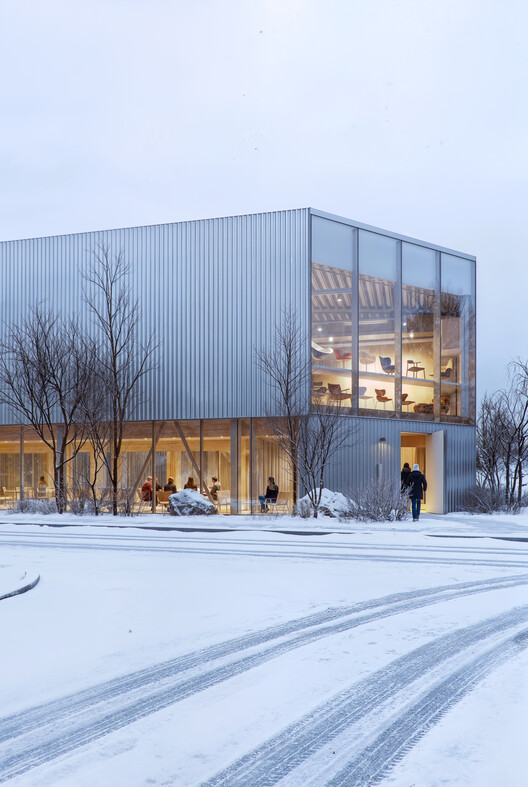
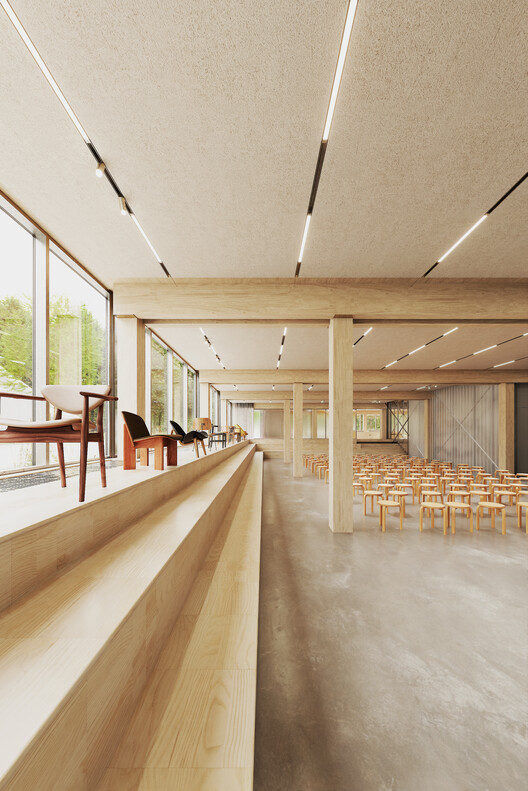
Cobe's architectural proposal transforms the enclosed IKEA warehouse by introducing three large windows that open the façade to the surrounding context of Älmhult. The intervention preserves the original industrial structure while inserting a new timber framework to create a mezzanine level and a series of rooms within the expansive open space. The existing steel frame, roof trusses, and concrete floor are retained, while the new timber structure is designed for disassembly, following contemporary circular design principles. The use of wood also references the region's strong furniture-making tradition, helping to define the building's new identity.
Inside, visitors will move between exhibitions, workshops, and learning spaces, guided by the idea of experiencing design as an evolving process rather than a static collection. The ground floor will host learning and experimentation areas, including exhibition spaces, workshops, lectures, and community events. The new wooden mezzanine will accommodate the open collection on galvanized steel shelving. These spaces will be connected by a double-height volume forming a central "canyon," alongside a large temporary exhibition area. The project stands as an example of adaptive reuse, particularly relevant given that each of IKEA's more than 500 retail locations includes its own warehouse and high-rack storage facilities.
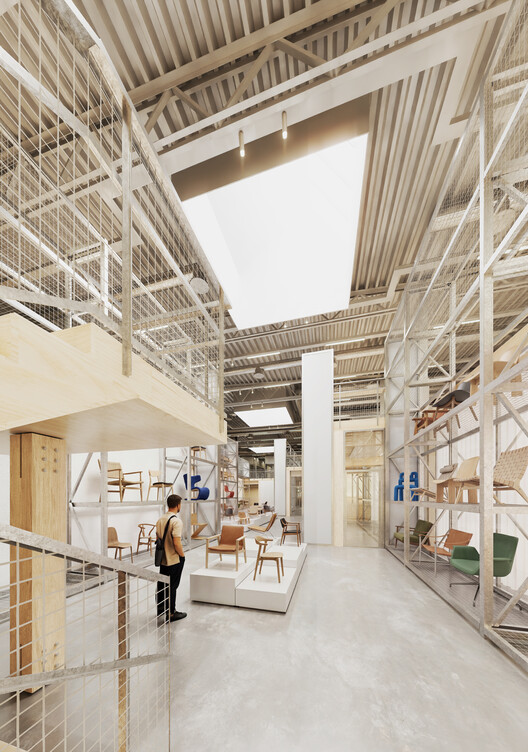
We approached the project as a precise transformation, working with what was already there rather than replacing it. The existing warehouse has strong spatial and material qualities: robust, flexible, and ready for renewed use. Our task was to extend that logic, not overwrite it. By keeping the industrial frame, opening the facade, and inserting a new timber structure, we shift the building from closed storage to public space. A few deliberate moves turn an anonymous warehouse into an open and inviting design destination. — Architect Dan Stubbergaard from Cobe
The furniture retail company recently presented an exhibition during the 2026 Milan Design Week titled Food for Thought by IKEA. Developed in collaboration with chefs and interior designers, the installation reinterpreted the Swedish saluhall through a sequence of room settings and a large working kitchen, where cooking and shared meals became central spatial and social elements. From April 20 to 26, Milan hosted the 64th edition of Salone del Mobile.Milano at Fiera Milano, where a wide range of products, from lighting and modular furniture systems to surface innovations, were unveiled, including 13 notable architect-designed objects highlighted by ArchDaily's on-site editors. Other recent museum developments include the opening of Peter Zumthor's David Geffen Galleries at LACMA in Los Angeles, the completion of V&A East Museum in London, and the recent opening of OMA's New Museum expansion in New York.

