

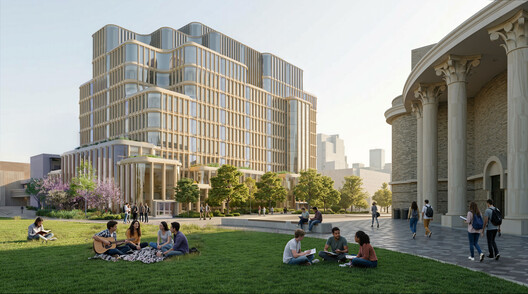
The University of Toronto has revealed the design for the Temerty Building, a new facility for health research and education at the heart of the university campus. The project was designed by MVRDV and Diamond Schmitt Architects in collaboration with Two Row Architect. It builds on a previous collaboration between the first two offices at the University of Toronto Scarborough campus, scheduled for completion in late 2026. The project was first introduced in Temerty Medicine's 2018-2023 Academic Strategic Plan and envisions a 36,000-square-metre extension to the university's Medical Sciences Building, including laboratories for higher education, classrooms, and shared spaces. Work on site is expected to begin in the second half of 2026, starting with preparatory work in July.
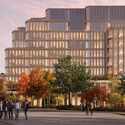
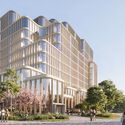

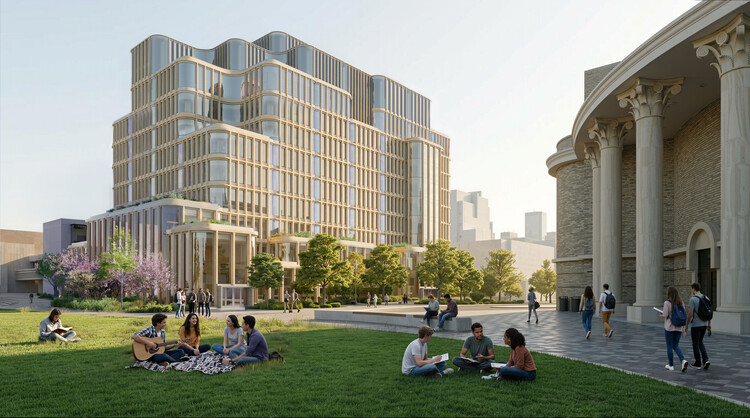
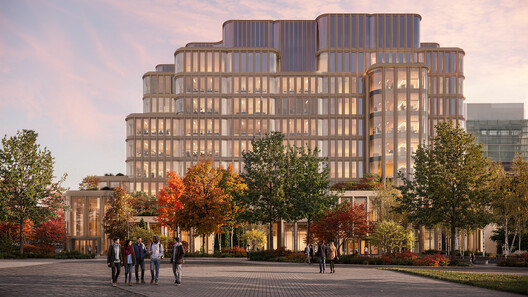
The Temerty Building is designed to replace a 1969 wing on the west side of the existing Medical Sciences Building. Together with the neoclassical Convocation Hall, the site forms a gateway to Front Campus, the historic heart of the university. The new building addresses the growing spatial demands of the faculties, providing updated facilities for research and educational activities, as well as specialized areas for infectious disease research and aquatic disease models. Nearly 60% of the total area will be dedicated to research space, with the intention of creating a campus centerpiece for gathering, sharing ideas, and advancing knowledge.
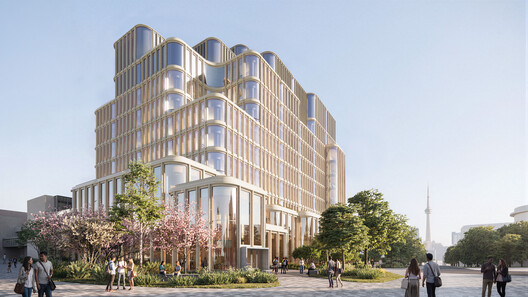
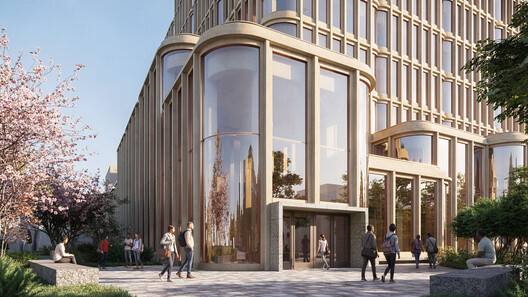
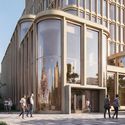
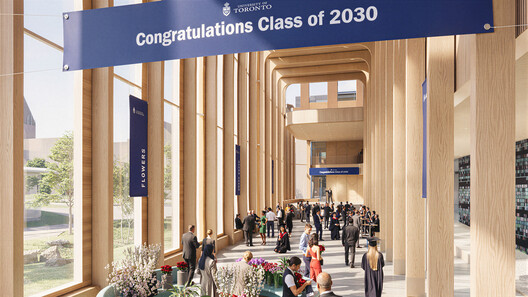
The design of the building's communal areas responds to its central location within the university's St. George Campus, incorporating flexible, multi-purpose spaces that support the intellectual, social, and ceremonial life of the university. The ground floor hall offers a triple-height space for informal encounters, secondary audience functions, and graduation ceremonies. In the southwestern corner of the building, dedicated spaces are provided for the university's Elders and Knowledge Keepers, while the adjacent landscape features an Indigenous teaching garden. The central part of the ground floor has a flexible layout, with movable walls that allow it to transform from studio learning spaces into an open-plan venue for events.
Above the ground floor, the design includes an additional level of flexible classrooms and seminar rooms, while laboratories occupy the seven floors above. Each laboratory floor is organized into three distinct areas: wet labs, dry labs, and open social spaces. The design connects to the existing building's corridors, creating easily navigable circulation loops and introducing natural light into previously enclosed areas. The University aims to become climate-positive by 2050, and the new building will incorporate renewable energy generation and a district energy nodal plant at the basement level to provide heating and cooling to surrounding buildings.
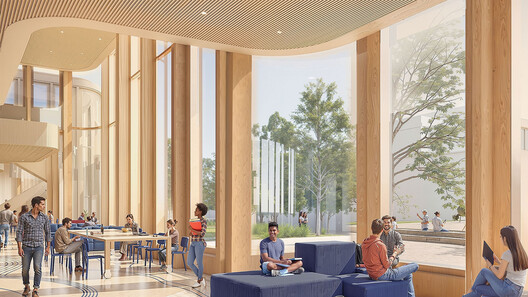
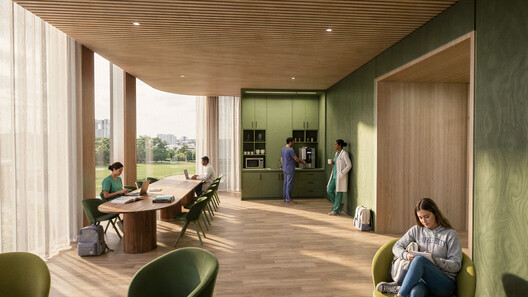
According to the architects, the Temerty Building's form is inspired by the escarpments characteristic of the Toronto region. A glass and sandstone façade emphasizes transparency, particularly in the communal areas of the lower floors. The façade's vertical articulation relates to the Gothic influences of surrounding buildings, while its curved corners echo the colonnade and columns of the university's Convocation Hall.
The Temerty Building's design is about bridging worlds. It prioritises functionality and durability, but also ensures the building will be warm and inviting. Its lower floors form a crossroads for the wider university community and opens to the surrounding landscape for the first time in 50 years. The building will support deep focus, as well as foster greater connection, with an emphasis on spatial clarity and natural light, while fitting seamlessly into the iconic landscape of King's College Circle. - Diamond Schmitt principal Don Schmitt
Other recent project announcements include the future construction of Sea of Time in Fukushima, an art and architecture project designed by Japanese architect Tsuyoshi Tane in collaboration with artist Tatsuo Miyajima; a new Centre Pompidou in Seoul designed by Wilmotte & Associés; and the Tennessee Performing Arts Center (TPAC) in Nashville, designed by BIG – Bjarke Ingels Group in collaboration with William Rawn Associates (WRA) and HASTINGS Architecture.


