This week marked World Health Day, observed annually on April 7 by the World Health Organization. This year's edition issued the call to "Stand with science," inviting renewed engagement with scientific knowledge as a foundation for collective action across disciplines. In architecture and urban design, this imperative resonates through projects that translate research into spatial strategies: from the deployment of digital twins to inform urban planning and decision-making, to rewilding initiatives that integrate biodiversity as a tool to mitigate climate change, and materially informed practices that engage resource-conscious construction. Within this broader framework, recent works also foreground architecture's social agency at multiple scales, including a landscape-driven cancer support center in Kent that aligns wellbeing with environmental sensitivity, an urban installation in Brescia operating as a civic awareness device around life in prison and pathways to reintegration, and the transformation of a street in Mantua into a pedestrian-oriented, biodiversity-rich public space.
Digital Twins and Rewilded Landscapes Shaping the Future of Urban Design
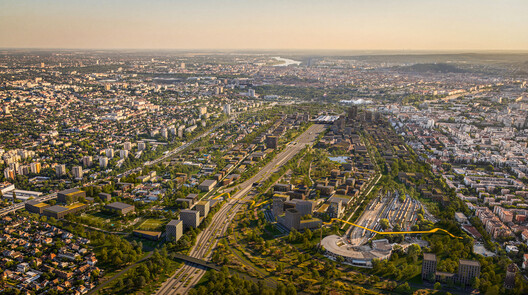
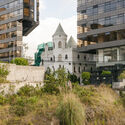
This week, city planning and urban design foreground the growing interplay between digital infrastructures and ecological regeneration as complementary approaches to urban transformation. In Japan, the project PLATEAU digitalization initiative, led by the Ministry of Land, Infrastructure, Transport, and Tourism, is developing an open-access platform of digital twins, offering 3D models for more than 250 cities to support planning, simulation, and collaboration across sectors. Meanwhile, landscape-driven strategies are reshaping public space in Paris, where Parc de la Villette recently introduced a new urban farm alongside rewilded environments that enhance biodiversity and expand the park's ecological and social functions. In Budapest, Coldefy was selected to lead the reconversion of a brownfield site into a rewilded district, embedding natural systems within new urban development. These initiatives suggest an evolving urban paradigm in which data-driven models and regenerative landscapes operate in tandem to inform more adaptive and resilient cities.
Contemporary Reflections on Modern, Vernacular, and Material Heritage in Architecture
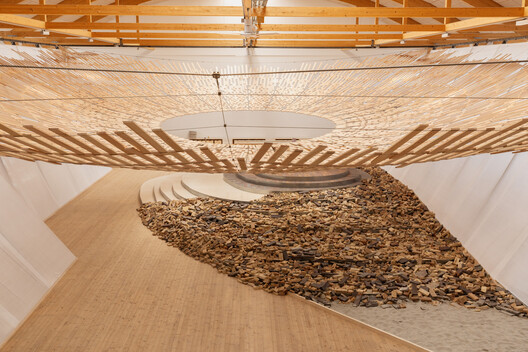
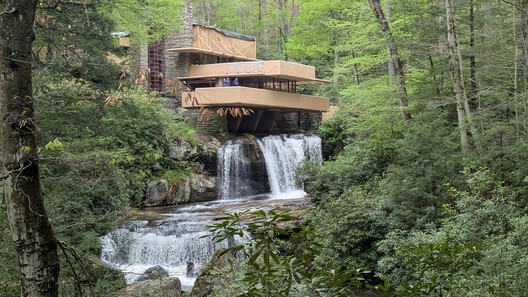
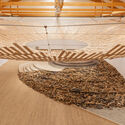
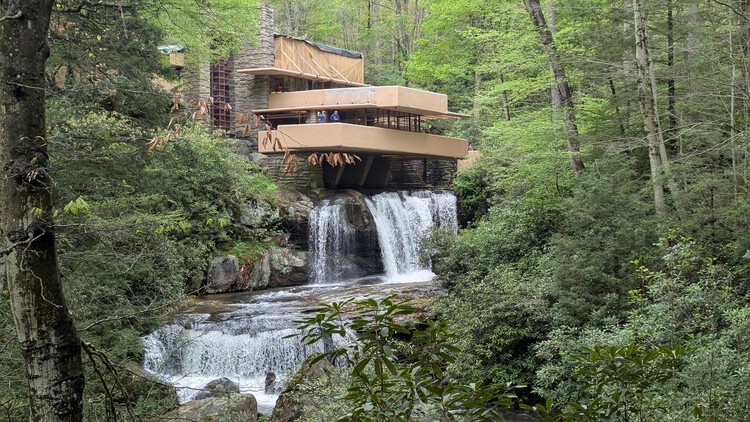
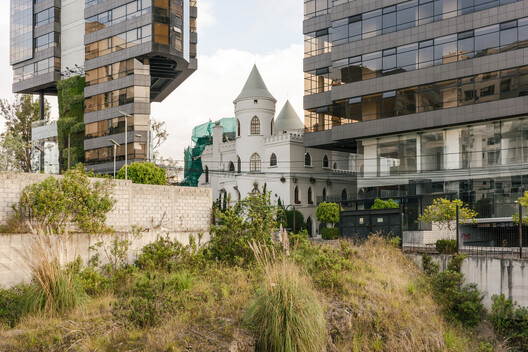
This week's reflections on modern, vernacular, and material heritage span restoration, documentation, and installation, highlighting diverse approaches to cultural continuity in architecture. The reopening of Fallingwater, designed by Frank Lloyd Wright, marks its 90th anniversary following a careful restoration, reaffirming its status as a canonical work of modern architecture while emphasizing ongoing efforts to preserve its material integrity and relationship with the landscape. In parallel, photographers Francesco Russo and Luca Piffaretti document over 40 contemporary works across Ecuador, capturing how current practices engage with local climates, materials, and vernacular traditions across diverse regions, from the Andes to the Amazon. Meanwhile, Kengo Kuma & Associates present "Earth | Tree" at Copenhagen Contemporary, a site-specific installation that explores the tactile and symbolic qualities of natural materials, reinforcing an architectural language rooted in sensory experience and ecological awareness.
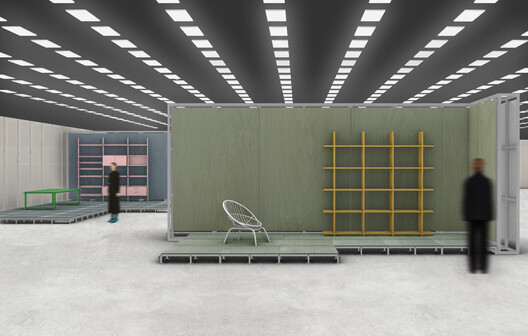
This week, also look ahead to the upcoming Salone del Mobile.Milano 2026, where architecture and design converge through an expanded programme of talks, installations, and city-wide interventions. As outlined in ArchDaily's curated selection, the 64th edition foregrounds new operational and curatorial frameworks, including the launch of Salone Contract, developed by Rem Koolhaas and David Gianotten, alongside a series of discussions that examine the evolving relationship between design, industry, and the built environment.
On the Radar
Assemble Designs Landscape-Driven Cancer Support Centre Using Local Ragstone and Woodland Gardens
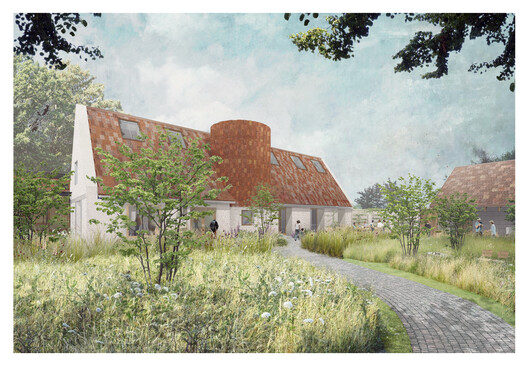
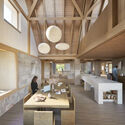
The new Maggie's cancer support centre in Kent, England, designed by Assemble, has received planning permission and will be built within the grounds of Maidstone Hospital, forming part of the Maidstone and Tunbridge Wells NHS Trust. Conceived as a deeply landscape-driven project, the 450 sqm building is embedded in the geology, heritage, and horticultural culture of Kent, using locally quarried Kentish Ragstone and Sweet Chestnut to establish a strong material and spatial continuity with its surroundings. The architecture is structured around thick, inhabitable walls and a sweeping timber ceiling that mediate between intimate and collective spaces, while maintaining constant visual and physical connections to the garden. Designed in collaboration with J&L Gibbons, the landscape draws on historic earthworks and the site's existing woodland to create a sequence of biodiverse gardens linked by meandering paths, offering both social and secluded environments. The building and its setting prioritize sensory experience, familiarity, and well-being, supporting the institutional mission to provide free practical and psychological care for people affected by cancer. The building is expected to be completed in 2027, and operations are to begin in 2028.
Stefano Boeri Architetti's Gate of Hope in Brescia Reimagines the Prison Threshold as a Civic Interface for Urban Exchange
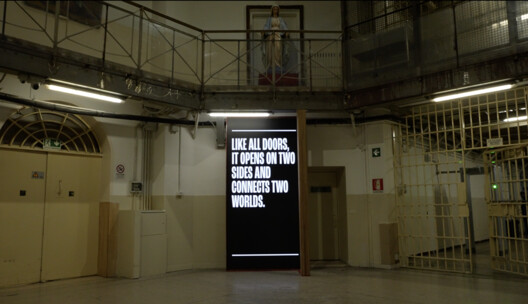
The Gate of Hope – Gate of Work by Stefano Boeri Architetti, installed at the Nerio Fischione Penitentiary and in Piazzale Arnaldo, introduces a civic and symbolic device that connects the prison with the city of Brescia through a two-way exchange of information and opportunities. Developed through dialogue with inmates and staff as part of the Porte della Speranza initiative, the project comprises two identical gates functioning as a single architectural system: within the prison panopticon, the gate operates as a permanent interface for employment, education, and vocational training, displaying opportunities offered by local companies and social cooperatives, while its urban counterpart shares these opportunities alongside information about detention conditions, overcrowding, and the daily work within the institution. The paired structures symbolize a continuous flow between inside and outside, positioning the gate as a working threshold that supports awareness, social inclusion, and reintegration.
STUDIOSPAZIO and Openfabric Transform a Peripheral Artery into a Rewilded Linear Park
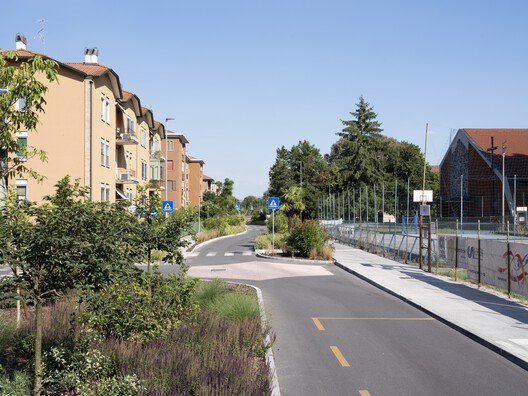
Amadei Garden Street, designed by STUDIOSPAZIO in collaboration with Openfabric, reconfigures an 850-meter vehicular artery in Mantua into a continuous linear park that prioritizes rewilding and community use over traffic flow. By formalizing a 30 km/h speed limit as a spatial design device, the project replaces the former straight roadway with a sinuous sequence of chicanes, selective depaving, and integrated cycle-pedestrian paths, naturally slowing vehicles while generating a series of localized public spaces. Central to the intervention is a redefinition of the street through a lush, composite landscape derived from the biodiversity of adjacent private gardens, reusing their plant species to blur the boundary between domestic and collective realms and foster a sense of familiarity and ownership among residents. This strategy transforms the street into a shared social infrastructure, enhancing daily life for the surrounding community while contributing to a broader shift toward pedestrian-friendly, traffic-calmed public spaces in contemporary cities.
This article is part of our new This Week in Architecture series, bringing together featured articles this week and emerging stories shaping the conversation right now. Explore more architecture news, projects, and insights on ArchDaily.


