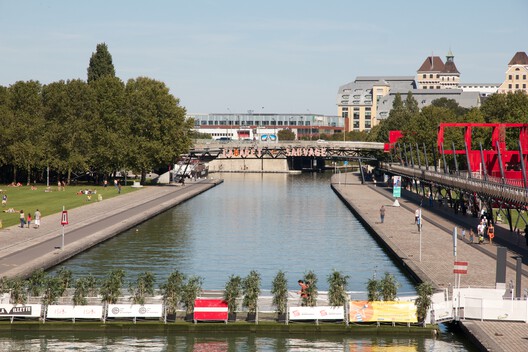
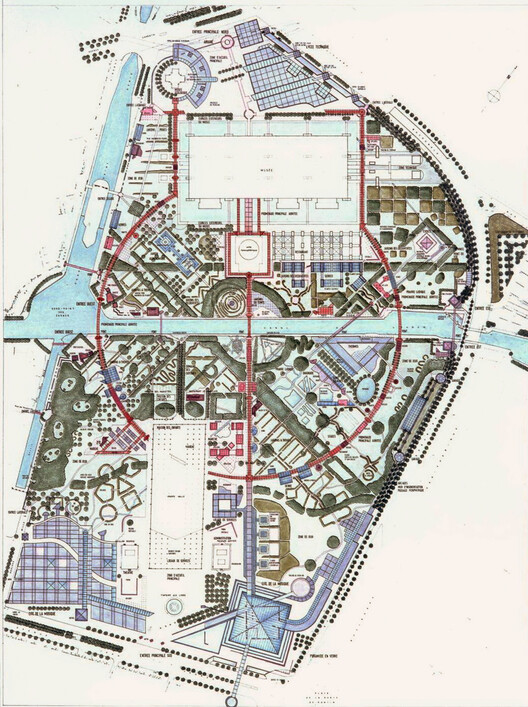
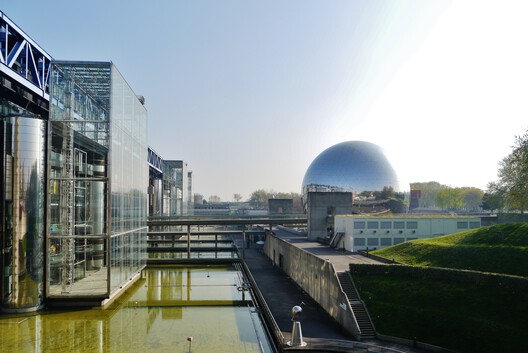
Paris's 19th arrondissement Parc de la Villette is undergoing a major transformation, combining a newly opened urban farm with restored biodiversity as part of a strategy to adapt the 55.5-hectare park to climate change. Masterplanned by Bernard Tschumi in 1982 and opened to the public in 1987, the park stands as a landmark of European modernism in public space design, breaking from the traditional concept of the metropolitan park. With a 15,000-square-meter extension, this major green lung in northeast Paris is reimagining its lawns as a living laboratory for environmental education, where animals, plants, and humans coexist. The extensive renovation follows the addition of Tschumi's HyperTent in 2022, a hyperbolic paraboloid structure functioning as a new ticket booth on the podium of Folie L4, and marks the park's most significant transformation since its inauguration.
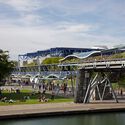
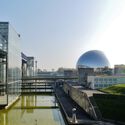
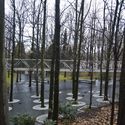
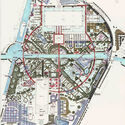
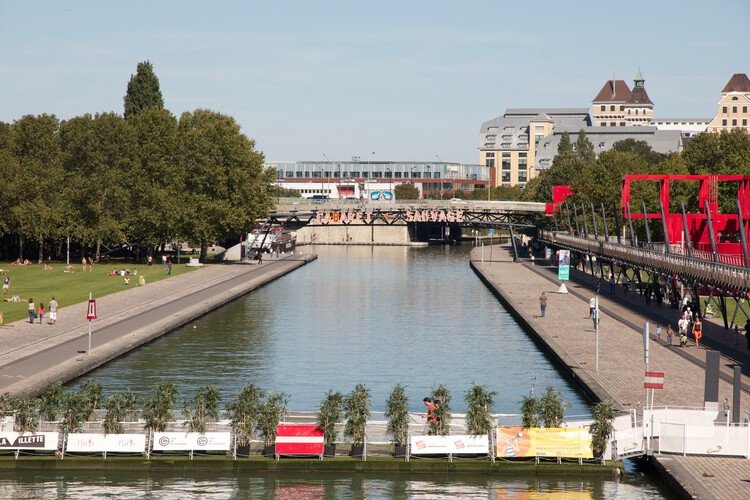
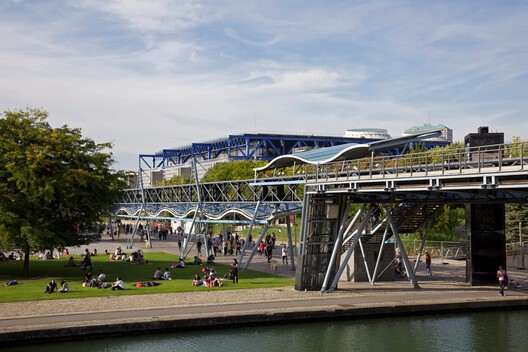
During the early 1980s, Paris underwent a period of urban redevelopment aimed at city beautification and strengthening its appeal as a tourist destination. In 1982, the Parc de la Villette competition was launched to redevelop abandoned land formerly occupied by a meat market and slaughterhouses dating back to 1860. Titled "Urban Park for the 21st Century," the competition sought to answer what a contemporary Parisian park could be, challenging conventional notions of public green space. Tschumi's proposal offered a radical response: a layered design conceived as an extension of the city rather than a contrast to it. Organized through three systems, points, lines, and surfaces, the park deliberately evokes a sense of urban disorientation. Signage is intentionally minimal, and paths curve irregularly, leading visitors without a fixed destination. The project embodies a deconstructivist interpretation of late modernism, using vast public space to reinterpret the site's industrial legacy.
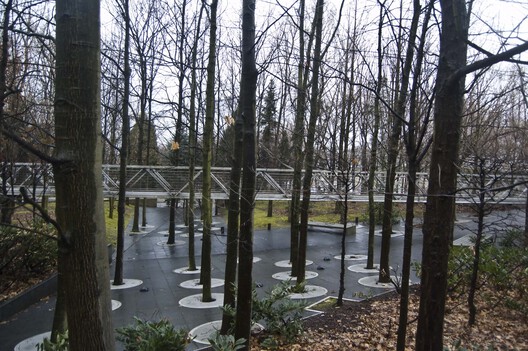
Forty years after its inauguration by François Mitterrand, the largest renovation in the park's history responds to a new urban agenda: addressing and mitigating the impacts of climate change. Former Paris mayor Anne Hidalgo championed urban rewilding as part of a broader strategy for inclusion and sustainability. Today, the Parc de la Villette continues this trajectory by introducing a new 15,000-square-meter area dedicated to raising awareness of nature and biodiversity. Named 'Ferme de la Villette,' the space opened to the public on March 28, 2026, in the southestern section of the park, behind the Little Villette children's area. It offers a variety of landscapes, including meadows, gardens, groves, and an educational farm, designed to preserve and promote biodiversity.
Related Article
Paris 20th-Century Architecture City Guide: From Le Corbusier’s Modern Villas to Brutalist EstatesThe transformation includes four components: La Halle de Rouvray, an industrial hall renovated as the farm's main building; Les Grandes Pâturages, home to the farm's animals and a space for learning about their care; Les Jardins Passagers, biodiverse gardens with cultural, educational, and social functions; and Le Champ des Oiseaux, a bird sanctuary centered around a wheat field, a flower-filled meadow, and a wooded area. La Halle de Rouvray was originally built in 1914 as a metalworking and carpentry workshop for the Canal Authority and remained in use until 1994. Now integrated into the park, it has been renovated by Carrière Didier Gazeau into a 1,000-square-meter urban farm. The program includes 550 square meters within the main hall, housing workshops, flexible spaces, and animal enclosures, and 450 square meters of outdoor courtyard, featuring a chicken coop, relaxation areas, and a bread oven.
Surrounding the hall, Les Grandes Pâturages allow visitors to encounter donkeys, chickens, goats, and bees. The building and lawn complex is designed to host activities focused on life cycles and animal welfare. Nearby, the Jardins Passagers, originally established 25 years ago under the philosophy of gardener and landscape architect Gilles Clément, have been expanded to diversify their educational role. New features include an open-ground vegetable garden inspired by traditional market gardening techniques, a greenhouse for seed propagation, a composting education area, a sensory trail designed for visitors with disabilities, and a garden dedicated to dye plants used in workshops. This new project adds to the Ruches Villette urban beekeeping initiative, established in 2020 to support bee conservation and produce local honey.
Le Champ des Oiseaux, located on a formerly vacant site west of the park, is being developed as a space for nature observation, education, and the preservation of sensitive ecosystems, some of which will remain inaccessible to protect biodiversity. The project also safeguards the Rouvray dock, now an evolving habitat where birds and wild vegetation thrive along the canal. Conceived as a quiet environment for both humans and non-humans, the area includes a 300-square-meter heirloom wheat field for workshops on seeds, soil, and bread-making; a wildflower meadow supporting pollinators; a forest edge and urban woodland providing shade and habitat; and a landscaped swale that collects rainwater to form a wetland.
Elsewhere in Paris, the upcoming Art Paris 2026 will take place from April 9–12 at the recently renovated Grand Palais, bringing together nearly 165 galleries around the themes of language and reparation. Meanwhile, RSHP has won a competition to redevelop the Rives-Défense site in La Défense, transforming an eight-hectare area into a low-carbon mixed-use neighborhood. The observation deck at the top of Tour Montparnasse closed on March 31, 2026, marking the start of a multi-year renovation. In Saint-Ouen-sur-Seine, Renzo Piano Building Workshop is designing a new hospital conceived as a "hospital-landscape," featuring a 1.3-hectare rooftop garden and an urban forest with over 1,000 trees.

