
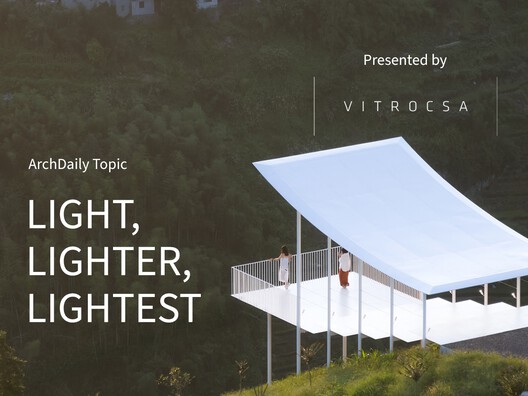
Architecture has long been drawn upward. In Air and Dreams, Gaston Bachelard writes about an imagination shaped by movement; by the urge to rise, to drift, to escape the pull of the ground. Air, for him, invites imagination to distort, to invent, to go beyond what is given rather than simply reproduce it. In that sense, lightness is not only a physical condition, but a feeling: a desire to transcend the weight of the earth and move toward something less tangible. This impulse can be traced across architecture's enduring attempts to lift itself, from pilotis and long spans to suspended systems and tensile membranes. To build lightly, then, is not only a technical ambition, but also a cultural one – a way of reaching toward the sky.
Today, this pursuit of lightness takes on renewed urgency. As environmental concerns, climate risks, and technological advancements reshape the built environment, building lightly is no longer only an aesthetic or structural ambition; it is increasingly framed as an ecological and ethical imperative.
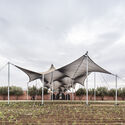
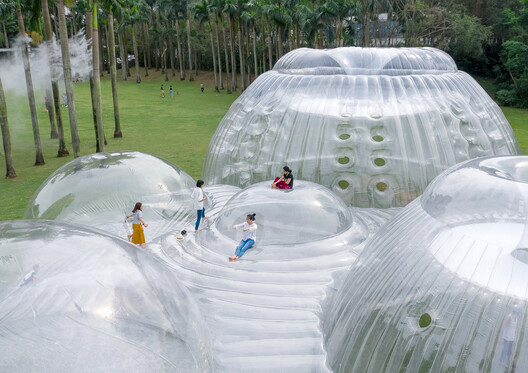
This month, ArchDaily explores Light, Lighter, Lightest: Redefining How Architecture Touches the Earth, examining how contemporary architecture approaches the ground not as a fixed base, but as a negotiation. From pilotis and long-span structures to suspended systems, floating platforms, textile surfaces, and permeable envelopes, the topic investigates how design strategies attempt to reduce impact while expanding spatial and environmental performance. Yet this shift also raises a central question: does building over the ground truly minimize its impact on the environment, or does it merely shift the weight and consequences to another location?
Across the coverage, different interpretations of lightness come into focus. Structural innovations enable buildings to achieve greater spans with less mass. In parallel, projects in flood-prone regions or below sea level demonstrate how elevating or detaching architecture from the ground can respond to climatic pressures. At the same time, the notion of lightness extends beyond engineering: it is also perceptual and cultural. Civic voids, trompe l'oeil strategies, and spatial illusions challenge how weight is experienced, while utopian visions of floating or suspended environments reveal a persistent desire to rise above constraints.
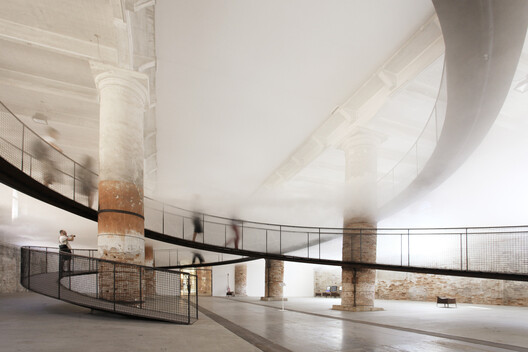
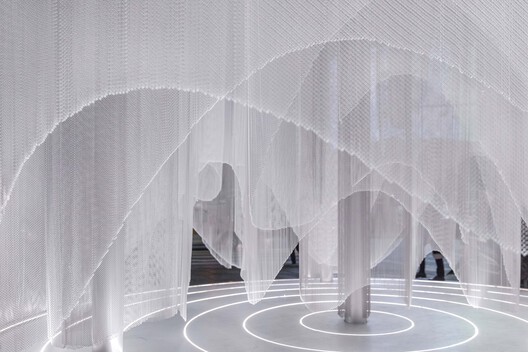
Yet lightness is never neutral. The aspiration to minimize contact often conceals what remains below — infrastructures, foundations, or environmental trade-offs that sustain the appearance of lightness. Similarly, the "light" digital and technological systems that support contemporary architecture depend on heavy material and energy networks. In this sense, lightness becomes not only a technical achievement but also a critical lens through which to examine what architecture reveals, displaces, or hides.
As these perspectives unfold, broader questions emerge: Is architectural lightness a structural necessity, an environmental strategy, or a conceptual desire? What remains beneath elevated structures, and what does lightness obscure or expose? And can building lighter truly reduce impact, or does it simply shift it across scales and systems?
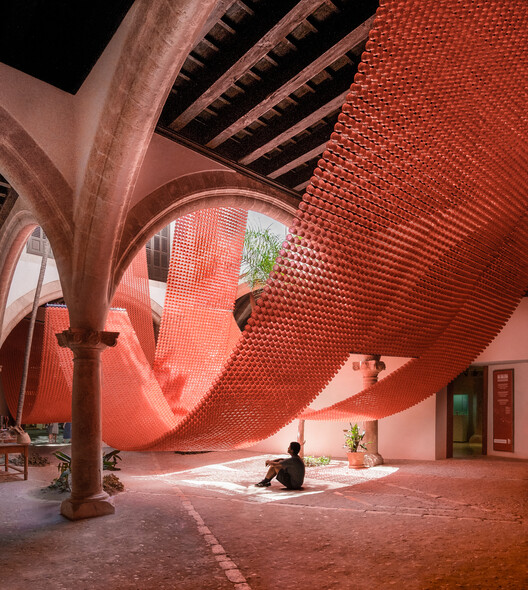
This article is part of the ArchDaily Topic: Light, Lighter, Lightest: Redefining How Architecture Touches the Earth, proudly presented by Vitrocsa, the original minimalist windows since 1992.
Vitrocsa designed the original minimalist window systems, a unique range of solutions, dedicated to the frameless window boasting the narrowest sightline barriers in the world. Manufactured in line with the renowned Swiss Made tradition for 30 years, Vitrocsa's systems "are the product of unrivaled expertise and a constant quest for innovation, enabling us to meet the most ambitious architectural visions."
Every month we explore a topic in-depth through articles, interviews, news, and architecture projects. We invite you to learn more about our ArchDaily Topics. And, as always, at ArchDaily we welcome the contributions of our readers; if you want to submit an article or project, contact us.


