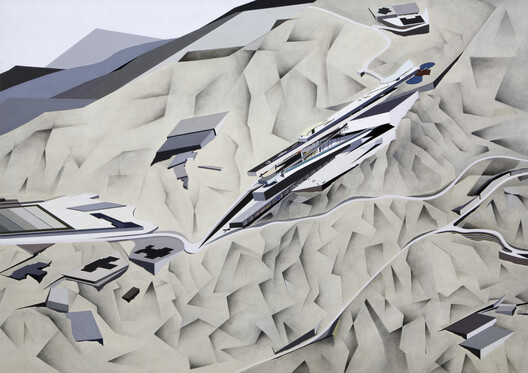
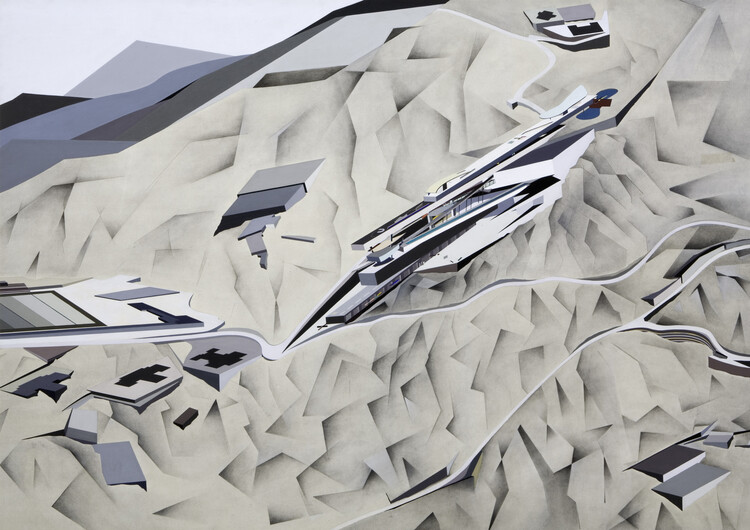
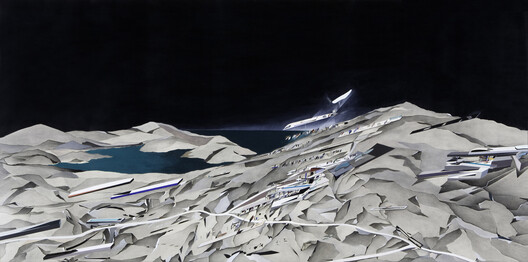
Between June 23 and August 30, 1988, The Museum of Modern Art (MoMA) in New York held an exhibition titled Deconstructivist Architecture, as part of a program "conceived to examine current developments in architecture." Curated by Philip Johnson and Mark Wigley, it focused on the contemporary work of seven international architects: Coop Himmelblau, Peter Eisenman, Frank Gehry, Rem Koolhaas, Daniel Libeskind, Bernard Tschumi, and a young Zaha M. Hadid. At 37 years old, her work was presented to the world as an example of "the emergence of a new sensibility in architecture." The material on display was not a model or a blueprint, but a painting, The Peak, submitted for an architectural competition in Hong Kong in 1983. From this starting point, her contribution to architecture deepened along the same lines recognized at the time of her inclusion in the exhibition: the development of a distinctive, mathematical, and, in her own words, "fluid" architectural language, and her emergence as a leading female figure in a field historically dominated by men.

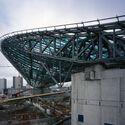
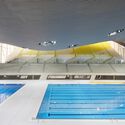

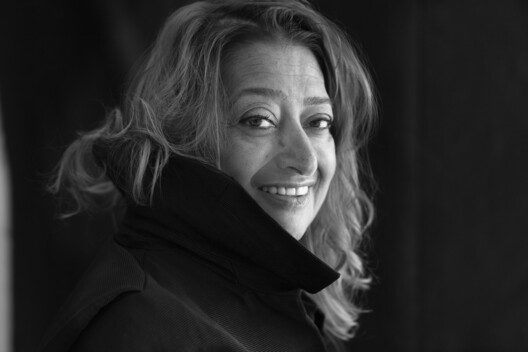
As recognized in the 1988 MoMA exhibition and in a previous retrospective at the Architectural Association (AA) in London in 1983, Zaha Hadid's approach to architecture was not only deeply committed but also theoretically grounded and driven by genuine insight. From her first built project, the Vitra Fire Station in Germany (1993), to her last, the exhibition design for Kurt Schwitters: Merz in Switzerland (2016), she developed a signature style known for sweeping curves and fluid forms. Her mathematical background is reflected in the process of translating her designs into built form, requiring advances in software development, engineering solutions, and composite materials, a design approach now encompassed within the concept of parametric design. During her Pritzker Prize acceptance speech in 2004, she expressed her interest in "the development of an organic language of architecture, based on these new tools, which allow us to integrate highly complex forms into a fluid and seamless whole," a guiding idea behind her commitment to continuous experimentation.
As a rising figure in the architectural field, she followed a consistent path toward originality. Born in Baghdad, Iraq, in 1950, she studied mathematics in Beirut, Lebanon, before settling in London in 1972. After a brief period at the Office for Metropolitan Architecture (OMA), she founded her own practice in 1979. Nicknamed "Queen of the Curve" by architecture critics, she was criticized and praised in equal measure for always building the impossible and pushing the boundaries of amazement. A barrier-breaking woman, she became the first woman to receive the Pritzker Architecture Prize in her own right in 2004, and the first woman to be awarded the RIBA Royal Gold Medal individually in 2016. She received the Stirling Prize in both 2010 and 2011, was appointed Commander of the Order of the British Empire in 2002, and was made a Dame in 2012 for her services to architecture. At the time of her death in 2016, at the age of 65, she had built a practice of over 400 employees, with around 950 projects across more than 44 countries.
On the 10th anniversary of her death on March 31, 2016, the Zaha Hadid Foundation (ZHF), the Architectural Association, and the Serpentine Galleries announced a two-day public symposium to be held in London this October, as part of a broader program of commemorative events. The Municipality of Milan has officially named a pedestrian thoroughfare in the CityLife district "Via Zaha Hadid." Zaha Hadid Architects continues to develop a contemporary evolution of her signature architecture under the direction of five board directors led by Patrik Schumacher, who worked with her for nearly 30 years until her passing in 2016, and is now renegotiating the terms to retain the firm's name.
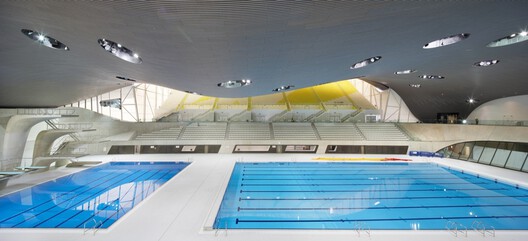
The Zaha Hadid Foundation, an independent charitable organization based in London since 2013, is dedicated to maintaining, disseminating, and activating the architect's archive. It also organizes public programs, supports education and emerging voices, and partners with a range of organizations committed to experimentation across architecture and related disciplines. The foundation recently announced the establishment of a Scholars Program in collaboration with the American University of Beirut (AUB), which will fully fund two undergraduate students each year for the duration of their five-year architecture degree at AUB's Maroun Semaan Faculty of Engineering and Architecture.
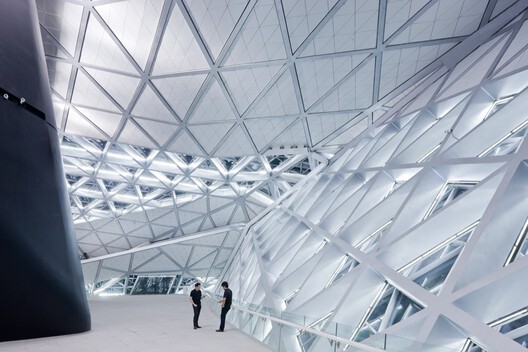
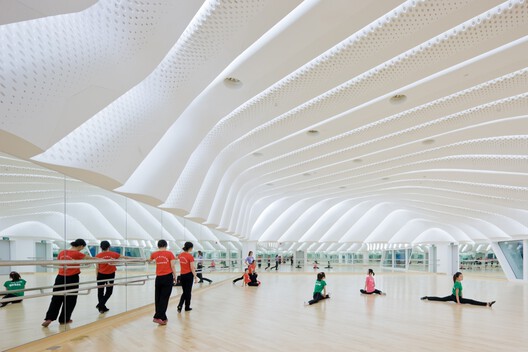
The ultimate ambition was to create fluid space, in every sense, between inside and out, and there is no boundary for people to move from one space to another. ― Zaha Hadid, 2012
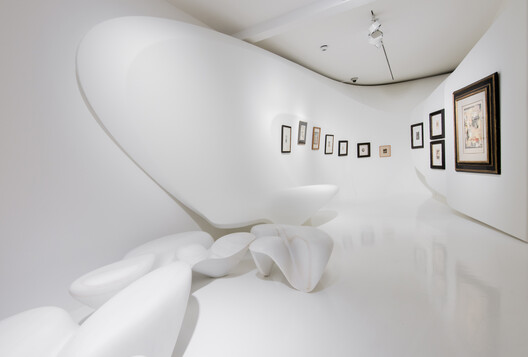
Recent projects by Zaha Hadid Architects include the redevelopment of the waterfront along the Zhedong Canal in Hangzhou's Xiaoshan District, China, envisioning a sequence of landscaped parklands, terraces, and gardens along the canal basin, transforming former industrial areas into a green corridor extending toward the city center. The firm has also recently broken ground on the new Bishoftu International Airport (BIA), designed for Ethiopian Airlines Group and planned to become Africa's largest airport. Construction is also advancing on OPPO's new headquarters campus in Shenzhen's Greater Bay Area, conceived as a consolidated workplace for the China-based technology company. Significant progress has also been made on Taipei's Danjiang Bridge, a project initially awarded in 2015, with construction beginning in 2019 and expected to be completed this year.


