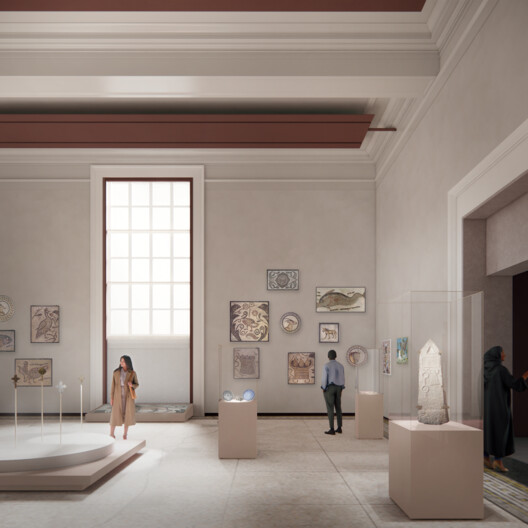
New York's Brooklyn Museum has announced the extension of its neoclassical building, a New York City–designated landmark, to include new galleries dedicated to its historic African art collection. The project to renovate and create permanent galleries was designed by the Brooklyn-based architectural firm Peterson Rich Office (PRO), with prior experience in contemporary exhibition spaces, in consultation with Beyer Blinder Belle Architects & Planners on the museum's historic preservation. The project transforms previously underutilized spaces that served as on-site storage, marking a new milestone in a series of renovations of an institution with over 200 years of history. For the first time, the museum's Egyptian art galleries will connect to the new African galleries, uniting North Africa with the rest of the continent to offer visitors a cohesive vision of Africa's rich artistic legacy.
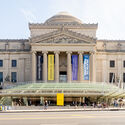
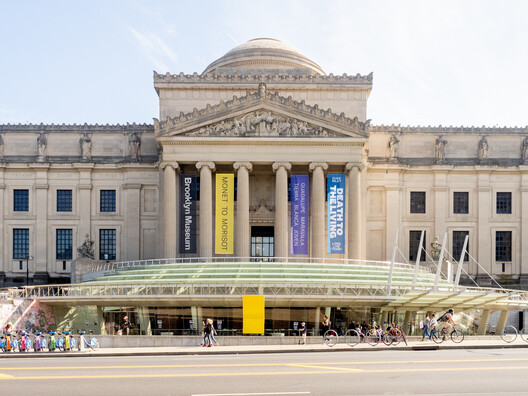
The Brooklyn Museum was designed in 1893 by the architects McKim, Mead & White and has undergone several renovation projects over the past twenty-five years. These maintenance and renovation initiatives include a decade-long transformation of its second-floor galleries dedicated to the Arts of Asia and the Islamic world; the renovation of the first-floor Great Hall in 2016; the establishment of the Elizabeth A. Sackler Feminist Center in 2007; the opening of the Visible Storage and Study Center in the Luce Center for American Art in 2001; and the major reconstruction of the Rubin Pavilion and Lobby in 2004. This new project is funded by the City of New York and federal grants, with additional support from the Ford Foundation, the Sills Family Foundation, and individual donors. Renovations are expected to begin in summer 2026, and the galleries are scheduled to open in the fall of 2027.
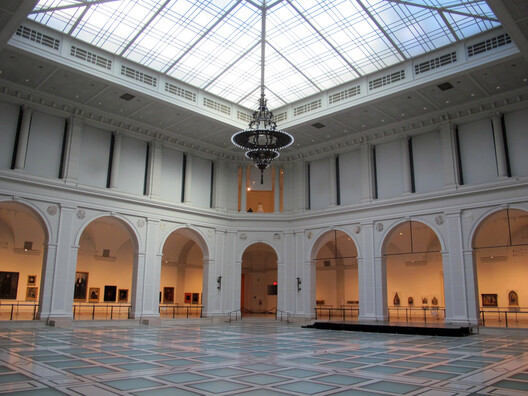
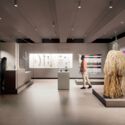
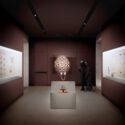
Peterson Rich Office's 6,400-square-foot Arts of Africa galleries will be located on the museum's third floor, adjoining the Beaux-Arts Court. The project follows the institution's vision to revitalize gallery spaces, enhance visitor engagement, and bring more art into view. The museum intends to "present the Arts of Africa collection as living and active, representing a wide range of forms, materials, time periods, and geographic regions." The collection integrates classical sculpture with contemporary art from across the continent and the diaspora to reflect the complexity and diversity of African arts. This framework is mirrored in the architectural expression of the three galleries to be renovated.
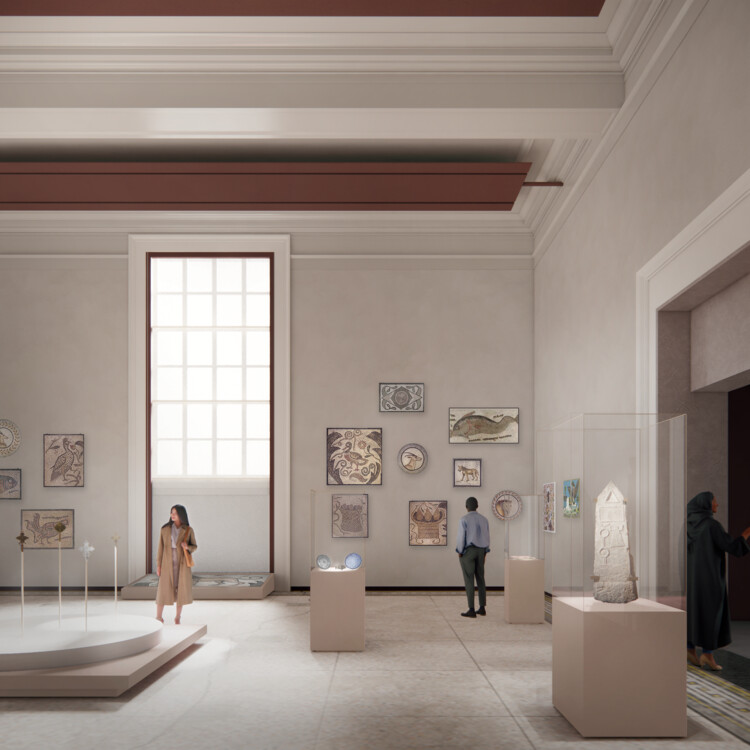
Built at different moments in the museum's architectural history, the galleries vary in ceiling height, proportion, structural systems, and historical details. The first gallery, located in the historic East Wing, features twenty-five-foot ceilings and twenty-three-foot windows, allowing filtered daylight to illuminate the space, complemented by traditional moldings that highlight the building's Beaux-Arts heritage. The adjacent galleries, built in the 1920s, are more modest in scale. PRO's design strategy aims to highlight these individual features while uniting them into a cohesive gallery experience.
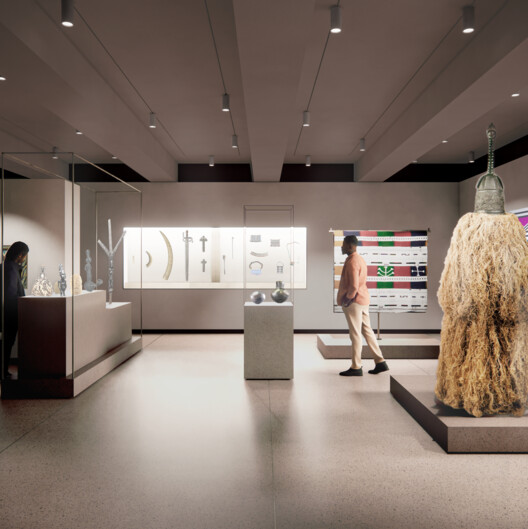
One of the main components of the project is the reopening of an original enfilade that once connected the spaces around the museum's Beaux-Arts Court. This involves removing doors and clearing infilled openings to restore visual sightlines and historical circulation paths. The intervention is also programmatically significant, directly connecting the Egyptian and Arts of Africa galleries. Through this reunification, visitors will experience North Africa and the broader continent as a cohesive whole, reflecting a contemporary scholarly approach that diverges from traditional cultural geography and art-historical narratives.
The renovation also introduces contemporary infrastructure throughout the galleries, including updated lighting systems and climate control. The project establishes a visible dialogue between old and new elements: all new metal components will be finished in a rich accent color, creating contrast within the space. Historical plaster ceilings and moldings will coexist with contemporary materials; traditional proportions will frame modern display strategies; and natural daylight will be supplemented with calibrated artificial illumination.
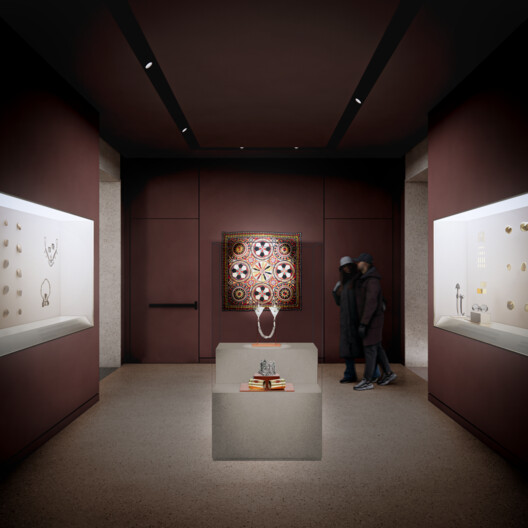
The new premises will feature an inaugural installation of over 300 works, spanning from antiquity to the present. The museum has appointed Ernestine White-Mifetu as Sills Foundation Curator of African Art and Annissa Malvoisin as Associate Curator of African Art to help shape new approaches to how African art is displayed and interpreted. The curatorial team has conducted collection reviews, research, and conservation treatments for works that have not been displayed since entering the collection. The curatorial framework for the new space emphasizes the African continent's global impact through the movement of people, ideas, and materials across major natural and cultural corridors, such as the Atlantic Ocean, the Mediterranean Sea, the Niger River, the Nile River, the Loango Coast, and the Sahara Desert. This framing is intended to illustrate the deep interconnections among African cultures and the wider world.
Other recent news related to African art and architecture includes the opening of a new two-part architectural installation by TAELON7 at the recently opened Limbo Museum in Accra, Ghana, operating within the unfinished concrete shell of a Brutalist building. The first edition of the Pan-African Architecture Biennale is set to open on September 7, 2026, with a program curated by Somali-Italian architect Omar Degan. The biennale aims to shift architectural discourse by expanding contributions from studios representing all 54 African nations. Kéré Architecture has recently unveiled designs for a new healthcare center in the Bubanza region of Burundi, while the international architecture and planning firm Benoy has developed a City Walk masterplan for Abuja, Nigeria, introducing a mixed-use district and a proposal for what is expected to be Africa's tallest tower.

