

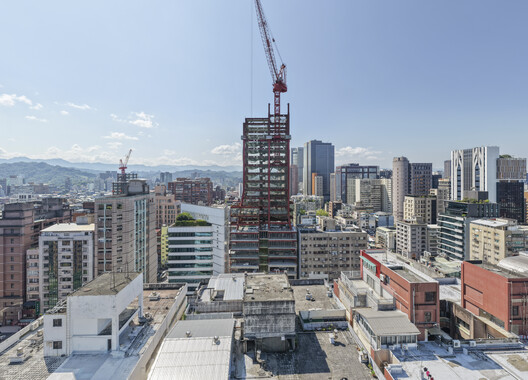
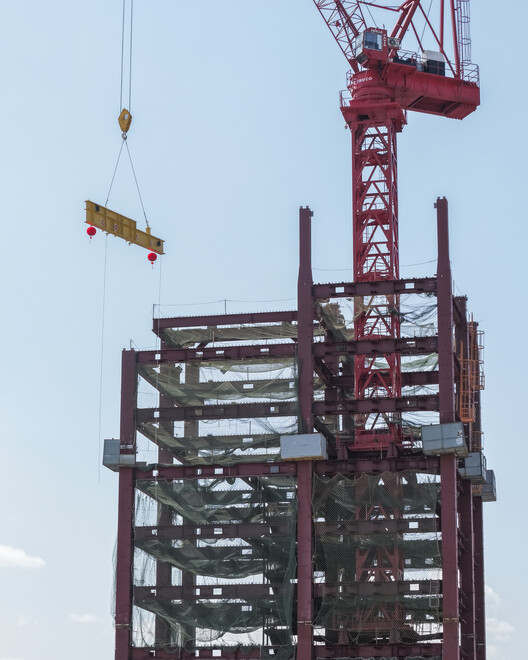
OMA's Metropolitan Village, also known as Taipei Xinyi–Wenchang Residence, is a new high-rise residential tower located in Taipei's Xinyi Central Business District. The project, led by David Gianotten and Chiaju Lin, with HCCH & Associates Architects Planners & Engineers as local collaborator, provides 11,961 m² of residential floor area on a 736 m² site. The 95 m, 23-storey building follows the concept of a "vertical village," reflecting the increasingly fluid boundary between living and working identified by the architects in post-pandemic Taipei. Commissioned by Continental Development Corporation, the project broke ground in 2024 and is scheduled for completion in 2027. Recent images show construction progress, with the highest structural element now being installed.
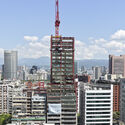
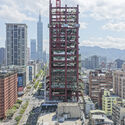
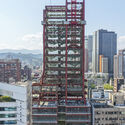
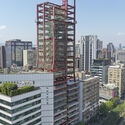
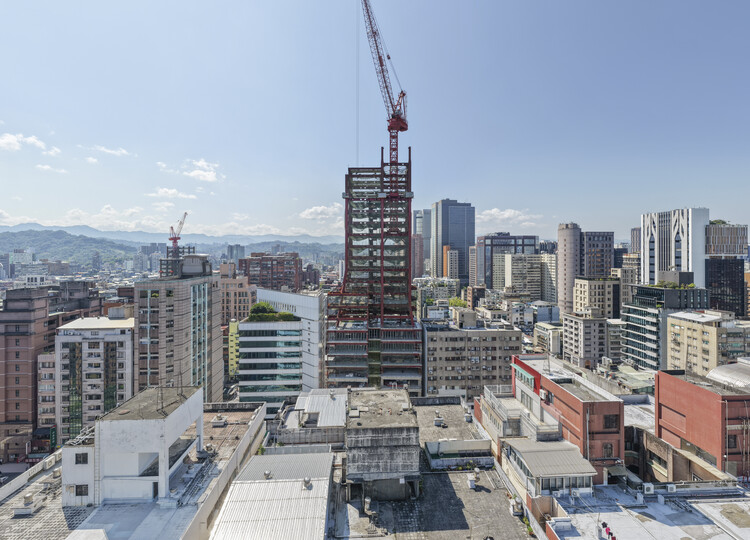
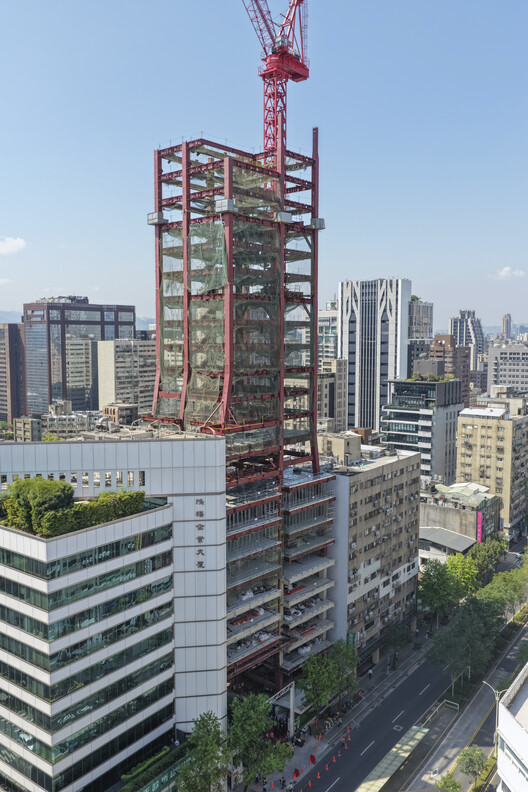
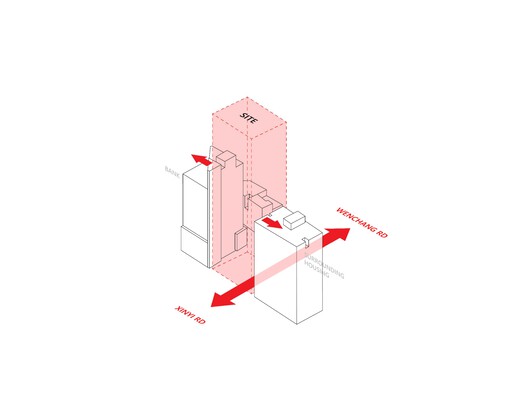
The tower is composed of interlocking volumes arranged around a central services core, each with a distinctive façade defined by aluminum panels and a curtain wall system. The design responds to surrounding urban conditions: the front faces a 40 m-wide main road in the Xinyi commercial area, while the rear addresses a 6 m-wide street in the Wenchang district. This aggregation of volumes reflects the contrasting urban scales of the site, the large-scale Xinyi district at the front and the finer-grained Wenchang neighborhood behind. The lower volumes are lifted off the ground to create a new pedestrian path linking the two districts.
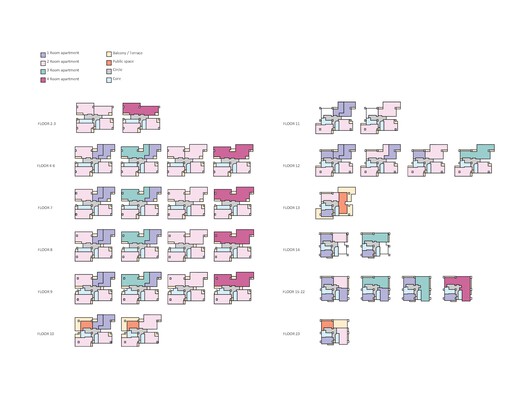
The main façade combines a curtain wall system with coated aluminum and patterned glass, commonly used in Taiwanese interiors as partitions. In areas requiring less privacy, the glass is used as balustrades, creating what the architects describe as "a mosaic-like expression of domestic activity." The interlocking composition generates more than 30 residential unit types, ranging from 68 m² studios suitable for remote work to 165 m² apartments with large kitchens. Most units measure approximately 120 m² and can be flexibly adapted for living, working, or leisure.
To complement the residences, the building includes shared facilities distributed across different floors. A business center and meeting rooms on the ground floor support remote work. Upper levels house a library, bar, and restaurants aligned with the rooftops of adjacent buildings. A gym and communal rooftop terraces offer expansive views of Taipei's cityscape, providing shared infrastructure intended to support work–life balance.
Other recently announced tower projects worldwide include SOM's "Iconic Complex" in Kazakhstan, comprising two towers and the "Gateway District" master plan; Heatherwick Studio's transformation of the Daegyo Apartments in Yeouido, Seoul, the firm's first residential project in South Korea; and Foster + Partners' latest design images for Two World Trade Center, the final commercial tower planned for the World Trade Center campus in Lower Manhattan. Earlier this year, Mexican office Rojkind Arquitectos was selected to design a mixed-use component in the redevelopment of the Zyber Hallulli site in Tirana, Albania, while Moscow-based practice Meganom nears completion of its residential skyscraper at 262 Fifth Avenue in New York City.


