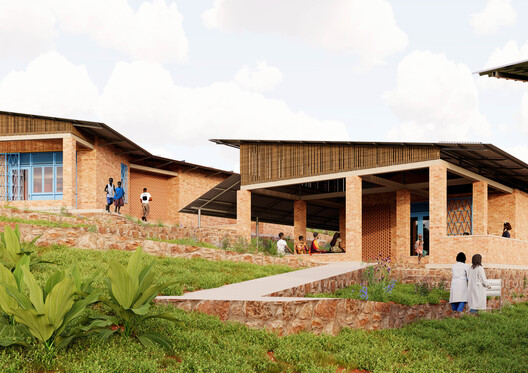
Kéré Architecture has designed a new healthcare center in the Bubanza region of Burundi, about 40 kilometers north of the country's former capital, Bujumbura. Commissioned by the NGO Ineza Clinic, the project aims to improve access to healthcare for the region's rural population, complementing the services of the existing general hospital, with a focus on maternity and specialized surgical care. Francis Kéré's plan distributes the program across ten pavilions connected by a road that zigzags up the hillside toward a visitor center, forming a 3,000 m² complex. The project combines materials sourced from the surrounding region, traditional craftsmanship, and knowledge transfer, minimizing its carbon footprint, supporting the local economy, and strengthening local teams. Construction has already started, with the first phase scheduled for completion this year.
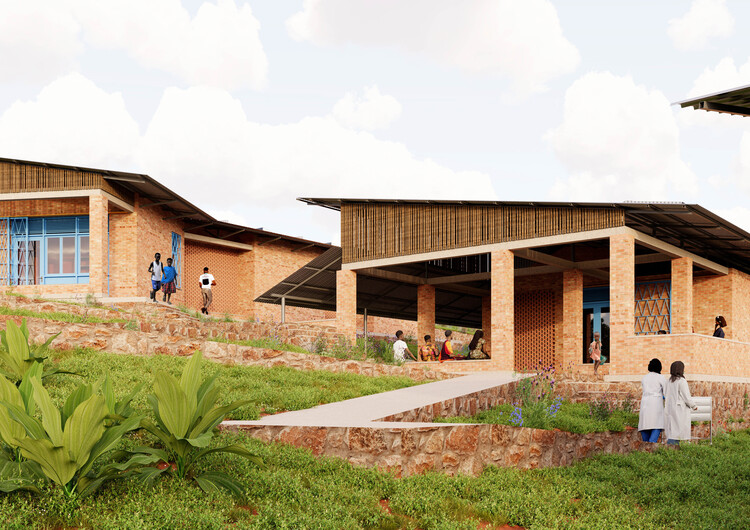
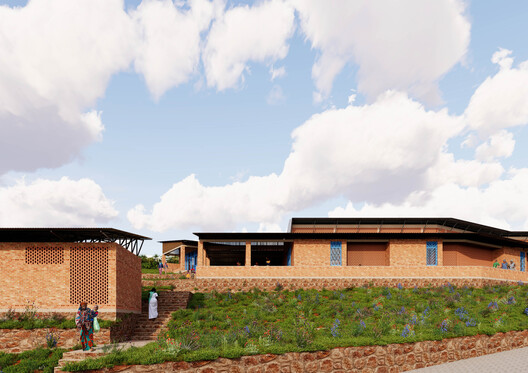
The Republic of Burundi, located in the Great Rift Valley in East Africa, is considered one of the world's poorest countries. With approximately 67% of the population living below the poverty line, according to UNCDF, it has one of the highest population densities on the continent. As in other countries in the region, the capital was officially moved from Bujumbura to Gitega in January 2019. While the transition is ongoing, Bujumbura remains the economic capital, the most populous city, and a major center of commerce. According to Kéré Architecture, high fuel prices pose challenges for the transportation of both materials and people. The design team therefore mapped locally available resources and techniques, such as brick factories, welding workshops, and wood-processing plants, to develop a design that could be built efficiently using local means.
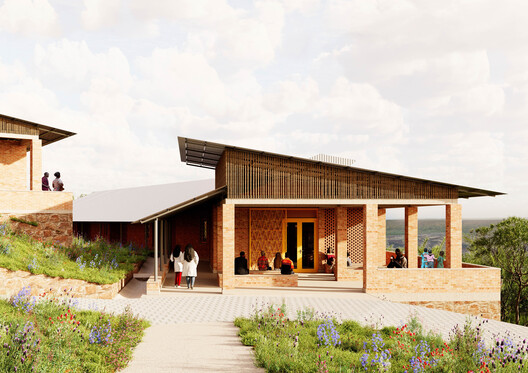
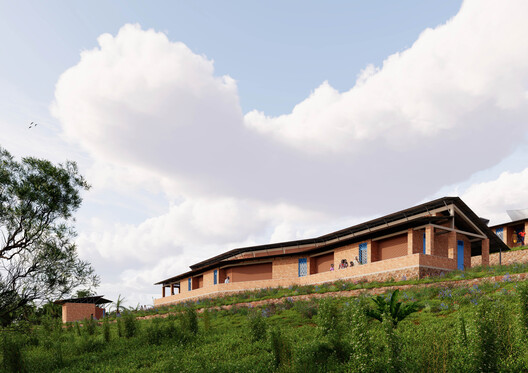
The building site is located on a steep, north-facing hillside and is directly accessible from the national road connecting Bujumbura to the northern regions of the country. Responding to this topography, the design organizes the healthcare program into ten pavilions connected by a primary spine road that ascends the hill from the lower access point to the upper visitor zone. This road acts as an organizing element between the pavilions, separating public functions from clinical and medical spaces. The massing responds to the site's natural topography: narrow, elongated buildings minimize excavation and backfilling while preserving the original profile of the hill. Buildings are oriented according to prevailing wind patterns to maximize natural cross-ventilation and provide thermal comfort without reliance on mechanical systems.
Related Article
Rooted in Tradition, Nature, and Community: Wellness and Healing Spaces from the North to the South Africa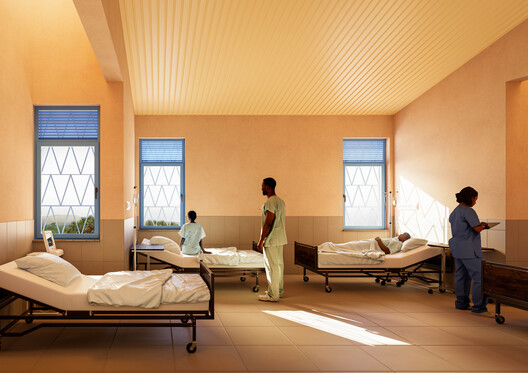
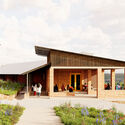
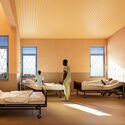
The clinic's buildings are arranged to optimize functional adjacencies and ensure clear circulation for staff, patients, and visitors. The maternal care and outpatient facilities share similar floor plans, with irregular profiles that create shaded waiting areas and integrated bench alcoves along their façades. The buildings feature a ventilated roof system drawing on earlier Kéré Architecture projects, adapted to Burundi's heavy seasonal rainfall. A distinct architectural approach is applied to the surgical ward, where vertical chimneys provide stack ventilation, while each patient bay is equipped with an individual window to ensure access to daylight and views of the surrounding landscape. To reduce transportation costs while maintaining material quality, walls and perforated screens are constructed from locally fabricated clay bricks, while ramps, retaining walls, and landscape elements use stone sourced from nearby quarries. The project is being built by local builders and bricklayers working closely with the Kéré Architecture team, using construction methods developed by the practice over many years.
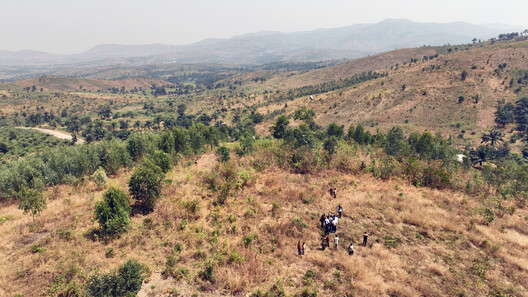
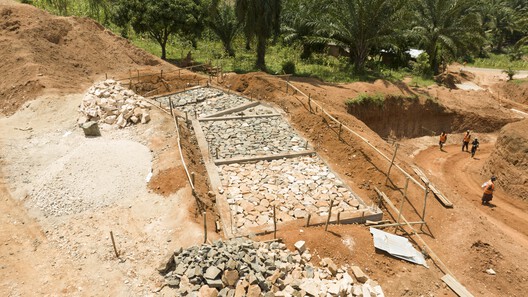
In a place where traveling less than forty kilometers can take up to three hours because of poor road conditions, having a clinic in close proximity is vital for survival. This clinic in Bubanza makes that difference. When you imagine a pregnant woman in the back of an ambulance, trying to reach care over those roads, you begin to understand just how essential nearby access to medical treatment is for the community. ― Architect Francis Kéré
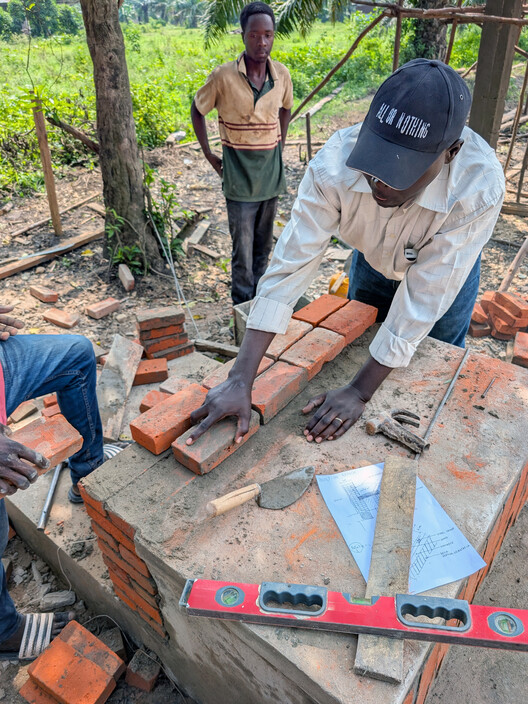
The project will be delivered in two phases: the first half of the buildings is set for completion in summer 2026, when the clinic will begin operations, with the remaining structures to follow in 2027. The Ineza Clinic builds on Kéré Architecture's experience in healthcare design, including projects in Burkina Faso such as the Léo Surgical Clinic and Health Centre and the Centre for Health and Social Welfare. Other recent projects by the studio include Las Vegas' first stand-alone museum featuring a mosaic of locally sourced stone; a proposal for the 40,000-square-meter Biblioteca dos Saberes (House of Wisdom) in Rio de Janeiro's Cidade Nova neighborhood, featuring a perforated façade for sun protection, roof gardens, and a canopied amphitheater; and the firm's first cultural project in Germany, Museum Ehrhardt, dedicated to photography and contemporary art and currently under construction.


