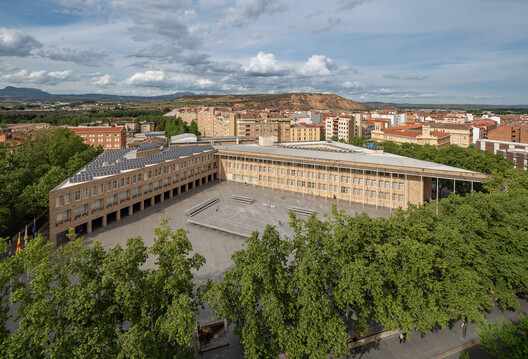
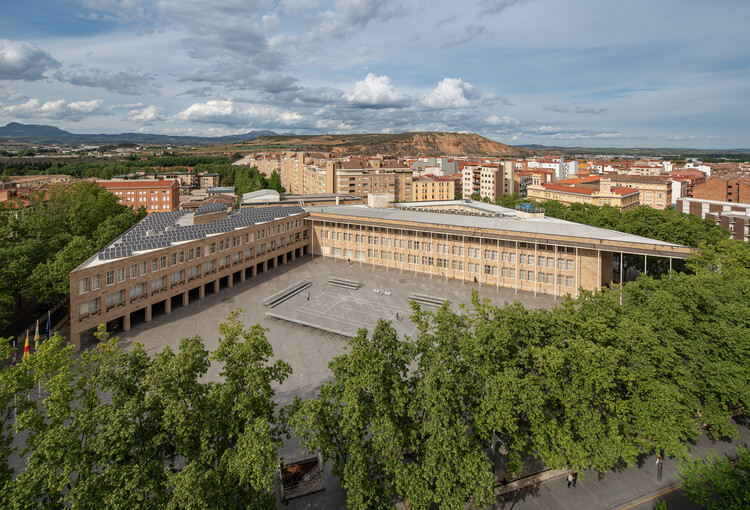
Concéntrico, the Spanish laboratory for urban innovation exploring new ways of inhabiting public space through temporary urban installations, presented the program for its upcoming edition on March 17th, along with its main lines of work for the 2025–2026 season. The festival invites architects, designers, artists, and researchers from different geographies to propose interventions that activate squares, streets, riverbanks, and vacant spaces in the city. This year's edition includes the participation of Smiljan Radić, the recently awarded Pritzker Architecture Prize laureate, who will develop a light, foldable, and temporary structure built from industrial plastic fabrics following the concept of a "poor circus." Another 26 teams, including three practices selected through the festival's international open calls, will intervene in Logroño's public space from June 18 to 23, 2026, with projects ranging from climate-responsive structures to ephemeral public space activations.
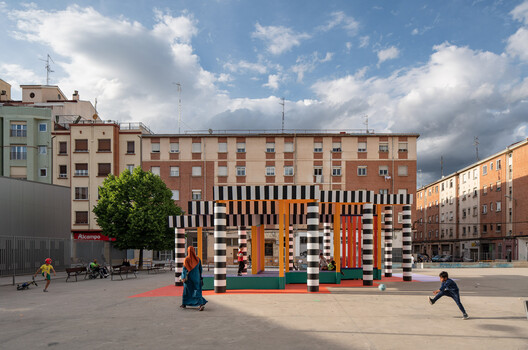
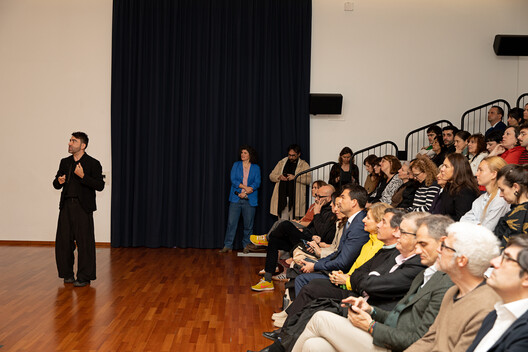
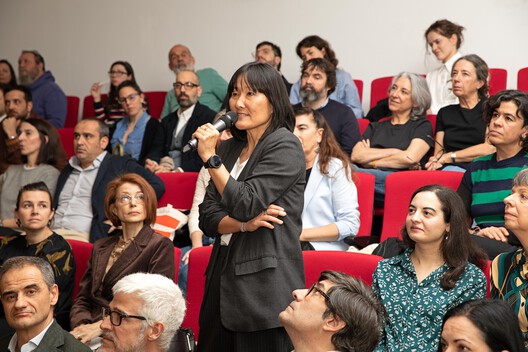
As explained by the festival's director, Javier Peña, "for this edition, Concéntrico's curatorial approach proposes incorporating practices that operate from the collective, the festive, and the performative." Based on the ideas presented in the book Concéntrico: Laboratorio de Innovación Urbana (Park Books, 2025), this edition proposes to deepen its research, allowing the program to be read as a reflection on the contemporary city. This year, the festival is organized around three curatorial lines: Identity and Fiction, Urban Ecologies, and Ephemeral Agents. The first explores architecture as a form of narrative and territorial interpretation; the second examines the relationships between architecture, climate, material, and landscape in the contemporary city; and the third considers ephemeral architecture as a means of activating social dynamics and temporarily transforming urban space.
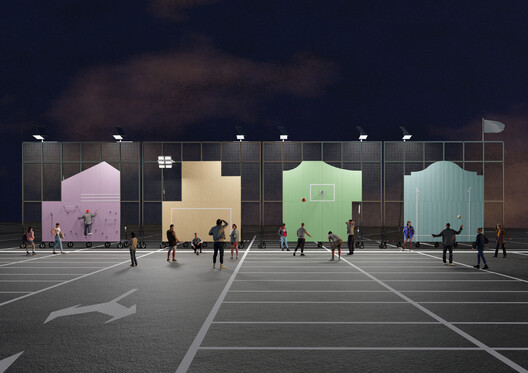
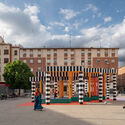
The Identity and Fiction axis proposes going beyond the city as a physical space, recovering the narratives, imaginaries, and memories that shape how it is inhabited. Within this framework is the project by Smiljan Radić, who brings to Logroño the logic of the traveling circus as an ephemeral and collective architecture. This section also includes the work of Italian architect Matilde Cassani, who explores the ritual and symbolic dimension of contemporary public spaces; research by OFREIA — Office for Revealing Encounters in Architecture — focused on memories associated with the Ebro River and historical bathing practices; and projects by BEar and PPAA studios proposing new readings of the urban environment from an experimental perspective. A collaboration between CENTRAL studio and photographer Maxime Delvaux invites reflection on how images construct and transform our perception of the spaces we inhabit. In this category, the pavilion selected through the open call is titled El plano latente by Dancing on Architecture collective, a proposal to transform the Paseo del Espolón into an urban choreography.
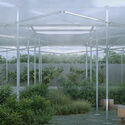
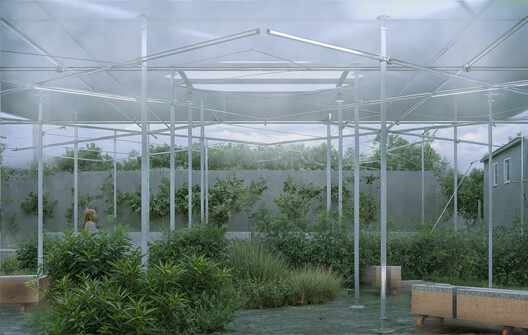
The projects gathered under the Urban Ecologies axis investigate how architecture can generate microclimates, activate ecological processes, or recover knowledge linked to the territory, proposing interventions that engage with natural cycles and environmental conditions in urban space. Participants in this area include the Berlin-based collective raumlabor, with three pavilions conceived as small experimental climate zones built with lightweight structures and natural materials such as jute, coconut mesh, and insulating membranes; Sahra Hersi's exploration of the relationship between landscape, coexistence, and the city through a civic garden dedicated to cultivation and seed exchange; a collaboration between Swiss studio Boltshauser and the collective Garbizu Collar to build a pavilion with rammed earth walls and reused wine barrels; Suomi-Koivisto & IC-98's pavilion functioning as a plant refuge for the historic city center affected by the urban heat island effect; Parabase's intervention focused on the reuse of materials from the energy sector; the Shade, Breeze, Cooling pavilion by noof group; and the work of Zeppelin Design and Faris Alossaimi.
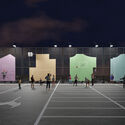
The projects grouped under Ephemeral Agents use lightweight structures, mobile devices, or temporary infrastructures to generate new forms of encounter and participation in public space. This includes Gabriel Fontana and curator Amanda Pinatih's rethinking of physical education from an inclusive perspective through a collective game developed in student workshops and public sessions; Sounds of Architecture Records' production of a new vinyl based on recordings of voices, stories, and soundscapes from Logroño; AAU Anastas as the first Palestinian team to participate in Concéntrico, installing a series of listening devices across different squares in the city; TAELON7 with a light structure inspired by informal kiosk architectures; Future Firm's temporary intervention exploring the relationship between the city and the river; Ignacio G. Galán with Ozaeta Fidalgo Architects and Jordan Whitewood-Neal's installation addressing bodily diversity as a tool for rethinking the design and use of public space; the Frontones Danzantes intervention by the Italian studio 2050+; and the work of other practices such as DF DC and Tło.
Upcoming developments for Concéntrico include the launch of a Summer School in collaboration with Distigmo and supported by Pro Helvetia; a new collaboration with Barcelona's Cruïlla Festival, inviting architecture studios to design the festival's main stages; and a new stage of the book tour for Concéntrico: Laboratorio de Innovación Urbana, with stops in Warsaw, Berlin, and Rotterdam. Other recent urban installation announcements include the opening of a two-part architectural installation by TAELON7 at Limbo Museum in Accra, Ghana; the exhibition of the five winning stations of Toronto's Winter Stations design competition, on view until March 30th; and BuildFest: Acts of Construction, a three-year initiative by the Bethel Woods Art and Architecture Festival activating the grounds of the 1969 Woodstock festival through large-scale timber installations and multimedia experiences.


