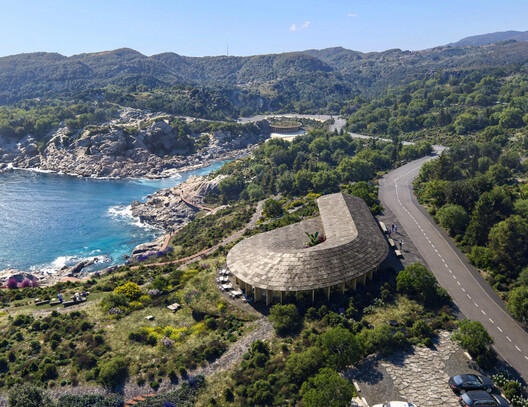
This week has been marked by the deliberate, rampant, and unjust destruction of war in Southeast Asia. As one of the most damaging manifestations of human abuse of power, we have witnessed the destruction of places that hold memories and sustain culture, as well as the loss and irreparable harm to the human lives that lend them their identity. With the expectation of offering brighter and more constructive scenarios in the future, we present, in contrast to this reality, a scenario of progress in the gender gap that characterizes architecture and its paths forward, a group of landmark projects of public and community interest moving forward from Türkiye to Mexico, and three major multimodal transport infrastructure projects improving the way we circulate and inhabit public space in Europe and the United States.
New Civic Landmarks Enrich Urban Experience from Chicago to Seoul
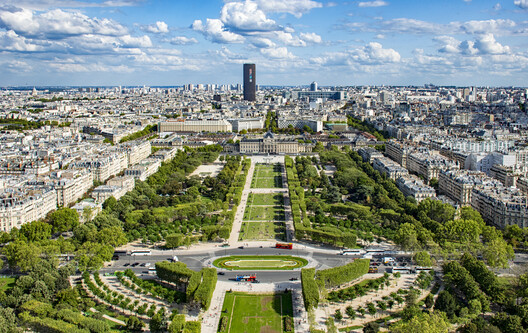
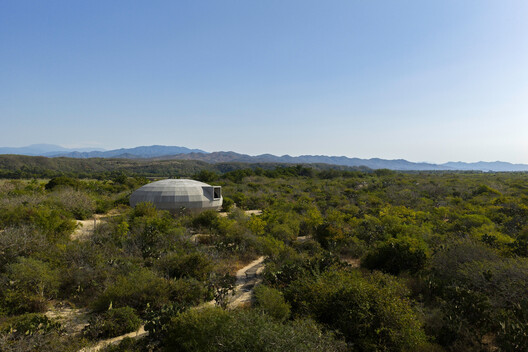
On a more optimistic note, four notable architecture projects of public and community access have been announced this week, highlighting how new landmarks can reshape spatial experience and civic identity across diverse contexts. In Chicago, the Obama Presidential Center is set to open on Juneteenth 2026 in Jackson Park, introducing a major civic complex dedicated to public programming, education, and community engagement. In Paris, the observatory at the Tour Montparnasse will close in March 2026 as part of a broader redevelopment that aims to transform the tower and its public viewing experience. Meanwhile, in Seoul, Heatherwick Studio has unveiled plans for the Daegyo Apartments redevelopment, proposing a large-scale residential complex conceived as a sculptural landmark intended to enrich the relationship between housing and the surrounding city. In Oaxaca, OMA, led by Shohei Shigematsu, has designed an ellipsoidal pavilion for mushroom cultivation at the Casa Wabi foundation, combining mushroom production with a spatially expressive structure accessible to the foundation community and visitors. These projects can be identified not only as visual icons but as frameworks for public interaction, cultural programming, and everyday experience.
Related Article
Women in Architecture: Progress, Gaps, and the Work Still AheadNew Cities and Coastal Districts Propose Models for Urban Development
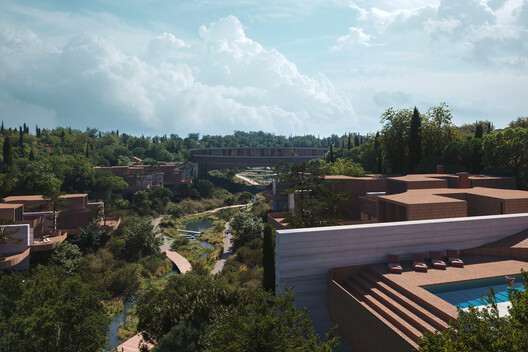
Two recently announced projects illustrate how large-scale urban developments are being used to test new models of city-building in response to evolving economic, environmental, and demographic conditions. Emerging in very different contexts, the projects show how contemporary planning increasingly links large-scale urbanization with strategic infrastructure and landscape integration. In Istanbul, an international team including Snøhetta, BIG – Bjarke Ingels Group, and MVRDV has collaborated on a masterplan for an 84-hectare coastal neighborhood in the Riva area of Beykoz along the Black Sea. Conceived as a landscape-led residential district, the project integrates housing, cultural facilities, and public programs; its first phase will deliver 969 homes for approximately 3,000 residents, with completion expected around 2027. Meanwhile, in Alatau, SOM has designed a landmark mixed-use tower complex and the Gateway District masterplan for a newly planned city along the Almaty–Qonaev highway. Envisioned as the economic and administrative nucleus of a future international investment hub, the development forms part of a long-term masterplan extending to 2050, with major infrastructure phases expected by 2030.
On the Radar
KCAP and A2P2 Selected to Plan Transit-Oriented Growth Along the PKM Południe Railway in Gdańsk, Poland
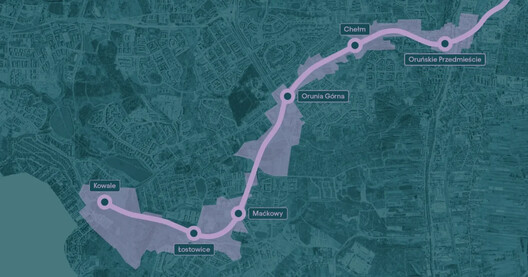
Following a European public tender, the Polish–Dutch consortium of KCAP and A2P2 Architecture and Planning has been appointed by InvestGDA and the Pomerania Development Agency to prepare the Gdańsk Nowe Południe Masterplan, a 164-hectare strategic framework guiding the long-term development of southern Gdańsk along the planned PKM Południe metropolitan railway. The project focuses on a 7.5-kilometer rail corridor running from Orunia to Kowale and structured around six new stations intended to anchor coordinated urban growth. Developed over 18 months from January 2026 to mid-2027, the plan applies a Transit-Oriented Development approach that organizes housing, services, public spaces, and green infrastructure around walkable station areas connected by public transport, aiming to shift suburban expansion away from car-dependent patterns. The masterplan is expected to help coordinate urban development with regional transport investment while incorporating a multi-stage participatory process, including at least four consultation phases with residents and stakeholders to inform the spatial and programmatic vision for the new districts.
New Rochelle Converts Obsolete Highway into a Park and Mobility Corridor in New York State, United States
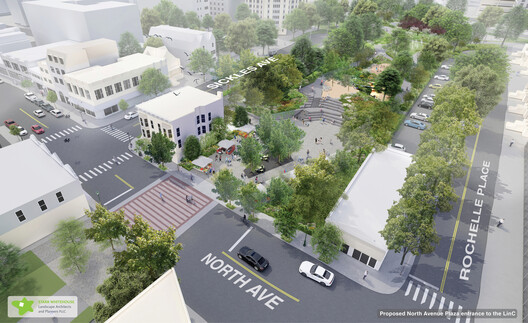
The City of New Rochelle, a rapidly growing municipality in the New York metropolitan region, is advancing The LINC, a large-scale urban project that transforms outdated roadway infrastructure into a one-mile linear park while reorganizing traffic and mobility flows. The initiative replaces the incomplete Memorial Highway spur built in the mid-20th century to connect Interstate 95 with nearby regional parkways, an intervention that historically divided the Lincoln neighborhood from the city's downtown. The project introduces a realigned, pedestrian-friendly Memorial Highway running from Lincoln Avenue to Huguenot Street, together with a west–east recreational corridor extending toward the Exit 16 interchange. These interventions create new pedestrian crossings, protected bicycle lanes, and public recreation areas while improving connections between the city's downtown core, transit center, public library, and surrounding neighborhoods. Developed through the city's Lincoln Avenue Task Force and supported by the New York State Downtown Revitalization Initiative, the project will be implemented in phases and aims to reconnect districts long separated by highway infrastructure while integrating green space and redesigned circulation into the city's broader urban revitalization strategy.
Berenblum Busch Architects Designs Cruise Terminal and Waterfront Park Gateway at the Port of Los Angeles, United States
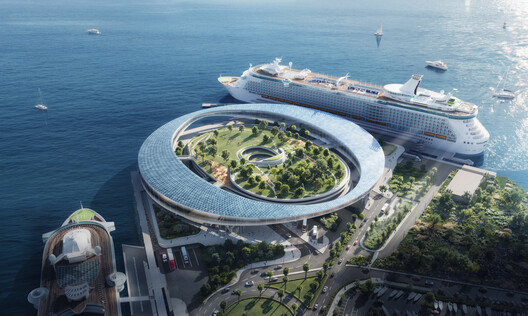
Berenblum Busch Architects has designed a new terminal complex for the Port of Los Angeles in the Outer Harbor district of San Pedro, conceived as both port infrastructure and a public waterfront destination. Developed by Pacific Cruise Terminals, LLC, a partnership between Carrix and JLC Infrastructure, the project combines a cruise terminal with a three-acre publicly accessible park that spans the terminal and its parking structure. The multi-level open space introduces recreational areas and panoramic views across the harbor while expanding public access to the waterfront. The design integrates passenger circulation, terminal logistics, and public space within a single architectural system intended to balance operational requirements with civic openness. By layering port functions with a year-round public landscape, the project seeks to reframe large-scale maritime infrastructure as an urban gateway that links tourism facilities with new recreational and civic spaces along the Los Angeles waterfront.
This article is part of our new This Week in Architecture series, bringing together featured articles this week and emerging stories shaping the conversation right now. Explore more architecture news, projects, and insights on ArchDaily.


