On February 28th, 2026, the news of the loss of human lives, the operational pattern of military strikes, damage to infrastructure, communication disruptions, and international responses following US-Israeli military attacks on Iran confirmed to the world that there was a new focus of war in Southwest Asian territory. This military conflict has also had a human and infrastructural impact on Lebanon, Syria, Iraq, and Jordan, with active combat zones in their territories, and the Gulf States, where damage particularly affected US military bases and energy infrastructure. This adds a new site of armed conflict in the area, following over two years of systematic destruction of life, habitat, and essential facilities in the Gaza Strip, reaching a near total of 81% destroyed structures by the end of 2025. These territories are currently involved in the deliberate destruction of their normality, including essential, everyday, and cultural infrastructure of global value. Although information is currently scattered and partial, it is possible to assess some of the damage to cultural heritage caused by this new outbreak of armed conflict.
Built cultural heritage can be less important in its material dimension than in its historical and social value. A building, structure, or site is recognized as heritage when it exceeds its intrinsic value and acquires universal recognition based on its historical significance and its aesthetic, scientific, or social importance, warranting preservation for future generations. On both a local and international scale, cultural heritage offers a beacon for perspective, identity, memory, and shared values. On this note, on Monday, March 2nd, UNESCO expressed concern over the protection of cultural heritage sites amidst escalating violence in the Middle East. In a short declaration, the organisation recalled that cultural property is protected under international law, notably the 1954 Hague Convention for the Protection of Cultural Property in the Event of Armed Conflict and the 1972 Convention concerning the Protection of the World Cultural and Natural Heritage.
The Golestan Palace, a UNESCO World Heritage site in the heart of Tehran, has reportedly been damaged in US-Israeli airstrikes as the military campaign against Iran spirals into a wider regional conflict.
— ARTnews (@artnews) March 3, 2026
According to Iran’s cultural heritage minister, Reza Salehi-Amiri, debris… pic.twitter.com/1WpcL3Cyes

The statement followed the confirmation of damage from a strike to the Golestan Palace in Tehran on Sunday, March 1st. The hazards include blown-out windows, shattered mirrors, damaged stained glass, and lifted pavement, to an extent detrimental to the integrity of the whole. The building, a former official royal Qajar complex commonly called the "Versailles of Persia," dates to the Safavid era in the 16th century and was expanded under the Qajar dynasty in the late 18th century, integrating earlier Persian crafts and architecture with Western influences. It was inscribed as a UNESCO World Heritage Site in 2013 for representing an exceptional example of an East-West synthesis in monumental arts, architectural layout, and building technology; containing the most complete representation of Qajari artistic and architectural production; and being a prime example of the arts and architecture of a significant period in Persian modernization processes throughout the 19th century.
Related Article
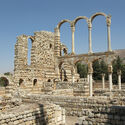
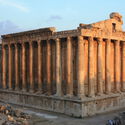
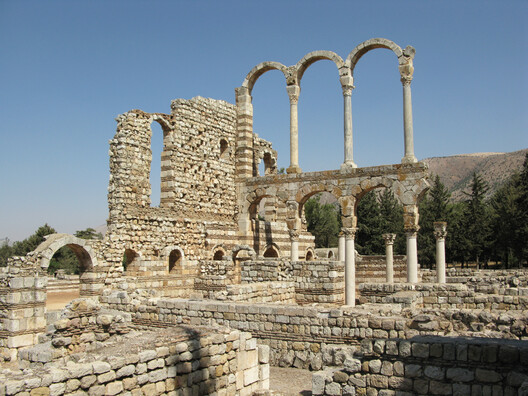
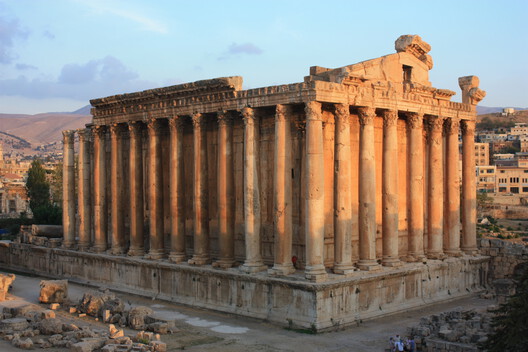
Heritage in Syria: Independent Groups Documenting the Country’s Historic ArchitectureOn Wednesday, March 4th, in response to the intensification of the conflict, Lebanon's Ministry of Culture called on UNESCO to provide additional protection for the country's cultural heritage. The ministry specifically referenced the National Museum of Beirut and listed Lebanese archaeological and historical sites, including the eighth-century city of Anjar, the Phoenician city of Baalbek, and Ouadi Qadisha (the Holy Valley), recognised as one of the most important early Christian monastic settlements in the world. The request followed Israeli airstrikes in the vicinity of key heritage areas near Baalbek. As can be expected, and despite no material damage, cultural institutions are closing temporarily. According to Ocula, in Beirut, the Ramzi and Saeda Dalloul Art Foundation, the Sursock Museum, Dar El-Nimer for Arts & Culture, and Beirut Art Center have closed. In Uzbekistan, the Centre for Contemporary Arts Tashkent (CCA), a flagship project led by the Uzbekistan Art and Culture Development Foundation, also announced the decision to postpone its upcoming opening "out of care for the safety and well-being of all participants, artists, and guests."
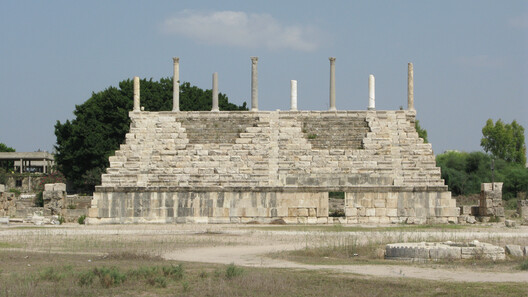
Further damage to cultural heritage has been confirmed over the last ten days. Israeli airstrikes struck the immediate surroundings of the UNESCO World Heritage Site of Tyre on Friday, March 6th. The ancient town of Tyre was a great Phoenician city built for the most part on an island reportedly impregnable, considered one of the oldest metropolises in the world, and, according to tradition, founded in 2,750 BCE. Located on the southern coast of Lebanon, 83 km south of Beirut, it reflects important stages of human history. Notable attributes include imposing ruins from the Roman city and medieval constructions from the Crusader period on the former island, and, on the mainland, a necropolis, monumental way, aqueduct, and hippodrome. The strike directly impacted the entrance of the Al-Bass Archaeological Site, damaging the perimeter of the ancient Roman-era complex. Community organisations and local authorities are urging UNESCO and the international community to take measures to protect heritage belonging to all of humanity as an irreplaceable testament to the stages of our shared history.
This outbreak of military conflict joins the fifth year of the Russia-Ukraine war, the civil wars in Sudan and Myanmar, persistent conflict in Mali, Burkina Faso, and the Democratic Republic of the Congo, violent armed conflict in Haiti, and the forced overthrow of the former Venezuelan president. In Ukraine, a Cultural Heritage Fund continues to take shape since its announcement at the fourth Ukraine Recovery Conference in Rome in July 2025. According to the country's Culture Ministry, the initiative is conceived as a multidonor platform to mobilise international resources for the protection, restoration, and development of Ukrainian cultural heritage damaged by war. According to The Art Newspaper, as of November 2025, 1,630 cultural heritage sites and 2,437 cultural infrastructure facilities across Ukraine have been damaged or destroyed in the war. Thirteen initial restoration projects have been selected, including the St. Nicholas Roman Catholic Church in Kyiv, damaged by a Russian missile strike in 2023. This project joins other programs by UNESCO, Aliph Foundation, the World Monuments Fund, ICCROM, a Rome-based intergovernmental organisation, and Obmin, registered in 2022 in Warsaw, alongside community efforts in each of these countries to preserve the collective memory from the destruction caused by the abuse of human power.
Editor's Note: This article was created on March 9, 2026, based on consistent news reports from multiple international media outlets. Given the volatile nature of the ongoing conflict, on-site verification remains limited, and some details may be subject to revision as new information emerges.