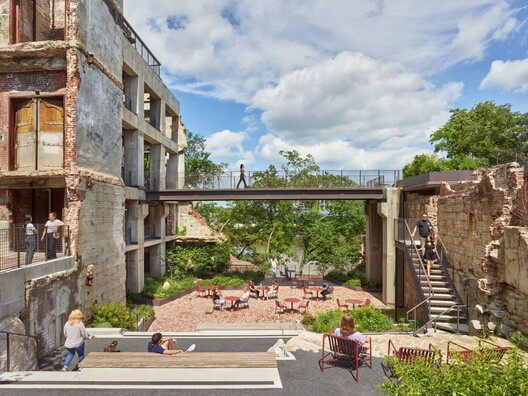
This week began with the World Day of Social Justice, foregrounding urgent questions of labor rights, spatial equity, and resource governance, and framing architecture as both a product of and a response to the social systems that shape access to land, housing, and opportunity. The announcement of the 15 winning projects of the 2026 ArchDaily Building of the Year Awards highlighted a global cross-section of built works recognized for their architectural quality, innovation, and social impact, offering a snapshot of contemporary practice across scales and geographies. This week's news prompts a broader reflection on architecture's civic responsibility, with heritage and community-building through cultural architecture emerging as central themes. Housing, meanwhile, anchors another critical strand of the discussion with three highlighted initiatives: a manifesto reframing housing not as a market commodity but as a civic right and collective project grounded in care; a large-scale waterfront regeneration masterplan responding to regional housing demand through coastal transformation; and a timber residential project that explores the potential of wood in medium-density housing.

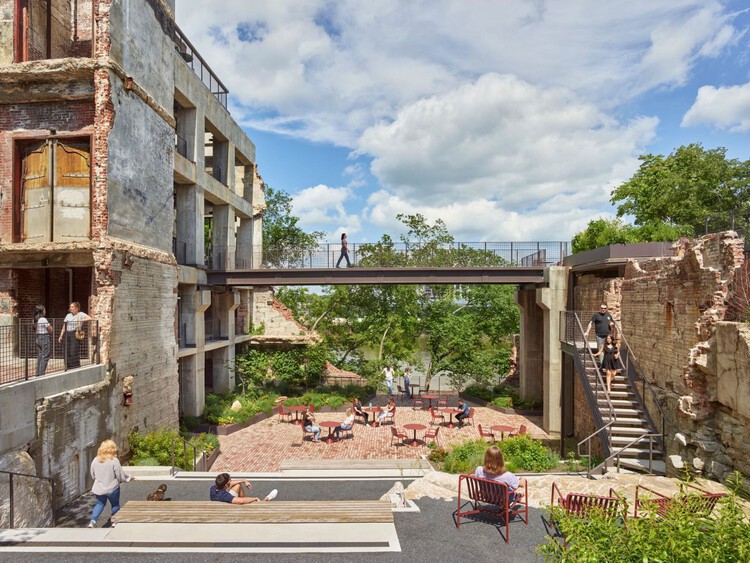
Rethinking Heritage Through Completion, Regeneration, and Archival Memory
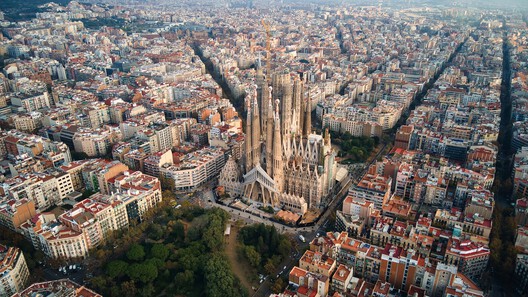
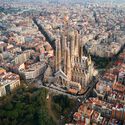
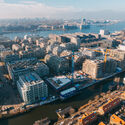
Heritage preservation takes multiple forms this week, from completing historic visions to revisiting unrealized futures. In Barcelona, the final piece of the central tower of La Sagrada Familia has been installed, marking a major milestone for one of the world's most notorious unfinished buildings and coinciding with the centenary of Antoni Gaudí's death. The completion of the tower advances Gaudí's long-envisioned vertical landmark while underscoring the ongoing, intergenerational nature of its construction. In London, Studio Egret West has been appointed to guide the future phases of the Battersea Power Station regeneration, shaping the next stages of an eight-phase masterplan that rethinks a major brownfield site through long-term, adaptive redevelopment. Meanwhile, in Paris, the exhibition "Concours Beaubourg 1971" revisited the unbuilt competition entries for the Centre Pompidou, positioning archival documentation as a tool for preservation by presenting the diversity of proposals and architectural approaches that once imagined this now-iconic institution.
Activating Urban Life Through Libraries, Youth Centers, and Seasonal Installations
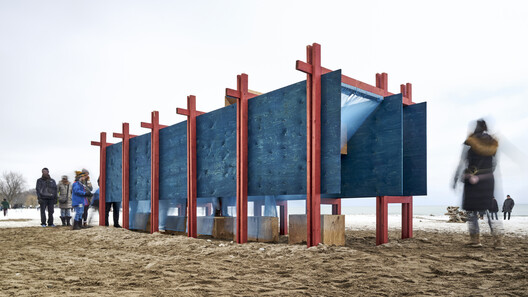
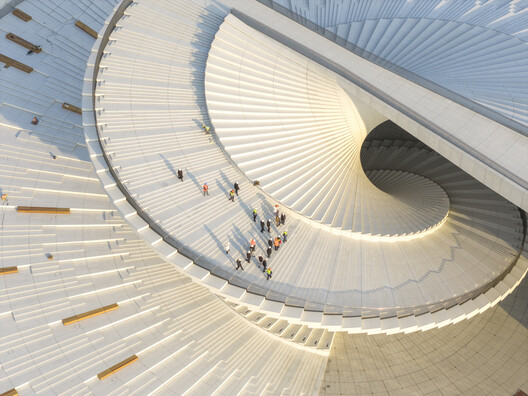
Across diverse contexts, cultural architecture continues to act as a catalyst for collective life and civic identity. In Yerevan, MVRDV has begun construction on the EU TUMO Convergence Center, conceived as a hub for education, technology, and creative exchange that expands the TUMO model and aims to reinforce Armenia's position as a center for youth-driven innovation. In Shanghai, Snøhetta's Grand Opera House is nearing completion, introducing a major performance venue designed to anchor a new cultural district. Meanwhile, Kengo Kuma and Associates' spiral-shaped public library in Rzeszów reimagines the library as a civic landscape that encourages gathering, learning, and informal interaction. At a more temporary yet equally community-driven scale, the 12th edition of Winter Stations in Toronto transforms the city's waterfront through five winning installations, illustrating how cultural buildings and installations, permanent and ephemeral alike, serve as infrastructures of belonging, creativity, and shared urban experience.
On The Radar
Shaping the City Venice 2025 Advances 15 Lessons for Housing as Civic Infrastructure and Collective Care
The 2025 edition of Shaping the City: Forum for Sustainable Cities and Communities, held on 21–22 November at Palazzo Michiel in Venice as part of ECC Italy's Time Space Existence exhibition, framed housing as one of the most urgent global challenges and a foundation for equitable urban futures. Under the theme Housing and Community for a Shared Future, the forum brought together architects, planners, academics, and policymakers to argue that housing must be understood not as a market commodity but as a civic right and shared project rooted in care, wellbeing, and collective agency. Across panels and debates, participants emphasized renovation over replacement to preserve communities and reduce carbon impact; gender-sensitive and equity-driven planning; the reclamation of space from segregation and disinvestment; and the creation of common ground through shared spaces and ownership models. The discussions highlighted innovation in incremental housing, modular systems, co-living, and adaptive reuse, and the role of policy as an enabler of affordability and long-term resilience. Central to the forum's conclusions was the need for situated, community-led practices grounded in local culture, climate, and geography, supported by interdisciplinary collaboration. The resulting manifesto distills 15 lessons that reposition housing as civic infrastructure and a social ecosystem, calling for cities shaped by solidarity, ecological responsibility, and sustained cooperation in the face of climate change, inequality, and demographic transformation.
Powerhouse Company Begins Construction of The Ark, a Timber Medium-Density Housing Model in Amsterdam
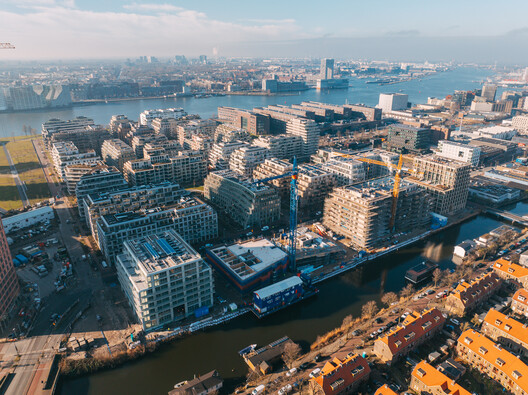
Now under construction in Overhoeks, Amsterdam, The Ark by Powerhouse Company advances timber as a viable model for medium-density urban housing. The 14,850 m² mixed-use project comprises 125 apartments (81 rental and 44 for sale) alongside 550 m² of commercial space, forming part of a broader long-term transformation of the district. Structurally, the building combines a limited concrete base, used only for the basement, ground floor, and core, with an extensive timber superstructure organized in a repetitive system. Within the apartments, the timber structure remains exposed, introducing tactility and sensory depth with the aim of supporting residents' well-being while reinforcing the material's architectural presence. Full-width balconies wrap around the building, connecting its two distinct façades: an active street-facing side with commercial functions and a public terrace, and a quieter waterfront elevation with access to a shared garden.
Haptic Architects and Planit Design Waterfront Masterplan to Meet Regional Housing Demand Through Coastal Regeneration in Barrow
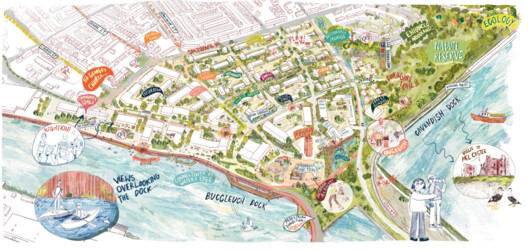
Haptic Architects and Planit have been appointed lead masterplanners for a 67-acre waterfront regeneration in Barrow-in-Furness, an industrial port town on the southwestern tip of the Furness peninsula in Cumbria, North West England. Commissioned by Westmorland and Furness Council, the scheme is designed to deliver over 1,000 new homes as part of a broader regional need for approximately 12,000 homes over the next decade. The masterplan repositions the town's waterfront as an accessible destination, introducing promenades, cultural and leisure uses, event spaces, and active edges while retaining heritage assets such as the listed former Railwaymen's Club to reinforce Barrow's maritime identity. Conceived as a mixed neighbourhood accommodating different tenures and life stages, the project integrates green infrastructure and sociable open spaces to a former industrial site where housing has been shaped by industry and the rapid changes it brought to the town. Blue-green infrastructure, sustainable drainage, and habitat creation are embedded into the layout from the outset, framing the regeneration as a long-term response to housing demand that combines environmental resilience with urban renewal.
This article is part of our new This Week in Architecture series, bringing together featured articles this week and emerging stories shaping the conversation right now. Explore more architecture news, projects, and insights on ArchDaily.


