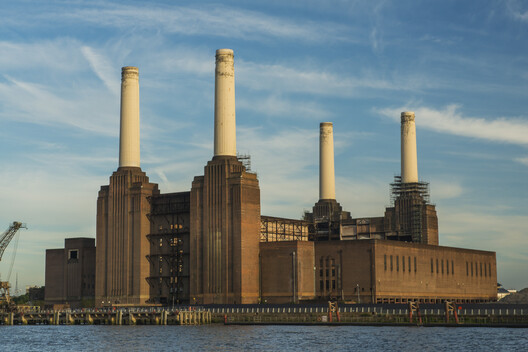
Battersea Power Station is a former coal-fired power station located on the south bank of the River Thames in London, originally designed by architects J. Theo Halliday and Giles Gilbert Scott. Notable for its appearance on the cover of Pink Floyd's 1977 studio album Animals and in Alfred Hitchcock's 1936 film Sabotage, the station is one of the world's largest brick buildings and is known for its Art Deco interior fittings and décor. Recognized today as part of modern industrial heritage, the site's transformation into a commercial development began in 2012, with the adaptive reuse guided by a masterplan designed by Rafael Viñoly. On February 16, Battersea Power Station announced the appointment of the strategic urban design practice Studio Egret West to evolve the original masterplan for the remaining 16 acres of the 42-acre riverside neighbourhood in the southwest London.
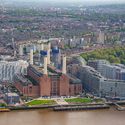
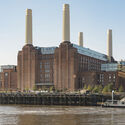
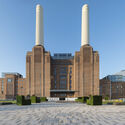
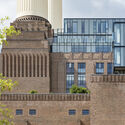
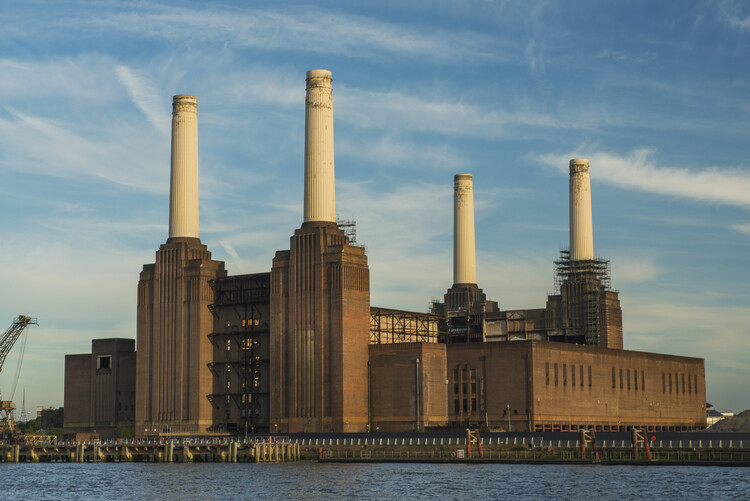
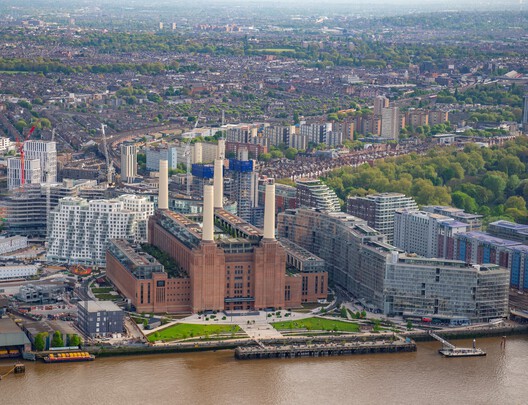
The Battersea Power Station industrial complex's two main buildings were constructed in two stages between 1929 and 1955. Today, the 42-acre (over 8 million sq ft) former industrial brownfield site is being transformed into an urban district with homes, shops, bars, restaurants, cafés, offices, and around 19 acres of public space. The transformation began with the station's decommissioning process between 1975 and 1983 and its listing in 1980, when the entire structure was granted Grade II status, later upgraded to Grade II* in 2007. It remained empty until 2014. After its definitive closure and various adaptive reuse proposals, plans for its current redevelopment began in 2012 when it was purchased by the current shareholders. The overall redevelopment project is divided into eight phases, each designed by a range of specialist architects.
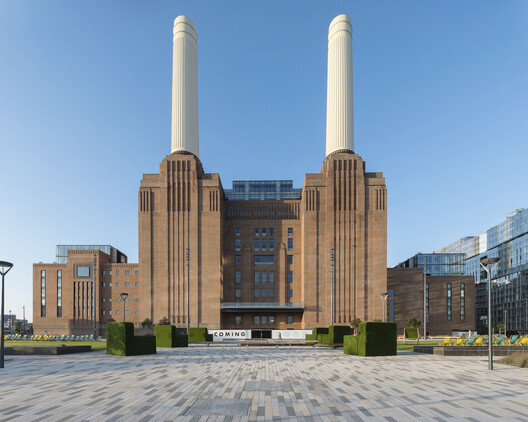
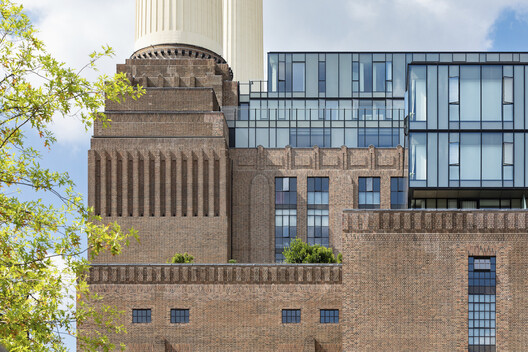
These include SimpsonHaugh and Partners and De Rijke Marsh Morgan (dRMM) for Circus West Village (Phase 1), completed in 2017 and now housing over 1,800 residents, along with a mix of bars, restaurants, and leisure facilities, including a cinema and theatre; WilkinsonEyre for the renovation of the masterplan's centrepiece, Battersea Power Station (Phase 2), which opened to the public on 14 October 2022 as a mixed-use building, home to Apple's London campus, shops housed in the former turbine halls, a cinema, a 24,000 sq ft food hall, a glass chimney lift, and new homes; and Foster + Partners and Gehry Partners for Electric Boulevard, Battersea Roof Gardens, and Prospect Place (Phase 3), launched in 2014 and currently under development. The site's transformation into an urban district also included a London Underground extension, which commenced in 2015.
According to Battersea Power Station's official statement, Studio Egret West's appointment to guide the remaining stages of redevelopment "will ensure the project fully reflects changes in societal behaviour and technology for the future." The firm is set to work on the remaining half of the neighbourhood, building upon the previously completed phases to extend the site's cultural, commercial, and community significance at a metropolitan scale. The upcoming phases are intended to connect to London's new Nine Elms Park, a 14-acre green space running from Vauxhall through Nine Elms and concluding at the six-acre riverfront Power Station Park. The construction of two new Gehry-designed buildings that will complete Electric Boulevard, the neighbourhood's pedestrianised high street, is set to begin in 2026. Battersea Power Station and Wandsworth Council have also recently announced a partnership to deliver around 200 new council homes as part of the council's Homes for Wandsworth programme in future phases, subject to planning and funding approvals.
The way cities function has shifted dramatically since 2012, when we purchased and began work on the Battersea Power Station redevelopment project. 14 years later, now is a critical time to reflect on the original plans and fine tune them to better support how people now live, work and spend their leisure time in the city. ― Tan Sri Shahril Ridza Ridzuan, Chairman of Battersea Project Holding Company
Other recent news from London includes the listing of the Brutalist Southbank Centre cultural complex following a 35-year campaign advocating for its protection as modern architectural heritage, as the final piece of the broader urban setting. A few months earlier, the City of London Corporation formally approved the delivery plan for the renewal of the Barbican Centre, confirming a £191 million investment to support the first five-year phase of a long-term transformation programme advancing the protection of the city's modernist heritage. Other announced initiatives include the pedestrianisation of Oxford Street, intended to deliver a vehicle-free public realm between Orchard Street and Great Portland Street as part of a wider regeneration strategy, and the 25th edition of the annual Serpentine Pavilion commission in Kensington Gardens, designed by LANZA atelier.

