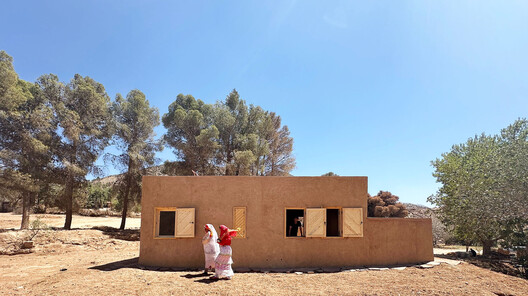
In an age so obsessed with skincare and appearances, few architects are truly interested in the intestines of our buildings. With a practice rooted in contextual awareness and technical pragmatism, sensitive to the needs of the people it serves and to resource limitations, Moroccan architect Aziza Chaouni focuses on the hidden systems that allow architecture to be. Over the past two decades, she has been working on projects across different geographies, particularly in the Saharan region, actively engaging with its communities and heritage.
Currently leading the South–North (SoNo) Lab for Sustainable Construction and Conservation at EPFL in Lausanne, Switzerland, Chaouni brings to the academic realm her architectural expertise in operating under pressing constraints, advocating for reciprocal collaboration between the Global South and the Global North. ArchDaily had the opportunity to speak with Aziza about her experience in Africa and how it can foster more sustainable ways of designing buildings for the future of our cities.
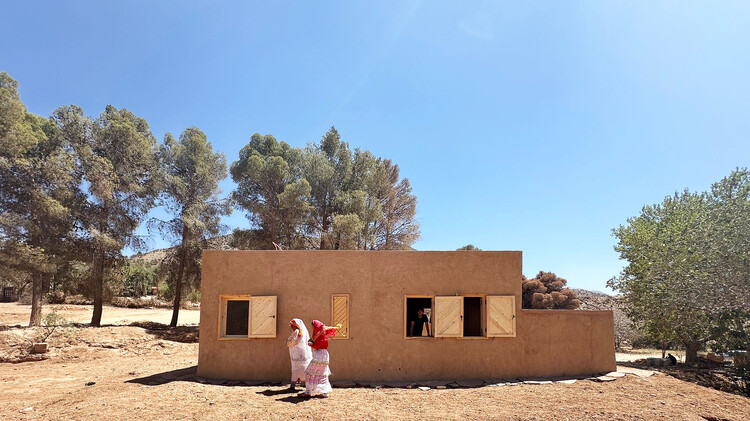
Arguing that architects usually work with the resources available to them, she refuses to focus on one-of-a-kind buildings, redirecting her efforts instead toward scalable, structural change within architectural practice. In this interview, Aziza reflects on community involvement, material innovation, African heritage, and how these themes converge at SoNo.
Related Article
Moroccan Modern: The Architecture of Jean-François Zevaco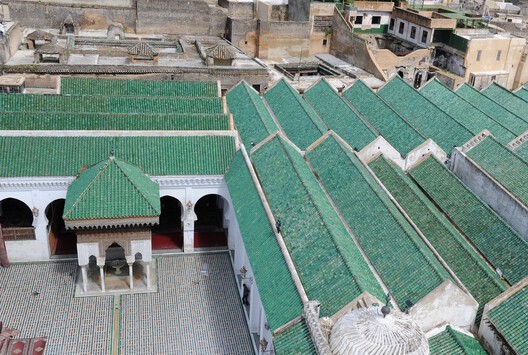
Romullo Baratto (ArchDaily): Your work seems to be rooted in a shared territory between community involvement, contextual sensitivity, traditional practices, heritage conservation, and technical pragmatism. How did you arrive at this position?
Aziza Chaouni: I wanted to become an architect from a very young age, largely because I had an aunt who was an architect. I used to go with her to visit the sites, and I was fascinated by the process: how something imagined through drawings could eventually become a space you could walk into and inhabit.
At the same time, my father was very insistent that I become an engineer. I listened to him, but I also knew I would eventually find my way back to architecture. So I chose to study structural engineering, thinking it would give me a deeper understanding of structure—and it did. That training became a very strong foundation for everything that followed.
I've always been fascinated by what I like to call the "intestines" of buildings—the systems that are usually hidden or left entirely to engineers. Energy, water, waste, structure: these elements are often treated as givens, but early on, I was deeply interested in understanding how they work and how they might be integrated into architectural design.
Because of this background, I never saw a strict separation between technique, construction systems, or even material innovation. I was, and still am, driven by curiosity: why do things work the way they do, and why do we accept certain solutions as inevitable?
Later on, my interest in working closely with people emerged very naturally. It came from witnessing, again and again, how many celebrated projects in the Global South ultimately failed. These were buildings that won awards, were widely published, and photographed beautifully, yet struggled once they were in use.
When studying at Harvard, I received a traveling fellowship that allowed me to spend an extended period conducting field research. I decided to do something that, even at the time, seemed quite extreme: to cross the Sahara alone and visit projects firsthand. This was between 2005 and 2006. I spent nearly a year traveling, visiting, surveying, photographing, measuring, and documenting these projects.
What struck me most during that journey was the generosity of people living in extremely harsh conditions. In the Sahara, with no water, no electricity, completely off the grid, people were extraordinarily welcoming. This experience fundamentally changed me. It reshaped my understanding of architecture, of autonomy, sustainability, and what "development" actually means when projected from the Global North onto such contexts.
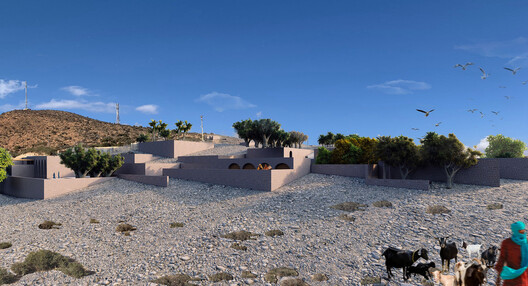
RB: The portfolio of your firm shows a wide range of projects spanning different scales. I wanted to hear from you about the masterplans, specifically the ones conceived with ecotourism in mind, and their relationship with the landscapes.
AC: My engagement with master planning really began during my time at Harvard. Under the supervision of Hashim Sarkis, my thesis focused on a master plan for the river running through the old city of Fez in Morocco, and what started as an academic project quickly confronted reality. I presented it to the mayor, and because I had an engineering background, I started collaborating with the city for infrastructure, especially sewage. That encounter shaped my understanding of how planning actually operates.
After my field research across the Sahara, I continued developing work on fragile landscapes, particularly through the Aga Khan Program at Harvard, with a focus on ecotourism in arid environments. I studied projects across Morocco and beyond, looking closely at what succeeded and what failed. Many master plans remained beautifully drawn but never implemented. That gap between vision and reality became central to my work.
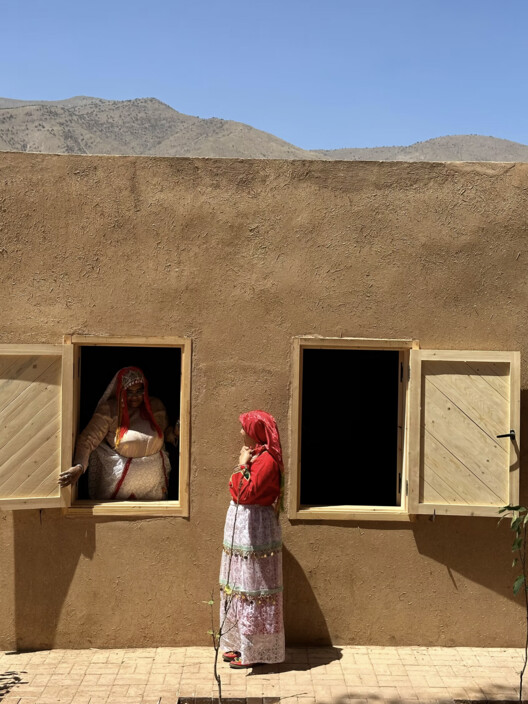
A key turning point was the Abaynou project. What began as a request for new bathing facilities became a comprehensive, participatory master plan addressing water systems, agriculture, climate risk, and social use of the landscape. The goal was never to produce a document that would sit on a shelf, but to anchor the plan in concrete, phased projects. What makes Abaynou truly significant for me is that it is moving into construction. At that moment, the master plan stops being an abstraction and becomes part of lived reality.
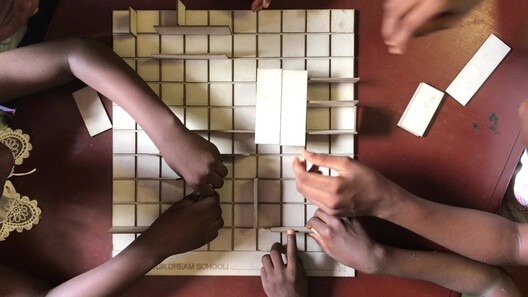
RB: Speaking of changing people's realities, you carried out a participatory process in Sierra Leone with kindergarten students. Can you talk about this experience?
AC: Yes, that project was completed some time ago, but it remains one of the most meaningful experiences I've had. It began when a close friend of mine was appointed Minister of Education in Sierra Leone, at a moment when the country was still recovering from the civil war and facing a severe lack of educational infrastructure. He told me, "I need to build 200 schools very quickly, and I don't know how to do it."
From the outset, there were strong constraints. The schools were based on prefabricated modules already defined through an international development grant, so architectural freedom was limited. I explained that before proposing any design adjustments, I needed to understand the context properly; the climate, daily routines, and, above all, how students and teachers actually experienced these spaces. I didn't want to make assumptions from afar.
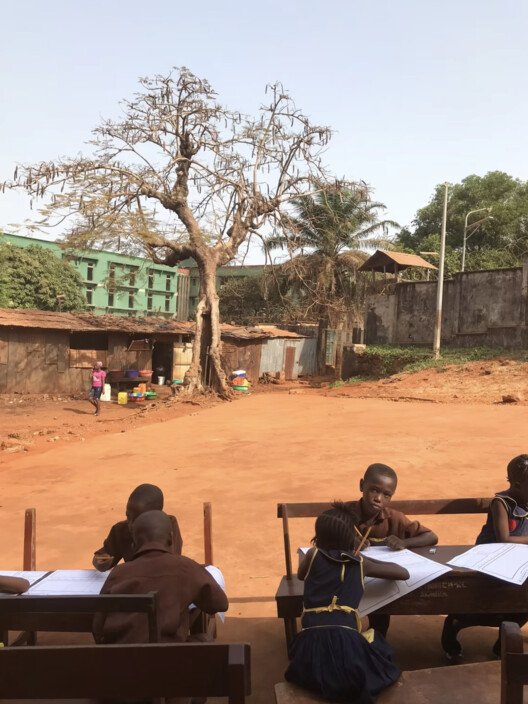
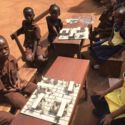
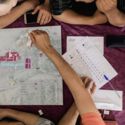
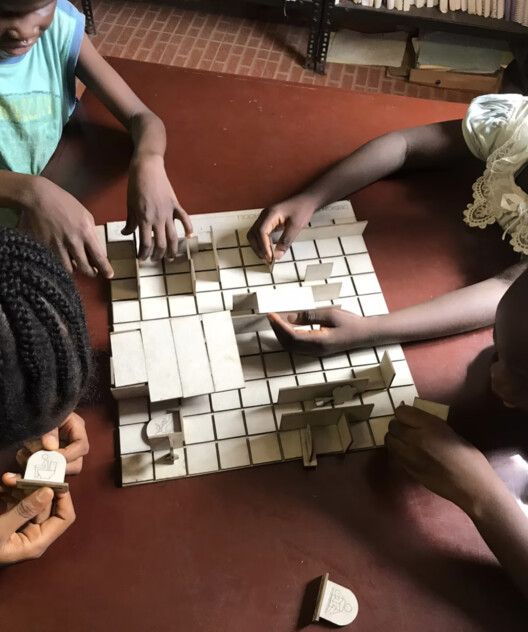
We developed a simple participatory game that allowed children to imagine their ideal school using elements drawn from their own reality: classrooms, water points, toilets, and shaded outdoor areas. The exercise was intentionally tactile and grounded, not abstract or aspirational in a way that ignored local conditions.
The project ultimately functioned as a form of consultancy, helping to refine the spatial organization, comfort, and basic services of the 200 schools that were going to be built. But for me, the most important aspect was the process itself. It reinforced the idea that even within tight constraints, meaningful participation is possible; and that listening carefully to children, teachers, and communities can fundamentally improve how architecture responds to real needs.
RB: So your involvement was more in the design and consultation phase than in construction?
AC: Exactly. The construction process was already fixed by the funding structure. To prevent misuse of funds, the schools were delivered as standardized prefabricated modules, almost like containers. My role was to work within those constraints and improve what could still be improved: insulation, orientation on site, outdoor spaces, access to water, and sanitation.
Budgets were extremely limited, so everything came down to priorities. Personally, I find these constraints stimulating. They force a certain clarity. In many African contexts, you simply cannot do everything, so the question becomes very direct: if you have very little, where do you invest it to make the most meaningful impact on children's ability to learn?
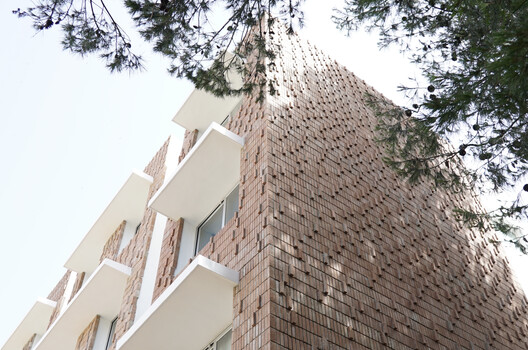
RB: You are currently leading the SoNo Lab (South–North Laboratory for Sustainable Construction and Conservation) at EPFL, which brings together many of these interests through processes that range from design to testing and implementation. Could you tell us more about the lab and its core intentions?
AC: SoNo Lab really came out of a very concrete encounter. When I arrived at EPFL, I met Karen Scrivener, a material scientist who is the inventor of LC3, a low-emission cement that produces about 40% less CO₂ than conventional alternatives. Meeting her was a real turning point for me.
Before that, my work was strongly focused on adaptive reuse, earth construction, and low-tech, bio-based solutions. But my previous experiences had already made something clear: by 2050, the biggest growth in construction will be in Africa. Not China, not India: Africa. And around 70% of that construction is self-built, using the cheapest material available, which is cement. Earth construction, despite all the attention it gets, remains very marginal.
The reality is that people are building with concrete blocks, often in unsafe conditions. As architects, we can keep designing beautiful, award-winning projects, but on the ground, most people are building for themselves. And that's where a huge part of future CO₂ emissions will come from.
Of course, we need to keep working with bio-sourced materials and earth construction. But the industry will not switch fast enough compared to the speed of construction already taking place. So if you want to reduce emissions at scale, you also have to work with cement. That's where LC3 becomes important. It costs roughly the same, uses the same cement factories, and only changes the mix. Yet the impact is huge: around 40% less pollution from production. At the scale of the African continent, that's enormous.
What interests me now is how to design systems that work with these materials more intelligently: using less material, improving safety, speeding up construction, and making buildings more resilient.
Architects work with available materials, so the real question is: do we want a one-off building that is beautifully photographed, or do we want to change practices at scale? This is what SoNo Lab makes possible.
RB: It's much more seductive to rely on "hero materials", but they don't necessarily change the process at large.
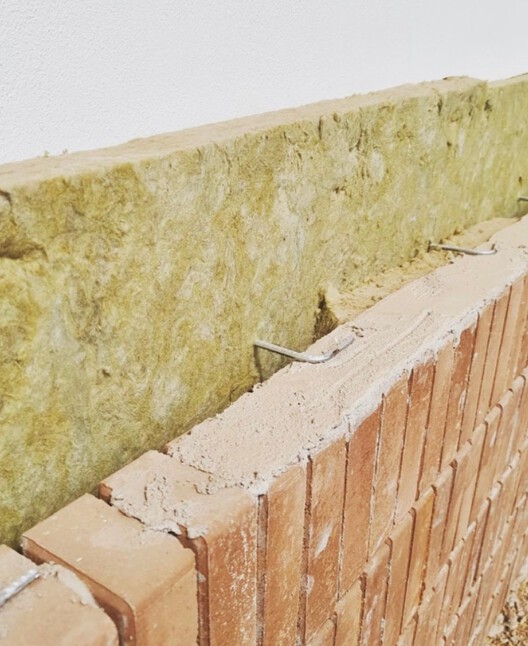
AC: And people often do not want to live in an earth building. That's why I developed interlocking bricks, almost like Lego, because earth can be among the safest and fastest systems for seismic contexts. But many people told me: We don't want to live in an earth house. A brick house looks more modern.
RB: You are talking about the anti-seismic prototype, right? Can you connect this project to the work you're now developing at SoNo?
AC: The anti-seismic prototype predates and somehow informs a lot of things developed at SoNo. We developed a proposal using a mix called Dura-Brick, with 5% cement and 95% earth. This was important because it allowed us to work with earth while still responding to local expectations around durability and safety. The goal was speed and constructability, and we proposed an interlocking, mortar-free system and a vaulted brick roof. Initially, the government framed it as a reconstruction prototype, which gave the project a certain visibility and urgency. Through this experience, my own position also evolved. If you want to reduce the carbon footprint even further, you need to develop blocks that use less concrete, that are structural, safe, and easy to assemble.
I started my career as a very purist architect, working almost exclusively with stone, earth, and natural materials, and seeing concrete as the enemy. But experience taught me that we need to work on two parallel tracks. One track engages with reality as it is and tries to reduce its impact. The other continues to push alternative systems and cultural change. Both have to exist at the same time.
RB: Shifting the conversation slightly, from materials to existing buildings, one of the SoNo studios focuses specifically on heritage documentation and reuse, which I see now as one of the most adequate approaches.
AC: Absolutely. For me, this became very evident in Africa, particularly when dealing with post-colonial heritage. In many cities, you have large low-income populations, urgent needs for infrastructure—schools, hospitals, community centers—alongside a lack of available land and very limited public funding. At the same time, you have these buildings from the 1960s and 1970s that were often built to extremely high standards.
In Morocco, Senegal, Burkina Faso, and elsewhere, these buildings were designed before air conditioning existed. Everything was passive: ventilation, shading, thermal mass. They are incredibly intelligent buildings. And so the conclusion became quite obvious to me: you need infrastructure, and you already have these buildings.
Very often, they're abandoned, seen as "monsters," or simply left unused because they're too expensive to demolish. However, they are part of the heritage of independence. They are often dismissed as "foreign" or not truly local, but in reality, many of them incorporate vernacular elements, climatic intelligence, and local construction knowledge. They tell an important story about a moment of optimism, ambition, and nation-building.
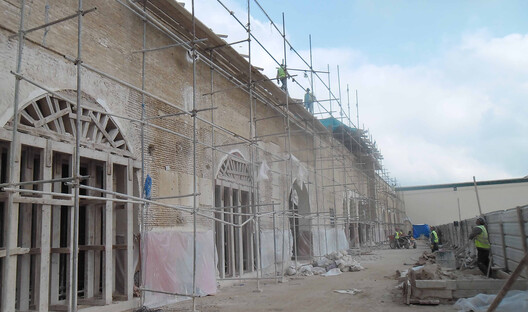
Through collaborations with the Getty Foundation and the World Monuments Fund, I've been working for several years now on modern heritage rehabilitation. Two books are finally being published, one on the Maison du Peuple in Burkina Faso and another on Sidi Harazem in Morocco, which document both the buildings themselves and the processes around their conservation.
What was crucial in these projects, and what we are implementing at SoNo, was the participatory dimension. We worked closely with officials who, at the beginning, wanted to demolish these buildings. But when they met international experts, visited comparable sites abroad, and began to see these buildings through a different lens, their attitudes shifted. That change in perception was as important as any physical intervention.
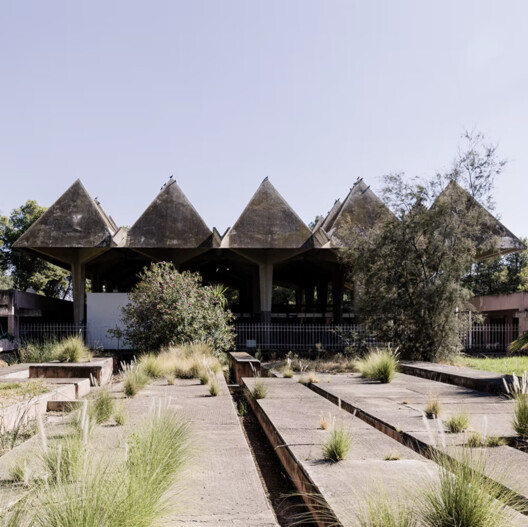
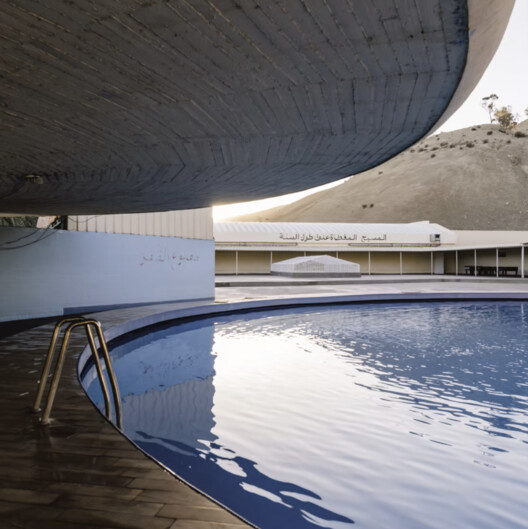
RB: Before SoNo, you already had a very strong experience with Sidi Harazem Thermal Baths, right?
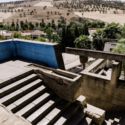
AC: Yes. I grew up going to Sidi Harazem with my grandmother. She believed the water healed her rheumatism. For me, as a child, the complex felt almost unreal, like something out of Star Wars.
When the project began years later, I knew from the start that it had to be collaborative—not only technically, but also politically. The government's initial intention was to turn Sidi Harazem into a five-star hotel. But historically, this place had always been used by people with very limited means. It was a popular, accessible destination, deeply embedded in social and cultural practices.
Convincing the authorities of the architectural value of the complex was not easy, especially given the double stigma attached to it: Brutalism and colonial history. Jean-François Zevaco, the architect commissioned, was French, and despite the fact that Sidi Harazem was one of the largest leisure projects commissioned by the Moroccan government after independence, it was still perceived as something "foreign."
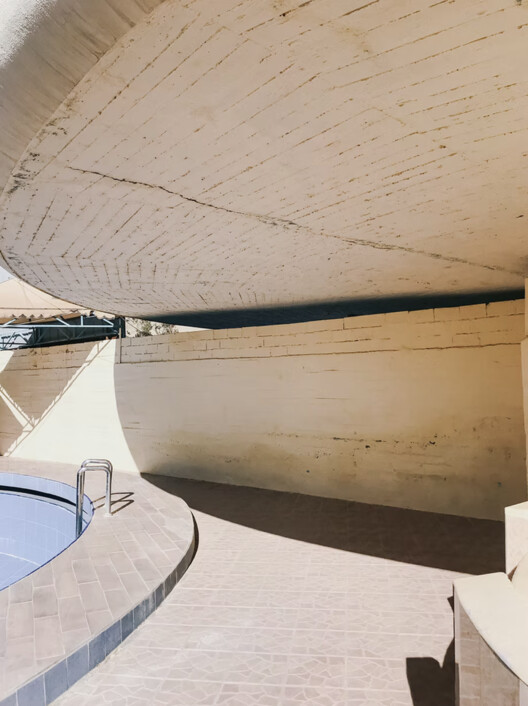
From 2018 onward, we worked steadily on research and preparation. Then COVID hit. I happened to be in Morocco when the borders closed, and I had the keys to the entire complex. I asked the government if I could temporarily activate the space so it wouldn't remain abandoned.
That's when everything shifted. We began organizing events—artist residencies, performances, concerts—and invited young Moroccans, many of whom had never heard of this heritage, to engage with the site through culture. A rapper performed in the pool. A choreographer staged a piece inside the complex. These cultural activations created an immediate emotional connection. People began to care.
We proved that a building doesn't even need to be restored to be alive. By opening the space, organizing public events, and inviting communities, including young people from informal settlements, we turned it into a shared cultural ground. It grew incredibly fast.
RB: It's revigorating to see heritage brought back to life this way, through use and experience.
AC: At the beginning, I never imagined this was how activation would happen. I believed restoration had to come first. COVID forced us to rethink everything.
Today, I work with the mindset that even if a building were to be demolished, the knowledge and awareness would survive. At Sidi Harazem, we trained local women and students to lead architectural tours. People now know who Zevaco was. They understand Brutalism. They are proud of this place.
RB: I guess there is not much more one could ask when working with architecture.
AC: Right? If something were to happen to me tomorrow, the community would protect that building. And that sense of collective ownership is, ultimately, the most powerful form of preservation. For me, that is a real victory.
This article is part of the ArchDaily Topic: Rethinking Heritage: How Today's Architecture Shapes Tomorrow's Memory. Every month we explore a topic in-depth through articles, interviews, news, and architecture projects. We invite you to learn more about our ArchDaily Topics. And, as always, at ArchDaily we welcome the contributions of our readers; if you want to submit an article or project, contact us.


