

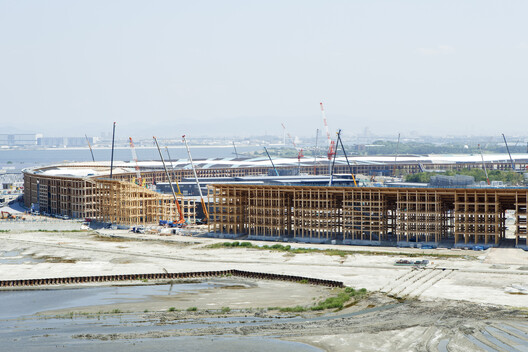
Exhibitions can be an opportunity to extend architectural discourse beyond professional circles, opening conversations with broader publics and serving as an interface between architecture and society. Within this concept, major international events such as the Osaka International Expo 2025 and the Venice Architecture Biennale have adopted the idea of the circular economy as one of their organizational objectives. The idea of circularity in events can be reflected in, for example, their energy consumption, the impact of the displacement they generate, their waste, or the useful life of their infrastructure. The site destined for the last World Expo, held in Osaka from 13 April to 13 October 2025, was surrounded by a massive timber structure designed by Sou Fujimoto Architects, one of the world's largest wooden constructions. The Japan Association for the 2025 World Exposition committed to reusing building materials "as much as possible," with concrete plans for their reuse to be finalized by March. In the meantime, some relocation alternatives are already emerging for the pieces of the World Expo structure.
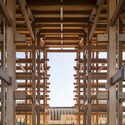
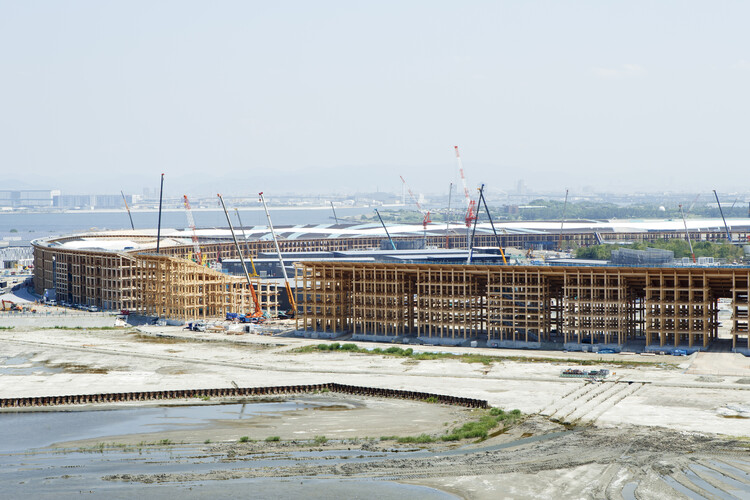
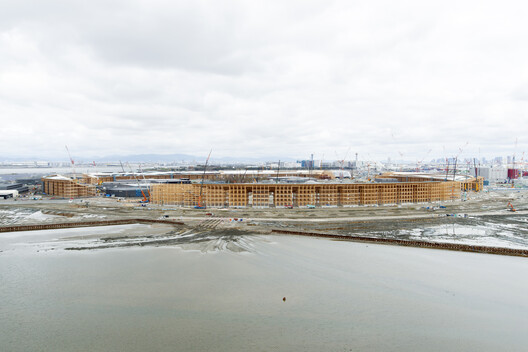
The Osaka Grand Ring was designed to embody the Expo's theme, "Designing Future Society for Our Lives," and symbolize the philosophy of "Diversity in Unity." Sou Fujimoto Architects' design served as the main access route for visitors, a sheltered space, an elevated Skywalk offering views of the entire Expo site, and a landscaped rooftop. The massive timber structure covered a horizontal projected area of approximately 60,000 square meters. With an inner diameter of 615 meters and an outer diameter of 675 meters, the Ring was 30 meters wide and stood 12 meters tall, rising to 20 meters at its highest point. It was designed with a focus on material efficiency, selecting wood for its renewable properties and carbon-storing capacity, contributing to the project's goal of minimizing its overall carbon footprint.
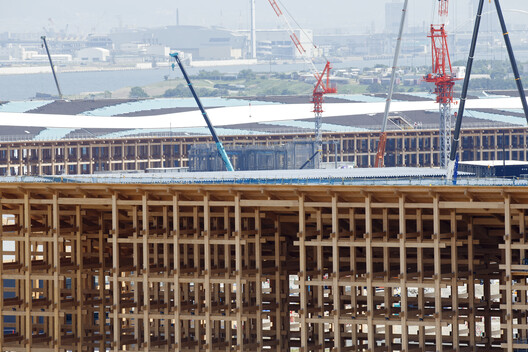
Locally sourced timber further reduced transportation-related emissions while supporting the regional economy. The ring structure was built with different types of wood, including Japanese cedar and cypress. The structure combined contemporary engineering with traditional Japanese craftsmanship, incorporating nuki joints, a technique in which a horizontal beam is fitted into a vertical post through a precise slot, commonly found in shrine and temple construction. This technique enables the easy removal and replacement of damaged or weathered pieces and has been used to build some of Japan's oldest existing buildings. It also facilitates the disassembly of the structure, as well as its easy transportation and rebuilding in another location.
Related Article
Laying the Groundwork: Six Creative Strategies for Reusing Architectural FoundationsWhile dismantling started in December, a portion of the roughly 2-kilometer loop, measuring about 200 meters, will remain on the Expo grounds as part of the site's preservation plan. After the event, the Japan Association for the 2025 World Exposition ran an auction of the Grand Ring's lumber from 17 October to 6 November. The service was meant to match supply and demand for the relocation and reuse of facilities, building materials, equipment, supplies, and other materials from the Expo site. The objective was to promote the reuse of facilities and equipment throughout Japan and reduce industrial waste. The recipients of the wood were announced during an online meeting of the association's working group in January.
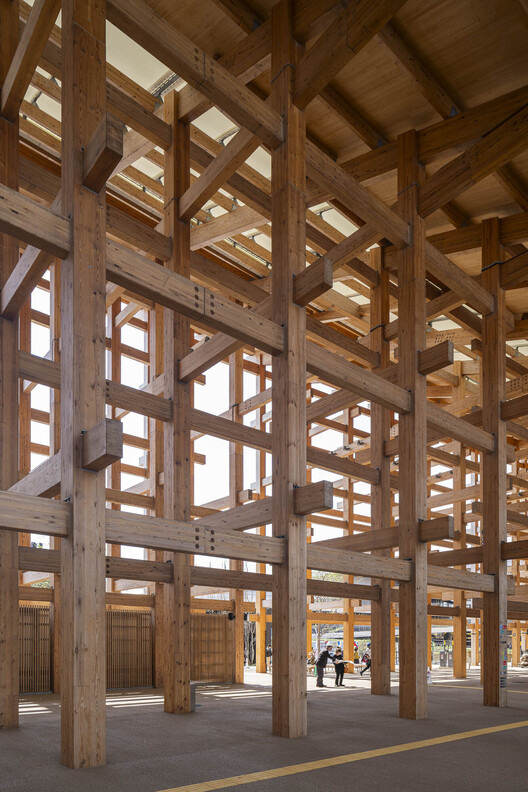
According to the association, the recipients include Namie in Fukushima Prefecture and Kansai University. The town of Namie was greatly damaged by the 2011 Great East Japan Earthquake and is considering using the wood as part of its reconstruction efforts. The university intends to use the material to rebuild a student building at its Senriyama Campus in Suita, Osaka Prefecture. An earlier article in the Japan Times also indicated that part of the wood would be used for public housing to aid recovery from last year's strong earthquake and heavy rain in Suzu City, in Ishikawa Prefecture. Shortly after the Expo's closure, architect Sou Fujimoto also stated to the press that the remaining material would most likely be turned into firewood.
According to the Japan Times, 26 of the Expo's 84 pavilions are expected to be reused, exceeding the original target of 17.5 pavilions. Five pavilions will be relocated in their entirety, and seventeen pavilions that made extensive use of leased construction materials are each assigned a value of one, as the materials will be returned to their lessors; eight pavilions that will be partially relocated are each assigned a value of 0.5. The circularity principles of the organization were also recognized in four sustainability awards presented to pavilions, including LAVA Architects' German Pavilion, which achieved zero waste, and STDM and Mikan's Luxembourg Pavilion, conceived to reduce resource and energy use both during operation and in the choice of materials, accounting for embodied or "grey" energy. Artificial coral skeletons made of calcium carbonate for Saudi Arabia's pavilion and donated to the University of the Ryukyus in Okinawa and Kansai University in Osaka Prefecture are also being used by Japanese universities to restore coral reefs and marine ecosystems. The Expo's toilets will be relocated to the Osaka Garden of Floral Culture in Kawachinagano, Osaka Prefecture.
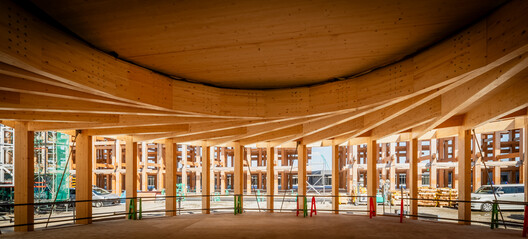
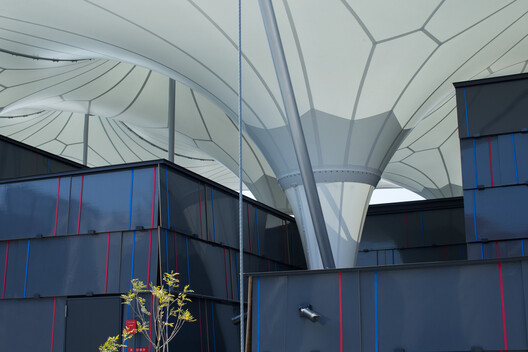
In line with the circularity and reuse concept and in the context of another major international event, Louisiana Channel released a new documentary on Danish architect Søren Pihlmann, providing a behind-the-scenes look at the process and thinking behind the Danish exhibition at this year's Venice Architecture Biennale, transforming it into a material laboratory and experimental construction site. Material reuse and the reappraisal of local and traditional materials were common themes among the 106 proposals received by TAC! 2025 Urban Architecture Festival, with two selected winning entries celebrating coastal culture. The Copenhagen Architecture Biennial 2025 also featured two 'Slow Pavilion' designs built from reused materials, embodying principles of circular design while serving as hubs for public programming during the event.
We invite you to check out ArchDaily's comprehensive coverage of Expo Osaka 2025.


