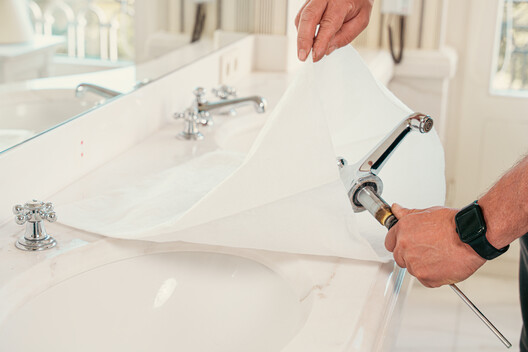
During renovation projects, replacement is often preferred over refurbishment. Used fixtures are removed, new products specified, timelines secured. Particularly in hospitality projects, where closures are costly and operations are tightly scheduled, installing new components appears to be the most reliable solution. It is faster, easier to coordinate, and aligns with established workflows. Refurbishment operates differently. It requires careful dismantling instead of disposal, evaluation instead of substitution, and trust in the quality of what is already there. It introduces complexity into a process designed for efficiency.
The recent renovation of Brenners Park-Hotel & Spa in Baden-Baden demonstrates that under the right circumstances, this additional effort can become a deliberate architectural strategy for similar projects, especially when the original materials were never intended to be temporary.
Extending the Life Cycle of Materials While Preserving Architectural Identity
Opened in 1872 along the Lichtentaler Allee, Brenners Park-Hotel & Spa represents a specific grand-hotel atmosphere: Belle Époque architecture layered with Art Nouveau detailing, marble floors, high ceilings, and restored salons. Following a two-year renovation, the five-star hotel reopened in October 2025, preserving its architectural identity while upgrading its technical performance. Stephan Bösch, Managing Director of Brenners Park-Hotel & Spa, explains:
It's always easier, faster, and saves effort, time, and communication when you simply say, throw it away, and replace it with something new. [...] But when we have the chance not to do that, we definitely take it.
The modernization was guided by a comprehensive sustainability strategy. Historic furniture and wallpaper were upcycled rather than discarded. Building services, heating, and cooling systems were fully replaced to meet high ecological standards and significantly reduce energy consumption. New windows were installed, and a photovoltaic system was carefully integrated. A technically demanding intervention within a listed building.
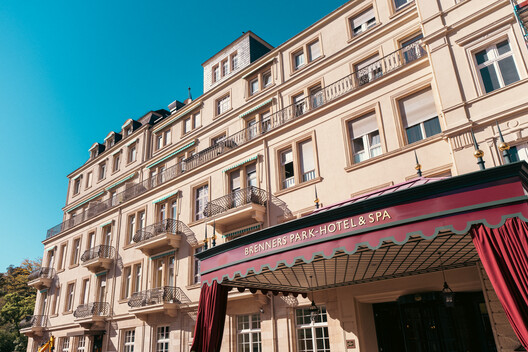
This approach extended to the bathrooms. For more than three decades, Dornbracht's Madison fittings had been installed throughout the hotel's rooms and suites. With their Art Deco references and solid brass construction, they had become part of the hotel's spatial character. Replacing them would have been straightforward. Instead, the fittings were dismantled, transported to Dornbracht's production site in Iserlohn, and refurbished through the company's ReCrafted program, a unique circular model. Rather than producing new pieces, the manufacturer takes back the used originals for handcrafted remanufacturing. As Bösch describes:
Instead of simply throwing things away and replacing them with new ones, we had the opportunity to preserve what we already had, restore it to its former beauty, and continue to use it.

Circular Strategies for Hospitality Renovation
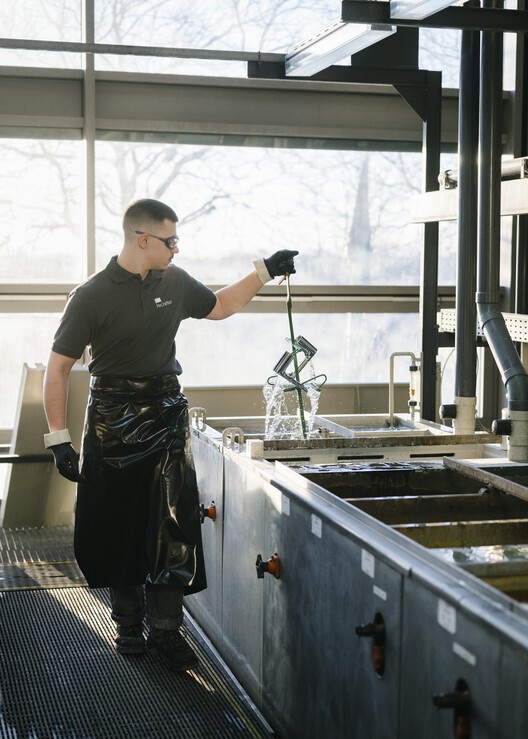
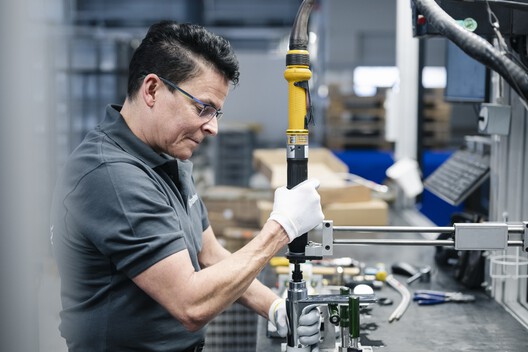
At Dornbracht's manufacturing facility, each reclaimed fitting was disassembled and evaluated component by component. All finishes were removed through an electrolytic process that recovered valuable raw materials. The base bodies were then manually ground and polished. New metallic surfaces were applied in the electroplating workshop, and the fittings were laser-marked as ReCrafted originals. After functional elements, including cartridges, seals, and aerators, were integrated, and following reassembly and quality testing, the fittings were returned to Baden-Baden for reinstallation. Visually, the result is indistinguishable from a new product. Technically, the fittings meet current standards. Materially, however, they remain the same objects that have accompanied the hotel for more than 30 years.
By recycling and reprocessing used fittings, CO₂ emissions are reduced by up to 40 percent compared with manufacturing a new product, while also avoiding material waste and costly disposal. However, refurbishment at this level depends on the quality of the original product. Madison's durability is rooted in its material quality and manufacturing precision. Produced in Iserlohn, with the majority of materials sourced within Germany and Europe, the fittings were designed for longevity and remain relevant for decades. When quality and timeless design align, refurbishment becomes technically and aesthetically viable.
For Brenners Park-Hotel & Spa, the decision was not solely environmental. The fittings are part of the hotel's lived history. Their return reinforces continuity within interiors that were otherwise technically transformed, allowing the bathrooms to feel renewed rather than replaced.
The renovation demonstrates that sustainability in architecture also involves recognizing the value embedded in existing components and extending their life cycle wherever possible. Replacing may remain the simpler option in many projects. Yet when technical precision, high-quality manufacturing, and long-term thinking converge, refurbishment becomes a way to preserve materials, reduce emissions, and maintain architectural identity.