This week's news compilation opens with two international commemorations, the International Day for Clean Energy and the International Day of Education, alongside a major archaeological discovery in Fano, Italy, where excavations have revealed a basilica described by Vitruvius, linking contemporary architectural discourse with deep historical continuity. Across this week's broader architecture news landscape, a central theme emerges around the advancement of civic architecture conceived as open, publicly engaged infrastructure, with cultural and institutional projects increasingly designed to strengthen their relationship with the city and everyday urban life. At the same time, renewed global attention turns toward Africa, where large-scale transport infrastructure and the conservation of modernist landmarks reflect interests in the region and the reassessment of the continent's architectural heritage. Complementing these narratives, this week's highlights also include a new model for car-free urban districts, co-designed public landscapes grounded in indigenous knowledge, and a residential development responding to regional context, reflecting how architecture is negotiating public space, civic responsibility, and territorial identity across diverse geographies.
Opening Buildings to the City: New Cultural and Civic Architecture Takes Shape Across Europe and the United States
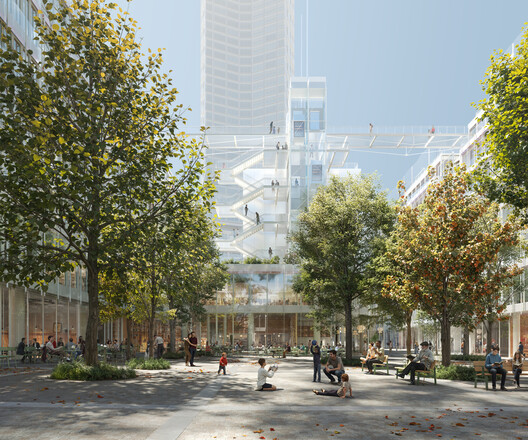
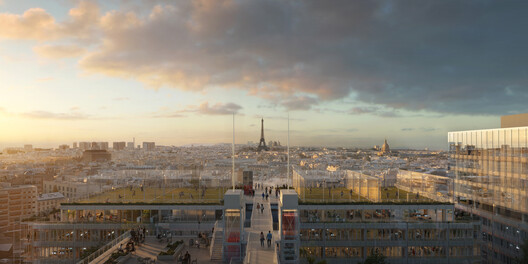
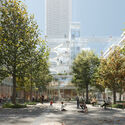
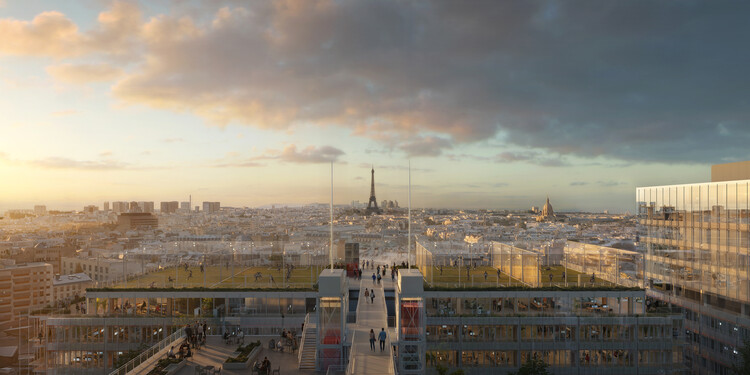
Recent developments highlight how major civic and cultural architecture projects are increasingly conceived as open, publicly engaged urban spaces. In the United States, construction is advancing on Herzog & de Meuron's new Memphis Art Museum, a timber-structured cultural institution scheduled to open in 2026, designed to strengthen connections between the museum, its park setting, and the city. In Milan, David Chipperfield Architects has released new images of the Santa Giulia Arena, one of the key venues for the 2026 Winter Olympics, as construction progresses on the arena that will host both sporting and cultural events as part of a broader urban regeneration. In Paris, Renzo Piano Building Workshop has unveiled plans to redesign the Montparnasse Commercial Centre as a pedestrian-oriented district, transforming a closed commercial complex into a permeable urban destination integrated with public space. Meanwhile, in the Netherlands, MVRDV and Buro Happold have revealed the design for the Lampegiet Theatre in Veenendaal, a civic venue conceived as a transparent and accessible cultural building that strengthens its relationship with the surrounding town.
Related Article
On the International Day for Clean Energy: How Local Initiatives Respond to the Spatial Impacts of Energy Production
Global Attention Shifts to Africa with Landmark Infrastructure Projects and Modernist Conservation
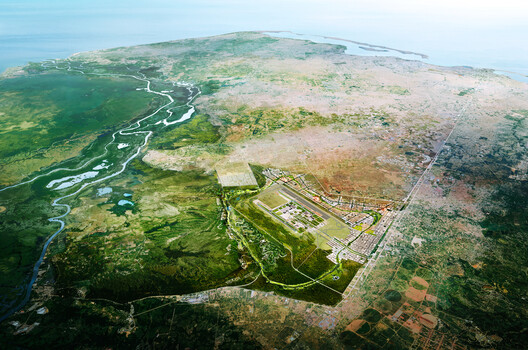
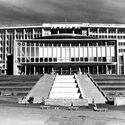
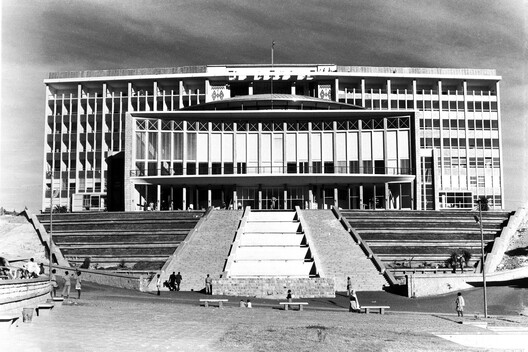
In the past two weeks, several major infrastructure projects in Africa designed by internationally renowned architecture firms have been announced. Foster + Partners, in collaboration with Angola's Ministry of Transport, unveiled a masterplan for the Icolo e Bengo Aerotropolis, a large-scale development planned around the recently completed Dr. António Agostinho Neto International Airport. This follows an earlier announcement by Zaha Hadid Architects marking the start of construction on the new Bishoftu International Airport (BIA) near Addis Ababa, which is planned to become Africa's largest airport. At the same time, international attention has also been directed toward the recognition of Africa's modern architectural heritage. The World Monuments Fund / Knoll Modernism Prize biennial award was granted to the conservation of the United Nations' Historic Africa Hall in Addis Ababa, Ethiopia, carried out by the Australia-based firm Architectus. The project was recognised for re-establishing a significant work of African modernism as an active venue for diplomacy and cultural exchange, adding to a growing number of initiatives that explore, document, and foreground modernism in Africa.
On the Radar
KCAP, MONK architecten, and Studio Nauta Design GROW Car-Free Urban District in Utrecht, the Netherlands
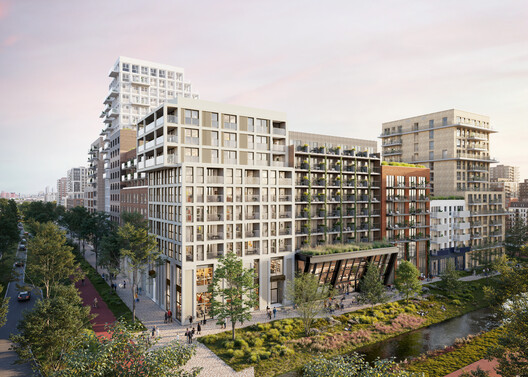
Designed by KCAP in collaboration with MONK architecten, Studio Nauta, and developed within BURA's master plan, GROW is a car-free mixed-use urban district along the Merwedekanaal in Utrecht that brings together urban density, architectural diversity, and sustainability-driven planning. The project comprises an ensemble of 18 buildings designed by 18 architects across the three studios, forming a fine-grained city block organized around a permeable courtyard that functions as a neighborhood park. Accommodating 575 homes across multiple housing categories, more than 10,000 square meters of amenities, and office and creative workspaces, GROW supports over 1,000 residents and approximately 400 workers within a single urban fabric. The district is structured through clearly articulated plinths, middle sections, and setbacks with roof gardens, emphasizing human-scale design through detailed ground floors, identifiable entrances, and careful public–private transitions. Sustainability measures include circular concrete and façade systems, CO₂-optimized design processes, efficient large-span layouts that enhance flexibility, integrated rainwater collection and retention, and extensive greenery across ground level, façades, and roofs. With a fully car-free ground plane, shared mobility infrastructure, and a centrally located parking hub, the new urban complex prioritizes walking, cycling, and public transport while positioning the neighborhood park, designed by Flux landscape architecture, as a climate-resilient green core that supports biodiversity and reduces urban heat stress.
LandLAB + SCAPE's Te Ara Tukutuku Vision Reclaims a Headland Open Space in Auckland, New Zealand
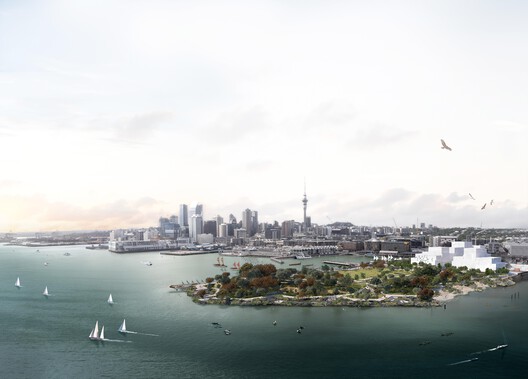
Designed by LandLAB in collaboration with SCAPE, Te Ara Tukutuku is a 5-hectare headland open space in Tāmaki Makaurau, Auckland, that exemplifies a co-design approach grounded in indigenous knowledge and practices to transform a former petrochemical site into a culturally, environmentally, and socially regenerative coastal landscape. Developed with Mana Whenua partners and a multidisciplinary team, the project is structured around a waka metaphor that conceptually binds land, sea, and people, linking the domains of Tangaroa (ocean), Tāwhirimātea (atmosphere), and Papatūānuku (Mother Earth). Conceived as the largest new open space in Auckland's city centre in a century, Te Ara Tukutuku follows a Mana Whenua–led vision that integrates mātauranga Māori, ecological science, infrastructure, and place-making. The design reimagines the original waterfront topography, shaping an elevated headland, coastal edges, and a sequence of bays and open spaces that support marine restoration, ngahere planting, outdoor classrooms, whare waka and waka launching infrastructure, and areas for pause and gathering. Regenerative landscape practice underpins the project, with a holistic focus on the interconnected health of whenua, moana, wai, and tāngata, supported by carbon-conscious design strategies, material reuse, local and Red List–free sourcing, and integrated water and energy systems. Through education-based activations and long-term ecological processes, Te Ara Tukutuku positions indigenous leadership and co-design as central drivers in creating resilient public spaces that reconnect communities to the water.
NOA Designs Berdenesh Hills Coastal "Citadel" Residential Development in Saranda, Albania
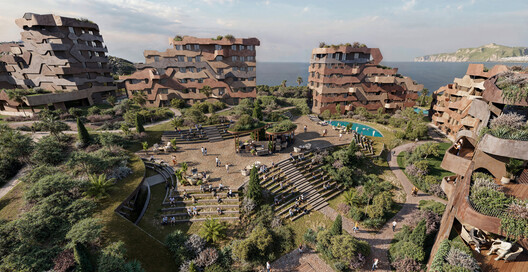
Italian studio NOA, in collaboration with local practice Atelier 4, has unveiled images of a contemporary "citadel" residential and hospitality development in Saranda, southern Albania, underscoring how architectural and real estate development in the country continues to expand beyond the capital, Tirana. Having received preliminary design approval and currently advancing through further development phases, the private project is planned to begin construction in 2026. Set within a Mediterranean landscape, the 26,000-square-metre ensemble comprises approximately 250 apartments and a hotel organized as terraced volumes in earthy tones. Drawing on the region's historical network of castles and fortified settlements, NOA proposes a new neighborhood structured as an open citadel, centered on a multi-level piazza and community pavilion, whose perimeter buildings remain visually and spatially porous to the surrounding landscape. Roof planes step and rise in response to the site's slopes, creating an amphitheatrical configuration, while a Mediterranean park extends across the site. Facades are articulated through layered plaster bands, projections, and recesses that disrupt the conventional reading of floor slabs typical of Saranda's coastal towers. Terraces provide private outdoor space for each dwelling and soften the visual impact of the six-storey maximum building height.
This article is part of our new This Week in Architecture series, bringing together featured articles this week and emerging stories shaping the conversation right now. Explore more architecture news, projects, and insights on ArchDaily.


