

January 26 marks the International Day for Clean Energy, an initiative aimed at raising awareness and mobilizing action for an inclusive transition from fossil fuels, such as coal, oil, and natural gas, to power generation systems with lower greenhouse gas emissions and fewer pollutants. The term "clean" signals a fundamental shift away from extractive, finite, and exhaustible energy sources toward systems based on renewable resources or on capturing energy embedded in natural processes. In a world grappling with climate change, clean energy plays an important role in reducing emissions and expanding access to reliable power. However, being labeled "clean" does not exempt these systems from the impacts associated with their production, deployment, and commercialization. In this context, architectural knowledge related to space, materiality, and habitation becomes relevant for supporting a transition toward energy systems that are sustainable over time. As stated by the United Nations, the science is clear: to limit climate change, reliance on fossil fuels must end, and buildings must be heated, lit, and electrified through clean, accessible, affordable, sustainable, and reliable power sources.



A significant share of the greenhouse gases that blanket the Earth and trap the Sun's heat is generated through energy production, particularly by burning fossil fuels to produce electricity and heat. Compounding this global issue is persistent territorial inequality in energy infrastructure, with many regions still dependent on polluting fuels for everyday life. This dependence contributes to the perpetuation of poverty, as limited access to reliable power constrains education, healthcare, and economic opportunities. Architecture and urban planning can contribute not only to expanding energy access, already supported by the continued growth of installed renewable capacity per capita, but also to improving energy efficiency. This involves achieving the same outputs with lower energy consumption through more efficient technologies in transportation, buildings, and lighting. Understanding how different energy sources operate, how they can be integrated into the built environment, and the environmental impacts associated with each is essential for an effective and equitable transition.
As states, cities, industries, and communities intensify efforts to address climate change worldwide, the following section presents two approaches to considering the impacts of energy sources at the design stage. The first considers energy production and distribution from a territorial perspective, examining how infrastructure shapes landscapes, ecosystems, and patterns of inequality at the local and regional scale. The second focuses on the architectural and technical devices through which energy is captured, stored, and consumed, addressing how their design, placement, and materiality can impact their ecosystems.
Related Article
The Future of Energy: Can Buildings Become Reservoirs of Power?The Territorial Impact of Clean Energy Sourcing: Pavilions Cooling Urban Spaces and Cryptocurrency Heating Homes
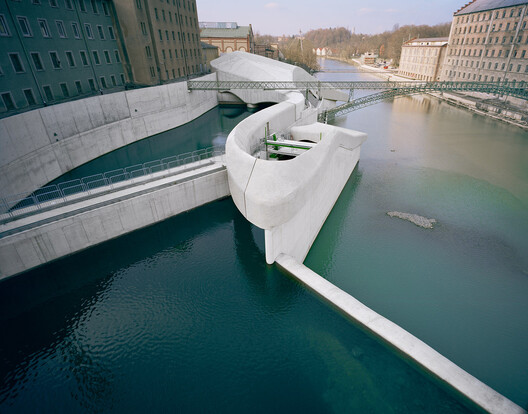
Common sources of clean energy today are primarily renewable, including wind, solar, geothermal, and hydropower. Other sources recognized by the United Nations include ocean energy and bioenergy. All of these systems require new forms of architecture and infrastructure to capture, process, transport, and use energy. Despite being labeled "clean," these strategies often depend on the intensive use of scarce resources, such as large tracts of land or extensive bodies of water. This dependence can give rise to so-called "sacrifice zones": areas, often inhabited by low-income communities, that experience permanent material and environmental degradation, ultimately reducing local quality of life. The impacts can be directly human, through changes to territorial, visual, or auditory conditions in inhabited environments, or through damage to animal and plant species that sustain ecosystem balance. As a result, sacrifice zones risk becoming enduring, and often transnational, manifestations of territorial inequality, regardless of how "clean" the recovered energy is considered to be.
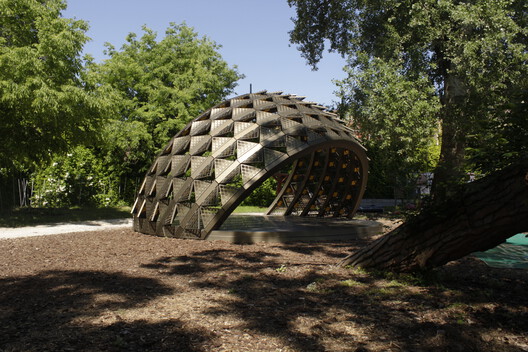
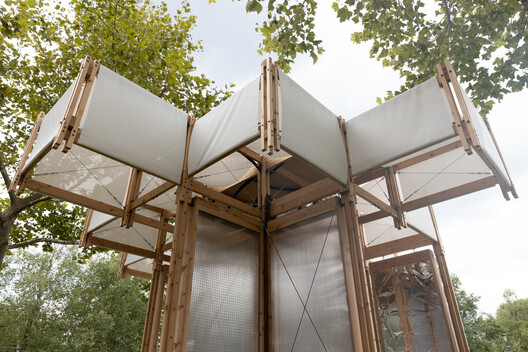
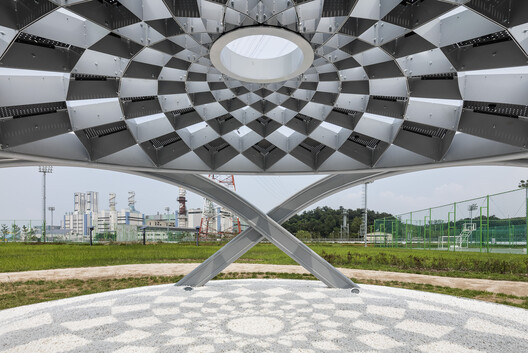
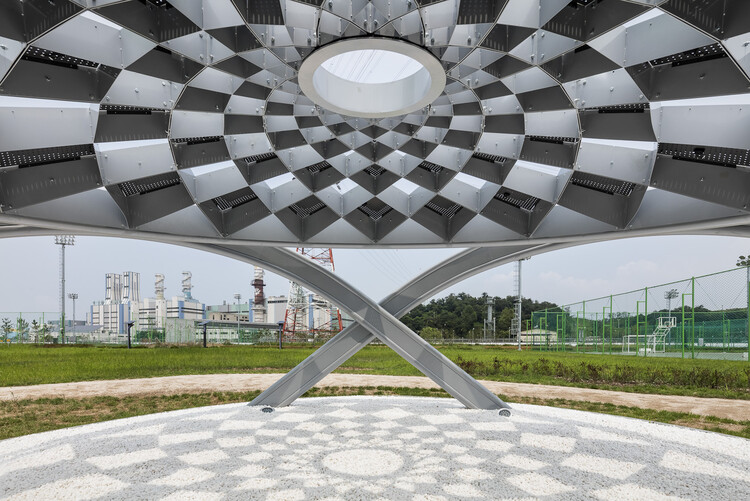
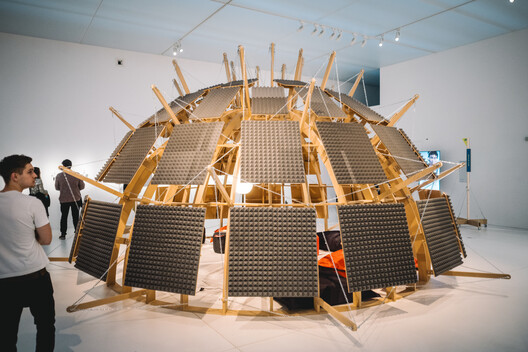
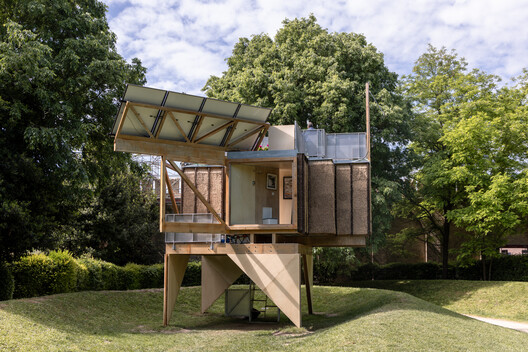
Responses to these challenges increasingly focus on a change of scale, favoring infrastructure solutions that address everyday needs in more localized and less invasive ways. This approach involves circular thinking, in which solutions emerge from local contexts, reducing the need for long-distance extraction or transport. Recent examples illustrate this shift. The Golden Lion for Best National Pavilion at the 2025 Venice Architecture Biennale, the pavilion of the kingdom of Bahrain, highlighted an installation designed to reduce temperatures in public space through passive strategies. Similarly, Henning Larsen's KlimaKover is a modular, low-energy system that provides thermal relief without mechanically cooling the air. Also in Venice, MVRDV has explored environmental responsiveness through kinetic adaptation in its SOMBRA Pavilion. At a larger scale, in Finland, waste heat from local cryptocurrency mining operations is being used to heat the homes of approximately 80,000 residents by integrating with existing district heating systems, significantly reducing reliance on conventional boilers.
The Product Impact of Energy Transition Technologies: Painted Wind Turbines and Recyclable Solar Panels
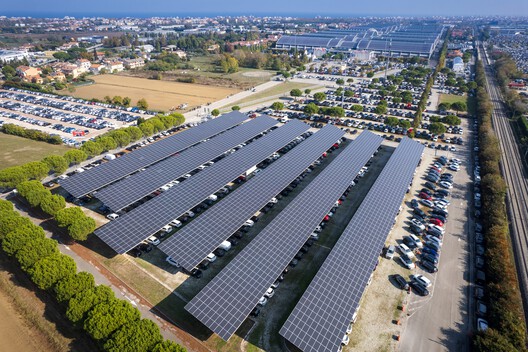
Beyond large-scale policies and infrastructural systems, alternative energy sources become part of everyday life through products and building-scale technologies. Panels, turbines, batteries, and related devices are the interfaces through which energy is harvested, stored, and consumed, making them especially relevant to architecture and construction. While often perceived as inherently benign, these products also carry environmental and economic implications tied to their material composition, manufacturing processes, maintenance requirements, and end-of-life management. Critical minerals, composite materials, and complex supply chains are embedded in many renewable energy products, while their deployment introduces new cycles of consumption, replacement, and waste. As costs have dropped dramatically, making renewables more accessible and reliable, these systems have scaled rapidly, reinforcing the need to consider their full lifecycle impacts rather than assuming a zero-impact condition.
Several recent initiatives point toward strategies that acknowledge and mitigate these product-related challenges. Efforts to recycle solar panels, for instance, address the growing volume of photovoltaic waste by recovering glass and other components for reuse, extending the material lifespan of energy-harvesting devices. In the context of wind energy, experimental approaches such as painting turbine blades black have been tested in the United Kingdom to reduce bird collisions, illustrating how design modifications can respond to ecological concerns without altering energy output. At the building scale, the University of Sheffiled is developing of flexible solar cells embedded in thin films to expand the range of surfaces capable of producing energy, reducing material intensity and allowing integration into existing architectural elements. From the perspective of architecture as an industry, incorporating a product into a project involves its consumption, integration into the environment, and degradation over time. Addressing the impacts of renewable energy products, through reuse, adaptation, and material innovation, is as important as their capacity to generate power.
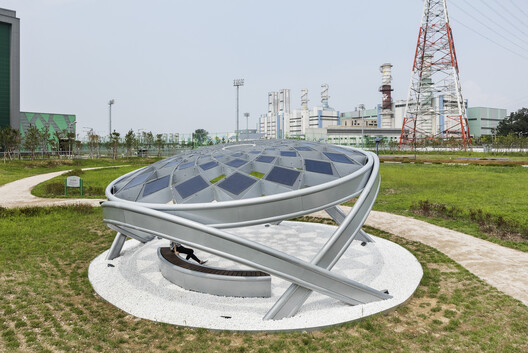
There is, therefore, no such thing as zero-impact energy. However, responses grounded in circular thinking and design do exist, allowing the application of energy-extraction technologies to be sustainable over time and significantly less damaging than the extractivist drive of fossil fuels. Territorial responses include the systematic integration of intermediate, community-based scales of organization and action for the deployment of devices and strategies that respond effectively and creatively to localized challenges. Material responses include innovation and experimentation in products, as well as the reorganization of their consumption, based on a shift in how time and the concept of "service life" are understood. From the massive to the community-based, from the immediate to the planned. These different projects around the world help us imagine concrete responses to the energy transition and develop resilient strategies capable of remaining effective amid large-scale technological shifts, such as the widespread adoption of artificial intelligence.
Explore ArchDaily's input into recent United Nations International Days: International Day of Education, International Migrants Day, Human Rights Day, and International Youth Day.


