
Does design guide usage, or does usage guide design? Students struggle to maintain focus, employees flinch under harsh lighting, and occupants withdraw from rigid spaces, often in response to environmental conditions that only become visible once a space is occupied. Light falling across a room, the resonance of sound, the texture of surfaces, or the rhythm of circulation can support focus, calm, or inspire creativity, but each can also inadvertently heighten stress and distraction. Architects and designers are exploring and questioning: how are design decisions informed, and whose knowledge is considered essential in shaping space?
The global integrated design firm DLR Group places these questions at the center of its practice. Working across educational, civic, healthcare, and workplace environments, the firm emphasizes research-informed, human-centered design that treats lived experience as a form of design intelligence. In a recent conversation with ArchDaily, Global Design Leader Tim Ganey, Global Leader of Equity, Diversity, and Belonging Jessica Bantom, and Interior Designer Sammy Rupp describe how working directly with users helps define challenges before solutions are proposed.
While user-centered design takes many forms, these approaches are not interchangeable. Some rely on observation and research, others on dialogue, testing, or simulation. What unites them is not a single methodology, but a shared goal: prioritizing the needs, experiences, and constraints of the people who will ultimately use a space, and allowing these realities to guide decisions. As Ganey explains, this work begins by reframing how problems are defined:
It's about defining what users are looking for and inviting them to create with us [...]. Users are the experts on themselves, and the design process starts with a conversation involving everyone. It's about creating and defining the puzzle together, rather than rushing in to solve a problem.
Experiencing Space with Tactile at Time Space Existence
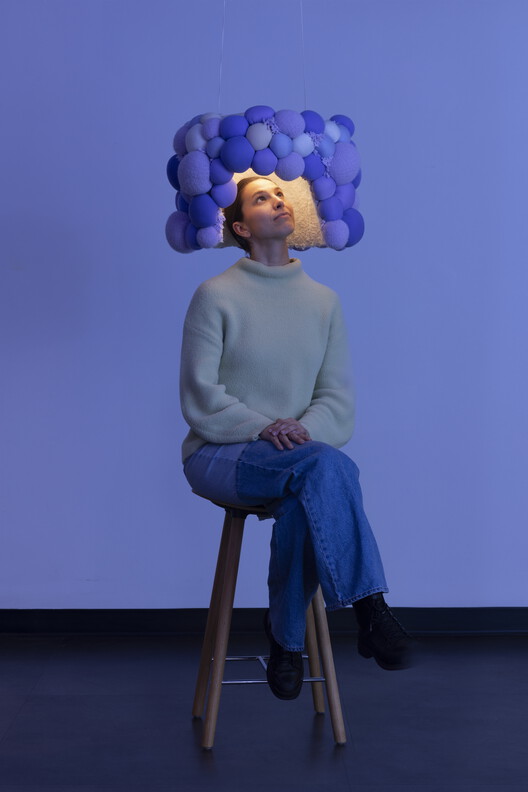
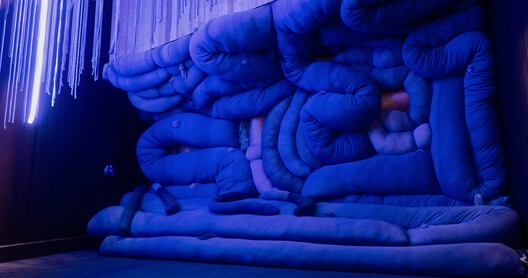
This emphasis on lived experience is particularly evident in DLR Group's exploration of neuroinclusive design, which extends universal accessibility beyond physical movement to include sensory and cognitive needs. Tactile, an interactive exhibition presented at Time Space Existence—hosted in parallel to the Venice Architecture Biennale 2025—explores ways in which environments can either support or disrupt concentration, comfort, and regulation. Developed through a DLR Group Personal Development Grant, the project grew out of Sammy Rupp's personal need to better understand how environments affect neurodivergent individuals, including herself and her sister.
Drawing on interviews with neurodivergent individuals, designers, and occupational therapists, Tactile allowed visitors to engage directly with spatial zones designed to explore touch, sound, light, and circulation. Active areas encouraged interaction, while quieter zones offered spaces for calm and regulation. Dim blue lighting, tactile textures, and low-frequency vibrations generated from an instrument created in collaboration with visual and sound artist Thessia Machado helped visitors experience how sensory-informed design can support attention, emotion, and comfort. Strategies developed with neurodivergent users in mind often benefit all users. As Rupp explains:
Recognizing the fact that in addressing some of the challenges for a particular population, you're more often than not meeting a need that affects more people than you're actually aware of or acknowledging.




Educational Spaces: Pathfinder Kindergarten Center and Boys Town Education Center
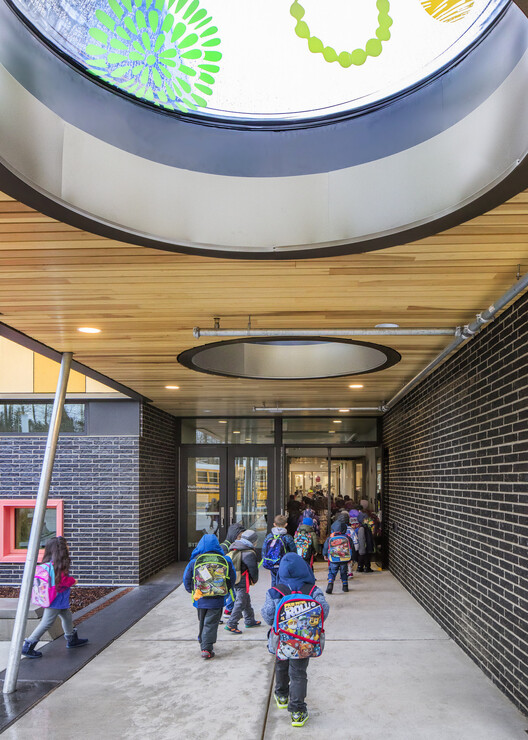
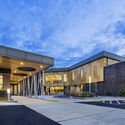
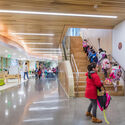
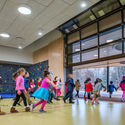
The principles extend into larger educational and therapeutic contexts. At Pathfinder Kindergarten Center, designers observed multiple existing kindergarten sites to understand learning and teaching needs, revealing key insights about spread-out activity programs, excessive transition times, and the need for community building. DLR Group developed an "expanded push-in" model with neighborhood pods, employing child-scaled, research-informed design to create spaces that encourage learning through play. Post-occupancy studies showed that decentralizing key functions and providing varied zones reduced transition times and improved attention and engagement.
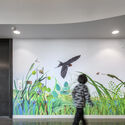
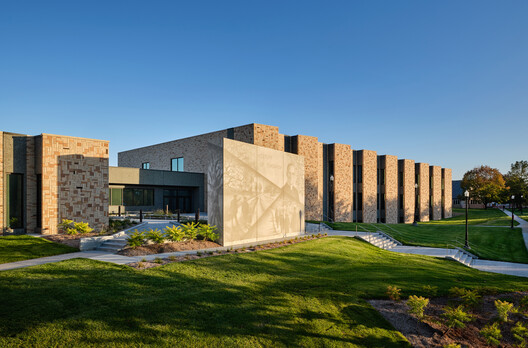
At Boys Town Education Center, the context and priorities were different. Nearly every student has experienced trauma, and 80% arrive with significant academic and/or behavioral challenges. Here the design process relied on extensive research, stakeholder engagement with the Boys Town Core Planning Team, student and teacher shadowing, design exercises, and student-led artwork.
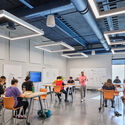
User input manifested in spaces that allow students to control their level of interaction with peers; private nooks balanced with interior visibility; varied seating options catering to individual needs; and sensory considerations, including tunable classroom lighting and comprehensive acoustic treatments. Prioritizing student and faculty mental health and emotional well-being, the design aims to give students comfort, safety, autonomy, and a sense of ownership over their environment. By stepping back from the "expert" role, designers create space for multiple voices, including students, educators, school counselors, and researchers, to influence meaningful outcomes.
Designing with Users in Mind
Human-centered design, as Bantom emphasizes in her book Design for Identity: How to Design Authentically for a Diverse World, focuses on integrating user perspectives into architecture. Understanding how people live, what they value, and how their identities intersect with space is essential. When users see their needs reflected in a final design, it fosters not only comfort, but also ownership and belonging. Bantom emphasizes: "We're doing inclusive engagement, [...] taking the content we get and incorporating it into the design, allowing the user to see their input reflected in the space."
Flexibility is a recurring theme across these projects. Whether offering choices between active and quiet areas, providing varied textures and lighting, or designing for different body sizes and cognitive processing styles, adaptability is essential. It allows spaces to respond to evolving needs, empowering users to regulate their own experiences.
Across educational, therapeutic, and civic projects, sensory-informed, research-driven design translates these principles into tangible solutions: fiber and textile assemblies that modulate sound and touch, lighting that supports calm, and flexible furniture that meets user needs. These interventions reduce stress, support attention, and uphold dignity. From installations to full-scale schools, such strategies demonstrate how human experience can guide architectural logic.
Civic and High-Risk Training Environments: Hayward Fire Training Center
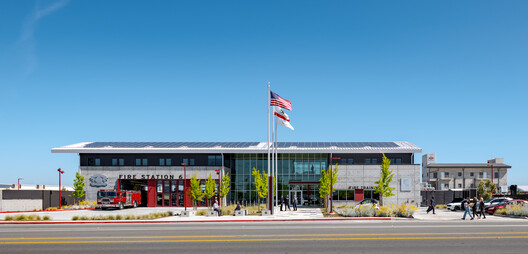
Sometimes, the 'user as designer' method guides architectural logic in unexpected directions—even intentionally defying building code. At the Hayward Fire Training Center and Fire Station #6, DLR Group simulated unpredictable, high-risk hazards and hurdles that first responders encounter in the field, to prepare recruits and in-service personnel for mission-critical duties.
In a Community Hazards study, crews used their cell phone cameras to photograph real-world dangers: narrow stairwells, non-code-compliant attic conversions, and doors that open in a counterintuitive direction. The designers embedded these hazards into the campus, creating disorienting layouts, props, and structures, and a multi-floor tower where each floor plate mimics a different building type. By training repeatedly against a variety of user-informed scenarios, trainees and recruits can develop the muscle memory needed for making split-second decisions in high-risk situations.




Ultimately, when users are integrated into the design process, their knowledge becomes integral to spatial decision-making, resulting in research-informed, human-centered environments that support restoration, focus, and community resilience. Ganey emphasizes: "Designers should seek to create environments that foster everyone's unique abilities and allow a much wider variety of people to thrive."