The pursuit of stronger, lighter, and more durable materials has guided architecture long before polymers or carbon fibers existed. One of the earliest large-scale examples of composite materials can be found in the Great Wall of China, where stone, clay bricks, and organic fibers such as reeds and willow branches were blended to create a resilient and lasting structure. These early techniques reveal a timeless intuition: distinct materials, when combined thoughtfully, produce properties unattainable by any single element. As the construction sector faces urgent ecological pressures, this intuition is being revisited through the lens of sustainability, with architects and engineers exploring bio-based, recycled, and hybrid composites designed not only for performance but also for circularity and environmental responsibility.
Widely used composites, such as petroleum-based polymers reinforced with glass or carbon fibers, first entered architecture through aviation and automotive industries focused on efficiency and precision. Their combination of lightness, strength, and resistance allowed architects to pursue forms and spans that conventional materials could not easily offer. However, their production is energy-intensive, reliant on non-renewable resources, and recycling remains a challenge, while many end up in landfills, contributing to a high carbon footprint. While technically impressive, standard composites present environmental trade-offs that the construction sector can no longer ignore.

Materials That Grow and Evolve
Sustainable or circular composites emerge as an alternative, integrating bio-based fibers, recycled plastics, or hybrid materials designed for reuse, biodegradability, or recyclability. These materials maintain the benefits of widely used composites—lightness, strength, and formability—while reducing environmental impact and aligning with circular economy principles. Bio-composites, in particular, are gaining attention: natural fibers such as hemp, flax, jute, bamboo, and mycelium can be combined with plant-based resins or recycled polymers to produce lightweight, thermally efficient, and resilient materials.
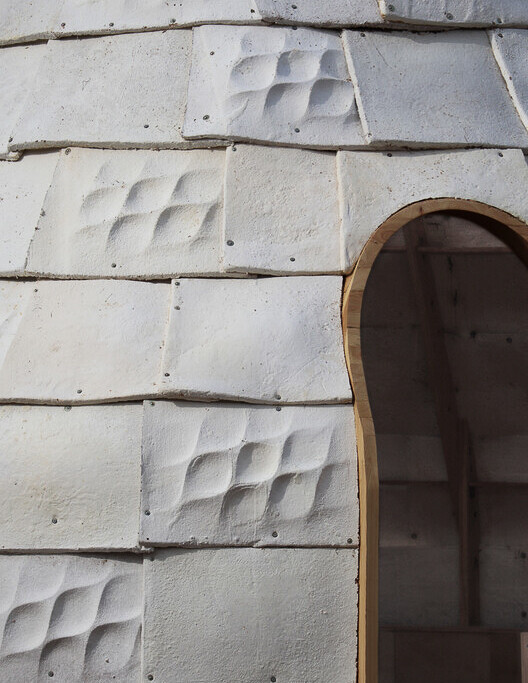
Several experimental projects demonstrate their potential. The Mycelial Hut by Yong Ju Lee Architecture explores fungal networks by using molds fabricated with robotic 3D printing, creating insulating panels with natural textures. Similarly, Matter Matters Lab experiments with plant-fiber components from food waste, showing how bio-composites can move from prototypes to potential functional architectural elements. Henning Larsen Architect's Growing Matter(s) Pavilion, presented at Milan Design Week, uses modular spheres grown from mycelium, showcasing how biological systems can generate components with minimal embodied energy. Other emerging examples are Hempcrete, made from hemp hurds and lime. While bio-based composites may not yet rival carbon or glass fibers in absolute strength, hybrid solutions combining natural and synthetic fibers enable architects to balance performance with ecological responsibility.


Renovation and Reuse: Circular Composites as Tools for Transformation
Recycled composites expand this approach, giving new life to waste and decommissioned materials. This has particular relevance for renovation. As existing buildings require reinforcement, thermal upgrades, or lightweight extensions, circular composites provide an opportunity to intervene with minimal impact on the original structure. In many cities, renovation has become a central strategy for lowering carbon emissions and reducing the need for carbon-intensive new construction. The precision and adaptability of bio-based and recycled composites make them suitable for delicate retrofits, while their recyclability ensures that new additions do not become a burden for future maintenance or demolition.
Standard composites have already demonstrated their effectiveness in such projects: their lightness reduces the need for additional foundations, their durability lowers maintenance demands, and their compatibility with prefabrication allows faster, cleaner interventions. From reinforcing existing concrete to adding high-performance facade layers, these materials support upgrades that preserve and improve buildings rather than replace them. Architects can mold panels, shells, and exoskeletons into continuous curves, dynamic surfaces, and parametric patterns, achieving both structural efficiency and expressive form.
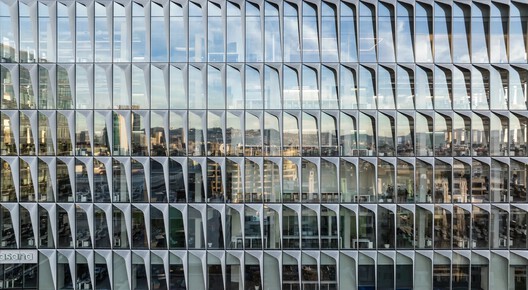
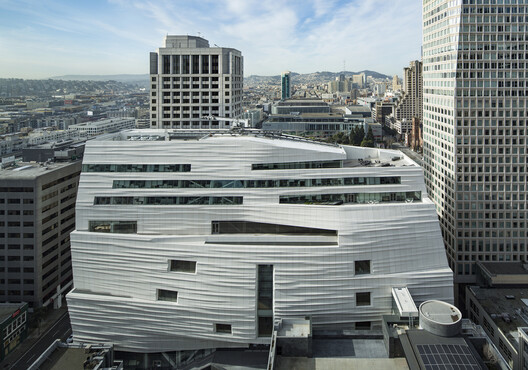
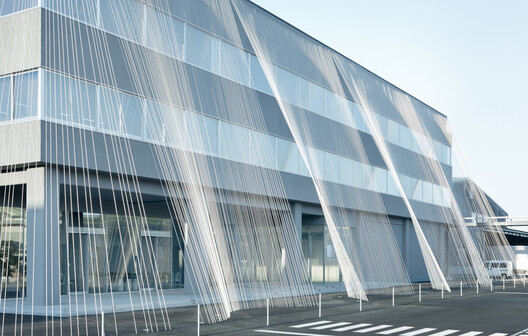
Projects such as 633 Folsom, Latitude The Berkeley Building, the FA-BO renovation, and the San Francisco Museum of Modern Art expansion facade exemplify how standard composites can successfully support renovation, combining modernization, structural efficiency, and aesthetic enhancement. These cases show that composites are well-suited for interventions that extend the life of existing buildings rather than replacing them. Looking ahead, sustainable composites have the potential to deliver similar performance while reducing environmental impact, offering a promising path for future renovation projects when applied according to the same principles proven by widely used composites.
As research progresses and built examples become more common, sustainable composites may reshape not only how buildings are made, but how they evolve over time. They enable a construction culture in which materials circulate continuously, reducing ecological impact while expanding the expressive and formal possibilities of architecture. Although their widespread adoption in architecture is still emerging, advancements in testing, certification, and industrial production indicate that today's experimental composites suggest a steadily growing potential for broader application in the near future.
A Worldwide Network Driving the Future of Composites
A global ecosystem of research, industry, and design supports this evolving field of sustainable composites. JEC World 2026, taking place March 10–12 at the Paris Nord Villepinte exhibition center, brings together manufacturers, engineers, and architects to showcase composites, including bio-based, recycled, and hybrid composites. The event features more than 1,400 exhibitors, over 46,000 professional visitors from 100 countries, live demonstrations, high-level conferences, and the JEC Innovation Awards, which highlight groundbreaking solutions, unique manufacturing techniques, and business opportunities, serving as a hub of creativity, vision, and action.
JEC World also serves as a global showcase for the wider composites industry, attracting professionals from aeronautics and space, mobility and transportation, infrastructure and construction, renewable energy, water management, sports equipment, and consumer electronics. For designers, the event provides insight into the evolving possibilities of materials that combine performance with environmental responsibility, spanning projects from experimental pavilions to large-scale infrastructure.
Discover the latest innovations, projects, and sustainable materials at JEC World 2026, the leading global event dedicated to the composites industry.


