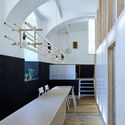
The Glasgow Institute of Architects, in collaboration with Glasgow Life, Glasgow Doors Open Days Festival and Mackintosh at the Willow, are inviting entries for an exciting live-build competition during the Glasgow Doors Open Days Festival weekend to celebrate the 150th anniversary of Charles Rennie Mackintosh. Taking place from Friday 14th to Sunday 16th of September, the competition will see the Billiard Room at ‘Mackintosh at the Willow’ on Sauchiehall Street inhabited and transformed by an installation built entirely from cardboard, which will enhance the Mackintosh-designed space.
The call for ideas considers water landscapes, specifically rivers, as mediators in the formation of a harmonic and dynamic balance between cities and nature. a river restoration approach (considering fluvial geomorphology) should be adopted in order to “re-enliven the river” and as a lens from which to reinforce and understand natural systems for design adaptation.
The BAMB - Building As Material Banks – project has been working on developing and integrating tools including reversible design and materials passports in order to enable a systemic shift in the building sector, where dynamically and flexibly designed buildings can be incorporated into a circular economy. Through design and circular value chains, materials, products and components used in renovations and new buildings can sustain their value over time. Instead of being to-be waste, buildings will function as banks of valuable materials – slowing down the usage of resources to a rate that meets the capacity of the planet. Different strategies for design of reversible buildings whose structures could be reversed to the set of components / elements to adjust to changing functional requirements of buildings or create new building structures utilizing its components and materials.
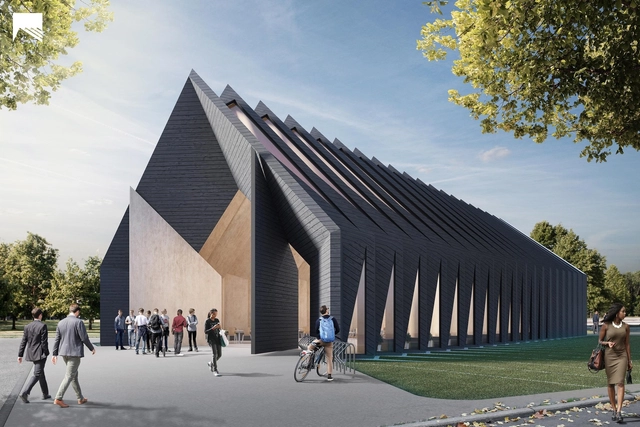
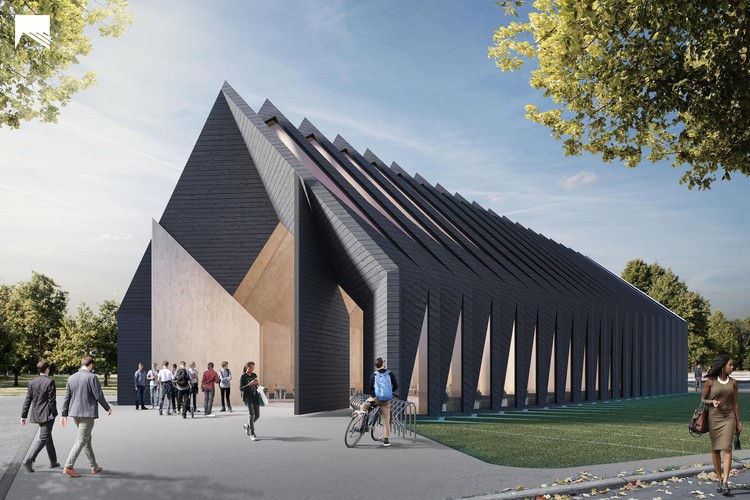
MIT Mass Timber Design, a cross-disciplinary design workshop at the Massachusetts Institute of Technology, have developed a building prototype that aims to tackle the world’s growing energy crisis, “one of the biggest challenges of the 21st century.” Extensively using the wood-based building design and construction technology mass timber - a method growing in popularity within North America - the project utilizes the “efficiency, speed, precision and versatility” of prefabricated timber construction elements to realize a multi-functional, sustainable building. The longhouse typology, often one of the first permanent structures of a civilization, is a common across the world, but in adapting its construction to face modern-day issues, the team hopes to create a space that “builds upon this rich cultural icon.”




.jpg?1532075805)
.jpg?1532078403 "© Phil Boorman")
.jpg?1532076106 "© Phil Boorman")
.jpg?1532078444 "© Phil Boorman")
.jpg?1532076715 "© Phil Boorman")
.jpg?1532077418)