

-
Architects: LEAPfactory
- Area: 50 m²
- Year: 2015



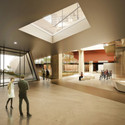
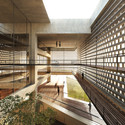
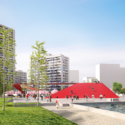
This latest design by Architects for Invention, a development bid proposal for the Spelthorne Borough Council, presents a residential development in the United Kingdom with community at its heart. Situated along the Thames river, the structure unfolds itself toward the city, providing its tenants, and the public alike, with extraordinary views of the river.
In keeping with best practices, this update to the existing town aims to place the community at its center, inviting visitors to enjoy the space along with the residents. To accomplish this, the building employs an open scheme, physically encompassing the community to draw it in through easy points of access. Additionally, the building is meant to create a positive contribution to the local character of its setting while simultaneously acting as a central hub for the community through its placement.
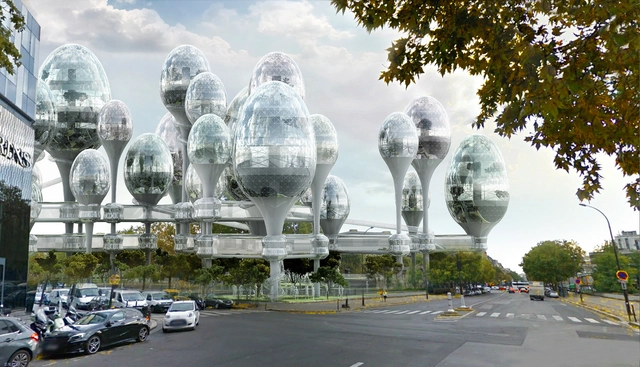
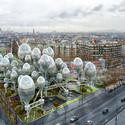
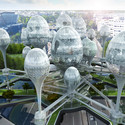
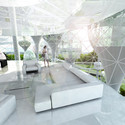
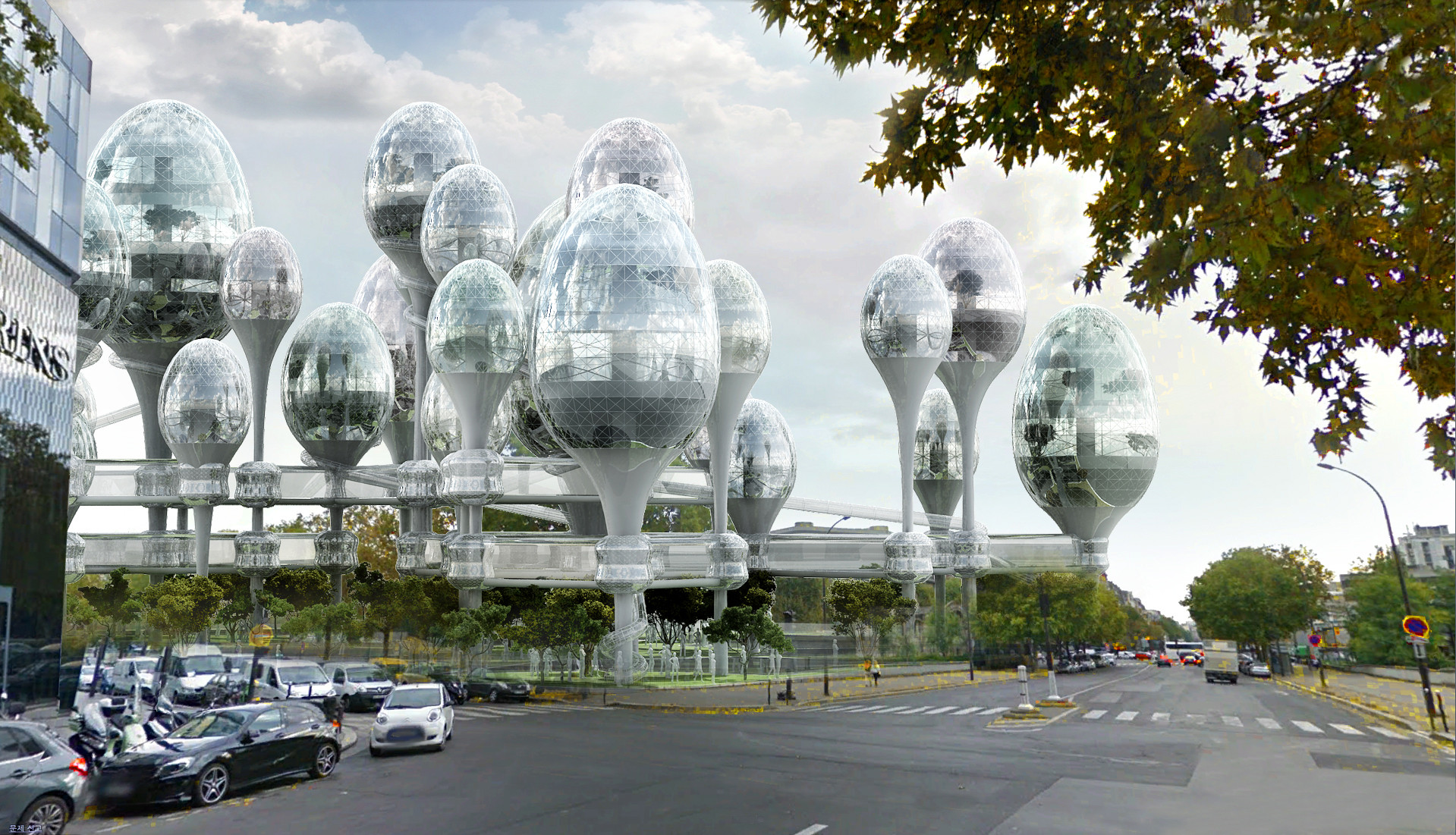
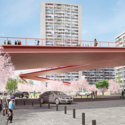
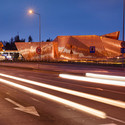
When asked by the City of Paris to envision its future, Planning Korea turned to the uncharted microbial world of the city’s parks. Their observations lead them to an unusual proposal: shape the future “Greater Paris” by infilling voids within the urban landscape (in this case, between two bridges in the heart of Porte Maillot) with a floating, “organism-like” complex of mixed-use pods designed to coexist with the “macro world of artificial structures.”
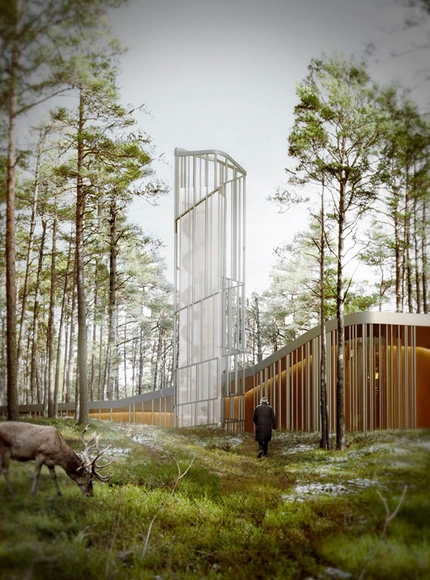
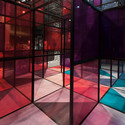
The Museum of Estonian Architecture opens its new season with an exhibition of the latest recipients of the Alvar Aalto Medal, Nieto Sobejano Arquitectos. Exhibition “The Window and the Mirror” opens at the museum today (Friday, February 13), providing visitors a first-hand experience of the works of the internationally acclaimed architects Fuensanta Nieto and Enrique Sobejano. In 2014 Nieto Sobejano Arquitectos won the architecture competition of the Arvo Pärt Centre to be built in Estonia by 2018.
On March 6 and 7, New York's Pratt Institute will host "Sculpting the Architectural Mind," a conference exploring the connection between "Neuroscience and the Education of an Architect."
Examining the past and potential role of applied neuroscience within architectural education, the conference will touch on topics such as design cognition and the effect of digital media production. "Sculpting the Architectural Mind" is both analytical and speculative, searching for new means of integrating digital tools into the design process and questioning what effects such an approach would have upon the built environment. The themes will be explored over four sessions spaced over the conference's two days.
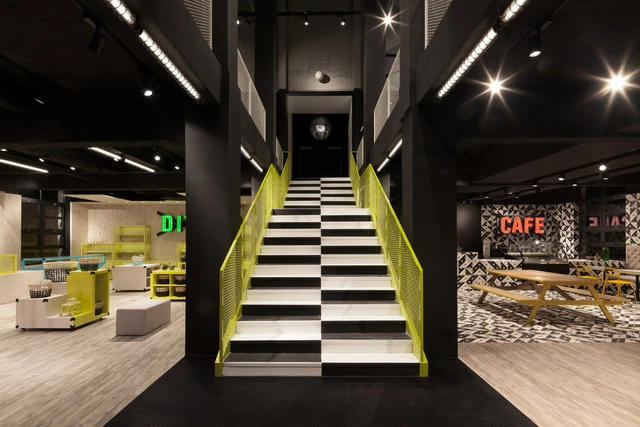
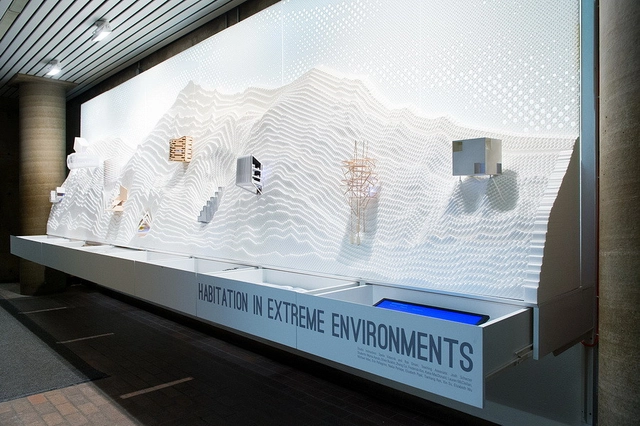
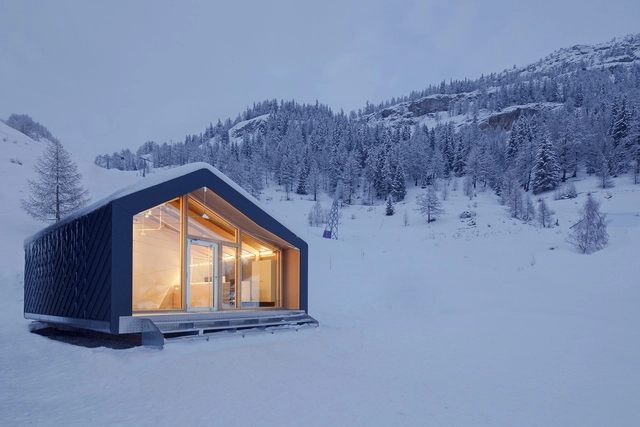
The extreme climatic conditions of the North introduce a design paradox for architects. The fragile environmental conditions require incisive designs that respond to irregular loading from strong winds, heavy snowfalls, avalanche risk zones, and extreme cold. The studio investigated a prototypical design: a unit with sleeping and cooking space for up to eight people, on a mountain site in Slovenia. The talk (on Friday, February 13th) serves as an opening for the exhibition on this project, curated by Spela Videcnik, John T. Dunlop Design Critic in Housing and Urban Development, with Rok Oman, featuring the work of her Fall 2014 studio, displayed on the Experiments Wall (in Gund Hall). Construction of the shelter is planned for summer 2015.

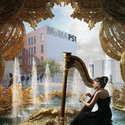
Although the Young Architects Program (YAP) announced Andrés Jaque of Office of Political Innovation as winner of its 2015 MoMA PS1 competition last week, the competition was fierce. Phenomena by Studio Benjamin Dillenburger addressed the idea of phenomenology in design, creating an experiential space that stimulates all the senses and hosts multiple programs.
Phenomena was one of the five shortlisted proposals for this year's MoMA PS1 YAP competition. Read more about the proposal after the break.
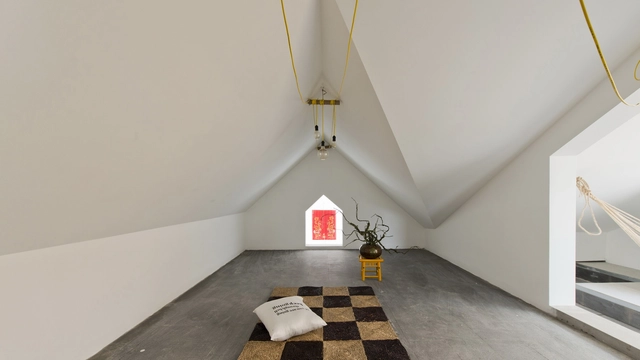
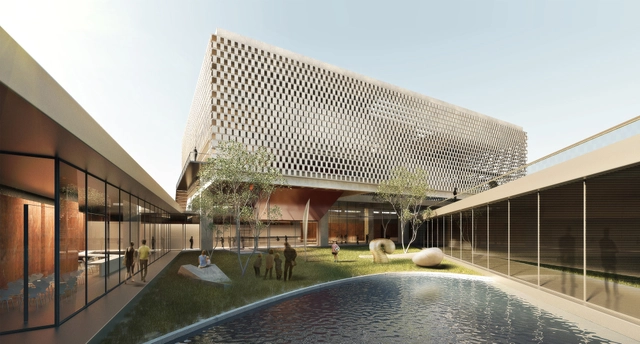
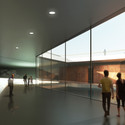
The first prize winner of a Greek design competition in Greece, which challenged participants to redesign an existing structure into an archaeological museum, this proposal by Tsabikos Petras Architectural Studio examines both the reintroduction of green areas into the city and relationship among city, sea, and coast. The scheme follows the lead of a north-south and east-west axis which present a pedestrian connection between the museum and a public square, and an archaeological site with a second public square, respectively.
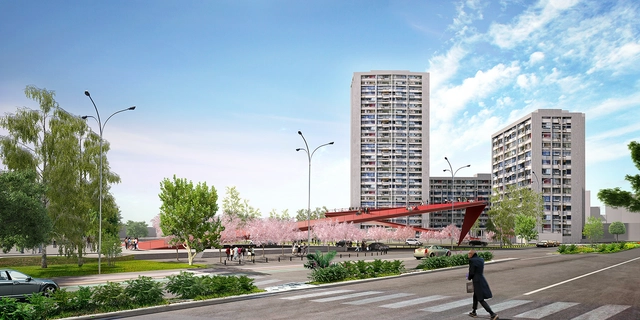
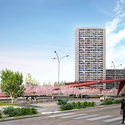
Chilean architects Archiplan and international office Architects of Invention have unveiled their concept design for a new public plaza in Santiago. Prepared as a competition entry, the proposal is a tribute to the late Chilean architect Fernando Castillo Velasco, sited in front of his iconic Tajamar Towers.
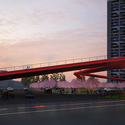
Entitled "Origami Highline," the project draws inspiration from the ancient Japanese paper folding craft of origami and takes the form of a sculptural intervention in Balmaceda Park.
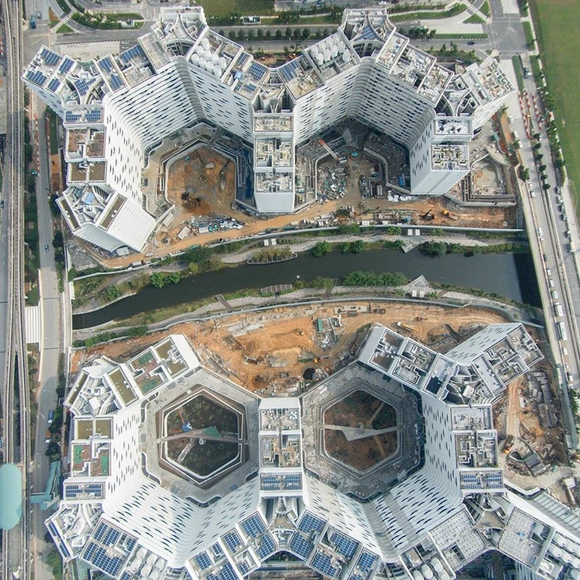
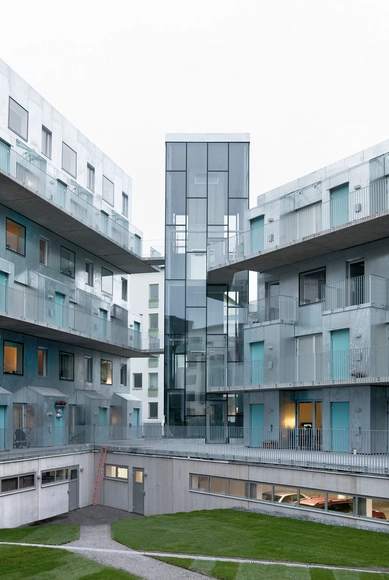
Group8asia is nearing completion on a first-prize winning proposal that is meant to revive the concept of public housing in Singapore. The Punggol Waterway Terraces, so named for the river on which they’re set, will be a sustainable community that aims to echo the utopic exuberance of Singapore’s first housing developments in the 1970s. Arranged around central courtyards, these high-rise apartments hope to create a sleek, graceful skyline that contrasts with the verdant greenery of their landscape.
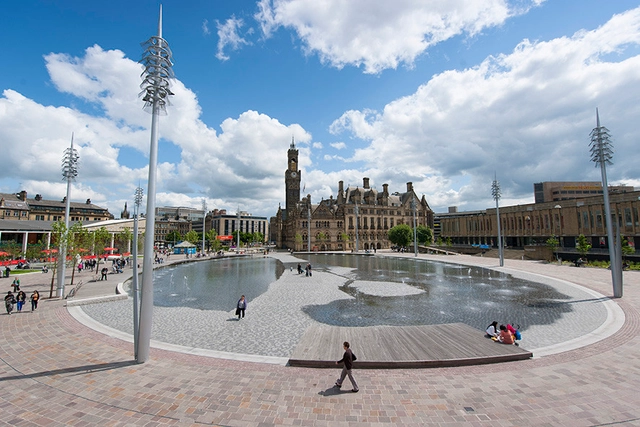
Rethinking the Urban Landscape, a (free!) exhibition curated by The Building Centre and Landscape Institute, presents a case for a landscape-first approach to city design and regeneration. The show, which is on view at The Building Centre in London until end of February and then tours, focuses on six problematic areas - from environmental issues to financial planning - and shows international projects that, due to the early procurement of landscape architects, deliver unique solutions.
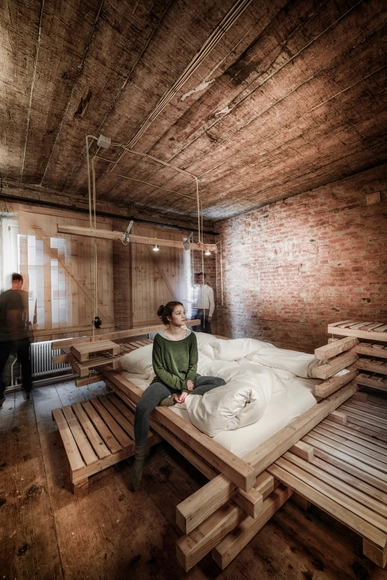
BLUEPRINT is the latest exhibition on display at the Storefront for Art and Architecture in New York. Curated by Sebastiaan Bremer, Florian Idenburg and Jing Liu, the exhibition features 50 blueprints from participating artists and architects, ranging from as far back as 1961 to 2013.
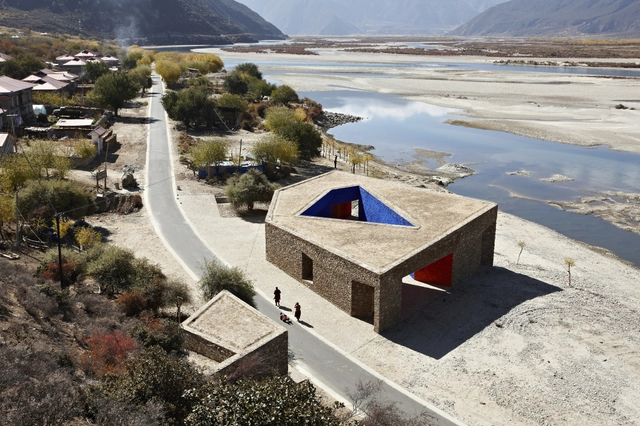
Berlin's Aedes Architecture Forum will mark the beginning of its 35th Anniversary Program by continuing its focus on Asia and China. With the architect Zhang KeofZAO/standardarchitecture from Beijing, Aedes presents one of the most promising protagonists of a young group of Chinese architects and urban planners with the exhibition 营造 Contemplating Basics. This follows on from the 2001 exhibition TU-MU, in which Aedes presented for the first time, and with global success, the first generation of independent architects in China. At that time, the architects and artists introduced in the exhibition - Yung Ho Chang, Liu Jiarkun, Ai Wei Wei, Wang Shu, Lu Wenyu - were fully unknown in the West, while some have since gone on to become Pritzker Prize winners or internationally renowned artists.