

-
Architects: Donald Osborne Architect, Ronald Janssen Architects
- Year: 2015


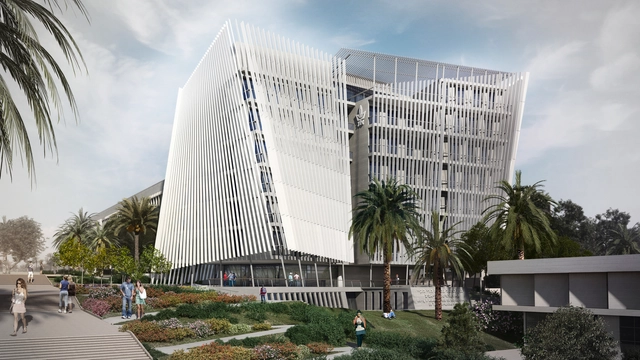
o2a Studio has unveiled their proposal for the Lorry I. Lokey School of Management at Tel Aviv University. Part of an invited competition, the design brief required a two-phase proposal sited at the focal point of the Tel Aviv University Campus: an initial 3,500 square metres of classrooms, offices and an auditorium and a future 1,500 square metres of extra classes and offices. Though not selected for the final design of the school, the o2a Studio proposal for the Lorry I. Lokey School of Management encompasses contextual, programmatic and climatic concerns in an elegant solution. Read more about this proposal after the break.

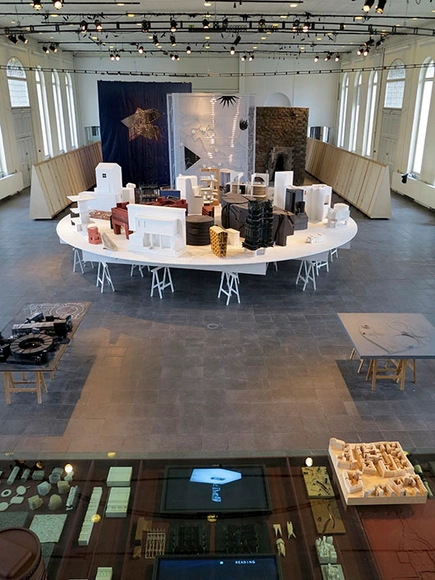
The main exhibition of this year’s Tallinn Architecture Biennale TAB 2015 is looking at hybrid forms of construction where cutting-edge technology and science meets the self-driven variability of material systems and where the degrees of freedom and control define an outcome of multiplicity within tolerance, trying to find a balance between the unruly and the predictable - body and building.
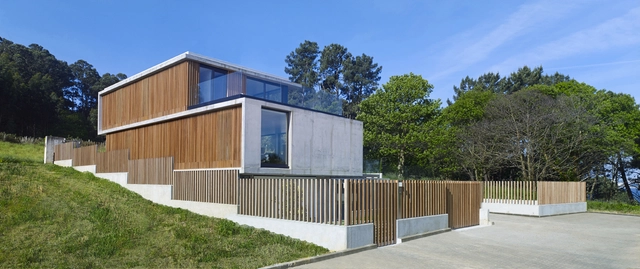
Work from the Master`s programme in Art and Architecture The Royal Danish Academy of Fine Arts, School of Architecture 2012-2015
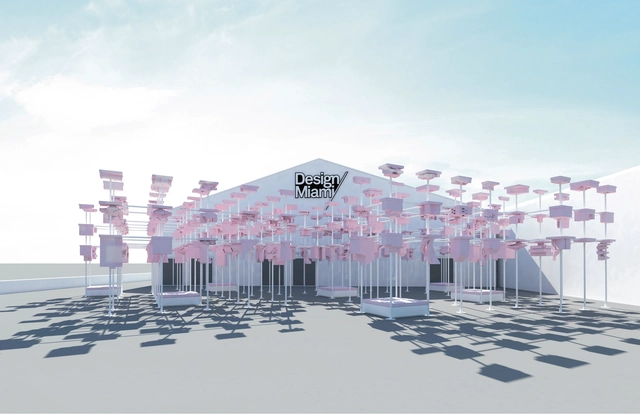
Design Miami/ is the global forum for design. Each fair brings together the most influential collectors, gallerists, designers, curators and critics from around the world in celebration of design culture and commerce. Occurring alongside the Art Basel fairs in Miami, USA each December and Basel, Switzerland each June, Design Miami/ has become the premier venue for collecting, exhibiting, discussing and creating collectible design.

Imagine that Eurasia has been brought to absolute destruction - by wars over religion, ethnicity or countries, or maybe even nuclear destruction. Cities, towns and villages across the super-continent are left in rubble or abandoned; all forms of organization are a fairy tale from a bygone era. Thousands of years of culture and civilization, gone.
What if a new Eurasia could arise from the remnants of this destruction? What artifacts and memories would remain, to seed the creation of a new Eurasia? Imagining New Eurasia, commissioned by Asia Culture Center in Gwangju, South Korea, invites anyone living in, or from Eurasia to submit their ideas, in the form of drawings, sketches, text, artwork, found objects, photographs, maps, memorabilia or any other kind of artifact, on how the future of a New Eurasia may pan out.
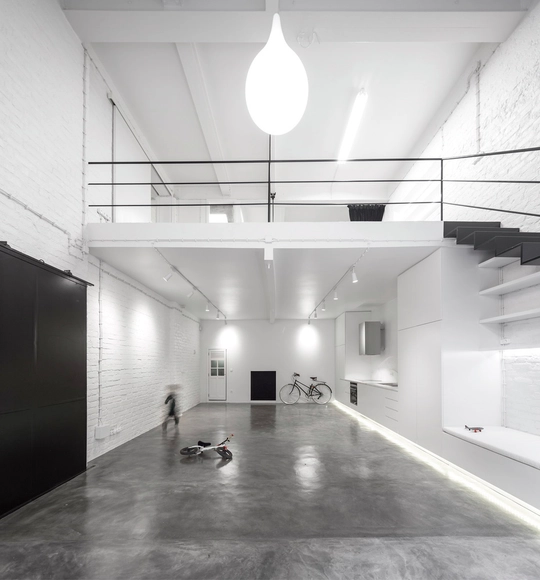
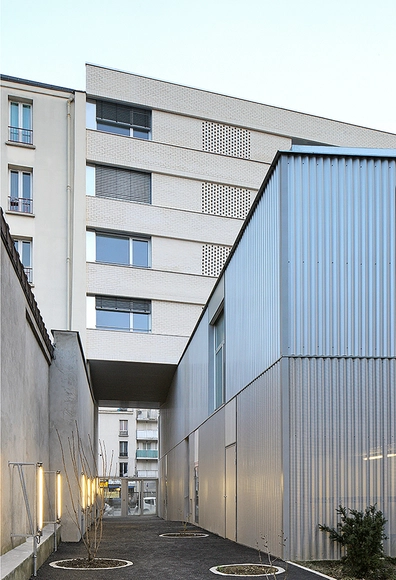

The UO John Yeon Center for Architecture and the Landscape presents Climate Change and the Willamette Valley The fears. The possibilities. The necessities.


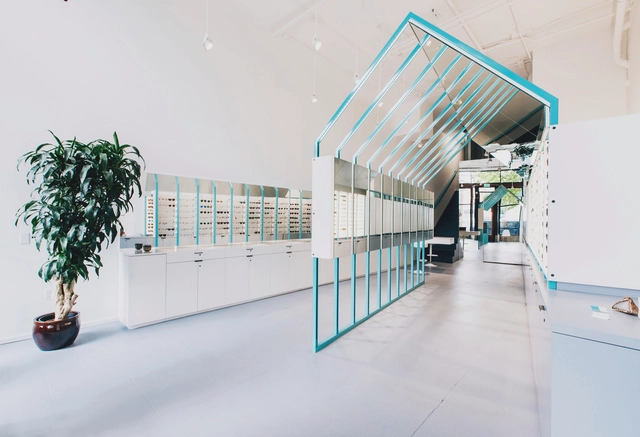
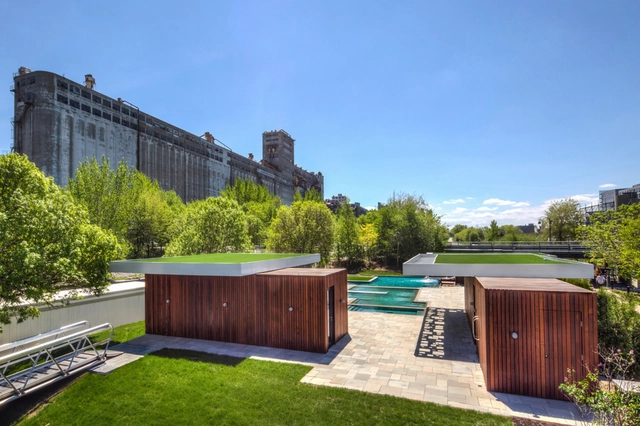

New Horizon_architecture from Ireland, a series of presentations of the work of emerging Irish practices in three high-profile venues around the world, opens at Chicago Design Museum on October 3rd and runs until January 3rd, 2016 as part of the inaugural Chicago Architecture Biennial.
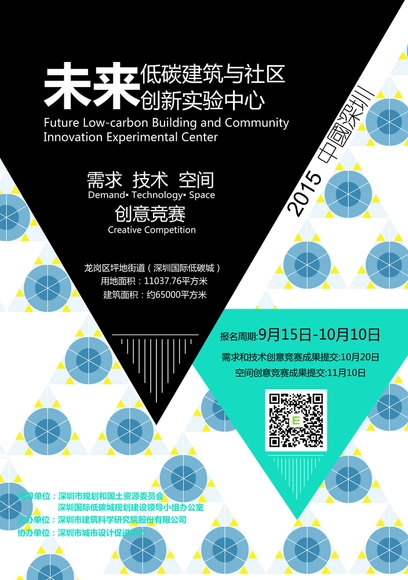
As a part of the flagship project for the EU-China Urbanization partnership, the Shenzhen Institute of Building Research Co., Ltd. (IBR) has announced its "Demand▪ Technology▪ Space Creative Competition" for the Future Low Carbon Building and Community Innovation New Experimental Center, also known as the Future Center.
Located in the underdeveloped Pingdi Subdistrict of Shenzhen, the project site is a part of the Shenzhen International Low Carbon City, a roughly 53 square kilometer area less than two hours away from Hong Kong with the goal of utilizing low-carbon and carbon-zero technologies in order to significantly boost sustainable development.
IBR is calling for submissions from individuals, teams, and even research institutes, design institutions, and any others, to participate in one, two, or all three of the competition’s categories.