In an excellent essay for the Architectural Review, Charlotte Skene Catling deftly ties together a number of recent debates in the field of morality in architecture, from the false accusations aimed at Zaha Hadid by critic Martin Fuller to recent debates over whether architects have any responsibility to tackle poverty, an ostensibly political issue. Taking aim at one article in particular - in which Dan Hancox argues that architects such as Urban Think Tank who engage in humanitarian work are often 'fetishizing poverty' - Catling dissects the work of many of those in the field to find that they in fact do vital work to connect the top-down and bottom-up approaches that would otherwise never meet in the middle. Or, as Urban Think Tank's Alfredo Brillembourg says, in opposition to the horizontal city of the 19th century or the vertical city of the 20th, "the 21st century must be for the diagonal city, one that cuts across social divisions." Click here to read the article in full.
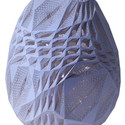
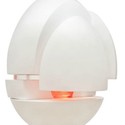
Terence Conran asked nine of his friends in the design world "What have you always wanted in your home, but have never been able to find?" The result is The Wish List, a set of ten projects dreamed up by big name designers such as Norman Foster, Zaha Hadid and Richard Rogers, but designed and crafted in collaboration with emerging designers.
Sponsored by the American Hardwood Export Council, the only restriction was that the product had to be made of wood, leading to designs ranging from Foster's modest geometric pencil sharpeners to Paul Smith's dream garden shed.
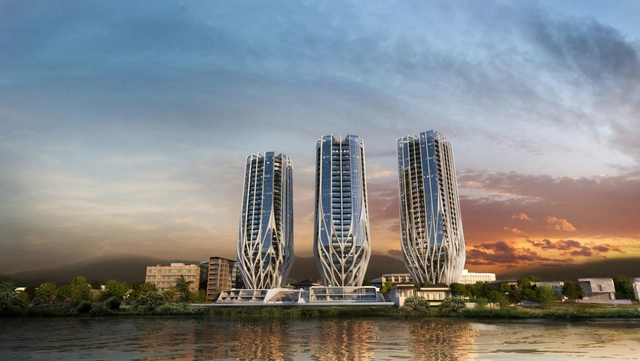
Zaha Hadid Architects' designs for three towers in Brisbane were recently unveiled. Image Courtesy of Zaha Hadid Architects
Despite her position as one of the world's most prominent and successful architects, Zaha Hadid yesterday revealed that there is one thing she feels is missing from her portfolio: a skyscraper in London. Speaking to BD at the announcement of her Science Museum competition win, Hadid said "I’d love to do a tower in London but it hasn’t arrived." More of Hadid's comments after the break.
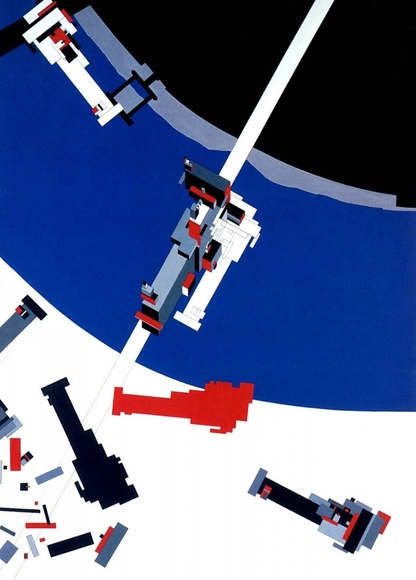
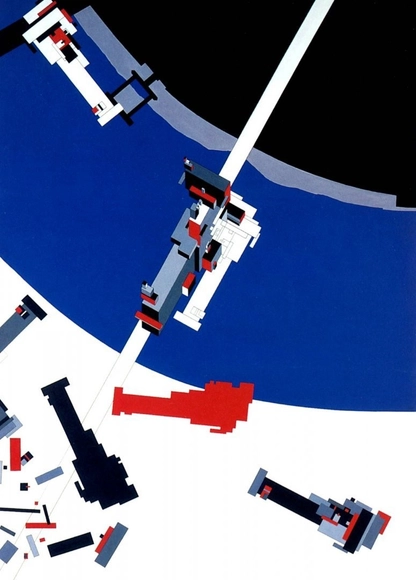
Malevich’s Tektonik. Image Courtesy of Zaha Hadid Architects
Zaha Hadid has been featured in a 30-minute BBC Secret Knowledge film based on Kazimir Malevich: The Russian Revolutionary: Zaha Hadid on Kazimir Malevich. One of Hadid’s greatest influencers, the Russian painter and theoretician inspired the Dame’s AA graduation thesis which transformed Malevich’s 1923 Arkitekton model into a 14-story hotel that stretched across London’s Hungerford Bridge. You can watch the film online (here) through September 16.
Last week Zaha Hadid filed a libel lawsuit against critic Martin Filler, after Filler’s review of Rowan Moore’s book “Why We Build: Power and Desire in Architecture" for the New York Review of Books included a scathing section on Hadid. In the article Filler said she had shown “no concern” for the death of construction workers in Qatar, where she designed a stadium for the 2022 World Cup. Now, Filler has admitted to a significant error in the article he wrote, The New York Times has reported. In an amendment to his article Filler acknowledges that the quotes he used from Hadid were taken out of context and had “nothing to do” with the Qatar stadium she designed. Read Filler’s full statement in the New York Times article, here.
Zaha Hadid will be awarded an honorary degree and fellowship from Goldsmiths College, at the University of London, during the college’s graduation ceremony in September. Hadid was chosen because of her “inventive approach, and eagerness to challenge conventions which have pushed the boundaries of architecture and urban design," Architects’ Journal (AJ) reported.
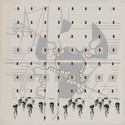
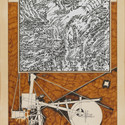
As a student of architecture, the formative years of study are a period of wild experimentation, bizarre use of materials, and most importantly, a time to make mistakes. Work from this period in the life of an architect rarely floats to the surface - unless you're Zaha Hadid or Frank Gehry, that is. A treasure trove of early architectural drawings from the world's leading architects has recently been unearthed from the private collection of former Architectural Association Chairman Alvin Boyarsky. The collection is slated to be shown at the Kemper Art Museum, Washington University, St. Louis, as a part of the exhibition Drawing Ambience: Alvin Boyarsky and the Architectural Association from September 12th to January 4th, 2015.
Take a look at the complete set of architects and drawings for the exhibition after the break.
New images have been leaked of the inside of Zaha Hadid’s New York City luxury apartment complex, set to be built alongside the second section of the High Line at 520 West 28th Street.
The renderings, first published by Curbed, show the layout of a typical kitchen and master bath in this 11-story sculpted glass and steel apartment. While the kitchen rendering features a curvy island and faucet in the middle, the bathroom appears to have textured walls.
When I set up the Global Architecture Graduate Awards (GAGAs) at The Architectural Review in 2012, it was with the insight that, at its best, the work produced at the start of a career can be its most daring and projective. At that fertile threshold between the academy and practice, uncertain graduates can be years ahead of more assured and mature colleagues in the creative risks they are willing to take.
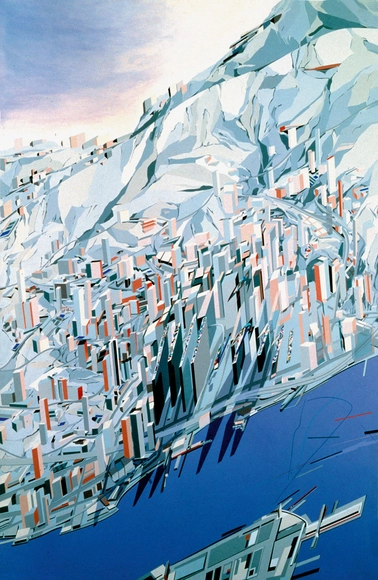
In an article for London's Royal Academy of Arts Magazine entitled Plane Sailing, Zaha Hadid discusses the influence of Russian Suprematist painter Kazimir Malevich on her own design work. In Hadid's early work, such as The Peak Blue Slabs (1982/83), the visual connections to Malevich's strict, regular shapes and lines are evident.
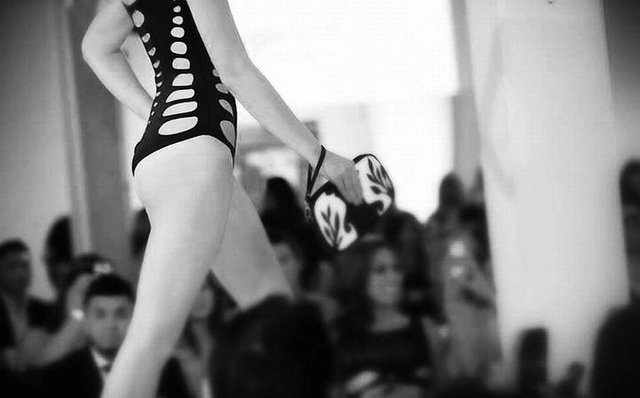
Le Corbusier donned signature glasses; Frank Gehry designed footwear; early twentieth-century architect Adolf Loos even wrote "Why A Man Should Be Well-Dressed." Now Zaha Hadid is making her way into swimwear. But are the nuances of fashion too much for architects to dip their feet into? Read the full article at the Telegraph.
Malevich’s Tektonik. Image Courtesy of Zaha Hadid Architects
The BBC’s Tony Hall has announced that Zaha Hadid will be presenting a 60-minute Secret Knowledge film based on Kazimir Malevich. The Russian painter and theoretician, who founded the Suprematist movement, inspired Hadid’s AA graduation thesis which transformed Malevich’s 1923 Arkitekton model into a 14-story hotel that stretched across London’s Hungerford Bridge. Hadid will be one of many influential art leaders enlisted to participate in the program, which intends to place the arts on “center-stage.”
Zaha Hadid Architects' design for al-Wakrah stadium, the main stadium for the 2022 Qatar World Cup. Image Courtesy of ZHA
Zaha Hadid’s unfortunate comments in response to worker deaths on construction sites for the 2022 World Cup has made Qatar the eye of a storm that has been raging globally for decades. But it’s not just about Qatar. This has been an issue for as long as there have been construction sites and for as long as poor people have swarmed to them for a chance at a better life.
Construction booms and migrant construction workers have always been two sides of the same equation, both dependent on the other, and, by the twisted logic of the global economy, both are the reason for the other’s existence. No migrant labor pool = no global city = no fantastic architecture, or something to this effect.
The migrant workers are the silent collaborators in global architecture, the invisible, faceless, “untouchables” who make the cost-effective construction of these buildings possible.
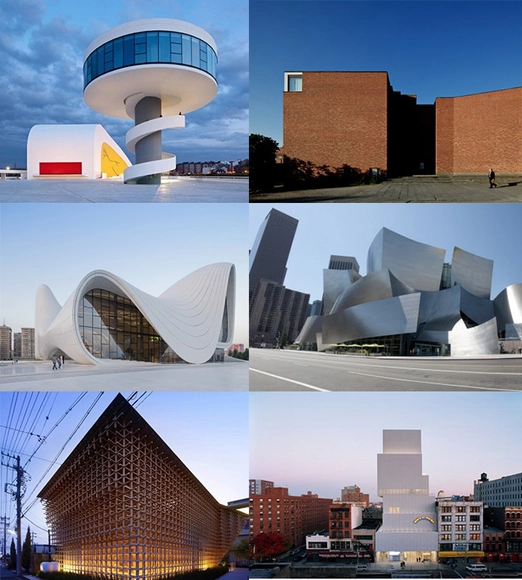
In case you missed it, we’re re-publishing this popular post for your material pleasure. Enjoy! To celebrate the recent launch of our US product catalog, ArchDaily Materials, we've coupled six iconic architects with what we deem to be their favourite or most frequently used material. From Oscar Neimeyer's sinuous use of concrete to Kengo Kuma's innovative use of wood, which materials define some of the world's best known architects?


.jpg?1411136626&format=webp&width=640&height=580)
.jpg?1411136478 "Pencil Sharpener / Norman Foster + Norie Matsumoto. Image © Petr Krejčí")
.jpg?1411136290 "Workspace / Terence Conran + Sebastian Cox. Image © Petr Krejčí")
.jpg?1411138048 "Ladder / Richard Rogers, Ab Rogers + Xenia Moseley. Image © Petr Krejčí")
.jpg?1411138170 "Shed / Paul Smith + Nathalie de Leval. Image © Petr Krejčí")
.jpg?1411136626)


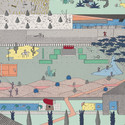
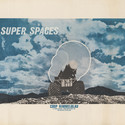


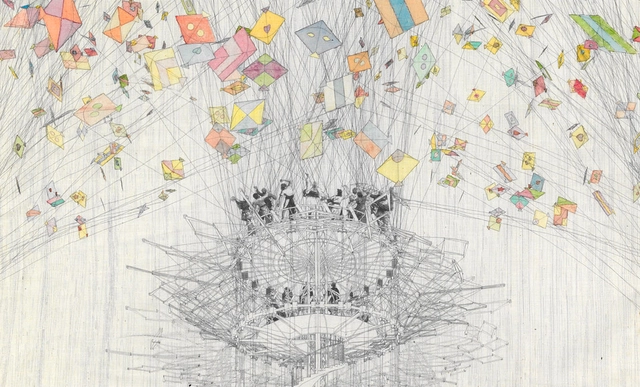


assembly_of_suburbia.jpg?1406067449 "Post-Graduate Runner-up, GAGA 2013. Adrienne Lau - (Dis)assembly of Suburbia")