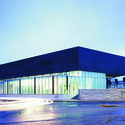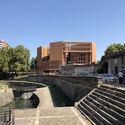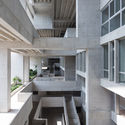
Which is more male: a stadium or a nursery? Hannah Rozenberg, a recent graduate of the Royal College of Art, says that it’s the former—and she has an algorithm to prove it.


Which is more male: a stadium or a nursery? Hannah Rozenberg, a recent graduate of the Royal College of Art, says that it’s the former—and she has an algorithm to prove it.
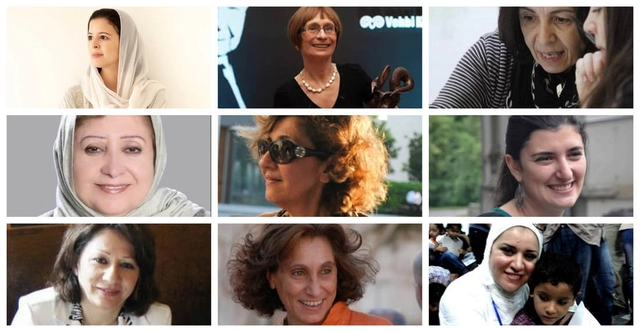
The Tamayouz Women in Architecture and Construction Award is an excellence award for women who have contributed to the fields of architecture and construction throughout the Near East and North Africa. The award consists of two categories:

The gender chasm in architecture persists. Students see it in their mentors, practitioners experience it in the office, and media representation of the profession follows in kind. While schools of architecture are more and more demographically gender-balanced in their student populations, faculty and the practice both remain vastly skewed, indicating that programming in schools may be leading genders into the profession inequitably or “losing” certain populations along the way, or that the bridge between academia and practice is broken. This doesn’t even include the experience of people of non-binary genders in architecture, of which documentation is almost non-existent. Without equal representation of all genders in the profession, it is virtually impossible that the practice of architecture as a whole is serving its clients and communities equitably. It takes a multitude of perspectives to serve diverse communities thoughtfully and effectively, and it is architecture’s charge to do so.

City Dreamers is a documentary by filmmaker Joseph Hillel that underlines the ever-changing city of tomorrow and the life and work of 4 women architects who reconsidered the urban environment. Phyllis Lambert, Denise Scott Brown, Cornelia Hahn Oberlander and Blanche Lemco van Ginkel are inspiring pioneers that observed and shaped the city of today and tomorrow.

Although cities are supposed to be built for everyone, they are in most of the time, thought, planned and designed by men: “Cities are supposed to be built for all of us, but they aren't built by all of us.”
With basic different needs, men and women expect different outcomes from their urban surroundings. A city should be able to fulfill everyone’s essentials. Lately, the topic that has everyone's attention revolves around cities designed by women. With a female mayor onboard and a feminist agenda, for the past four years, Barcelona has been undergoing major transformations on this subject.
ArchinfoFinland.jpg?1576139638&format=webp&width=640&height=580)
Archinfo Finland has announced the theme and curatorial team for the Pavilion of Finland at the 17th International Architecture Exhibition of the 2020 Venice Biennale. Entitled New Standards, the exhibition conceived by Laura Berger, Philip Tidwell, and Kristo Vesikansa will explore Finland’s timber industry.
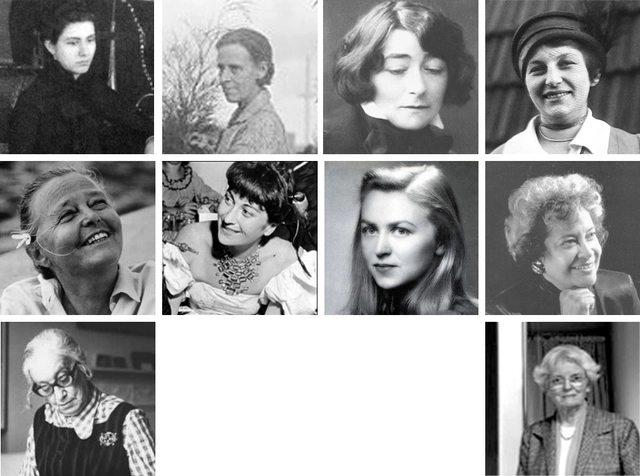
Looking back on architectural history, you could be forgiven for thinking that women were an invention of the 1950s, alongside spandex and power steering - but this couldn’t be further from the truth. Big names like Le Corbusier, Mies, Wright, and Kahn often had equally inspired female peers, but the rigid structure of society meant that their contributions tended to be overlooked.
Architecture theorist, historian, and curator Beatriz Colomina talks about our discipline and its difficulty to accept the work as the result of a collaborative effort. When asked about sexism and gender issues within architecture, Colomina broadens the discussion and tackles the historical myth of architecture as the product of one single, brilliant - and always masculine - mind. A fiction that has obscured the role of a number of women, and whole teams, committed to the design process.

The Tamayouz Excellence Award revealed the winners of its Women in Architecture and Construction Award 2019, a prize that honors the achievements of female architects in the Near East and North Africa, under 2 categories: Rising Star and Woman of Outstanding Achievement.
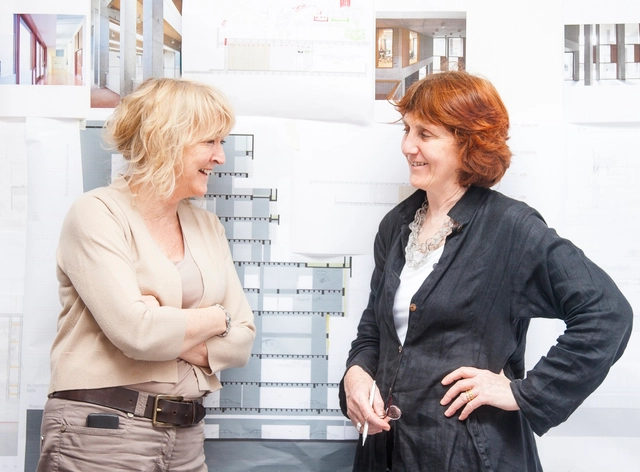
Dublin-based Grafton Architects have been announced as the winners of the RIBA 2020 Royal Gold Medal, the UK’s highest honor for architecture. Recognizing the practice’s significant global contribution to architecture, the award is approved personally by Her Majesty The Queen. RIBA acknowledged that the people-centered practice has achieved global recognition and is known especially for its exemplary education buildings.

Accessibility is often approached as a field related to disability, whether physical or mental. When it comes to architectural design, it always comes up as a peripheral consideration of the project and not as something fundamental. However, there are other barriers.
In this edition of Editor's Talk, editors from ArchDaily Brazil share their thoughts on what they understand as accessibility and whether it's possible to create a neutral architecture.

This article was originally published on Metropolismag.com.
Maria Semple’s 2012 novel, Where’d You Go, Bernadette?, is an addictive, high-octane, hilarious summer read about a retired architect in Seattle entering the next phase of her career. Perhaps unsurprisingly, it has resonated with women architects. One texted me hours after picking up the book recently: “I’ve read about ⅓ of Bernadette in one sitting. I’ve squealed out loud with laughter. I’ve bitten my lip. I am currently reading about Bernadette on the job site getting disrespected by a subcontractor. Someone IS seeing me/us. It’s buried in this book.”

Women are imperative members of the design community, creating innovative and inspiring work in the fields of architecture, design, and urban planning. However, even with the rise of the women's movement, their contributions are still being questioned, compared, or taken for granted.
Metropolis Magazine looked back at the history of feminism in architecture, shedding the light on the times when the advocates witnessed unprecedented progress, and times when they lost their advantage.

This article was originally published on Metropolismag.com.
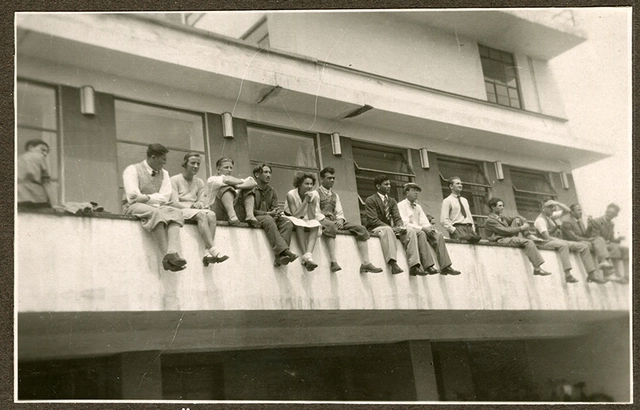
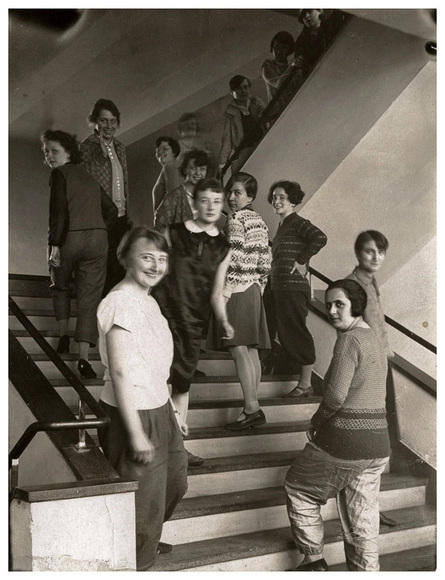
The Bauhaus was founded on the promise of gender equality, but women Bauhauslers had to fight for recognition. A new book recounts the achievements and talents of 45 Bauhaus women.
After the end of World War I, a spirit of optimism and a euphoric mood prevailed in Germany. Thanks to a new republican government and women’s suffrage, the war-torn nation was experiencing a radical new beginning.
As part of that convention-breaking wave, in 1919 German architect Walter Gropius assumed leadership of what would become the legendary Bauhaus. Initially, he declared that there would be “absolute equality” among male and female students.
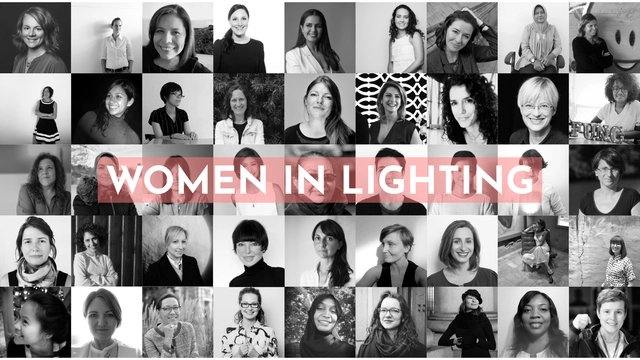
Light Collective, founders of the project "Women in Lighting", conclude that although female designers seem to make up possibly half of the lighting design profession, their profile appears much lower than men when looking at judges in awards and speakers at major conferences. Sharon Stammers and Martin Lupton started a project with interviews of female lighting designers and contacted conference organizers to enhance their visibility.

Anna Saint Pierre's Granito project is harvesting the ingredients for new architectural building blocks from demolished structures.
Rapid urban change comes and goes without many even noticing it. Entire slices of a city’s history disappear overnight: What was once a wall of hewn stone is now fritted glass and buffed metal. The building site is always, first, a demolition site.
This is the thread that runs through Granito, a project by the young French designer and doctoral researcher Anna Saint Pierre. Developed in response to a late-20th-century Paris office block due for a major retrofit, one involving disassembly, it hinges on a method of material preservation Saint Pierre calls “in situ recycling.” Her proposal posits that harvesting the individual granite panels of the building’s somber gray facade could form the basis of a circular economy. “No longer in fashion,” this glum stone—all 182 tons of it—would be dislodged, pulverized, and sorted on-site, then incorporated into terrazzo flooring in the building update.

Griffin founded the consultancy Urban Planning for the American City, which she complements with her pedagogical work at Harvard University’s Graduate School of Design.

Since its emergence with the cultural turn in the 1970s and ’80s, spatial justice has become a rallying cry among activists, planners, and plugged-in architects. But as with many concepts with academic origins, its precepts often remain elusive and uninterrogated. Though some of this has changed with the advent of city- and place-making discourse, few are doing as much to lend articulation, nuance, and malleability to spatial justice as Toni Griffin. A Chicago native, Griffin practiced architecture at SOM for nearly a decade before leaving the city to work as a planner in Newark and Washington, D.C., among other municipalities. In 2009, she founded the consultancy Urban Planning for the American City, which she complements with her pedagogical work at Harvard University’s Graduate School of Design. There, she runs the Just City Lab, which, through research and a host of programs, aims to develop, disseminate, and evaluate tools for enhancing justice—and remediating chronic, systematized injustice—in America’s cities. But what form could justice take in the U.S. context, and how can architects and designers help? Metropolis spoke with Griffin about how focusing on inclusivity and embracing interdependence and complexity are parts of the answer.

In 1919, the creation of the Bauhaus school in Germany marked an important moment in the history of architecture, one that would ignite innumerable debates about architecture and design for years to come. This school, which later became more of a movement than an institution, faced an array of political resistance throughout its existence, eventually closing its doors in 1933 during the Nazi regime. However, the knowledge instilled by the Bauhaus transcended time and space to travel across the globe and make its mark on cities worldwide.


ELKA.jpg?1576139754 "Workmen carry a frame panel for a Puutalo house in northern Colombia where some 1,500 houses were constructed from 1955 to 1957 as dwellings for workers. These Puutalo homes can still be found throughout the Simón Bolívar neighborhood of Barranquilla today. Photo from 1956.. Image © ELKA")
ELKA.jpg?1576139683 "Stacks of pre-cut material stand ready and waiting for assembly in northern Colombia in 1956. Some 1,500 houses were constructed in the town of Barranquilla from 1955 to 1957 as dwellings for workers. These Puutalo homes can still be found throughout the Simón Bolívar neighborhood today.. Image © ELKA")
ELKA.jpg?1576140648 "A Puutalo house in Australia sits among a group of tall palm trees in the early 1950s.. Image © ELKA")
ELKA.jpg?1576139623 "A draughtsman finishes work on a sheet of drawings in the early 1950s at the Helsinki office of the Puutalo company.. Image © ELKA")
ArchinfoFinland.jpg?1576139638)