Germany's contribution to the 2014 Venice Architecture Biennale scrutinizes the architecture of representation, its crisis, and potential cessation. Aside from the universal ambition of modernism to break with the past, Germany has undergone a number of decisive political and societal breaks during the last hundred years. Through the question of how the nation "(re)builds and represents itself through architecture, we are able to discuss the friction between national identity and architecture expression—however, architecture is not only a mirror to ideology, but a constituting reality and societal context."
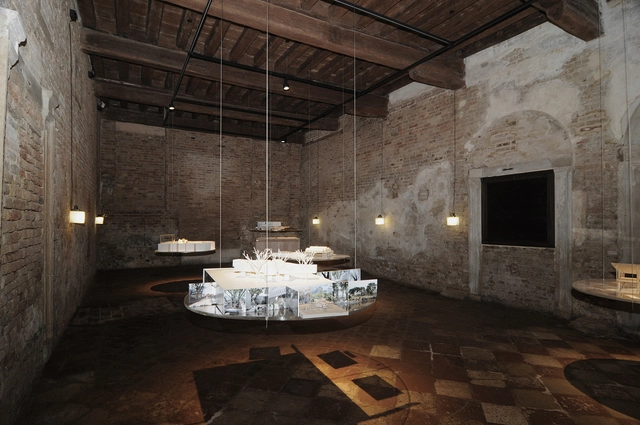
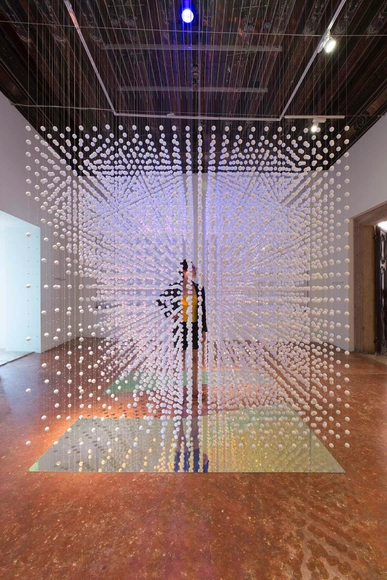
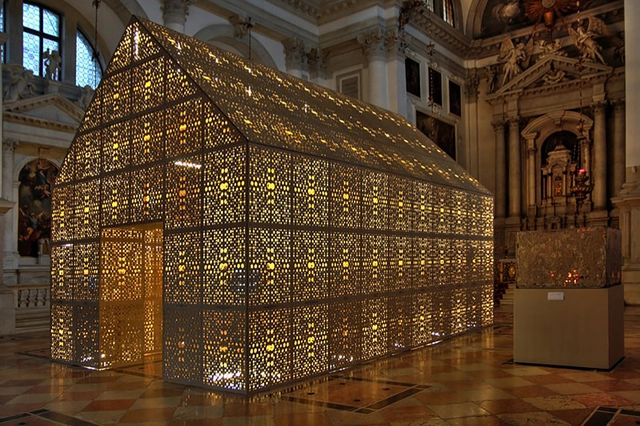
Dutch practice Bekkering Adams Architecten, in cooperation with ABT and BeersNielsen, recently unveiled an installation at the Palazzo Mora, Venice as part of a collateral event with this year's Venice Biennale. Entitled Form-ContraForm, the sculptural piece reflects on the conceptual and human perception of space - something which they describe as "a space that surrounds and envelops." Distilling architecture's fundamentals (which is also the theme of this year's Biennale) down to the definition of co-ordinates in space, the experience created by Bekkering Adams is akin to the notion of "the mass versus the cavity."
Arguing that the previous thirteen Biennales have, "more or less, tried to predict what is going to happen over the next five years," "Rem Koolhaas has changed the paradigm:" Rem's Biennale is about "the past of the present". Jencks, who describes Koolhaas as "the Corbusier of our time", suggests that his Biennale is about analysis rather than total synthesis. He has, however, "shown that research can be creative."
Australia’s new pavilion for the 2015 Venice Art Biennale will be, in the words of featured artist Fiona Hall, “a minefield of madness, badness, and sadness in equal measure.” Designed by firm Denton Corker Marshall, (who also designed the Stonehenge Visitor Centre), the project will replace the 25 year old temporary pavilion designed by Phillip Cox and will be the first building constructed on the Giardini in two decades.
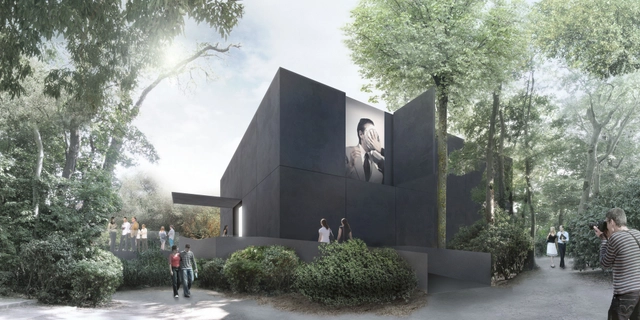
For CNN's George Webster, this year's Biennale is a "bold reminder that architecture is - or at least should be - about a great deal more than blueprints, digital renderings and scale models." Taking the British Pavilion as a case in point, Webster argues that Koolhaas' original thematic provocation has paid off, succeeding "because it places people - our history, culture and even our bodies - at the very heart of its thinking." Travelling through the pavilions of Romania, Germany, the Dominican Republic, and Russia, you can read the article in full here.
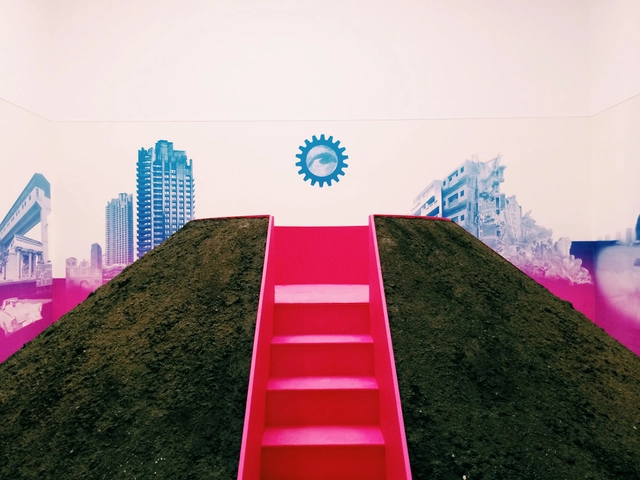
The British Pavilion at the 2014 Venice Biennale takes the large scale projects of the 1950’s, 60’s and 70’s and explores the "mature flowering of British Modernism at the moment it was at its most socially, politically and architecturally ambitious but also the moment that witnessed its collapse." The exhibition tells the story of how British modernity emerged out of an unlikely combination of interests and how "these modern visions continue to create our physical and imaginative landscapes." To those who know the UK's architectural heritage, this cultural and social history is delivered in a way which feels strangely familiar, whilst uncovering fascinating hidden histories of British modernity that continue to resonate in the 21st century.
Norwegian architect and Pritzker LaureateSverre Fehn’s original drawings for the Nordic Pavilion in Venice are to be presented alongside Ferruzzi’s monochromatic photographs of the building in an exhibition at the National Museum of Architecture in Oslo. Venice: Fehn’s Nordic Pavilion documents the incredible task undertaken by Fehn who, at the age of thirty-four, won the competition to design the pavilion and subsequently won international acclaim when the building was completed in 1962.
House Housing is the first public presentation of a multi-year research project conducted by the Temple Hoyne Buell Center for the Study of American Architecture at Columbia University. Situated in the Casa Muraro in Venice and staged as an open house, the exhibition responds unsolicited to the proposal by Rem Koolhaas, curator of the 14th International Architecture Exhibition, that architecture focus on its "fundamentals."
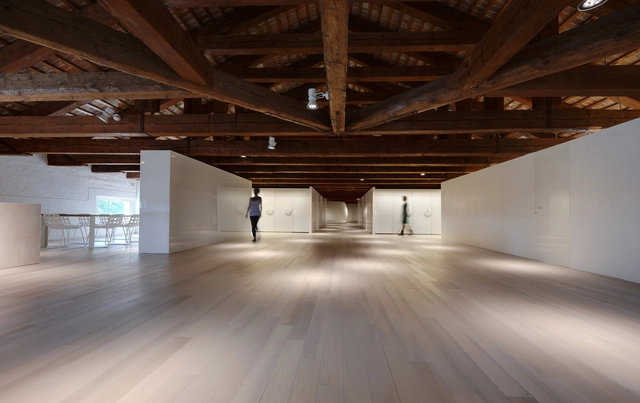
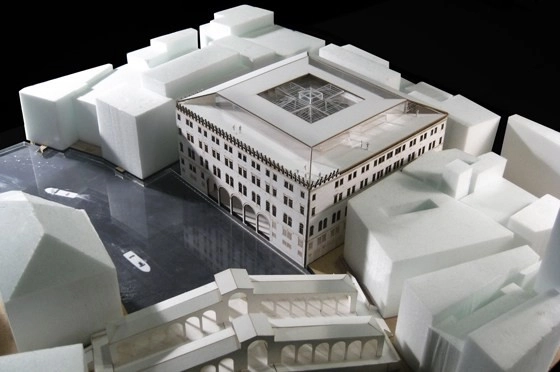
Both Le Corbusier and Frank Lloyd Wright can be found on a lengthy list of architects who have tried to build in Venice and lost their battle to conservationists. However, OMA has broke through this barrier, as the practice was recently approved - after five years pending - to go forth with a renovation project of a 16th century palazzo for the fashion retailer Benetton near the Rialto Bridge on the Grand Canal.
More details and statements from the architect after the break...
Taking place November 11-18, the ‘Emerging Realities’ international student workshop will take place in Venice as part of the Biennale to feature international guest speakers. The event, put on by the Institute for Architecture and Landscape, LANDLAB ia&l, envisions the Venice lagoon archipelago as a prototype for a future metropolitan regional system. The new productive landscape proposes that it is capable of supporting such community while establishing an integrated and environmentally stable system that builds upon existing biodiversity, cultural practice, and production. For more information on the event, please visit here.
For over a century, the VeniceBiennale (La BiennalediVenezia) has been one of the most prestigious cultural institutions in the world. The avant-garde institution has remained at the forefront in the research and promotion of new artistic trends, while leading international events in the field of contemporary arts that are amongst the most important of their kind. Over the past thirty years, the Biennale has given growing importance to the Architecture Exhibition, which is still a young component of the Biennale considering that its first exhibition was held in 1975. Today, the Venice Biennale captures a multitude of interest from around the globe and attracts over 370,000 international visitors.
Before the festivities of the 13th Venice Architecture Biennale begin tomorrow, read up on the origin of this highly acclaimed international exhibition.
A timeline history of the Venice Architecture Biennale:




















.jpg?1414007285&format=webp&width=640&height=580)
.jpg?1414007297 "Courtesy of C+S Architects")
.jpg?1414007287 "Courtesy of C+S Architects")
.jpg?1414007312 "Courtesy of C+S Architects")
.jpg?1414007315 "Courtesy of C+S Architects")
.jpg?1414007285)

