Held during the Venice Biennale, photographers are invited to submit for consideration their work showcasing architecture.
No exhibition fees; application fees apply.


Held during the Venice Biennale, photographers are invited to submit for consideration their work showcasing architecture.
No exhibition fees; application fees apply.

Chicago—The School of the Art Institute of Chicago (SAIC) and the University of Chicago jointly announced today their selection by the U.S. Department of State to serve as co-commissioners of the United States Pavilion at the 2018 Venice Architecture Biennale. As co-commissioners, the two institutions will organize Dimensions of Citizenship, the exhibition they proposed as the official United States contribution to the 16th International Architecture Exhibition, on view from May 26 through November 25, 2018.

The curatorial team for the U.S. Pavilion at the 2018 Venice Architecture Biennale have announced the seven designers who will create the pavilion’s main exhibitions. Consisting of architects, landscape architects, artists and designers, the group will produce responses to the theme of Dimensions of Citizenship, exploring “the meaning of citizenship as a cluster of rights and responsibilities at the intersection of legal, political, economic, and societal affiliations.”
The seven exhibitors include:
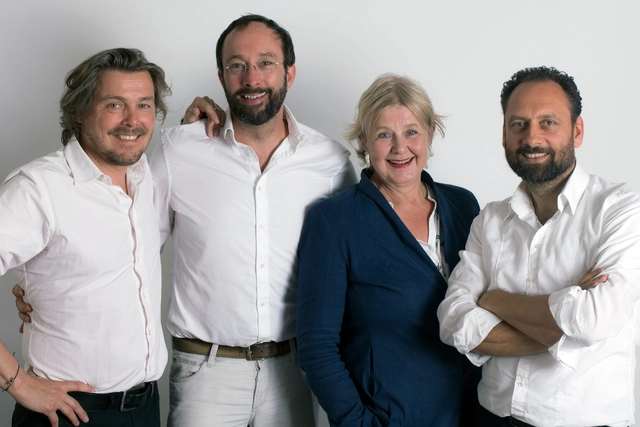
In 2018, Germany will be reunified for 28 years, the precise amount of time that the inner German border wall—which was active from between 1961 and 1989—stood between "East" and "West". With this in mind, the German State have announced "Unbuilding Walls" as the theme of the German Pavilion at the 2018 Venice Architecture Biennale. Curated by GRAFT with Marianne Birthler, the exhibition will be designed to "respond to current debates on nations, protectionism, and division."
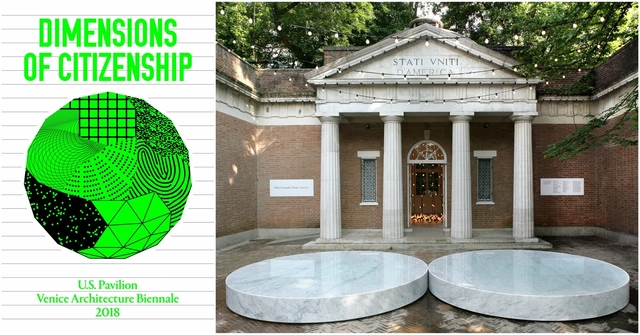
The U.S. State Department has announced the individuals and institutions that will serve as curators and commissioners of the United States Pavilion at the 2018 Venice Architecture Biennale.
Selecting through an open competition and recommendations from the Federal Advisory Committee on International Exhibitions, the exhibition will be led by co-commissioners The School of the Art Institute of Chicago (SAIC) and the University of Chicago and curators Niall Atkinson, Associate Professor of Architectural History at the University of Chicago; Ann Lui, Assistant Professor at SAIC and co-founder of Chicago-based architecture practice Future Firm; and Mimi Zeiger, a critic, editor, curator, and educator based in Los Angeles.
Under the theme of Dimensions of Citizenship, the exhibition will explore “the meaning of citizenship as a cluster of rights and responsibilities at the intersection of legal, political, economic, and societal affiliations.”
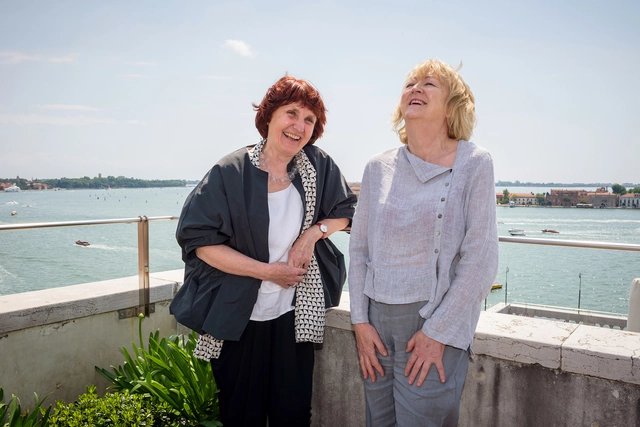
At a meeting convened today at the Biennale's headquarters at Ca’ Giustinian in Venice, Italy, Grafton Architects—Yvonne Farrell and Shelley McNamara—revealed the theme and outline for the 2018 Venice Architecture Biennale, which they have titled Freespace. According to the Directors, the forthcoming Biennale will celebrate "generosity and thoughtfulness," and "a desire to engage."
We believe that everyone has the right to benefit from architecture. The role of architecture is to give shelter to our bodies, but also to lift our spirits. A beautiful wall forming a street edge gives pleasure to the passer-by, even if they never go inside.
Freespace will "reveal diversity, specificity, and continuity in architecture. Together," they proposed, "we can reveal the capacity of architecture to connect with history, time, place, and people. These qualities sustain the fundamental capacity of architecture to nurture and support a meaningful impact between people and place." In their closing statement, Farrell and McNamara chose to quote an Ancient Greek proverb: a society grows great when old men plant trees whose shade they know they will never sit in.
We are pleased to announce a new content partnership between ArchDaily and Columbia University's Graduate School of Architecture, Planning and Preservation (GSAPP) in New York City.
GSAPP Conversations is a podcast series designed to offer a window onto the expanding field of contemporary architectural practice. Each episode pivots around discussions on current projects, research, and obsessions of a diverse group of invited guests at Columbia, from both emerging and well-established practices. Usually hosted by the Dean of the GSAPP, Amale Andraos, the conversations also feature the school's influential faculty and alumni and give students the opportunity to engage architects on issues of concern to the next generation.

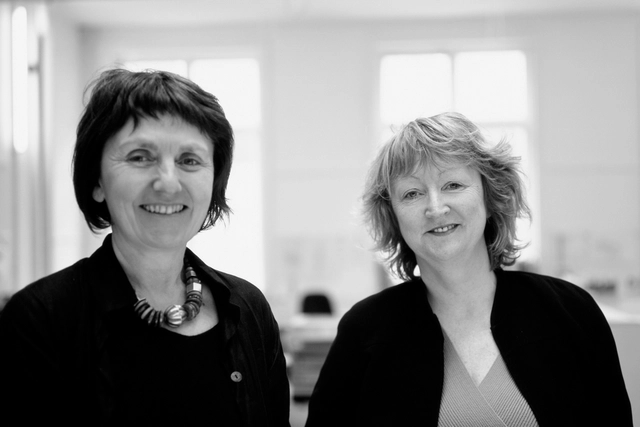
In a meeting yesterday, The Board of La Biennale di Venezia appointed Yvonne Farrell and Shelley McNamara of Grafton Architects as curators of the 16th International Architecture Exhibition in 2018. This marks the second time that the Venice Architecture Biennale will be directed by women, after Kazuyo Sejima's role as director for the 2010 Biennale.

As a way to obtain a sample of participatory architecture from all over Mexico, last October, the Mexican Fine Arts Institute (INBA) published an open call for entries. Works by 31 teams—out of more than 200 registered—were selected to be part of Mexico’s Pavilion in the Venice Biennale, which was curated by Pablo Landa.
Among the teams selected are Arquitectos Artesanos and RootStudio, both based in the city of Oaxaca. Works by these offices stand out because they recover and adapt traditional building techniques for new contexts, and because they are often realized through the collaboration of architects and organized communities.
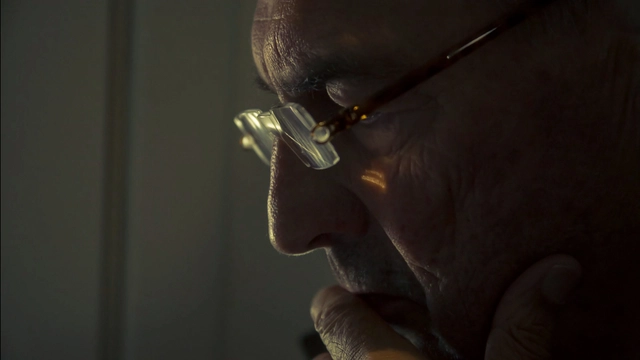
In the canon of great Dutch architects sit a number of renowned practitioners, from Berlage to Van Berkel. Based on influence alone, Rem Koolhaas—the grandson of architect Dirk Roosenburg and son of author and thinker Anton Koolhaas—stands above all others and has, over the course of a career spanning four decades, sought to redefine the role of the architect from a regional autarch to a globally-active shaper of worlds – be they real or imagined. A new film conceived and produced by Tomas Koolhaas, the LA-based son of its eponymous protagonist, attempts to biographically represent the work of OMA by “expos[ing] the human experience of [its] architecture through dynamic film.” No tall order.
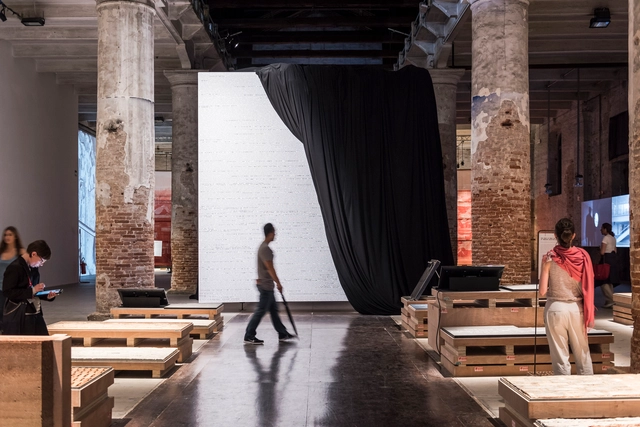
The appointment of Chilean architect Alejandro Aravena as the curator of the 2016 Venice Biennale (La Biennale di Venezia) has seen the exhibition take a more vested interest in social responsibility. In harmony with this theme, German architect Werner Sobek has presented a large cube with a sobering social and environmental message. Entitled "Beyond Form," Sobek's intention mirrors Aravena's; it forces the viewer to look beyond the formal elements of architecture to the unavoidable issues facing it in the near future.

On May 28, Beirut-based firm 109 Architectes unveiled Notes on a Tree at the 2016 Venice Biennale of Architecture. The interactive installation is part of the GAA Foundation’s annual “Time – Space – Existence” exhibition and commemorates Lebanon’s lost public spaces.
Notes on a Tree tackles the role of the architect in countries like Lebanon, where developers often dictate urban planning. The firm uses its own projects as examples of successes and disappointments in preserving public space, which is symbolized by specific trees. Some trees were saved and some were lost, but each one represents a community’s history and collective memory.

The Museum of Architecture and Design (MAO) in Ljubljana, Slovenia has announced that the project, Home at Arsenale, will be presented in the Slovenia Pavilion at the 15th International Biennale in Venice.
The project, curated by Aljosa Dekleva and Tina Gregoric, responds to the Biennale’s title, Reporting From the Front, by creating a "curated library" that addresses topics of home and dwelling as social and environmental issues.
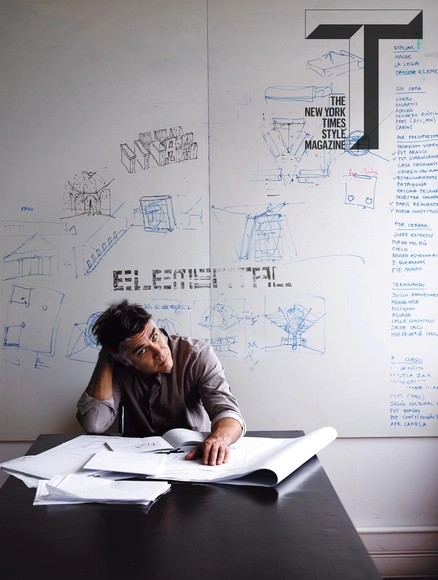
On the eve of the Venice Biennale, The New York Times’ Michael Kimmelman sits down with Alejandro Aravena in an intimate profile for T Magazine’s Beauty Issue. Visiting a number of projects by the architect and his office, Elemental, Kimmelman experiences socially minded architecture in an age of informal growth, income inequality, and mounting threats linked to climate change, all while learning about Aravena’s own path and growth as a practitioner. Although told by colleagues that he might be standoffish, Kimmelman finds Aravena to be “earnest, open, a little nerdy –– and deadly serious.”

An installation of nearly 100 books in the James Stirling-designed Book Pavilion at the Venice Biennale serves as a collection of documents that asks us to consider how climate intersects with architectural ideas.
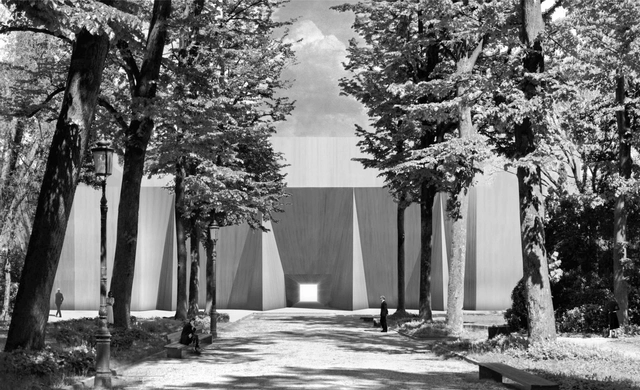
Few have ever considered what the Giardini—the park of national pavilions for the Art and Architecture Biennales in Venice—is like during the winter months. In light of the fact that, during their "off-season," the gardens are often left in a state of disrepair, RAAAF—a Dutch multidisciplinary studio based in Amsterdam, alongside architect Marcel Moonen—have proposed a series of installations in an attempt to "reclaim valuable public space" which sits at the heart of an often overcrowded city.
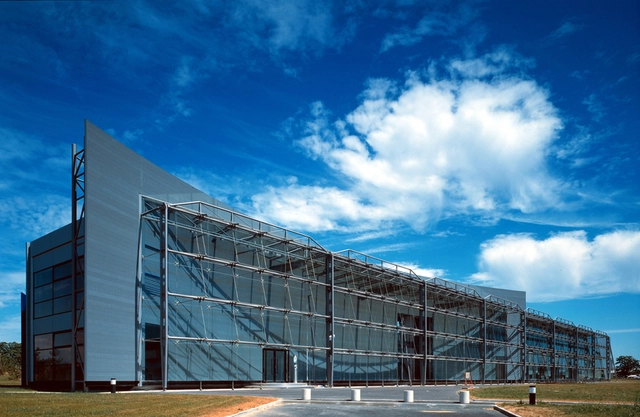
Designed by Odile Decq and Benoit Cornette, the BPO Building in Montgermont, France is now being threatened by a demolition permit. Inaugurated in 1990 and having won no less than 12 awards in its lifetime - including a Golden Lion at the 1996 Venice Biennale - the building has been widely lauded for its technical innovations, including a double-glazed suspended façade and panoramic elevators. It has appeared as the focus of theses internationally, and is featured at the Cité de l’Architecture et du Patrimoine and Palais de Chaillot, illustrating its pivotal role in architectural growth. It was one of the first buildings in the 90s to demonstrate an acute response to the quality of workplaces, and stands as an example of conscious, thoughtful design.
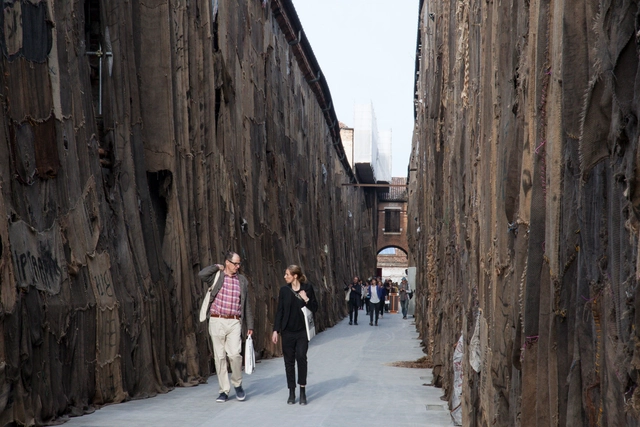
A temporary pavilion designed by London-based firm Adjaye Associates is housing a selection of works for the 56th International Art Exhibition, "All the World's Futures," in Venice. Curated by Okwui Enwezor, the exhibition explores the numerous ways in which art can be experienced in "an unfolding of typologies." Adjaye Associate's temporary museum seeks to parallel Enwezor's curatorial vision, and is nestled within a 316-meter-long, 16th-century ship-building warehouse in the Arsenale district.

.jpg?1484657568 "Waterloo Lane / Grafton Architects. Image © Ros Kavanagh")