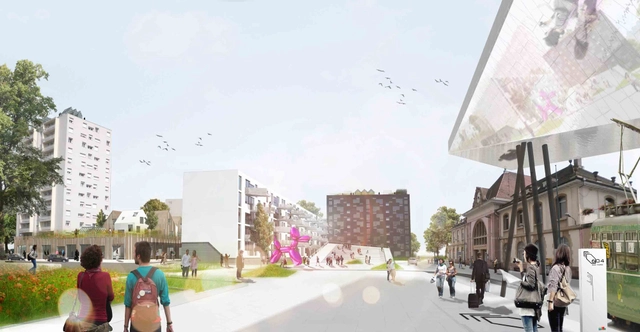
Designed by da architecture, their first prize winning proposal in the IBA Basel 2020 competition, Das Band meiner Stadt (The band of my city), is a new dynamic that is brought to the Eastern railway station district of Quartier du Lys, which becomes the new landmark of the city of Saint-Louis. The development of this new district on the western side of the station area is characterized by a well-mixed, multi-use business district with offices, commercial and residential programs. This will benefit Saint-Louis train station and help the stream of travellers to further increase. More images and architects‘ description after the break.
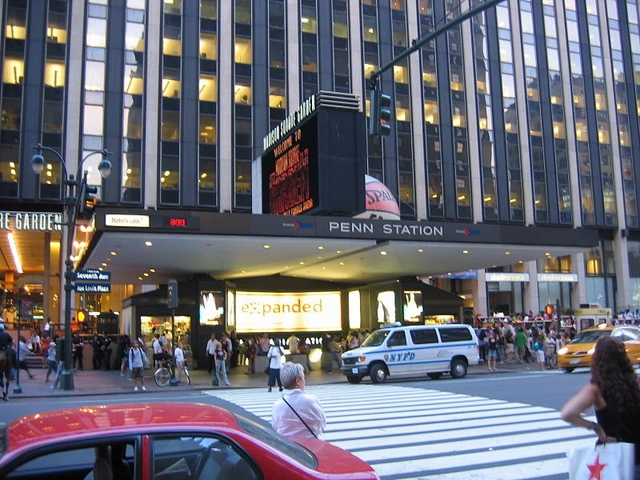
In an effort to “unlock people’s imaginations” about Penn Station and Madison Square Garden, the Municipal Art Society (MAS) of New York has challenged Santiago Calatrava, Diller Scofidio + Renfro, SHoP Architects and SOM to propose four new visions that exemplify the potential of the highly disregarded area.
The challenge comes amidst a heated debate on whether or not the city should restrict Madison Square’s recently expired special permit to 10 years, rather than in perpetuity as the arena’s owners - the Dolan family - has requested. This would allow time for the city to “get it right” and come up with a viable solution for the arena and station that would not only “improve the safety and quality of life for millions of people but also benefit the economy”. Think Kings Cross in London. With a thoughtful mix of public and private investments, the crime-ridden transfor station was transformed into a thriving cultural destination.
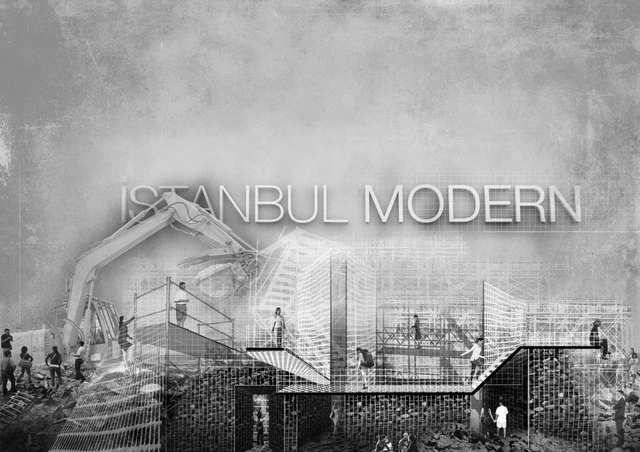
Chosen as one of the five finalists in MOMA’s Young Architectural Program (YAP), Yalin Architectural Design’s proposal ‘IM-Debris’ focuses on how Istanbul and all the other cities in the world have to come up with local solutions to their own problems in global standards. The main purpose of this design is to be within the rubble which we are usually used to observe from a distance, to form a place with every possible material that is left from a construction and to have the visitors re-discover where it came from, in a place designed by it in the first place. More images and architects’ description after the break.
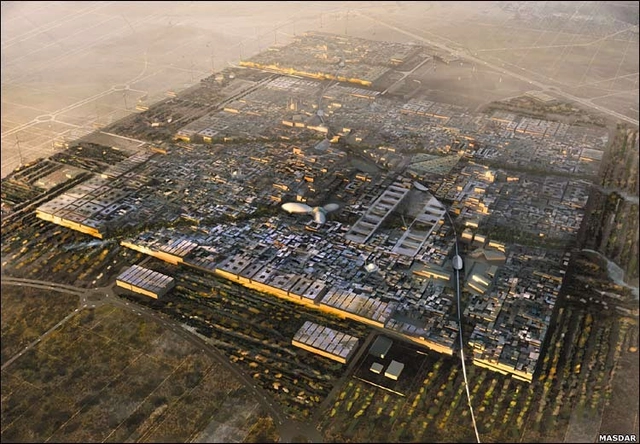
Arguably the biggest buzzword in urbanism right now is the 'Smart City'. The idea, although certainly inclusive of eco-friendly practices, has even replaced “sustainability” as the major intent of cities planning for positive future development. Smart City thinking has been used successfully in countries as diverse as Brazil, the US, the UAE, South Korea, and Scotland (Glasgow just won a £24million grant to pioneer new schemes throughout the city).
But what exactly are Smart Cities? What benefit do they bring us? And, more importantly, how can we best implement them to secure our future?
The answer, in my opinion, lies in the hands of architects.
More on the potential of Smart Cities after the break...
Designed by White arkitekter their Park 1 project is intended to house a traffic and emergency management center, a new fire station and a total of 1,200 new workplaces in which effective coordination will be created on an everyday basis. Located in Stockholm, the building complex inclines back from Lindhagensgatan in a generous gesture which marks the entrance while also boldly cantilevering slightly into space towards the Essingeleden highway and above all of the movement and communication at the site. More images and architects' description after the break.
In an effort to saving the crumbling 15-acre Pier 40 on Manhattan’s Lower West Side waterfront, seven downtown youth sports groups have released a concept plan prepared by WXY Architecture + Urban Designto open up 40% more space for more fields and park space on the pier, mainly by creating a new development site for two new, 22-story residential buildings in an area along West Street directly in front of the pier. The development approach would open the existing 800-foot-long pier shed building that encloses the park fields to improve connections and access between the Hudson River, the pier, and the park. The result knits together leisure and recreation amenities with a premier waterfront destination. More images and architects' description after the break.
Designed by the collaborative team composed of Harry C. Bougadellis & Associate Architects, Georges Batzios, andMartha Schwartz Partners, their proposal for the Re-Think Athens competition, which was named as the 2nd runner up, is an urban landscape element which will characterize the entire center of Athens. Titled 'Belvederes of Athens ', their design concept creates a high velocity urban corridor void of anchors or rest by structuring the street space into a series of terraces, expressive belvederes define individual urban spaces along this perpetual slope. More images and architects' description after the break.
Designed by EE&K a Perkins Eastman Company, their proposal for the Qingdao Harborfront Redevelopment project was recently awarded a 2013 Urban Design Honor Award by the American Institute of Architects (AIA) New York Chapter. The Harborfront occupies 26 hectares of former maritime/industrial uses in Downtown Qingdao, facing Jiaozhou Bay, and represents the anchor redevelopment for the city’s waterfront revitalization initiative. With the relocation of commercial port activities across the bay, antiquated docklands and shipyards throughout Downtown are now poised to become new mixed-use communities that will re-unite residents with their waterfront. More images and architects' description after the break.
A multidisciplinary, international team led by Alkistis Thomidou, Chryssa Komantou & George Anagnostakis of Also Known As Architects, and Gianmaria Socci won a special mention for the "Rethink Athens: towards a new city center" competition with a proposal based upon a new practice of citizenship, one that would physically reshape public space and let people regain control over their city. The proposal provides an intense linear space that will awaken hibernating potential for activities to shape the surrounding territory that will be unburdened of the existing restrictions to constitute a field enriched with traces of the city’s memories. More images and architects' description after the break.
The main idea of ABM Arquitectos in their Re-Think Athens proposal, which was a finalist in the competition, is to join the two parks at the end of the intervention (Pedion Areos and Lotos Likavitou) with a green mass that will flow all along the intervention. By doing this, the architects hope to bringvback the greenery to an area that used to be a green zone in the outside of the old Athens walls and creating a green corridor that joins the old Athens with the new Athens. More images and architects’ description after the break.
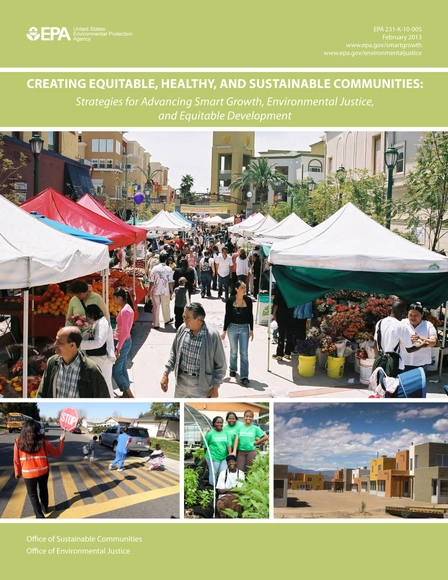
Creating Equitable, Healthy, and Sustainable Communities: Strategies for Advancing Smart Growth, Environmental Justice, and Equitable Development
The U.S. Environmental Protection Agency has released an extensive new publication that serves as a guide for low-income, minority, tribal and overburdened communities to build smart, environmentally just, and equitable developments using strategies that are accessible and affordable. The guidelines build upon precedents of past successes within struggling communities, whether these struggles are in the face of discrimination, social or economic prejudices, or environmental injustive. The EPA identifies seven common elements that have been illustrated in in-depth case studies of communities that have struggled with those very issues. By targeting community groups, governmental agencies, private and non-profit partners, regional and local planners and residents of these communities, the EPA's smart growth guide for "Creating Equitable, Healthy and Sustainable Communities: Strategies for Advancing Smart Growth, Environmental Justice, and Equitable Development" seeks to bring access to valuable information about the inherent possibilities to creating healthful, sustainable, and prosperous communities under a variety of circumstances.
Join us after the break for a breakdown of the EPA's findings and how they address equitability in community development.
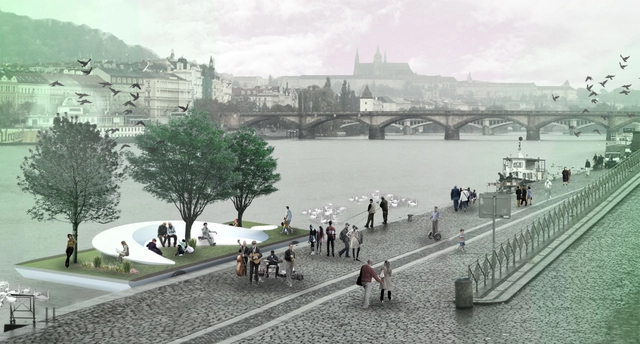
Courtesy of Juras Lasovsky, Zuzana Masna, and Koen Hezemans
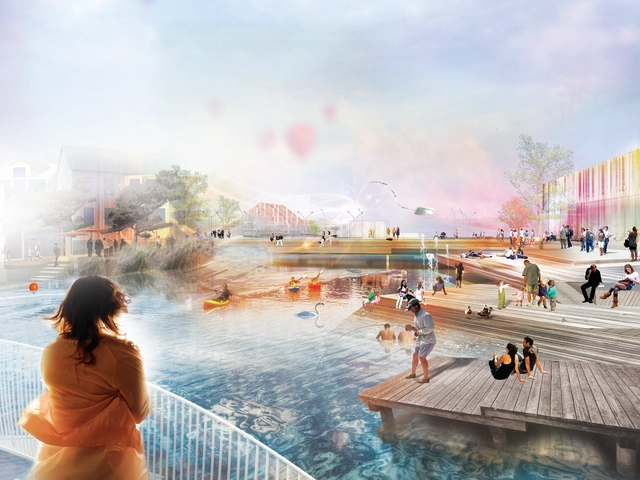
Designed by the collaboration of Juras Lasovsky, Zuzana Masna, and Koen Hezemans, their project "Prague Activators" suggests the idea of pontoons floating on the river. The pontoons "activate" the Vltava riverbank as well as various parts of the city of Prague. The proposal was originally awarded at the Skanska Bridging Prague Competition and was later elaborated into the current project Prague Activators. The project aims to motivate people not only to pursue activities on the riverside, but also to inspire them to care for the public space and alter it. More images and architects’ description after the break.
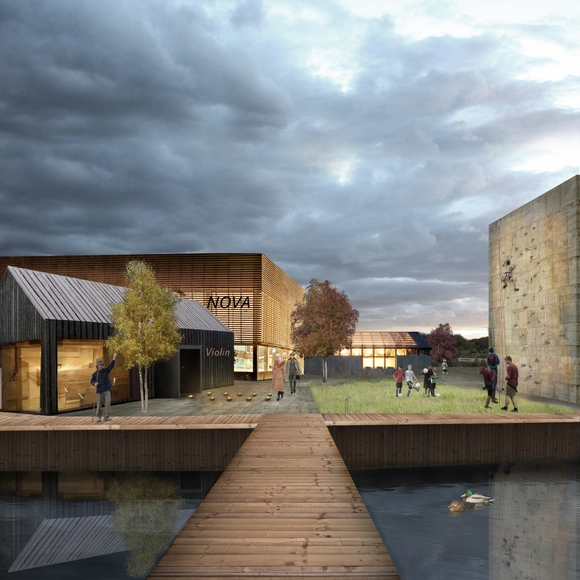
In the Future Floda competition proposal by Fabel Arkitektur + Sara Wernsten two strong paths are established to connect south with north and east with west through the central areas. All existing buildings are preserved and buildings with housing and commerce are established to increase density in the areas alongside the two paths. More images and architects’ description after the break.
After winning an international competition, OMA has been commissioned to masterplan a new 10km2 Airport City for a population of 200,000, linking the new Hamad International Airport with the city of Doha, Qatar. OMA’s masterplan is a series of four circular districts along a spine parallel to the HIA runways, intended to create a strong visual identity and districts with unique identities. Phase One of the 30-year masterplan, which links airside and landside developments for business, logistics, retail, hotels, and residences, will be mostly complete in time for the 2022 World Cup, hosted by Qatar.
Rem Koolhaas commented: “We are delighted and honored to participate in the exciting growth of Doha, in a project that is perhaps the first serious effort anywhere in the world to interface between an international airport and the city it serves.”
Text description provided by the architects. Designed for the 2013 Melbourne Food and Wine Festival, the Urban Coffee Farm and Brew Bar by HASSELLattempts to play on this element of intrigue and surprise, creating an unexpected landscape in a familiar urban setting. The architects’ design brings a jungle of coffee trees on the edge of a central business district which opened just last week and runs until March 17. More images and architects’ description after the break.
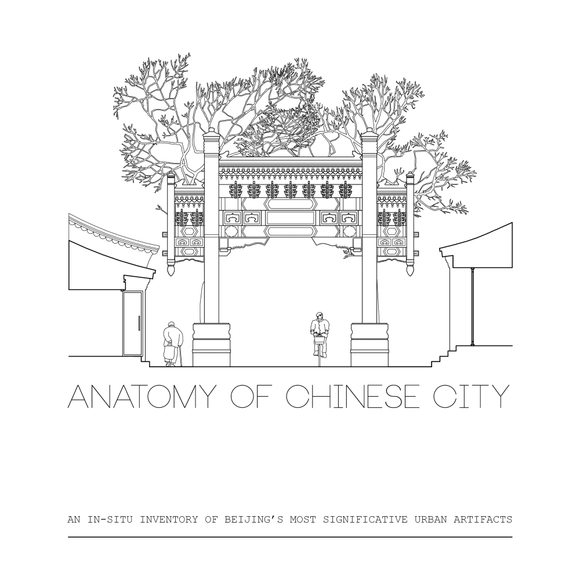
Courtesy of Thomas Batzenschlager and Clémence Pybaro
In cities around the globe, change happens almost instantly. Buildings rise, buildings disappear, and skylines morph before one’s eyes. There is no better example of this, of course, than China. From Ordos to Shanghai, Chinese cities are in a constant state of flux, as the Chinese people willfully abandon signs of the past and embrace the new.
Of course, it’s one thing to know this fact; it’s quite another to witness it firsthand, to experience this urgent impetus to demolish and demolish in order to build, build, build, and build. In the face of such large-scale, exponential urban development, it’s easy to feel powerless to suggest another path.
However, in publishing Anatomy of a Chinese City, that is exactly what two young architects have done. By taking the time to observe the “urban artifacts” that make a Chinese city unique, compiling over 100 drawings of everything from buildings to bicycles, Thomas Batzenschlager and Clémence Pybaro have preserved a piece of Chinese history that is quickly going extinct.
In a world where, in the race for progress, quotidian realities are erased unthinkingly, Anatomy of a Chinese City is not just a resource, but a call-to-action, reminding us to slow down and observe the very human context that surrounds us.
Read more about Anatomy of a Chinese City, after the break...
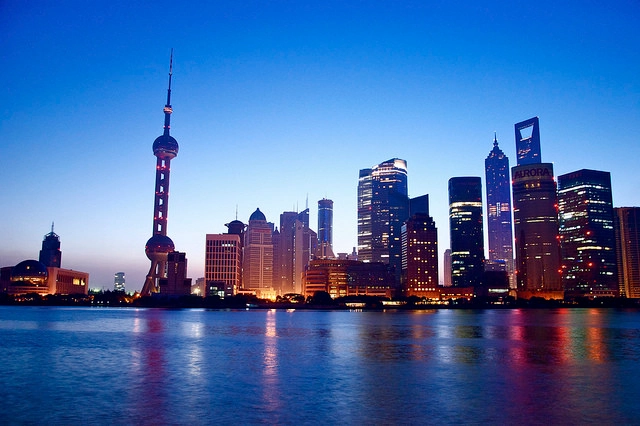
Shanghai Skyline. Image Flickr User CC Gaëtan Bruneteau. Used under Creative Commons
This article, by Austin Williams, originally appeared in The Asian Age as "India, China: Talk of the Town." Williams is the co-author of Lure of the City: From Slums to Suburbs and director of the Future Cities Project. He teaches architecture and urban studies at XJTL University in Suzhou, China. Email him at futurecitiesproject@gmail.com
As an architect living in Suzhou, just outside Shanghai, I have become blasé about the skyline being transformed before my very eyes. The classic view of Shanghai’s towering waterfront may not represent great architecture, but it’s impressive all the same… and constantly improving. In most cities across China it is the same story: high-speed construction activity, modernisation, transformation and skyscrapers everywhere. There is a palpable sense of opportunity pending — what the émigrés to America must have felt when arriving in New York 100 years ago.
While many Western commentators point to the failures (the accidents, the pollution and the corruption) with an unremitting Schadenfreude, China marches on. Where else can you watch a modern city grow and change in real time? Where else, indeed?
Read more of Austin Williams' account of the different kinds of urban development happening in China and India, after the break...
With the goal to inspire new visions for the future development of the central part of Floda, Mandaworks and Hosper Sweden’s proposal was recently selected as the the winner of the architectural competition for the future planning of Floda’s city center. Their ‘Down by the River’ concept focuses on and develops Floda’s strongest qualities: water, nature and Garveriet. The public spaces along Säveån refine and develop Floda’s existing character and identity as a community around the water. The proposal’s hook is the Blue Square - an innovative reinterpretation of the square as a public space where the rushing river creates a natural spectacle all year round. More images and architects’ description after the break.