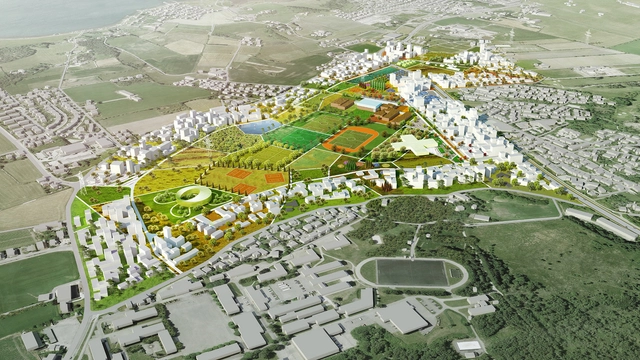
MVRDV and Space Group are one of three teams who have been asked to submit a masterplan proposal for the Norwegian town of Madla-Revheim, the main development area outside of Stavanger. The aim of this commission is to develop a model of sustainable growth that treats development principles, transportation systems and built structures as parts of a whole. In this proposal, MVRDV and Space Group propose to concentrate 4,000 housing units on the edge of the 780 acre site, preserving the heart of the development for open, green space, public programs and sports facilities.
Stretching beyond the natural constraints of Presqu’ile de Caen and into the neighboring towns of Mondeville and Hérouville Saint Clair, MVRDV’s competition-winning vision will transform 600ha of industrial brown fields into a collection of gardens punctuated by a mosaic of urban settlements. This ambition, titled ‘La Grande Mosaique’, is strongly based on respect for the existing structures and defined by small scale interventions that will result in a large scale structure vision for Greater Caen.
The proposal was selected from three submittals by the public development agency SPLA for being, as Caen Mayor Philippe Duron describes, the “most impressive plan”. It was commended by the jury for its “fresh view” on urbanism.
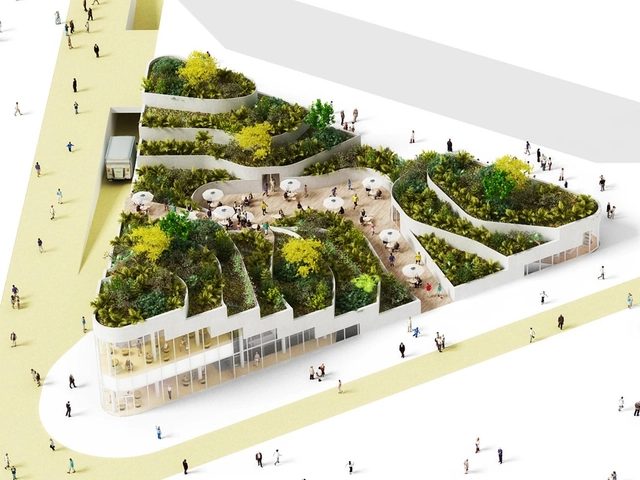
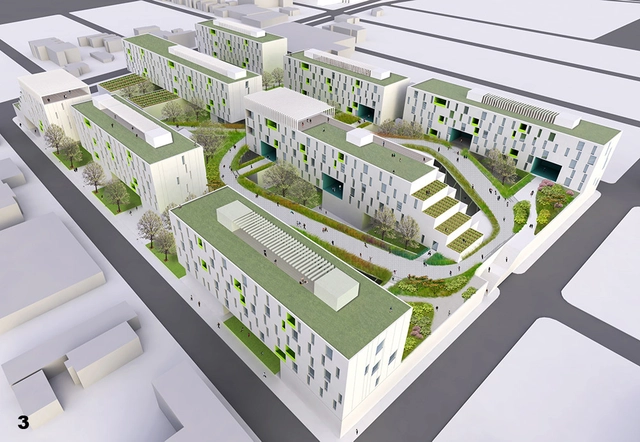
Housing Corporation VANKE recently asked NL Architects to make a proposal for a Super Market as part of a big resort in Sanya, the southernmost city in China. Renowned for its tropical climate and for being a popular tourist destination, the site of the resort will consist of three clusters of large residential slabs of 21 stories high enveloping semi enclosed gardens. The public space plays a crucial role in the atmosphere of the area as a whole so a lot of consideration is going into creating a pleasant environment. More images and architects’ description after the break.
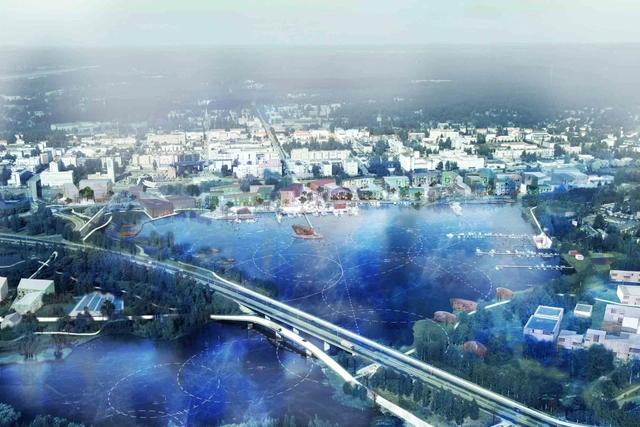
Mandaworks and Hosper Sweden were just awarded this past week with the third prize in the open international architectural competition in Mikkeli, Finland. From 107 proposals submitted last October, Mandaworks and Hosper Sweden were one of five teams selected to continue work in the second stage. Mikkeli is a medium-sized municipality with 80,000 inhabitants, most of whom live in the urban area Mikkeli. Their challenge was to find a model for how Mikkeli can densify around and best utilize the lakefront in an ecologically sensitive & holistically sustainable way. More images and architects' description after the break.
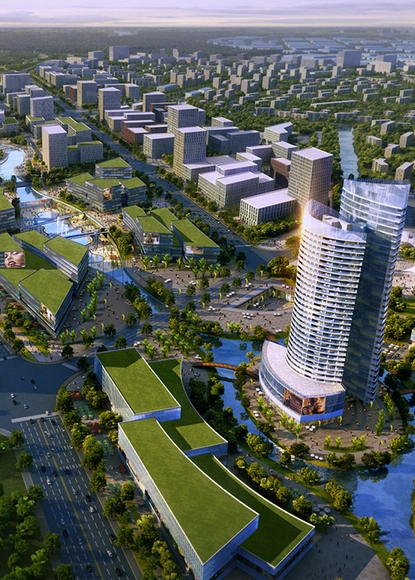
SBA International’s concept of a sustainable development among industry, business and residential in the Chinese city of Shenyang just won the first prize in the in the "Tiexi Waterfront Area" competition. Their ‘Clean City Concept’ includes a reduction of CO2 emissions, environmental green areas and office buildings which comply with the latest standards of a ‘Green Building’. The planning area is divided in three theme areas and in total covers an area of 90 square kilometers. More images and architects’ description after the break.
With a vision to create the “workplace of the future”, developer Danica Pension has teamed up with Henning Larsen Architects, COWI and Alectia to design a state-of-the-art, yet modest Microsoft headquarters in the new urban district of Lyngby, Copenhagen. Unlike many of the recent corporate headquarters making headlines in Silicon Valley, this Danish complex is unique for it’s central urban site and primary goal of serving the community.
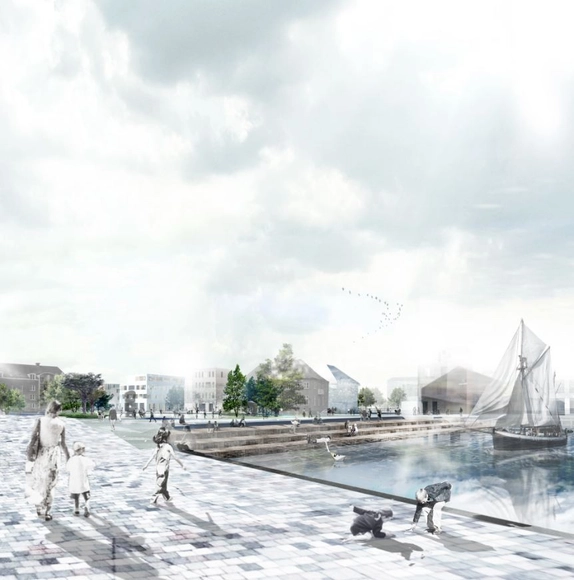
HOBRO – a city finds its lake, is the 1st prize winning proposal by Holscher Arkitekter, which aims to tie the historical center of Hobro to the harbor area. The philosophy behind the strategy is that the urban and landscape spaces are created first, then the streets and at last, the buildings. The architects wish to create a robust frame for a long lasting urban development. A strategy that allows the urban plan to exert itself and be experienced as completed in all phases of the development. More images and architects’ description after the break.
Situated in the very center of the historical town core, the Novo mesto central market feels somewhat removed today, being separated by its level and oriented towards the low-quality city space of Florjanov Square. Therefore, one of the basic guidelines for locating the new central market into the space must be to create the best possible entrance from the main square. Designed by Enota, the backbone of the new central market is formed by the covered Market Street, which lies on the level of main city square and connects the two spots closest to it on both access streets.
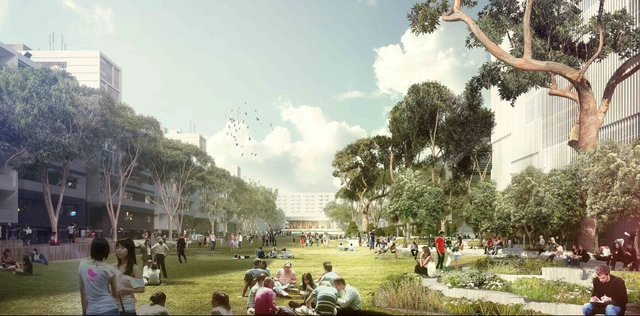
ASPECT Studios, in collaboration with Choi Ropiha Fighera, Barbara Flynn Grounds, ARUP, Deuce Design and People for Places and Spaces, was recently selected as one of five finalists by the University of New South Wales (UNSW) in a design competition for Alumni Park. In an effort to reconnect the University’s spatial hierarchy and movement patterns, the architects provide clearly articulated wayfinding and circulation routes with the new 2ha ‘Social Spine’. More images and architects' description after the break.
The proposal for Healthy Urbanism is a collaboration between a visionary client, a health scientist and ISA - Interface Studio Architects to investigate the potential for health outcomes to influence large-scale neighborhood and building design. The consulting team developed a conceptual tool in order to bring spatial design and health outcomes into communication with one another. “The Matrix” is a key proposal of the work which creates a bridge between health-related research and literature, factors, health impacts, program, and design parameters. More images and architects' description after the break.
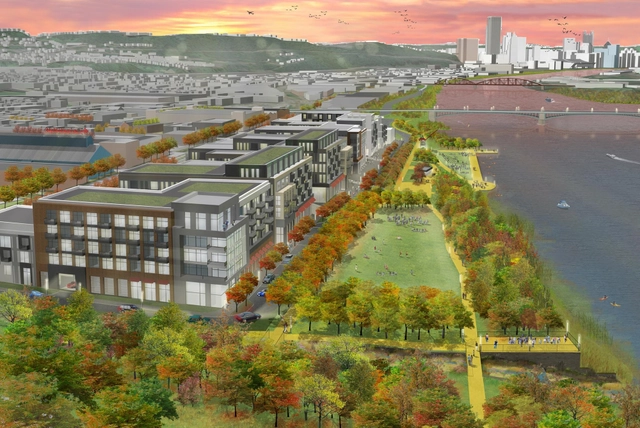
43rd St District View Back Towards Pittsburgh Courtesy of Sasaki Associates
With the advent of the High Line and the recent announcement about Chicago's Bloomingdale Trail, it's becoming clear that the 'parkway' is a powerful new force in urban planning, which has the potential to change the way cities around the world function. A new project in Pittsburgh seeks to harness these possibilities, as the city's history of industry has left its stamp upon the city in the form of a rusting industrial riverfront. A plan by Saski Associates envisages re-using this space to create a green belt, tying the city closer together. By adding pedestrian, cycling and light-rail transport routes, and creating plenty of green spaces, they hope to tap Pittsburgh's unrealized potential to be a river-front city, while encouraging geographical and social closeness amongst its communities.
More images and the architect’s description after the break…
In 2011, UN-HABITAT and Project for Public Spaces (PPS) signed a 5-year cooperative agreement to aspire to raise international awareness of the importance of public space in cities, to foster a lively exchange of ideas among partners and to educate a new generation of planners, designers, community activists and other civic leaders about the benefits of what they call the "Placemaking methodology." Their partnership is helping to advance the development of cities where people of all income groups, social classes and ages can live safely, happily and in economic security and in order to reach these ambitious goals, the duo recently released 10 informative steps that cities and communities can take to improve the quality of their public spaces.
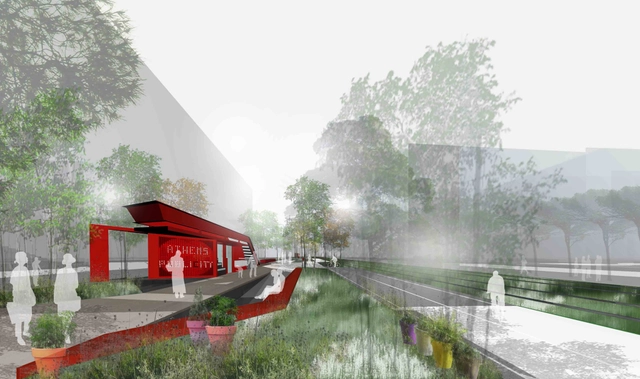
The proposal, ‘Athens PubliCity: an urban neuron for a new city center’, for the Re-Think Athens competition organizes a public space processing system which develops and expands like an “urban neuron”. Designed by Nikiforidis-Cuomo Architects, their concept becomes an entire living framework aiming to re-activate and revitalize the urban body. The system acts as a familiar, habitable and dynamic framework able to “contain” events and situations of both collective and individual actions. More images and architects’ description after the break.
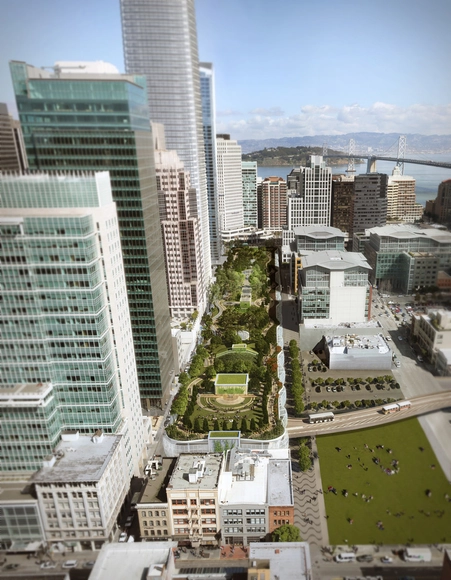
The revamped Transbay Transit Center in downtown San Francisco broke ground earlier this week, a project that will introduce a 1.5 million square foot development that will be part transportation hub, part public park and urban space, and part offices and retail establishments. The massive undertaking, designed by renowned architecture firm Pelli Clarke Pelli will bring together 11 systems of local and national transportation, serving 45 million people per year. In addition to securing access to myriad transit lines, the project will also provide downtown San Francisco with a 5.4-acre rooftop park, designed by PWP Landscape Architecture, along with numerous cultural programs. The project is budgeted at 4.2 billion dollars and is projected for completion in 2017. It is funded in part by the construction of a 1,070-foot tower that is adjacent to the Transbay Transity Center. It is also designed by Pelli Clarke Pelli and is slated to be the tallest tower in San Francisco. The tower will secure 60 stories of office space and jobs and will contribute to the projected $87 billion of revenue through 2030.
Join us after the break for more details on this project.
The proposal for the Green Square Library & Plaza in Syndey rethinks a common emphasis on new technologies and the transformation of a reading room in a library being an inside storage space of books to a public space that communicates with its boundaries. For this design, Gus Wüstemann Architects suggests a bridge from the virtual world to the authentic world, from nature to culture, society and technology. More images and architects’ description after the break.