
a.jpg?1415762213 "© Artur Silva")

-
Architects: M-Arquitectos
- Area: 500 m²
- Year: 2012
-
Professionals: Unipessoal Lda


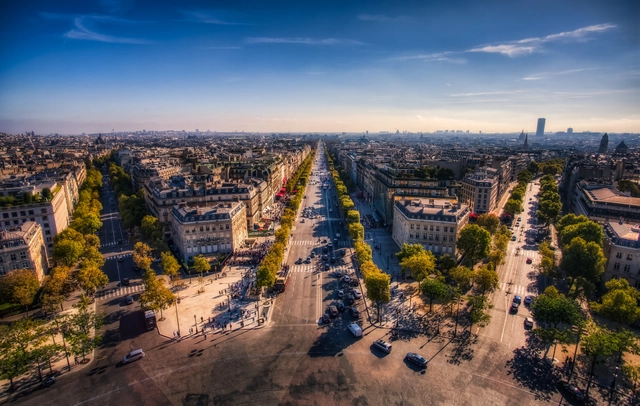
Why do cities exist and how will they grow and change? As more than half of the world’s population now lives in cities it is becoming increasingly important for urban designers and planners to seek answers to these questions. This article by Laura Bliss from City Lab presents the “science of cities,” and the ways in which the urban-planning world is moving away from traditional methods of simply putting cities into categories, in favor of a more evolutionary theory. Benefiting from the vast amounts of data available today on statistics such as crime and voting patterns across cities, researchers have worked to establish the quantifiable characteristics of urban areas as a whole, and recent studies in this area reveal how the shapes of cities themselves could be connected to internal economic and social processes. Learn more about these radical developments in the full article from City Lab.
Youngchae_Park.jpg?1414039175&format=webp&width=640&height=580)

Following a three-year redesign, the Place de la République in Paris reopened this year, welcoming back the regular organized protests that make it one of the most important public spaces in Paris. For the designers of the space, TVK agency, it was important not to infringe on what many Parisians consider their inalienable right to protest - however a question remained over how the square could be more amenable to other uses at the same time. In this article, originally published by Metropolis Magazine as "Place for Protest," Veronique Vienne explores how TVK agency allowed Parisians to have their cake and let them eat it too.
In Paris, rituals of political discontent are traditionally celebrated on Place de la République. It is a favorite kick-off point for the countless marches that define democracy in the French capital. But before taking to the street in a slow-moving procession, crowds block traffic all around the esplanade, creating a gridlock that can cripple the city from Sacré Coeur to the Opéra. Meanwhile, citizens get to unfurl banners and shout slogans. It’s legal, good, clean fun.
Well, no more.
Imagine luminaires that could fly and visualise new buildings or individually guide you through space. What would happen if you could even interact with these flying pixels? These concepts could be realised in the near future as the first prototypes and experiments are being introduced. Software-driven LED pixels combined with drone swarm technology provide extraordinary possibilities for inducing new forms of spatial experience. These luminous pixel clouds emerge as digital patterns, but at the same time they emanate a romantic quality with their unique star formations twinkling in the night sky. The first projects have shared a playful note, but laboratories such as MIT's SENSEable City Lab, ARES Lab and Ars Electronica Futurelab have shown an intriguing future in urban design for guidance systems or envisioning real estate developments, as advances in battery technology and wireless control have opened new perspectives for a life with smart flying pixels.
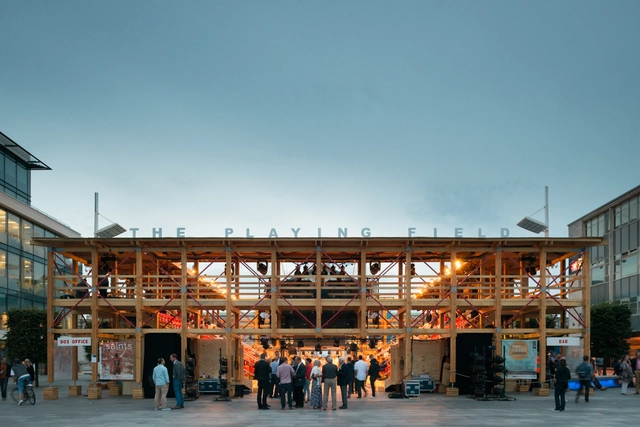
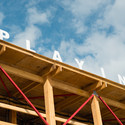
The Playing Field, a 450-seat "high tech Tudor theatre" in the heart of the British city of Southampton, represented a major collaboration between the city’s arts organisations and was realised through a collaborative effort between engineers Structure Workshop and Assemble Studio, the London based practice known for innovative interventions within the public realm. Their Cineroleum, coupled with a bold renovation of a yardhouse, are part of a small canon of cultural buildings designed to temporarily reimagine the urban landscape on a small scale.
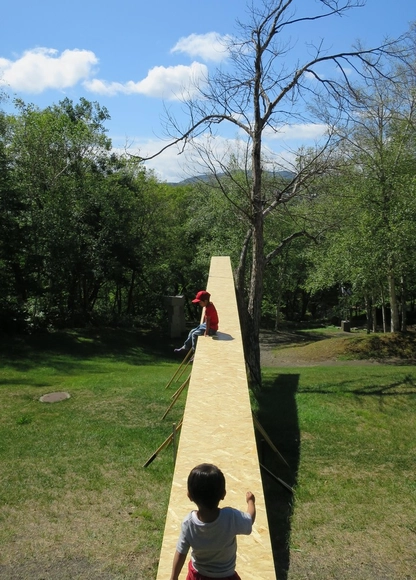
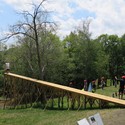
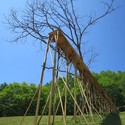
Ryo Yamada's "Air Garden" installation is a passage, but not in the traditional sense of the word. It's not a passage that connects one point to another, since the walkway does not lead to a tangible destination, but rather a passage that connects an enclosed garden to the vastness of the open sky. The artist believes everyone shares a common desire for the sky, which represents freedom and equality. Read on after the break for more information, images and a video.
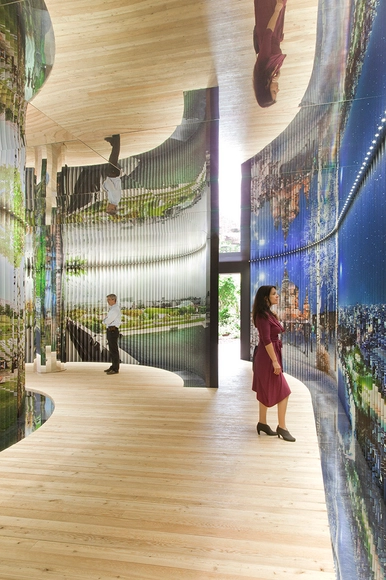
In their collateral event for the debut of the Moscow pavilion at the Venice Biennale, the exhibition "Moskva: urban space" explores the historic development of public spaces and examines the city’s progress in the context of Diller Scofidio + Renfro’s winning proposal for Zaryadye Park. Curated by Sergey Kuznetsov, Chief Architect of Moscow together with Kristin Kristin Feireiss from AEDES, and organized by MCA - Moscow Committee of Architecture and Urban Development, the exhibition comes at a pivotal moment in determining the future of urban development in Moscow. As Kuznetsov states, "While the face of Moscow in the past 100 years was largely determined by the architecture of its buildings, representing political and economic developments, today’s urban singularity is based on the “connective fabric” of its public spaces that have become equally important identity-makers and contributes significantly to improving the quality of urban life for its citizens." To see photos of the exhibition by Patricia Parinejad and learn more about the story behind it, continue reading after the break.

In 2011, the Tribeca-based design duo of James Ramsey and Dan Barasch proposed a radical project to transform an abandoned subterranean trolley terminal in Manhattan's Lower East Side into an underground park filled with natural light and vegetation, eventually proving their design with a full size mock-up of their design for light-capturing fiber-optic tubes. Since then, they haven't had nearly the same level of publicity - but that doesn't mean they aren't still working. This article by The Architects' Newspaper catches up with Ramsey and Barasch as they attempt to make their $50 million project a reality by 2018. Read the full article here.
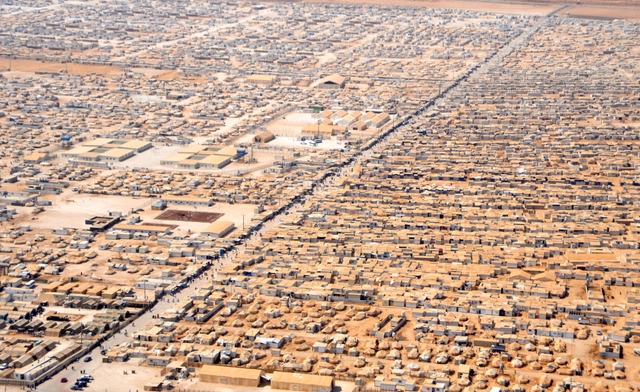
As the Syrian civil war continues to rage, more and more Syrian citizens are emigrating across the border to refugee camps in Jordan. While these camps were intended to be temporary, the sheer number of people they support and the uncertainty of when the Syrian crisis will end has leant them a sense of permanence. This article from the New York Times takes a look at how Syrian refugees are prompting urban development and what this means for the future of refugee camp design.

Did you know Millenium Park in Chicago, Illinois was actually a desolate industrial wasteland until the turn of the century? The 24.5 acre public park, host to a state-of-the-art collection of architecture, landscape design, and art, is now a popular destination for residents and tourists alike -- all thanks to an unprecedented public-private partnership pioneered by former Mayor Richard Daley. To learn more about how Daley made Millenium Park a reality, with the help of famous designers like Frank Gehry, check out the video above.
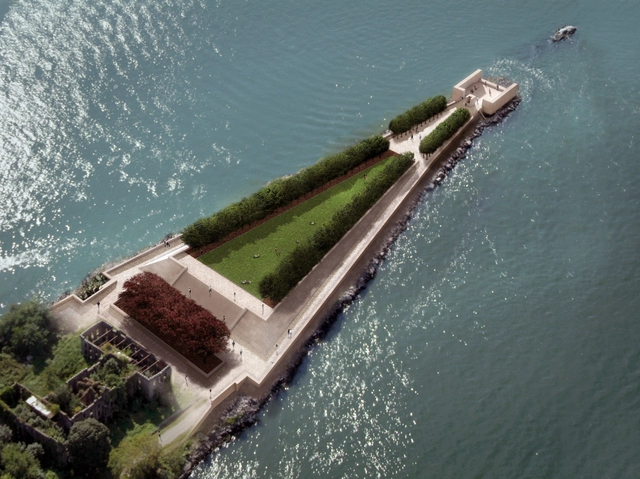
Built four decades after Louis Kahn's death, New York City's Four Freedoms Park - the architect's posthumous memorial to Franklin D. Roosevelt and his policies - is becoming one of the architect's most popular urban spaces. In a recent article for the Guardian, Oliver Wainwright investigates what he describes as perhaps Kahn's "best project". Wainwright's spatial description of the monument is interweaved by fragments of Kahn's personal history, building up a picture of a space with "the feel of an ancient temple precinct" and "a finely nuanced landscape". Although Gina Pollara, who ultimately realised the plans in 2005, argues that Four Freedoms Park "stands as a memorial not only to FDR and the New Deal, but to Kahn himself", can a posthumous project ever be considered as an architect's best? Read the article in full here.


In this article, first published by Indochino as “What makes some buildings happy?” architect Bruce Haden, principal at DIALOG in Vancouver, discusses why some places feel good to be in and why some just have that awkward, quiet feeling.
Award-winning architect and urban planner. Dad. Researcher on happy vs. lonely cities. We talked to Bruce Haden about why some places feel good to be in, and some just have that awwwkward, quiet feeling.
Bruce Haden has only been an architect and a bartender. So ask him what he likes about it, and his answer is he doesn’t really know anything else. In high school, he didn’t want to pick between calculus and woodshop, so he ended up in a profession that’s part art, part engineering (and a fair amount of politics). Now, he works on a lot of large, public buildings. But he also spends a lot of time thinking about happy and lonely cities. He talks about how working with a client is like dating, why some buildings are worth being in and others are just empty, and whether adventure or luxury wins.
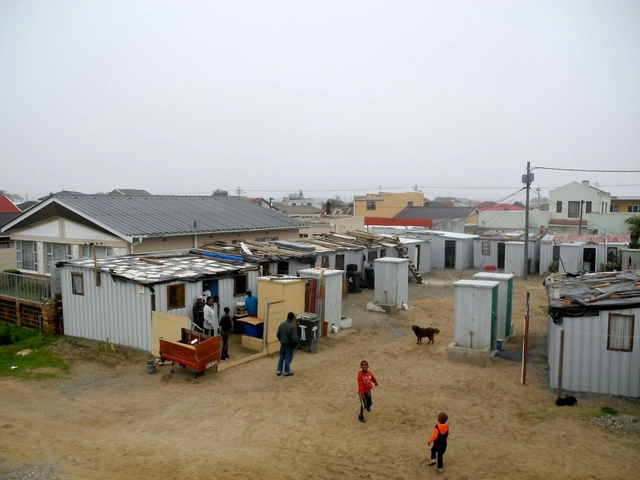
The city of Cape Town has adopted a new strategy for improving informal settlements - re-blocking, "the reconfiguration and repositioning of shacks in very dense informal settlements in accordance to a community-drafted spatial framework." Re-blocking serves to create communal spaces, make neighborhoods safer, and improve dwelling structures - among many other things. To see how it has been implemented and where, head to Future Cape Town and continue reading here.


Youngchae_Park.jpg?1414039205 "© Park Young-chae")
Youngchae_Park.jpg?1414039200 "© Park Young-chae")
Youngchae_Park.jpg?1414039106 "© Park Young-chae")
Youngchae_Park.jpg?1414039078 "© Park Young-chae")
Youngchae_Park.jpg?1414039175)