1. ArchDaily
  2. Thermal Insulation

Thermal Insulation: The Latest Architecture and News

The Role of Environmentally-Friendly Materials in Stadium Development and Renovations

 | Sponsored Content

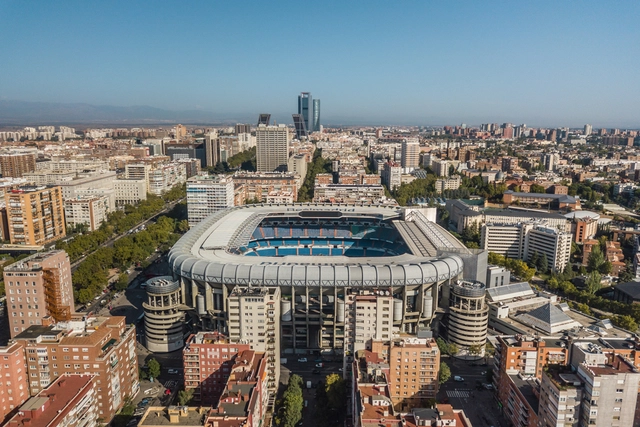
The 2022 FIFA World Cup was unique as the first FIFA tournament held in the Middle East. In another first, the FIFA World Cup, historically held between June and July, was moved to November and December, in view of Qatar’s 40˚C+ climate during the summer months. Even during the cooler months, Qatar’s average temperature reaches 26˚C. Combining this with the heat emitted by tightly packed spectators would at times have made the experience uncomfortable. As a result, Qatar air-conditioned eight of the nine open-air football stadiums – a significant challenge which was overcome through innovative design, technology and architecture and by utilizing spot cooling; and a complex undertaking when it is also important to maintain sustainability credentials.

To effectively cool the stadiums, the most crucial challenge was to prevent or at least reduce the hot air from outside coming into the stadium, which was achieved through the stadiums’ design and architecture.
Is Integrating Building Performance Difficult at Your Firm?

Subscriber Access | 

In a study recently published by AIA, less than 13% of architectural firms have incorporated building performance as part of their practice. With buildings contributing 40% of total carbon emissions leading to climate change, just 25 projects are roughly equivalent to planting 1 million trees each year. In addition to that, teams that are able to showcase data-driven and performance-driven decision-making and feature an energy analysis in every pursuit are able to increase fees and generate more revenue. Although integrating building performance sounds like a no-brainer, it proves to be difficult at many firms, because in addition to the practical changes, it requires a culture shift. That culture shift can only happen if the tools are easy to use, accurate, and mesh well with current workflows. Right now is the perfect time to tackle these culture changes due to a few reasons:

5 Ways to Discuss Building Performance for Your Next Project Pursuit

 | Sponsored Content

Today in the United States, buildings account for nearly 40% of carbon emissions (EESI) and 78% of electricity usage. The most sustainability-focused firms run energy simulations for less than 50% of their projects (10% for a typical firm) and only doing so late in the process when design changes are limited and insufficient to combat red flags found in the performance report (AIA 2030 report). We can make building performance widespread once we help the entire community discuss the subject in terms of investment and return. Especially during a project pursuit, since having the buy in from the whole team helps ensure the key project metrics are met. Owners are seeking out teams who are using actual metrics and data driven processes that affect their bottom line. This new approach to practice is what makes the younger teams’ standout and will benefit both the climate and the bottom-line. Here are 5 ways to talk about building performance in your project pursuits: 

What is CI and How to Design a Continuous Insulation System

Subscriber Access | 
What is CI and How to Design a Continuous Insulation System - Image 20 of 4
Courtesy of STO

CI (Continuous Insulation System) is an insulated facade system for walls and ventilated slabs that works through the superposition of 5 skins: fixation, insulation, waterproofing (open to the diffusion of the vapor and resistant to impact), and an outer cladding layer.

How are these components installed, and how do they work? Is it a system for new projects or can it be incorporated into existing buildings (retrofit)? How to design an CI correctly for my architecture project? Find these and other answers, below.

Eco-Friendly Insulation Offers Thermal Performance, Sound Absorption and Fire Resistance at the Same Time

Subscriber Access | 

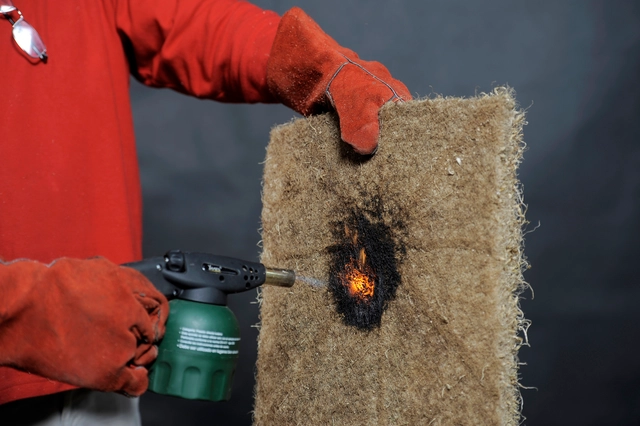
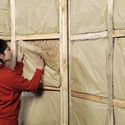
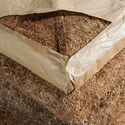
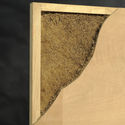
With the aim of promoting more efficient ways to isolate and protect building envelopes, the Chilean team Rootman has developed Thermoroot; a biodegradable and 100% natural insulation made from roots without genetic modifications or chemical additives. These roots make up what the company is calling a Radicular Mattress which, in addition to thermally and acoustically insulating the walls, floors, and ceilings of buildings, it is fire resistant.

Eco-Friendly Insulation Offers Thermal Performance, Sound Absorption and Fire Resistance at the Same Time - SustainabilityEco-Friendly Insulation Offers Thermal Performance, Sound Absorption and Fire Resistance at the Same Time - SustainabilityEco-Friendly Insulation Offers Thermal Performance, Sound Absorption and Fire Resistance at the Same Time - SustainabilityEco-Friendly Insulation Offers Thermal Performance, Sound Absorption and Fire Resistance at the Same Time - SustainabilityEco-Friendly Insulation Offers Thermal Performance, Sound Absorption and Fire Resistance at the Same Time - More Images+ 8