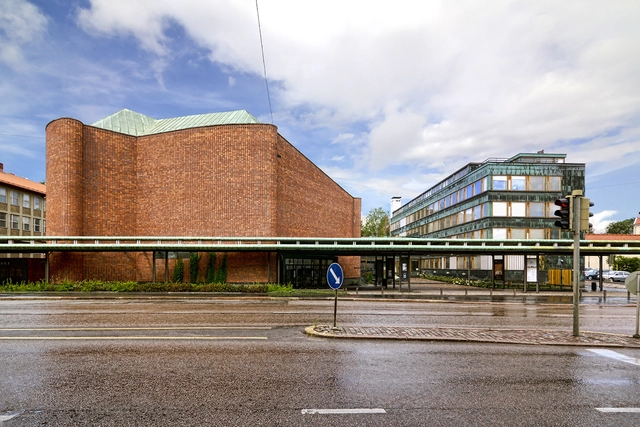
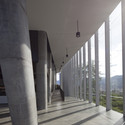
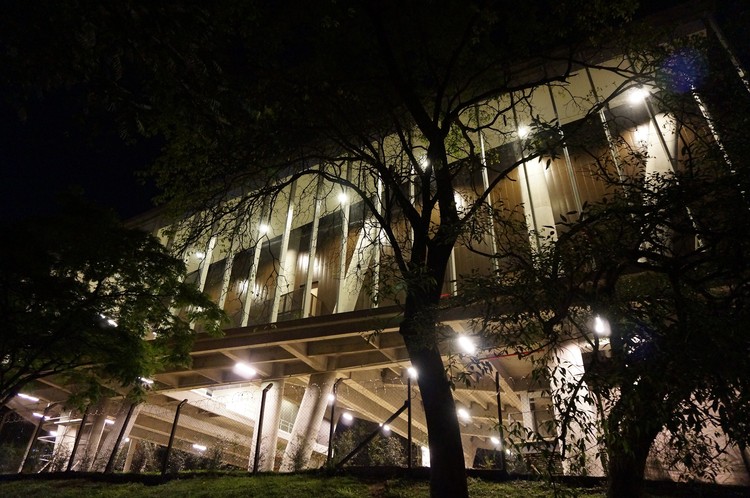
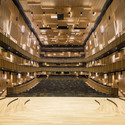
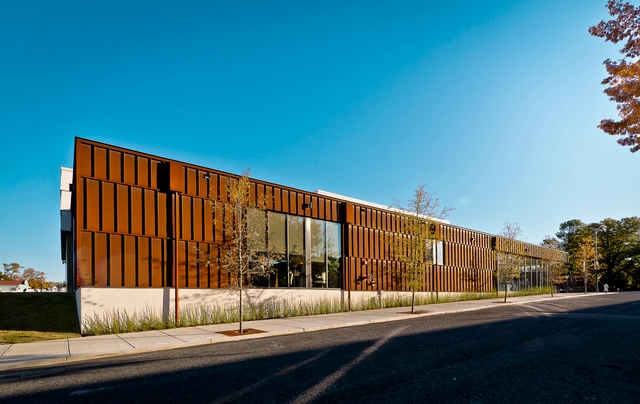
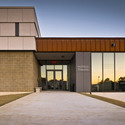
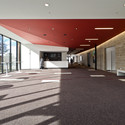
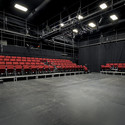
Originally built as the headquarters for the Finnish Communist Party, the House of Culture (Kultuuritalo in Finnish) has since established itself as one of Helsinki’s most popular concert venues.[1] Comprising a rectilinear copper office block, a curved brick auditorium, and a long canopy that binds them together, the House of Culture represents the pinnacle of Alvar Aalto’s work with red brick architecture in the 1950s.
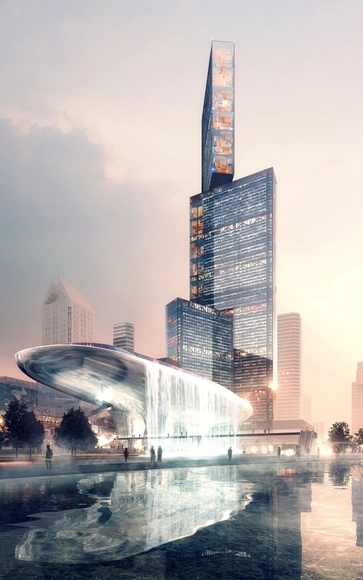
British firm PLP has unveiled their design for a large complex at the heart of the Pearl River Delta in China. The master plan comprises four buildings: the Platform for Contemporary Arts, the Lizhi Park Tower, the Concourse, and the Nexus - a 600-meter tall office and hotel tower that will be the masterplan's centerpiece and the region's tallest skyscraper.
A new design competition asks participants to design a facade and street presence for a new addition to the historic 1938 County Theater in Doylestown, Pennsylvania.
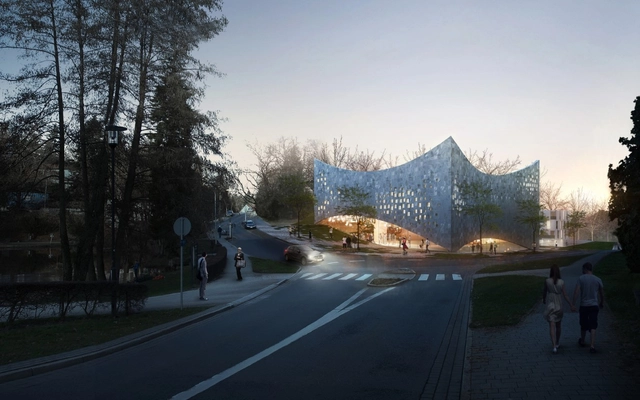
Exterior Rendered View. Image Courtesy of URBAN AGENCY
URBAN AGENCY, BEM Architects and bbz have unveiled their proposal for the Kronberg School of Music, in Kronberg, Germany, which includes a music chamber, music school and hotel. Developed as an invited competition entry, the project aims to enhance the area around the Kronberg train station and act as a new “gate” to the city, designed to blend into the forecourt of the station.
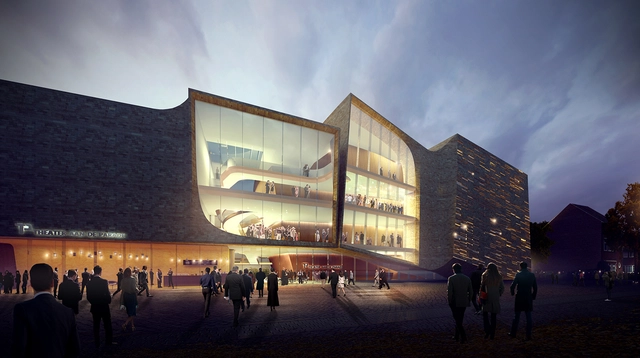
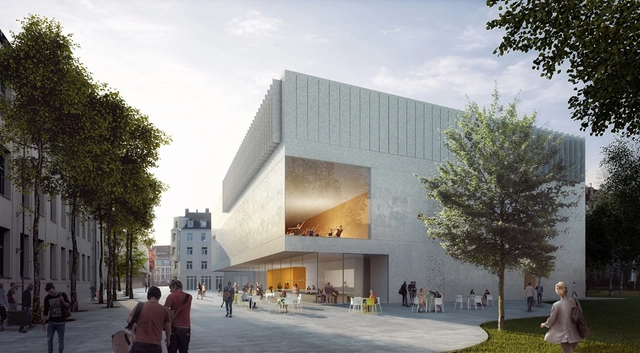
HPP Architects has won a competition to extend the campus of Cologne's University of Music and Dance. Chosen over 13 entries, the winning design will enclose a site in the Kunibertsviertel, close to Cologne’s railway station, and transform it into an "attractive" urban area. The plan, deemed by the jury to be a "clear example of a successful urban remedy," also calls for the conversion of an existing building into an animated concert and dance hall.
Envisioning the House of Hungarian Music as the new center of distribution within Liget Park, MenoMenoPiu Architects proposed a circular form for the concert hall, facilitating circulation to and from the museum and within the park. Although not the final winner of the Liget-Budapest Competition, “The Circle” demonstrates an interesting organizational strategy and perspective on sound.
Residents of 's-Hertogenbosch have been asked to vote on proposals by UNStudio and Ector Hoogstad Architectento decide who will design their new City Center Theater. Though vastly different, both proposals promise to provide a timeless main theater and flexible performance hall that connects to an inviting foyer and seamlessly merges with the adjacent public plaza.
The public's vote will count towards 50 percent of the final decision. Ground breaking is expected to occur in 2017, with completion scheduled for 2020. Read on for a preview of both proposals.
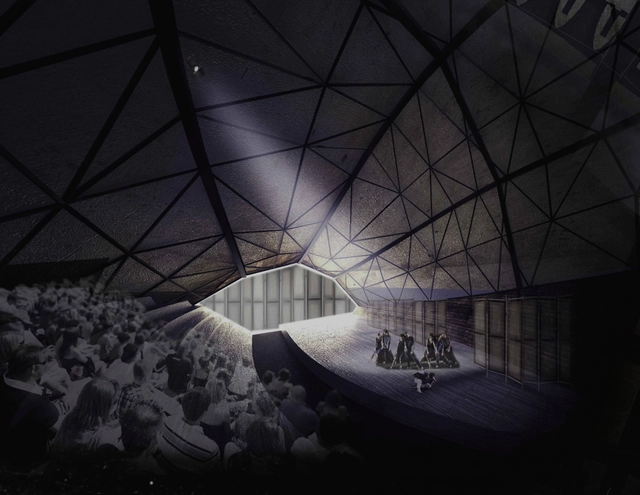
Improvisational Theatre / Žilvinas Stasiulevičius. Image Courtesy of OISTAT
Out of 197 entries from 38 countries, six proposals have been chosen as the winners of the 2015 OISTAT Theatre Architecture Competition, which sought proposals for a floating theatre that could be moved to different locations along the Spree River in Germany. The ideas competition was organized by OISTAT (International Organization of Scenographers, Technicians, and Theatre Architects), and the winning proposals will be showcased at the exhibition Stage│Set│Scenery in Berlin in June.
Per the competition requirements, the floating theatre proposals accommodate audiences of up to 300 people with a backstage area for 20 or fewer performers. The performance space remains moored on the river, while the foyer, restrooms, and refreshments are housed in a temporary structure on land that can be moved when necessary.
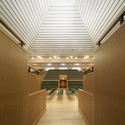
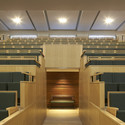
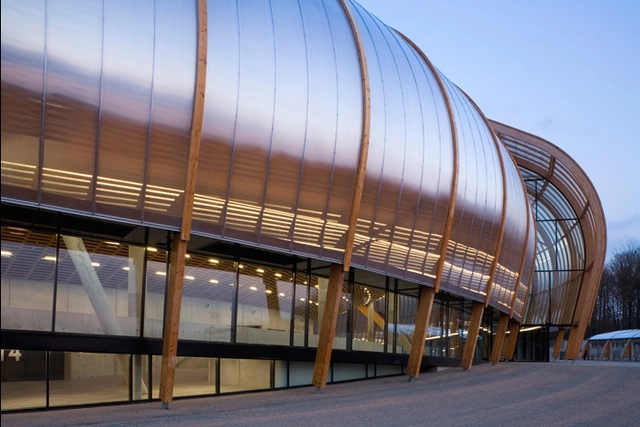
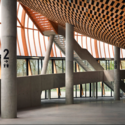
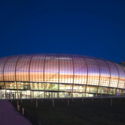
For those familiar with the more canonical work of Bernard Tschumi, the Limoges Concert Hall may seem a puzzlingly conventional departure from the radical, intensively theoretical projects that introduced the world to the Swiss architect. In one sense, the visual clarity of the design doesn’t provoke the same complex discourses on architectural violence and eroticism that guided his early-career pursuits, and it is certainly a more functional evolution of his polemic on non-programmatic space that was famously exhibited at Parc de la Villete. In another sense, the concept and form of Limoges aren't anything novel, either, emerging almost in its entirety from a concert hall prototype Tschumi developed in the late 1990s for a similar venue at Rouen. But Limoges is important for other reasons: in addition to its thoughtful material and spatial choices, it is one of the more articulate illustrations of Tschumi’s explorations of movement and enclosure—“vectors and envelopes”—that inform much of his recent work.