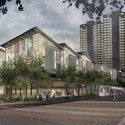
Now, a new pool at Houston’s Market Square Tower is upping the ante even further with a transparent plexiglass wading pool that projects out 10 feet past the end of the building – and 500 feet above the busy street below.
https://www.archdaily.com/868968/this-glass-bottomed-sky-pool-is-suspended-500-feet-from-the-groundAD Editorial Team
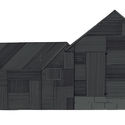
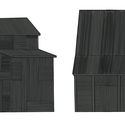
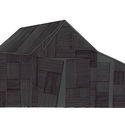
John Redington, a Texas-based illustrator, documents abandoned rural sheds and their modest architectural impact. In this visual essay he reveals this unseen, underrepresented vernacular arguing that the "shaky charm of the abandoned shed could offer a look into a more humble form of inspiration for architects."
The car rattles on a loose road as thick white dust rises from the back of its tires. On either side seas of sunburned grass just barely keep themselves from breaking onto the path. The sky sits heavily on the horizon, as the fragrance of both wild and cultivated plants fill the air.
We are now accepting applications for our second year of the MFx WORKSHOP. Like last summer, we will have a team of paid, full-time positions available for undergraduate and graduate students to join our crew from June 5 to August 11.
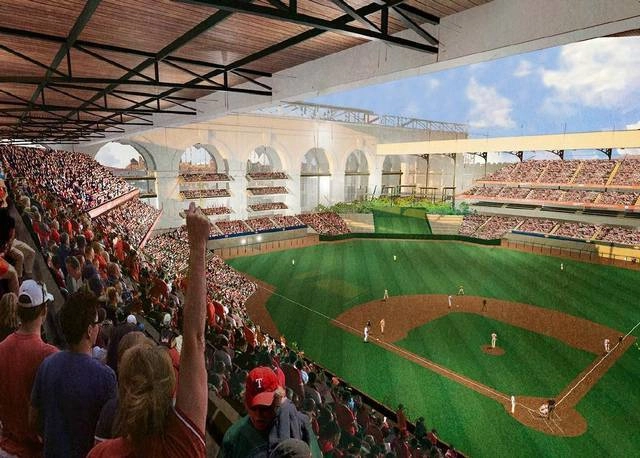
HKS Architects has been selected to design a new Major League Baseball stadium for the Texas Rangers, to be built in Arlington, Texas. As part of a new multipurpose sports and entertainment venue, the stadium will feature a retractable roof for climate control and shelter during the hot Texan summers.
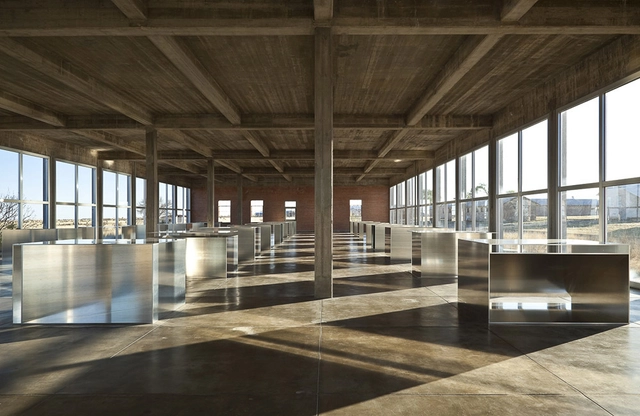
Completed in 1986, Donald Judd's 100 aluminum boxes offer one of the most exciting locations to study the grace of minimalism. His vision at Marfa in Texas has transformed a piece of military history into a peaceful and unique environment for art and architecture. Here, the shimmering material transcends the formal strictness of plain patterns and the narrow concepts of minimalism. The multiple reflections of light and space create an illusionary atmosphere beyond ascetic ideas.
Walk the Talk—A talk and tour about “missing middle” housing in Austin
Walk the Talk—A talk and tour for people interested in learning more about “missing middle” housing in Austin. Join us for a panel discussion and self-guided tour of "missing middle" housing types—such as duplexes, fourplexes, courtyard housing, and accessory dwelling units—in the Blackland and Cherrywood neighborhoods. Our expert panel represents varied perspectives on the subject. After a Q&A session, participants can easily bike or walk to the missing middle sites in the neighborhood. We welcome you to join the conversation!
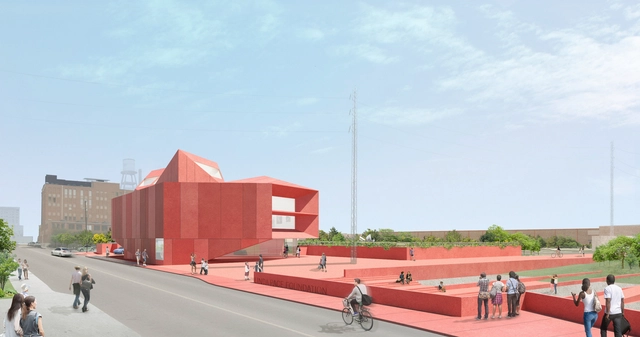
The Linda Pace Foundation has unveiled plans for a new building designed by Adjaye Associates. Planned to open in San Antonio, Texas in 2018, "Ruby City" will house the Foundation's growing collection of contemporary art. The two-story structure, clad in "crimson-hued panels of precast concrete with glass aggregate," will be distinct with its "dramatic rooftop of sloping angles and skylights that rise to varying heights and echo cut-away spaces at the building’s base."
Kaufmann House by Richard Neutra, 1947. Renovated by Leo Marmol, Marmol Radziner, the featured speaker at the "Modernism" Symposium
Leo Marmol is one of the world’s leading authorities in the restoration of iconic Mid-Century Modern and International style residences, including the Kaufmann House by Richard Neutra in Palm Springs, considered one of the most important residences of the 20th Century. His firm also incorporates those timeless concepts into new architecture, including product design exemplifying these design elements. Marmol will overview his firm’s landmark restoration projects, and discuss how the firm integrates Mid-Century design elements into their new construction and pre-fab projects, producing award-winning residences.
Texas and clean energy are hardly considered synonymous. However, as uncovered by a recent article in the Wall Street Journal, Texas has emerged as an unexpected leader in solar power, with $1 billion now being invested in solar energy infrastructure with an aim to produce up to 12,500 megawatts of solar electricity by 2029. To mark this important moment in US energy production, the New Jersey Institute of Technology has produced this infographic revealing the benefits (and drawbacks) of solar energy for the average American consumer, including everything from the history of solar energy to incentives available for solar systems nationwide. Read on to view the infographic in full.
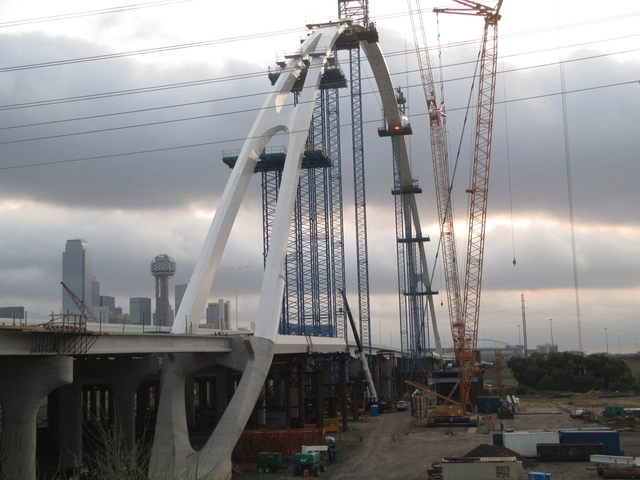
Santiago Calatrava has topped out on his second Dallas bridge - the Margaret McDermott Bridge - two years after completing the Margaret Hunt Hill Bridge. The steel arch, reaching a height of 275 feet, is the first of two that will support the 1311-foot-long bridge that is intended to provide access to pedestrians, bicyclists and cars over the Trinity River. The $113 million bridge is part of the massive $798 million Dallas Horseshoe Project that aims to alleviate traffic and enhance accessibility downtown. It is scheduled to complete by the summer of 2017.
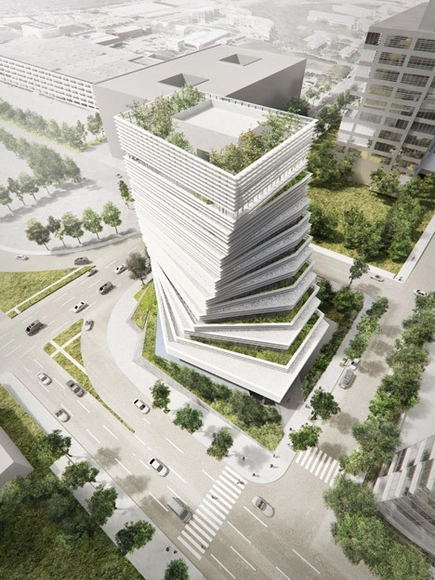
Kengo Kuma & Associates and developer Harwood International have broken ground on a twisted, seven-story tower for Rolex in Dallas' Uptown district. The luxury watchmaker intends on using the 136,857-square-foot building as a new office space. It will rise adjacent to Rolex's original building on Harwood Street that was built in 1984.
According to Kuma, the building "fuses nature and architecture," and will feature a tiered Japanese-inspired garden.
Since the construction of the first high-rise, it seems architectural merit has been weighed most heavily by a building's height. However, Kriston Capps of CityLab notes in his article "For the Best U.S. Architecture Per Square Mile, Head to Dallas" that the concentration of buildings by award-winning and internationally-renowned architects can also put cities on the architectural map. Although Chicago and New York may have taller skylines, he argues, in terms of stellar design density, Dallas can't be beat. Read the full article, here.
The Dallas Holocaust Museum and Center for Education and Tolerance has officially gone public with plans to build a new permanent home in the city’s West End, across from the museum’s current location. Preliminary designs, by Texas-based Omniplan Architects, indicate a modest concrete and weathered steel structure with expanded galleries that would be built on parcel bound by Ross Avenue, Houston Street and the Dallas Area Rapid Transit light.
The Fayez S. Sarofim Campus. Image Courtesy of Steven Holl Architects
The Museum of Fine Arts, Houston (MFAH) has released plans for an ambitious $450 million expansion that will transform it into one of the largest art campuses in the US. The 14-acre masterplan will include three new buildings - one by Texas-based Lake|Flato Architects and two others by museum aficionado Steven Holl Architects - connected by a pedestrianized landscape of reflecting pools and gardens.
The first scheduled to break ground (this year) is the Steven Holl-designed, 80,000-square-foot new home for the Glassell School of Art. The L-shaped, pre-cast concrete structure will, as MFAH describes, pride itself as an extension of the campus landscape, featuring a stepped amphitheater that leads up to a walkable, trellised roof garden.
Award-winning architect, writer, and professor David Heymann has just released his first work of fiction: My Beautiful City Austin. Composed of seven humorous tales, the stories document the misadventures of a young architect in Austin and his accidental involvement in the slow decimation of his city’s charms. Unable to deter his clients from their poor choices, the well-intentioned designer finds himself complicit. Using fiction, Heymann paints a sharply dynamic picture of the architectural consequences of Austin’s rapid growth and “rediscovered allure.” Check out the book, here.
Material Minds, presented by ArchDaily Materials, is our new series of short interviews with architects, designers, scientists, and others who use architectural materials in innovative ways. Enjoy!
Arthur Andersson of Andersson-Wise Architects wants to build ruins. He wants things to be timeless - to look good now and 2000 years from now. He wants buildings to fit within a place and time. To do that he has a various set of philosophies, processes and some great influences. Read our full in-depth interview with Mr. Andersson, another revolutionary "Material Mind," after the break.
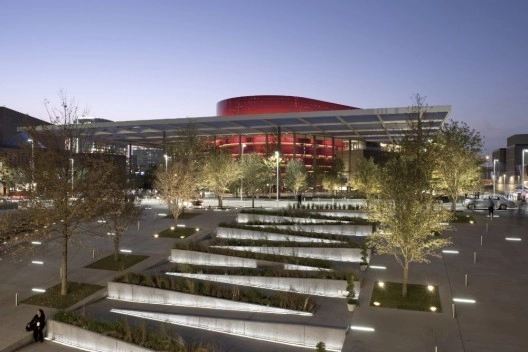
Rice University has commissioned Diller Scofidio & Renfroto transform an existing parking lot between Alice Pratt Brown Hall, the home of Rice's Shepherd School of Music, and Rice Stadium into a 600-seat opera theater. Charles Renfro, a 1989 Rice graduate and the project’s lead architect, stated: "It feels really natural in a lot of ways to be returning to campus, a place I've spent so much time and love so much." Completion is scheduled for 2018.
The results are in: Dallas has selected Stoss + SHoP’s “Hyper Density Hyper Landscape” (HDHL) over finalists Ricardo Bofill and OMA+AMO to reunite its downtown with the neighboring Trinity River. The winning team’s pragmatic approach aims to activates the region’s “full potential” by introducing an alternating “grid-green” development that will transform 176 acres into three new “dynamic, mixed-used” neighborhoods.
“The idea is very clear and compelling,” stated the jury. “There’s much left to be resolved in details but the diagram of the green coming into the city and the city going into the Trinity is a very powerful diagram that should become a strategy for managing change as the community moves forward.”