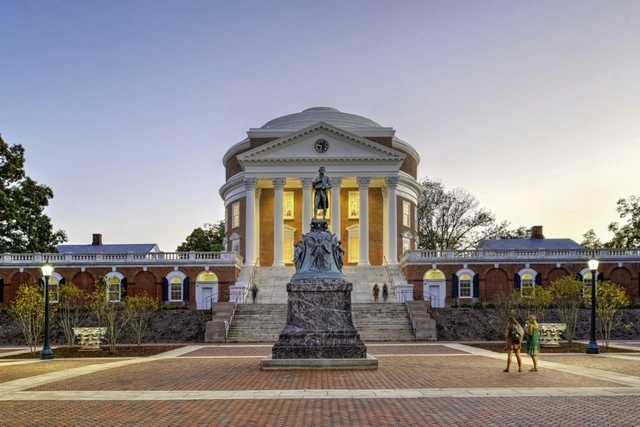
Architecture is defined by its humanity. This is especially true in a year defined by the coronavirus pandemic and global calls for social justice. The impact has been felt across sectors, including in higher education. As Architect for the University of Virginia, Alice Raucher advises the university on capital planning and design guidelines. Working to address unique design challenges, Raucher is acknowledging the University's past while planning for the future.
Students and alumni from the Harvard Graduate School of Design are launching an online Design Yard Sale to raise funds in support of the movement against systemic anti-Black racism. The team will sell and auction creative works donated by the design community, and all net proceeds will go towards the Bail Project and Colloqate Design. Among Design Yard Sale’s offerings will be works donated by renowned designers, artists, and scholars such as Toshiko Mori, Oana Stanescu, Rachel Israela, Jeanne Gang, Billie Tsien, Snarkitecture, Jerome Byron and VERV LONDON.
In the rage, furor, and sorrow that followed the murder of George Floyd, one voice in the architecture community managed to put the nation’s centuries-overdue reckoning with race into the larger context of the built environment. Earlier this month, CityLab published architect Bryan C. Lee Jr.’s essay “America’s Cities Were Designed to Oppress,” an impassioned polemic on design and race that also had the great virtue of offering up specific solutions.
Lee is the founder and design principal of Colloqate, a New Orleans–based design and public advocacy firm that was named an Emerging Voice in 2019 by the Architectural League of New York. Colloqate led the Paper Monuments project in 2017, a public art and public history campaign that was launched in conjunction with the successful fight to remove the Confederate statues in New Orleans. In addition to its advocacy work, the firm is currently working on architectural projects in Portland, Toronto, and New Orleans. Last week I talked with Lee about his essay, the charged moment that we’re in, and where the nation goes from here.
THE CHALLENGE Our world is witnessing a time of record migration and displacement. According to the United Nations High Commission for Refugees, there are now more than 60 million forcibly displaced people worldwide, the result of persecution, conflict, violence or human rights violations. Cities are on the front lines of this global crisis. Sixty to seventy percent of displaced people now live in cities. As the number of urban displaced persons grows, so does the moral imperative to welcome and embrace them. While immigrants and refugees face many challenges in their new urban lives — language, access to services, work and housing, cultural barriers — they also bring new energy to our cities and economies. Their success is our success.
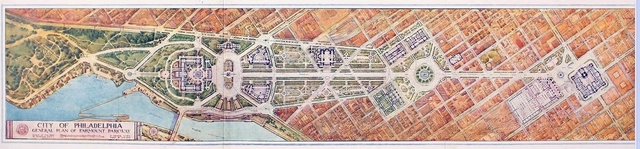
Design for Philadelphia's iconic Benjamin Franklin Parkway by Paul Crét and Jacques Gréber, 1917
The 2018 Better Philadelphia Challenge | $5,000 First Prize
This international urban design competition for university students is now open for registration. In celebration of the 100th anniversary of Philadelphia's iconic Benjamin Franklin Parkway, the Center / Architecture + Design seeks creative concepts for what a new 'Parkway' could be in a dense and developed 21st century city, connecting neighborhoods with nearby natural and cultural resources.
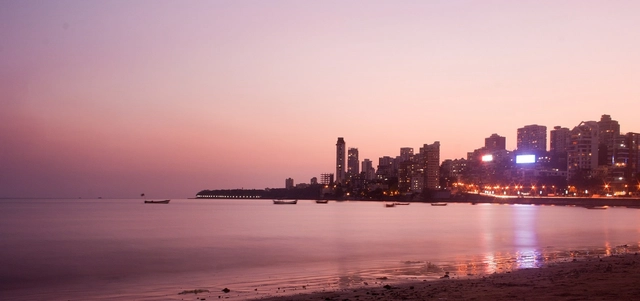
Mumbai Skyline. Image via Pixabay by user PDPics (public domain)
The Indian Government’s Smart City Mission, launched in 2015, envisions the development of one hundred “smart cities” by 2020 to address the country’s rapid urbanization; thirty cities were added to the official list last week, taking the current total of planned initiatives to ninety. The $7.5-billion mission entails the comprehensive development of core infrastructure—water and electricity supply, urban mobility, affordable housing, sanitation, health, and safety—while infusing technology-based “smart solutions” to drive economic growth and improve the citizens’ quality of life in cities.
In a country bogged down by bureaucratic corruption, the mission has been commended for its transparent and innovative use of a nation-wide “City Challenge” to award funding to the best proposals from local municipal bodies. Its utopian manifesto and on-ground implementation, however, are a cause of serious concern among urban planners and policy-makers today, who question if the very idea of the Indian smart city is inherently flawed.