1. ArchDaily
  2. School

School: The Latest Architecture and News

Call for Entries: Build School Project 2017

The Union of architects of Russia invites you to participate in the Russian competition with international participation "Build School Project", which will be held in the framework of the First international exhibition "Build School 2017" from 26 to 29 September 2017 in Moscow in "Expocentre". The major task of the competition is to ensure the quick implementation of the best architectural projects of preschool and school buildings, profile schools, sports, music, art, corps for initial classes, extensions to schools. The competition will promote best practices in the specific Russian context, the improvement of social infrastructure for children and the implementation of innovative design approaches in educational environment in terms of mass construction. The competition will also contribute to the broad exchange of experience among architectural bureaus from different countries involving in dialog local and Federal authorities and main architects of cities.
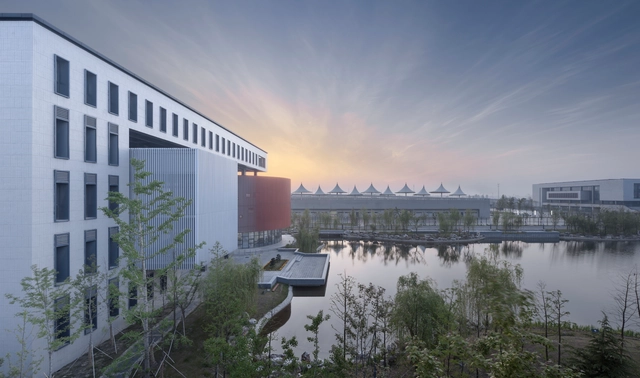
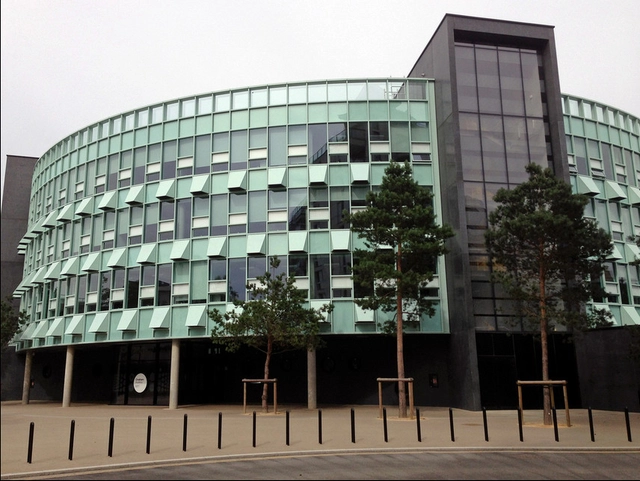
New Campus of Taizhou High School / Architectural Design & Research Institute of SCUT

New Campus of Taizhou High School / Architectural Design & Research Institute of SCUT - Schools , FacadeNew Campus of Taizhou High School / Architectural Design & Research Institute of SCUT - Schools , FacadeNew Campus of Taizhou High School / Architectural Design & Research Institute of SCUT - Schools , FacadeNew Campus of Taizhou High School / Architectural Design & Research Institute of SCUT - Schools , Facade, Handrail, BalconyNew Campus of Taizhou High School / Architectural Design & Research Institute of SCUT - More Images+ 33

Taizhou, China

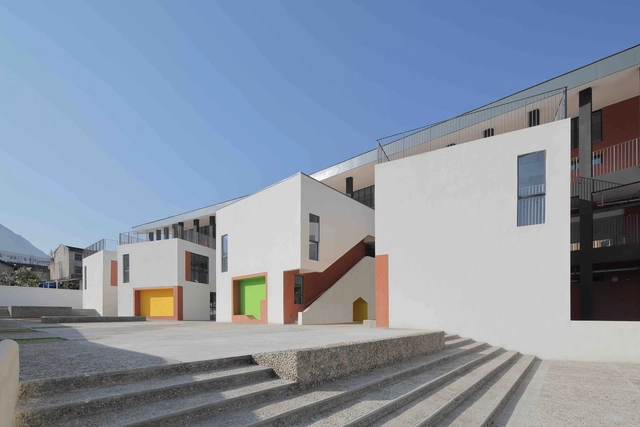
Jixian Kindergarten / Atelier Y

Jixian Kindergarten / Atelier Y - Kindergarten, Facade, LightingJixian Kindergarten / Atelier Y - Kindergarten, Stairs, Door, Facade, HandrailJixian Kindergarten / Atelier Y - Kindergarten, FacadeJixian Kindergarten / Atelier Y - Kindergarten, Facade, DoorJixian Kindergarten / Atelier Y - More Images+ 15

  • Architects: Atelier Y
  • Area Area of this architecture project Area:  2490
  • Year Completion year of this architecture project Year:  2017

Ultzama Summer School

The Summer School will be held in two parts. Students will work with three professors in developing a single project based on the program set. The idea is to give the students the opportunity to work in a set-up resembling that of a real-life practice tasked with a commission, under the supervision of the professors. Emphasis will be on “with,” rather than on “for,” simulating the intensity and efficiency of team work in an architectural office as well as the journey through the various phases of a project, from design to execution.

Open Call: School Without Classrooms (Berlin)

The competition seeks the creation of a middle school (age group 5-12) that completely negates the present day 'bench-table-chalkboard' idea of a classroom and a regularized building typology of a school. The competition seeks to radicalize the school system through architecture not only in terms of improving the quality of study environment but revamping the system and breaking all the physical and metaphorical class divisions into an entirely new school system. The competition seeks ideas from participants to create a fun built environment for a middle school that understands the individual needs of each child yet being very collaborative in nature. The school should strive to create a new pedagogical space that emphasizes on people-oriented design in behavioral terms as they interact and use spaces.

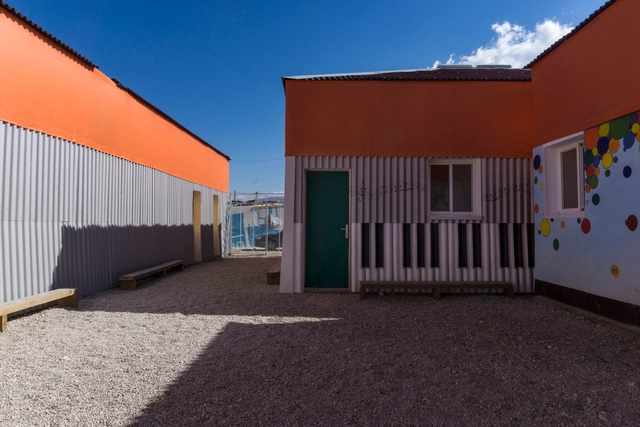
With the Jarahieh Refugee School, CatalyticAction Demonstrates the True Potential Of Temporary Structures

The 2015 Milan Expo required the input of more than 145 countries and 50 international organizations resulting in over 70 temporary pavilions; a combined effort totaling more than €13 billion. Norman Foster’s rippling pavilion for the United Arab Emirates ended up at €60 million. The massive slab of concrete, laid out over the previously green agricultural land to act as the Expo’s foundation cost a whopping €224 million. Even Vietnam’s “low cost” pavilion came in at $2.09 million.

Compare that with, for example, IKEA’s proposal for a temporary refugee shelter that can house 5, costing just $1000, and one can see the absurdity of spending gargantuan sums on buildings that will perhaps be sold to be used later as a clubhouse, or to a museum as another temporary cultural center. Where is the architectural action behind an architectural event that boasts “Energy for Life” or “Better City, Better Life” - the slogan of the Shanghai 2010 Expo - yet spends extraordinary amounts of resources on structures that provide little sustainable development to parts of the world that are actually in dire need of it?

With the Jarahieh Refugee School, CatalyticAction Demonstrates the True Potential Of Temporary Structures - Image 1 of 4With the Jarahieh Refugee School, CatalyticAction Demonstrates the True Potential Of Temporary Structures - Image 2 of 4With the Jarahieh Refugee School, CatalyticAction Demonstrates the True Potential Of Temporary Structures - Image 3 of 4With the Jarahieh Refugee School, CatalyticAction Demonstrates the True Potential Of Temporary Structures - Image 4 of 4With the Jarahieh Refugee School, CatalyticAction Demonstrates the True Potential Of Temporary Structures - More Images+ 32

Martel House / PPA architectures

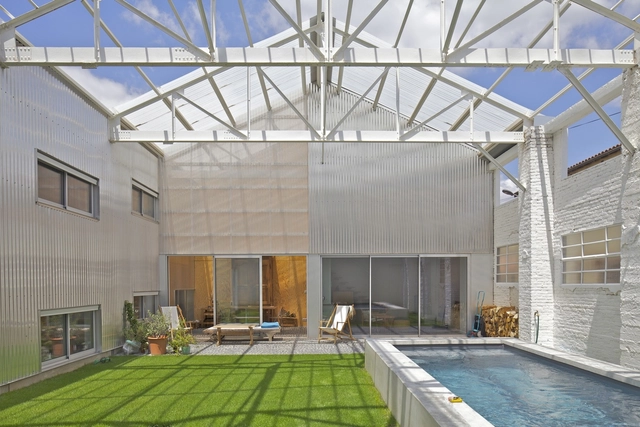
Martel House / PPA architectures - Houses, Facade, Table, ChairMartel House / PPA architectures - Houses, Kitchen, Table, ChairMartel House / PPA architectures - Houses, Bathroom, Table, Sink, Chair, CountertopMartel House / PPA architectures - Houses, Kitchen, Sink, CountertopMartel House / PPA architectures - More Images+ 13

Toulouse, France
  • Architects: PPA architectures
  • Area Area of this architecture project Area:  200
  • Year Completion year of this architecture project Year:  2014
  • Professionals: BEFES

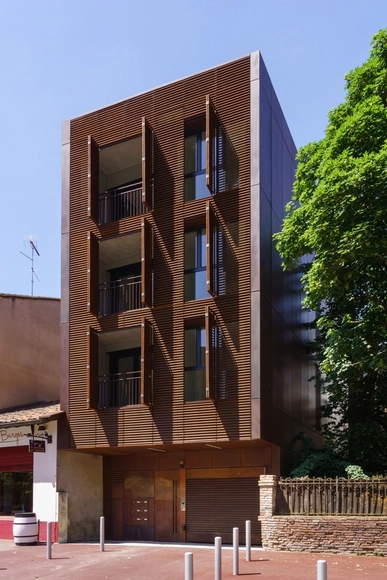
Yaoitcha Residence / Taillandier Architectes Associés

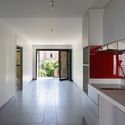
Yaoitcha Residence / Taillandier Architectes Associés - Apartments, Facade, BenchYaoitcha Residence / Taillandier Architectes Associés - Apartments, Facade, Beam, Column, Handrail, DoorYaoitcha Residence / Taillandier Architectes Associés - Apartments, Facade, Door, Handrail, ColumnYaoitcha Residence / Taillandier Architectes Associés - Apartments, Kitchen, Door, Facade, Sink, CountertopYaoitcha Residence / Taillandier Architectes Associés - More Images+ 16

Toulouse, France

Liyuan Middle School / Minax Architects

Liyuan Middle School / Minax Architects - High School, Facade, CityscapeLiyuan Middle School / Minax Architects - High School, Facade, CityscapeLiyuan Middle School / Minax Architects - High School, Facade, CityscapeLiyuan Middle School / Minax Architects - High SchoolLiyuan Middle School / Minax Architects - More Images+ 31

  • Architects: Minax Architects
  • Area Area of this architecture project Area:  40800
  • Year Completion year of this architecture project Year:  2015

Gain an International Perspective by Studying Architecture in Barcelona

Subscriber Access | 

UIC Barcelona School of Architecture has adapted to recent changes in the field of architecture to offer an education that provides an overarching perspective of the profession and the opportunity to learn a wide-range of skill sets. Learn more about what makes the school unique after the break.
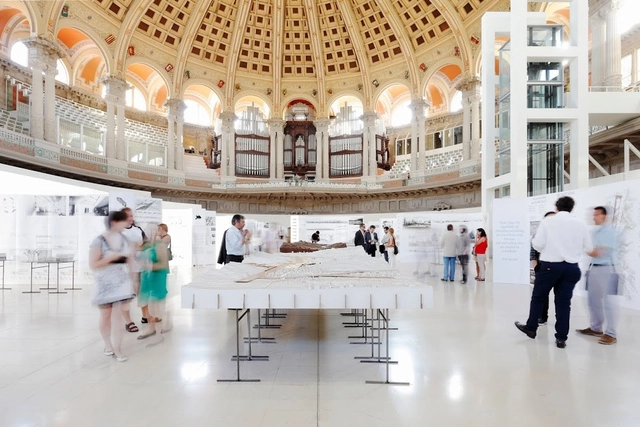
Lima de Freitas School Renovation / Ricardo Carvalho + Joana Vilhena Arquitectos

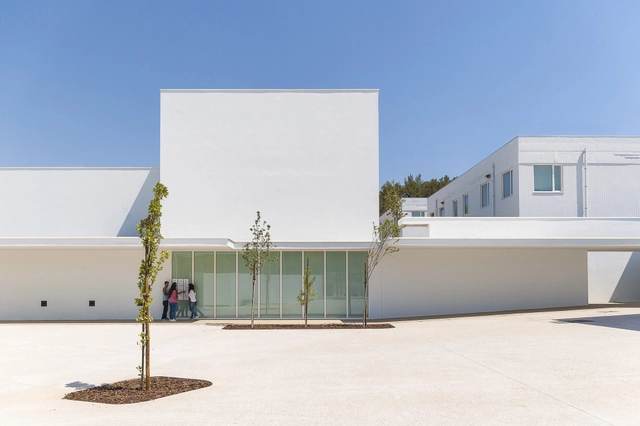
Lima de Freitas School Renovation / Ricardo Carvalho + Joana Vilhena Arquitectos - Schools Lima de Freitas School Renovation / Ricardo Carvalho + Joana Vilhena Arquitectos - Schools Lima de Freitas School Renovation / Ricardo Carvalho + Joana Vilhena Arquitectos - Schools Lima de Freitas School Renovation / Ricardo Carvalho + Joana Vilhena Arquitectos - Schools Lima de Freitas School Renovation / Ricardo Carvalho + Joana Vilhena Arquitectos - More Images+ 20

  • Architects: Ricardo Carvalho + Joana Vilhena Arquitectos
  • Year Completion year of this architecture project Year:  2012

Designing Security into Schools: A Special Report

When it comes to designing schools, security is always a big issue. This fact was thrown into sharp focus in December of 2012 after the Sandy Hook Tragedy in Newtown, Connecticut. Last year, we featured an article discussing how design can deal with tragedy - both in order to prevent it and how to deal with the aftermath. Now, a report by Building Design and Construction investigates the measures that could prevent dangerous incidents. While they admit "it’s impossible to stop an armed madman who is hell-bent on killing", the report has a number of simple and sensible recommendations which aid in preventing and responding to a threat. You can read the report here.

School Complex / IND [Inter.National.Design]

Inter.National.Design (IND), based in Rotterdam and Istanbul, have won first prize in a restricted competition to design a large school complex in Viranşehir, Turkey. Five rectangular courtyards, together with five dynamic public strips, combine to envelop the collection of buildings with a variety of both neutral and dynamic voidal spaces. A degree of permeability with the city is designed into the scheme with the "two types of open spaces following a gradient using the buildings as filters from the hermetic façade of the courtyards to the permeable skins of the outer façade". Hills, pyramid stairs and areas of wild nature tie the atmosphere of the scheme into a unit within a "homogenous industrial roof profile and a modular structure".

Can a School Ensure East London's Olympic Legacy?

In this article for The Guardian, Oliver Wainwright reviews Chobham Academy, a new school built as part of East London's Olympic Legacy by architects AHMM. While he finds the school impressive and ambitious, Wainwright questions whether the campus, which acts as the 'fulcrum' between the poverty-stricken streets of Leyton and the high end flats of the former Athlete's Village, will be able to bring the two parts of this community together. You can read the full article here.

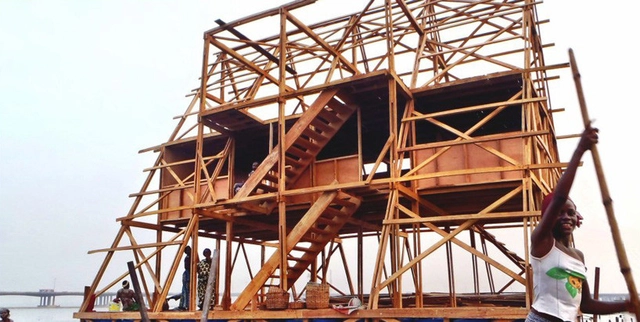
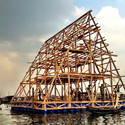
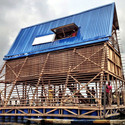
Makoko Floating School / NLÉ

Makoko Floating School / NLÉ - Educational ArchitectureMakoko Floating School / NLÉ - Interior Photography, Educational ArchitectureMakoko Floating School / NLÉ - Exterior Photography, Educational ArchitectureMakoko Floating School / NLÉ - Educational ArchitectureMakoko Floating School / NLÉ - More Images+ 12

The 8 Things Domestic Violence Shelters Can Teach Us About Secure School Design

Subscriber Access | 
The 8 Things Domestic Violence Shelters Can Teach Us About Secure School Design - Image 1 of 4
Flexibility within communal spaces stimulates and encourages a variety of uses. Project Name: Truman High School, a Federal Way Public School. Photo by Benjamin Benschneider.

In our last Editorial, "Post-Traumatic Design: How to Design Schools that Heal Past Wounds and Prevent Future Violence," we discussed how architects must conceptualize school design in the wake of the tragic shootings that have affected our nation. Rather than leaning towards overly secure, prison-like structures, the Editorial suggested a different model, one better suited to dealing with student needs (particularly for those who have experienced trauma): domestic violence shelters.

While the comparison may seem bizarre at first, shelter design is all about implementing un-invasive security measures that could easily make schools safer, healthier spaces for students. To further elaborate this unlikely connection, we spoke with an Associate at Mahlum Architecture, Corrie Rosen, who for the last 6 years has worked with the The Washington State Coalition Against Domestic Violence [WSCADV] on the Building Dignity project, which provides Domestic Violence Shelters advice to design shelters that empower and heal.

Find out Corrie Rosen's 8 strategies for designing schools that can improve security and student well-being, after the break...

Post-Traumatic Design: How to Design Our Schools to Heal Past Wounds and Prevent Future Violence

Subscriber Access | 
Post-Traumatic Design: How to Design Our Schools to Heal Past Wounds and Prevent Future Violence - Featured Image
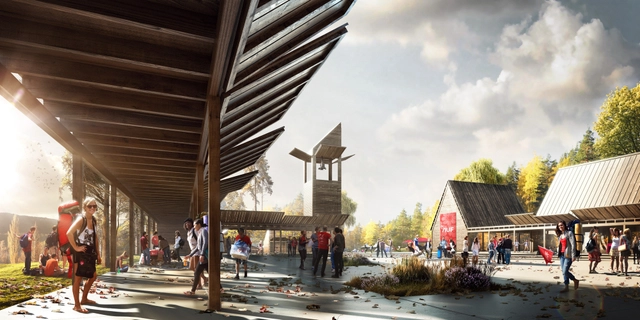
Rendering for the New Utoya Project in Norway, which will re-design the Utøya Island where the 2011 massacre took place. Image courtesy of Fantastic Norway.

Over a month has passed since the Sandy Hook tragedy. Its surviving students have gone back to school, albeit at another facility (decorated with old posters to make it feel familiar), and are working on putting this tragic event behind them. The nation is similarly moving on - but this time, with an eye to action.

The goal is obvious: to prevent a tragedy like this from ever happening again. The means, less so. While President Obama’s recent gun control policy offers some solutions, it’s by no means the only way. Indeed, opinions vary - from clamping down on gun control, to better addressing the root cause of mental illness, to even arming teachers in the classroom.

The design world has similarly contributed to the debate. A recent article in ArchRecord questioned how, in the wake of Sandy Hook, we should design our schools: “While fortress-like buildings with thick concrete walls, windows with bars, and special security vestibules may be more defensible than what is currently in vogue, they are hardly the kind of places that are optimal for learning.”Indeed, turning a school into a prison would be the design equivalent of giving a teacher a rifle. You would, of course, have a more “secure” environment - but at what cost?

As America and the world considers how we can move on after these traumas, I’d like to take a moment to consider what role design could play. If the answer is not to turn our schools into prisons, then what is? Can design help address the root causes of violence and make our schools less vulnerable to tragedy? If so, how?

Community-Oriented Architecture in Schools: How 'Extroverted' Design Can Impact Learning and Change the World

Subscriber Access | 
Community-Oriented Architecture in Schools: How 'Extroverted' Design Can Impact Learning and Change the World - Image 3 of 4
© Yazdani Studio of Cannon Design

You’ve considered every detail: re-thought the spatial configurations of the classrooms to account for over 40 students, ensured that the noise from outside doesn’t drown out the teacher, perhaps even adjusted the storage to kid-friendly heights.

As an architect, you live in the skin of the people who will daily occupy your buildings. And of course, the impact of physical conditions should never be underestimated, especially in the design of a school. Study after study has cited that the correct environment can greatly improve student engagement, enrollment, and even general well-being. [1]

However, there is another vital way in which design can impact learning. An approach that recognizes the power of society and culture, that aims to create a school not only permeable to the community around it, but charged with positive symbolic value.