Our friends from Visiondivision have envisioned a creative solution to respond to Stockholm’s lack of housing. While the city is growing rapidly, the pace of new construction for residences is quickly falling behind demand. Due to this lack of housing, the core of Stockholm has grown to be defined by expensive apartments, while the outer edges for those who can’t afford such prices. For Stockholm Stacked, Visiondivision responds to this segregated city by proposing a change in planning regulations to eliminate height restrictions on courtyard typologies, so as to utilize the urban spaces for efficiently and effectively. After all, “Who wants to move to a city where it is impossible to get an apartment? Which companies wants to invest in a city where their employees may have a hard time to find a place to stay? Which exchange students wants to study in a city where all the free time available will go to find a small flat with a decent rent?” asks the firm.
In cooperation with engineers LB Consult, CEBRA recently won the competition for 48 new student housing units in Esbjerg, Denmark’s 5th largest city. The eye-catching proposal consists of 26,910 sq. ft. apartments spread across ten floors and outdoor areas with terraces and activity zones such as a street basket field. The project is commissioned by the housing association Ungdomsbo and they expect that the first students can move in in January 2014. More images and architects’ description after the break.
The proposal for the Yashiki Mori competition by HOLDUP elaborates on the Yashiki-rin housing typologies as a protection from environmental aggressions: windbreak forest (hot summer wind, cold winter wind, sandblast), barrier against fire, sunshade, air-purifier (carbon dioxide absorber and oxygen provider), sound-proof shield, etc. This natural eco-system composed of hedges and high trees circling the house could preserve wildlife, supply bamboo or lumber as construction material, fuel or fertilizer. It perfectly fits today’s concerns, i.e. keeping some distance with the surroundings but preserving openness at the same time. More images and architects’ description after the break.
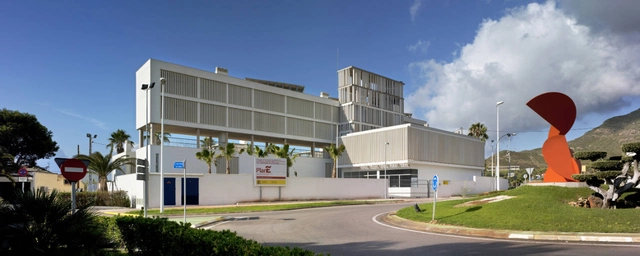
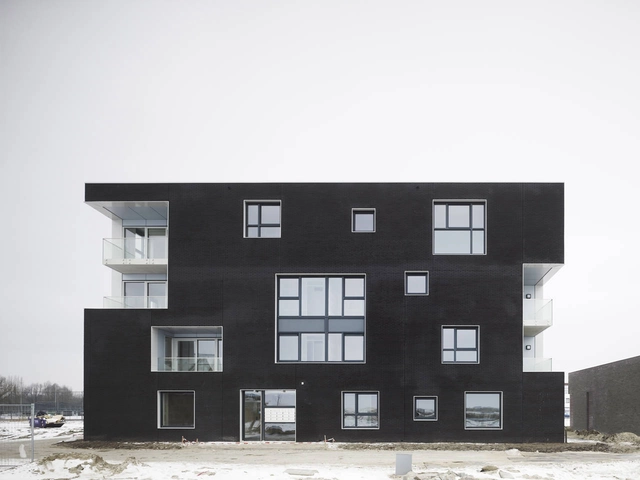
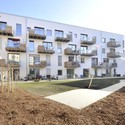
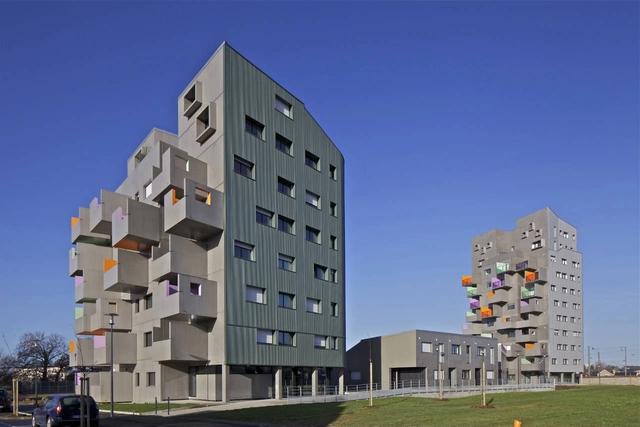
Designed by architect Nicolas Maugery, the Kobenhavn Student Center attempts to explore the impact of the development of a student housing project outside a campus. Located in a suburb of Kobenhavn, Denmark, doing so would allow a new daily life with the recreation of small shops and a new public building that creates a sense of cohesion between the generations. More images and architect’s description after the break.
YIBD ‘Project R6’, designed by REX, is an urban boutique residence for short-term business people, young urban professionals, and foreign residents in Seoul, South Korea. To meet the trends of its users and compensate for its small unit size, R6 must engender a strong sense of community and its residences must be highly attractive, providing generous views, daylight, and cross-ventilation. Maximizing daylight and cross-ventilation are also paramount to providing a highly sustainable residence. More images and architects’ description after the break.
Designed by TOTEMENT | PAPER, the residential area in Block No.5, as part of District D2 (“Science & Technology Park”) of “Skolkovo” Innovative Center, occupies a special area as it is the gate to the district and the main design point facing the Skolkovskoye Highway side. The architectural concept has been worked out to be presented at the second round of the competition. They took into the account close location of crowded housings of circles No.2 and 4 by closing our circle at their side. Bends of buildings allowed them to extend essentially the light front of the buildings and to get the necessary area for housing. More images and architects’ description after the break.