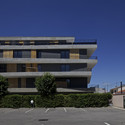
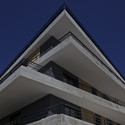
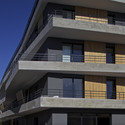
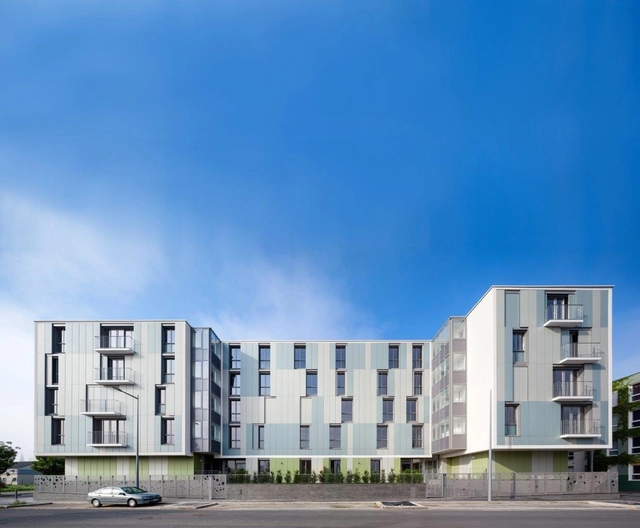
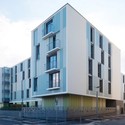
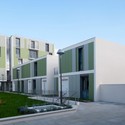
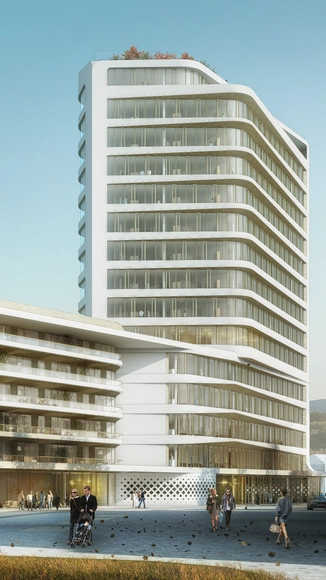
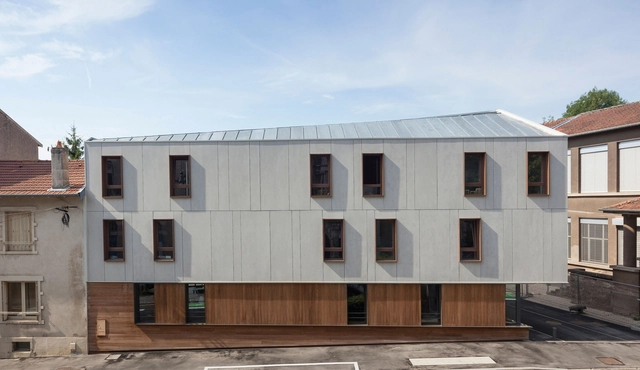
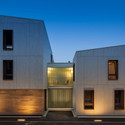
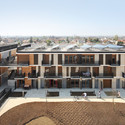
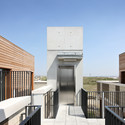
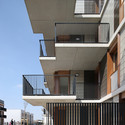
Studio Daniel Libeskind has released images of his latest project: a 10,000 square meter residential building planned for the center of Berlin. Occupying a half-acre corner site in the neighborhood of Chausseestrasse, “Chausseestrasse 43” will be encased by a metallic-coated ceramic facade shaped to maximize exposure to natural light.
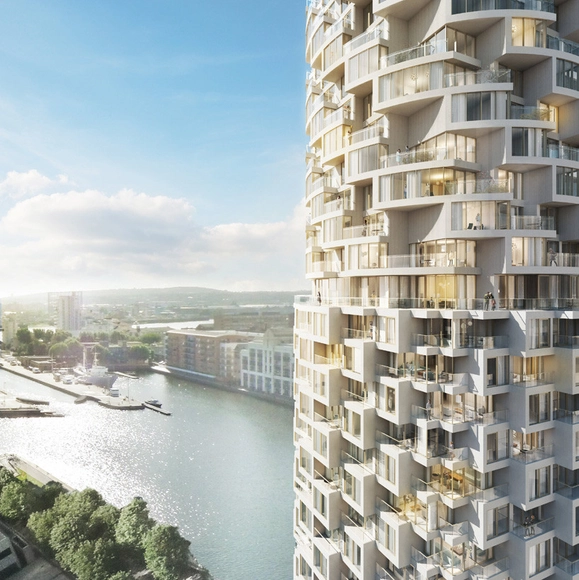
Herzog & de Meuron's Residential Tower. Image Courtesy of Canary Wharf Group plc
London firm Allies and Morrison has submitted planning applications for a 9.23 hectare, mixed-use development east of London’s Canary Wharf. Dubbed “Wood Wharf,” the new neighborhood will include upwards of 3,000 homes, 240,000-square-meters of commercial office space, 100 retail outlets, hospitality and more - all interconnected by a 3.6 hectare network of public space.
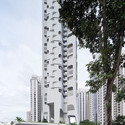
A 56-story, cylindrical skyscraper designed by Herzog & de Meuron will be one of three residential buildings planned for the scheme’s first phase, designed in collaboration with Stanton Williams. Allies and Morrison, who provided the revised masterplan for Canary Wharf Group, will design the first two office blocks targeted at technology-based companies.
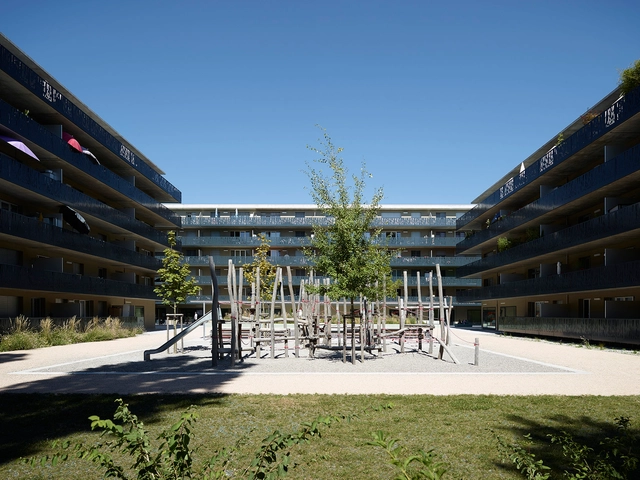
UNStudio has been announced as winner of a competition to design a 60-meter residential and office tower in Munich. Planned to be the “focal point” of the Baumkirchen Mitte development, the project will feature 13,000 square meters of “neutral” office space that promotes “flexibility” and “creativity” as well as 5,500 square meters of contemporary apartment units that each share a strong, private connection with the surrounding landscape.
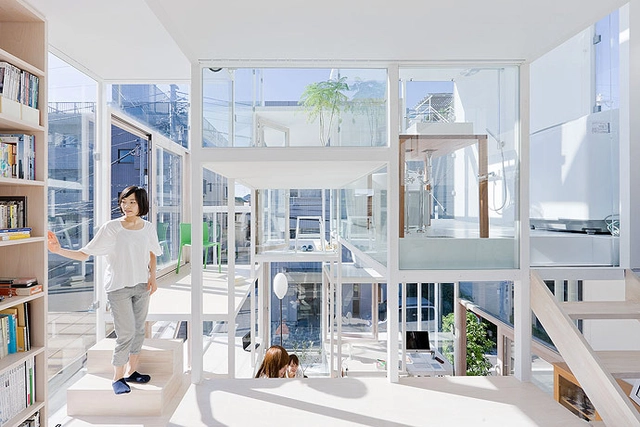
Japan is famous for its radical residential architecture. But as Tokyo architect Alastair Townsend explains, its penchant for avant garde housing may be driven by the country’s bizarre real estate economics, as much as its designers’ creativity.
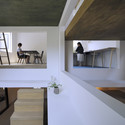
Here on ArchDaily, we see a steady stream of radical Japanese houses. These homes, mostly designed by young architects, often elicit readers’ bewilderment. It can seem that in Japan, anything is permissible: stairs and balconies without handrails, rooms flagrantly cast open to their surroundings, or homes with no windows at all.
These whimsical, ironic, or otherwise extreme living propositions arrest readers’ attention, baiting us to ask: WTF Japan? The photos travel the blogosphere and social networks under their own momentum, garnering global exposure and international validation for Japan’s outwardly shy, yet media-savvy architects. Afterall, in Japan – the country with the most registered architects per capita – standing out from the crowd is the key to getting ahead for young designers. But what motivates their clients, who opt for such eccentric expressions of lifestyle?
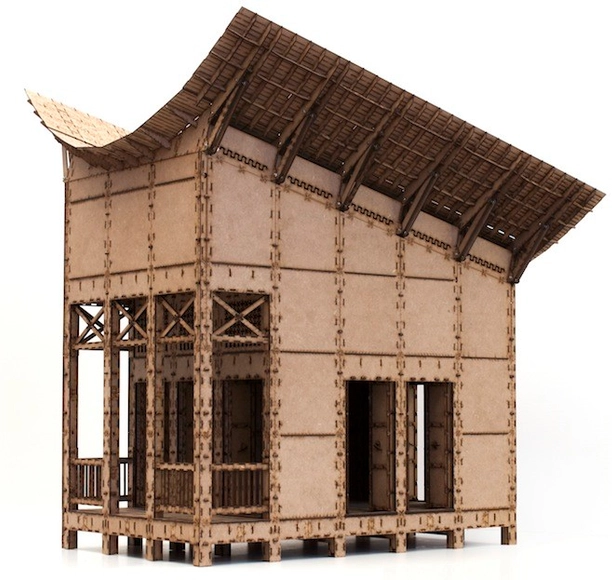
By now, we have all heard the mantra. In twenty years time, the world's cities will have grown from three to five billion people, forty percent of these urban dwellers will be living at or below the poverty line facing the constant threat of homelessness - scary statistics and even scarier implications.
ECOnnect, a Holland-based design firm, envisions a solution for these future housing shortages, one that could build a one-million-inhabitant city per week for the next twenty years for $10,000 per family. Peter Stoutjesdijk, architect at ECOnnect, created the concept after widespread devastation in Haiti caused by a massive earthquake left of hundreds of thousands of people homeless depending on tents for temporary relief.
https://www.archdaily.com/445418/puzzle-piece-homes-a-solution-for-rapidly-growing-populationsJose Luis Gabriel Cruz


PX2__01.jpg?1386695269&format=webp&width=640&height=580)