




-
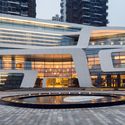
Architects: Amphibianarc
- Area: 21500 m²
- Year: 2017
-
Professionals: Shanghai Zhongxing Zhicheng Architecture Design Institute, AECOM



The Indigenous Housing Competition Canada invites everyone, students and professionals, to submit ideas for remote access Indigenous Community housing in Canada.
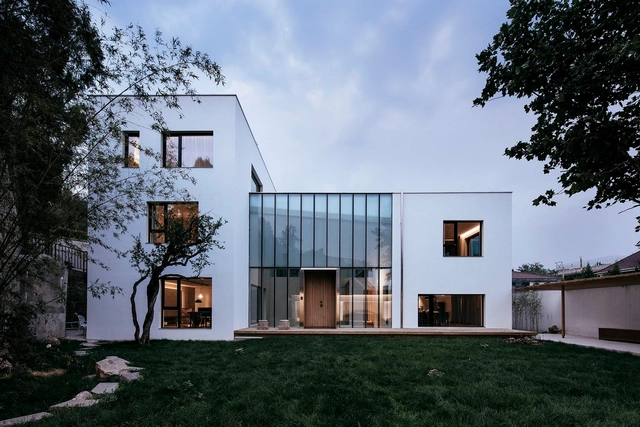

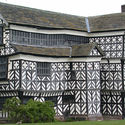
Sam Jacob Studio harbours a long-held fascination with Half-Timbering. In this essay, Jacob examines the historical, cultural, and aesthetic roots of the style.
It’s fair to say that “Mock Tudor”—that black and white facade treatment—has a less than glowing reputation. Take these sneering lines from John Betjeman’s Slough, for instance:
It’s not their fault they often go / To Maidenhead / And talk of sports and makes of cars / In various bogus Tudor bars.
(Perhaps those very same bars that Martin Freeman’s character in The Office notes have “a sign in the toilet saying: Don’t get your Hampton Court”.) “Mock Tudor” is often accused of “bogus”-ness, of lacking authenticity, of fakeness, and many other types of architectural sin.

Miami’s growing art district of Wynwood is set for further development in the form of two projects designed by renowned local architect Kobi Karp – Wynwood 25 and Gateway at Wynwood. The first is a $100 million unique mixed-use residential opportunity in the neighborhood, co-developed by the Related Group in Miami and the New York based East End Capital, and interiors by Meshberg Group, while the second is an upcoming 12-story tower responding to the increasing demand for office rental space.
“Wynwood’s artistic spirit and modern vibe are elements that inspired our designs for Wynwood 25 and Gateway at Wynwood,” explained Kobi Karp, Founder, and Principal of Kobi Karp Architecture and Interior Design, Inc. “This forward-thinking, vibrant area is gaining so much momentum and we wanted this to translate into our designs. It’s an exciting time to be a part of Wynwood’s growth and we aim to create unique designs that merge seamlessly with the area’s culture and unique energy.”
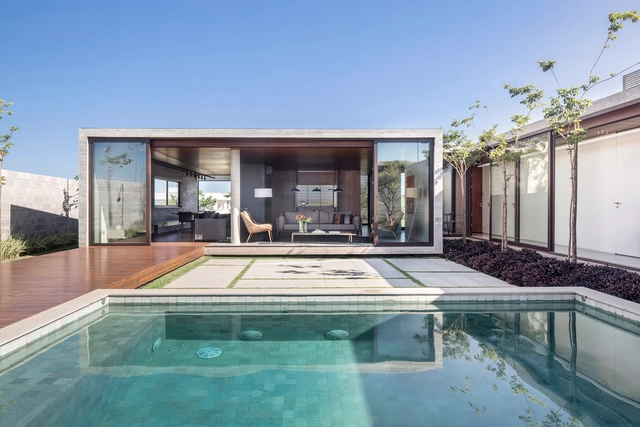
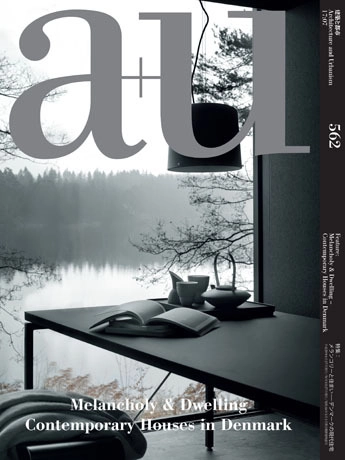
The July 2017 issue of a+u invites Lise Juel, Danish architect and collaborator of Jørn Utzon, to discover "melancholic" quality of contemporary houses located in the Nordic countries.
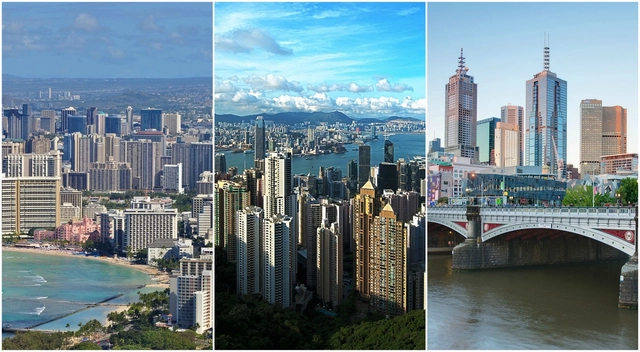
As anyone who has recently attempted apartment-hunting in a major urban area will know, reasonably-priced housing can be difficult to come by for many and salaries don’t always seem to match the cost of living. This gap is contributing to housing crises in developed and developing countries worldwide. People are simply being priced out of cities, where housing has become a commodity instead of a basic human right. Financial speculation and states’ support of financial markets in a way that makes housing unaffordable has created an unsustainable global housing crisis.
Earlier this year the 13th Annual Demographia International Housing Affordability Survey was released for 2017, revealing that the number of “severely unaffordable” major housing markets rose from 26 to 29 this year; the problem is getting worse. The study evaluates 406 metropolitan housing markets in nine of the world's major economies and uses the “median multiple” approach to determine affordability. By dividing the median house price by the median household income of an area, this method is meant to be a summary of “middle-income housing affordability.”

Rotterdam’s skyline is set to welcome a soaring new addition in the form of Cooltoren, V8 Architects’ 150-meter tower that upon completion, will become the city center’s tallest residential tower. Located in the Baan quarter, the design aims to integrate itself within the post-war urban fabric of the district and embody Rotterdam’s historical double layered characteristics – that of the low rise and the skyline.


The average cost of a home in London has now reached over £500,000 ($640,000), a figure far beyond the reach of the large majority of individuals or families on or below the average UK income (£34,473, or just under $45,000, per year). It’s a story which has been told time and again in recent years; the “housing crisis” of affordability continues to exacerbate the lives of a generation.
For Naked House, a not-for-profit organization dedicated to “stripping affordable housing back to the bare essentials,” crisis necessitates a creative response. With support and funding from the GLA (Greater London Authority) and the incumbent Mayor of London, who has awarded a £500,000 grant to the development, they—in collaboration with OMMX—have now made an important step closer to realizing their vision.





The following photo set by Fernando Guerra focuses on Boa Nova Tea House, a project by Portuguese architect Álvaro Siza Vieira. Completed in 1963, it was one of the first works done by the 1992 Pritzker Prize winner. Built on the rocks that hang over the sea in Leça da Palmeira, the tea house is in close proximity to another iconic project by the same architect, the Leça Swimming Pools, both classified as National Monuments in Portugal.
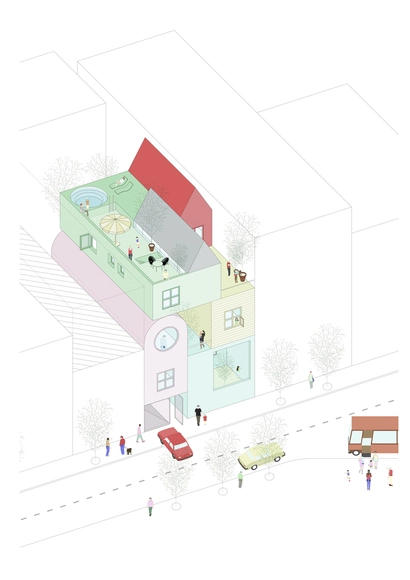
In this article Marcos Parga, director of the Madrid-based office MAPAA, presents an exploratory essay on the possibilities of living in developed urban centers, taking as a case study a site between two existing party walls in Madrid. The objective of MAPAA's exercise is to seek ways to enjoy the benefits of rural life, such as close contact with nature, in the city.

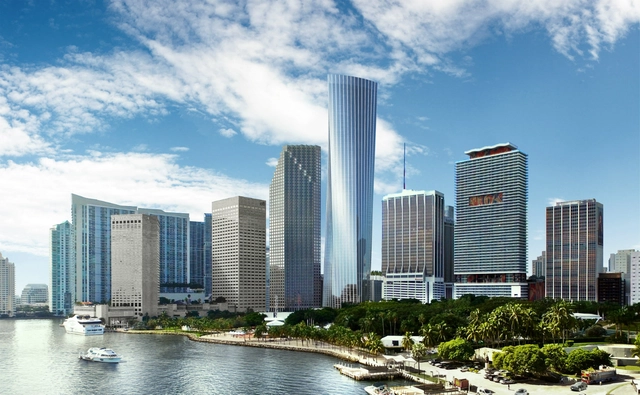
Renderings have been revealed of KPF’s One Bayfront Plaza, a 92-story mixed-use tower in downtown Miami that when completed will reach 1,049 feet tall, becoming one of 5 new buildings that will share the title of Miami's tallest tower.
The project is being developed by Florida East Coast Realty, and will bring 902 apartments, 200 hotels rooms, 532,000 square feet of office space and 104,000 square feet of retail to downtown Miami. Located at 100 South Biscayne Boulevard, the project will total 3.3 million square feet.


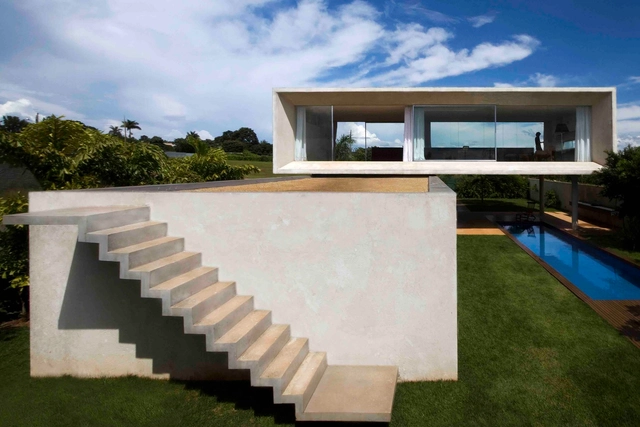
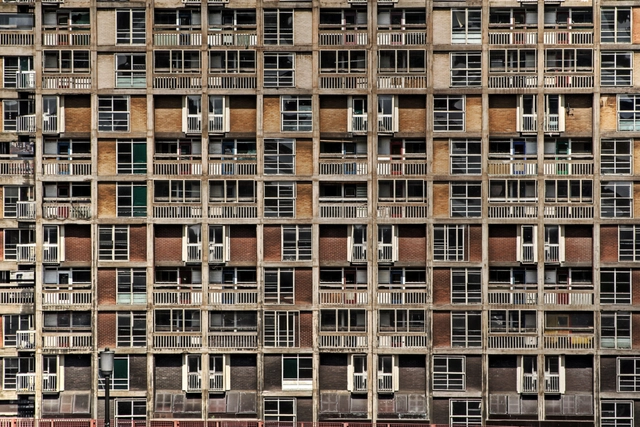
From its hilltop vantage point in the east end of Sheffield, UK, the Park Hill Estate surveys the post-industrial city which sprawls westwards. Its prominent location makes the estate highly visible and it has, over time, become engrained in the popular consciousness – a part of the fabric of the city. Although today it divides opinion, following its completion in 1961 it was hailed as an exemplary model for social housing. Designed by architects Jack Lynn and Ivor Smith under the supervision of Sheffield’s visionary City Architect John Lewis Womersley, the estate now stands as testament to an era when young British architects were revolutionizing the field of residential architecture with radical housing programs.
The Park Hill Estate was part of Womersley’s strategy to introduce more high-density housing to Sheffield, which he believed would foster a stronger sense of community than the ubiquitous back-to-back terraces.[1] This policy went hand in hand with an urgent need for slum clearance; The Park, a slum so notorious for its high crime rate that it was known locally as ‘Little Chicago,’ was demolished to make way for the estate.

Designed by Rafael Viñoly Architects, 'One River Point' is set to be the latest addition to Miami’s ever-growing luxury real estate market. Comprised of two 65-story-tall towers, the project is a mixed-use residential development situated along the Miami River, in the city’s downtown core.






.jpg?1501324422 "Anne Hathaway's Cottage, England. © <a href=\"https://en.wikipedia.org/wiki/Tudor_architecture#/media/File:Anne_Hathaways_Cottage_1_(5662418953).jpg\">Wikimedia Commons user Tony Hisgett</a> licensed under <a href=\"https://creativecommons.org/licenses/by-sa/2.0/\">CC BY 2.0</a>. Image Courtesy of Tony Hisgett")






















.jpg?1488148039 "© Pedro Vannucchi")
.jpg?1488147841 "© Pedro Vannucchi")
.jpg?1488147594 "© Pedro Vannucchi")
.jpg?1488147620 "© Pedro Vannucchi")


