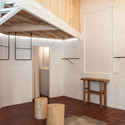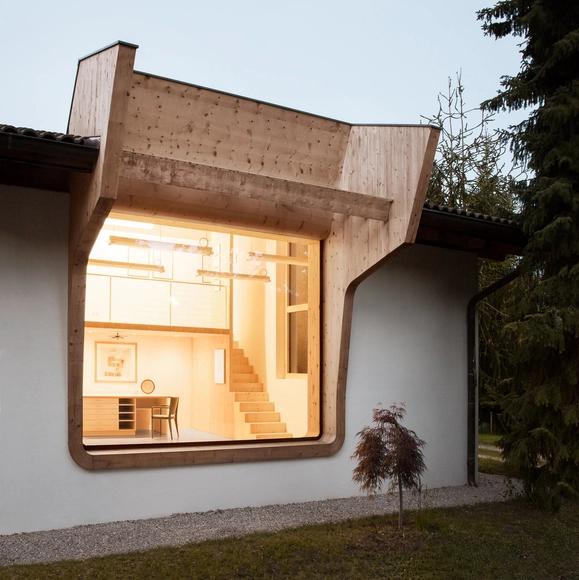
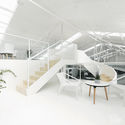
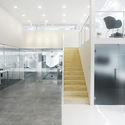
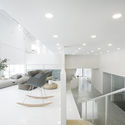


-
Architects: hyperSity Architects
- Area: 2600 m²
- Year: 2016


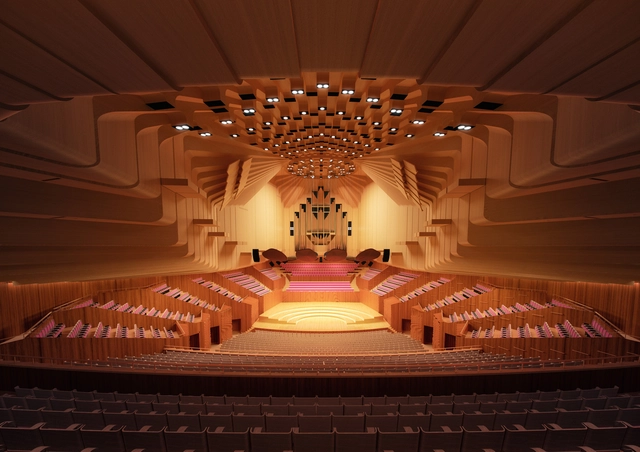
The Sydney Opera House has revealed designs for a $202 million renovation project, the largest upgrade program to the Jørn Utzon-designed building since it opened in 1973. Announced by New South Wales Deputy Premier and Minister for the Arts, Troy Grant, the project’s main goal is to “improve access and ensure it meets the needs and expectations of audiences, artists and the 8.2 million people who visit each year.”
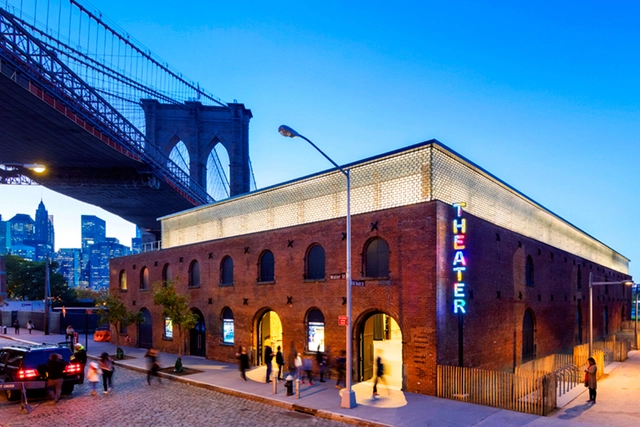
This article was originally published on Autodesk's Redshift publication as "Energy Efficiency in Historic Buildings: Why a Theater Company Chose Resurrection (Not Demolition)."
For a ruined Civil War-era warehouse in Brooklyn, there may have been no better organization than an avant-garde theater group to think creatively about its future.
Situated in the shadow of the Brooklyn Bridge in the popular Dumbo neighborhood, the 1860 tobacco warehouse was crumbling and forgotten when St. Ann’s, a 36-year-old theater company that began life in another Brooklyn church, sought to renovate it for its first permanent home. Attaining energy efficiency in historic buildings is not just possible—it can be the most sustainable and aesthetic choice.
St. Ann’s, led by artistic director Susan Feldman, hired a building team that included Marvel Architects; BuroHappold Engineering; and Charcoalblue, a theater, lighting, and acoustics consultancy. The resulting 25,000-square-foot complex, St. Ann’s Warehouse, includes two versatile and changeable performance spaces, lobby and event areas, and a triangular garden (designed by landscape architects Michael Van Valkenburgh Associates).


The Walmart Supercenter is generally considered one of the great antagonists of architecture around the world – the hulking behemoth who sold its integrity for the consumer convenience of having everything in one place. Though the first Walmart Supercenter didn’t open until 1988, big box stores have existed in some form since the 1960s, luring in shoppers with low prices and curbside loading lanes. For all the user psychology design that goes into them, the original designs of these buildings rarely pay much mind to their architectural or urban consequences, excluding a few notable exceptions.
Regardless, for the past 20 years big box stores have continued to prosper, prompting tenants to leave their homes and move on to even larger structures, leaving behind giant, open frameworks – for sale on the cheap. In a recent essay for 99% Invisible entitled Ghost Boxes: Reusing Abandoned Big-Box Superstores Across America, author Kurt Kohlstedt explores the architectural potential of these megastructures, drawing inspiration from the architects and communities that have successfully converted them into valuable assets.

1 Overview
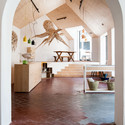
This open international competition is to take place among three groups who have been solicited to draw up refurbishment plans of 12 courtyards. Finalists whose plans comply with the design guidelines and have construction feasibility will be authorized by the organizers to implement the project, and the plans will be made available for reference in the Baitasi district, the broader old-town districts of Beijing, and in old towns throughout China that need to be revitalized.
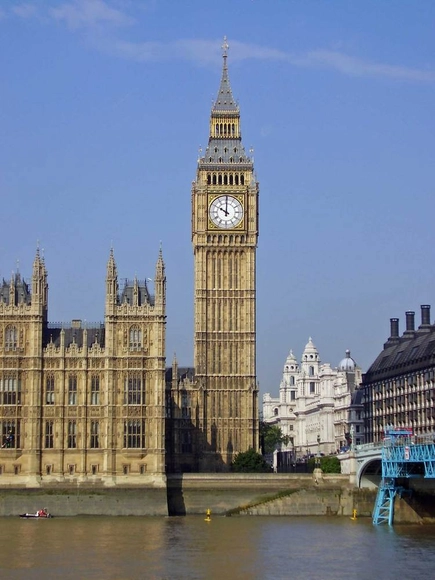
The Parliament of the United Kingdom has announced a series of renovations that will take place on Elizabeth Tower and Big Ben in London, starting in early 2017. During the renovation period, the tower and clock will be partially covered with scaffolding, which will be removed as the work progresses. Moreover, the clock mechanism will be stopped for several months, during which there will be no chiming or striking of the iconic bells.

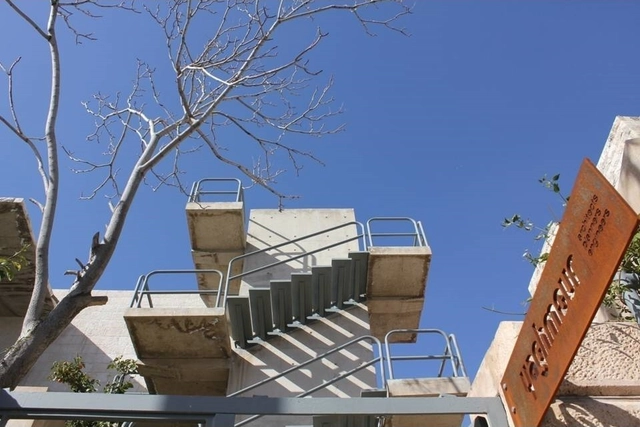
Let yourself be silently drawn by the stronger pull of what you really love.
To the bewilderment of many friends, this quote by Rumi adorns the cover of my portfolio. It justifies my pursuit of a career in architecture instead of a more stable field. Although I teasingly explain that “architecture is chronic,” the quote still holds some truth.
As an architect, I thought I did my due diligence: working long, underpaid hours and late nights to build a solid portfolio. But, despite the recognition one’s work may receive, underpayment and employment uncertainty are considered part of the job. On the other hand, the diversity inherent to the profession promotes creative thinking and an aspiration to incite meaningful change; thus, it continues to ignite the imagination.
That’s why, when the opportunity presented itself in the summer of 2014, I took leave from work to visit the Middle East. Yes, that is correct. Having the opportunity to grow up in the East and then to live in the West, I know better than to submit to the media’s fear-inspiring propaganda. I figured that speaking the language and being a seasoned traveler would come in handy. So I set out on an expedition that not only reconnected me to architecture, but also led to one of the most meaningful projects I have worked on.
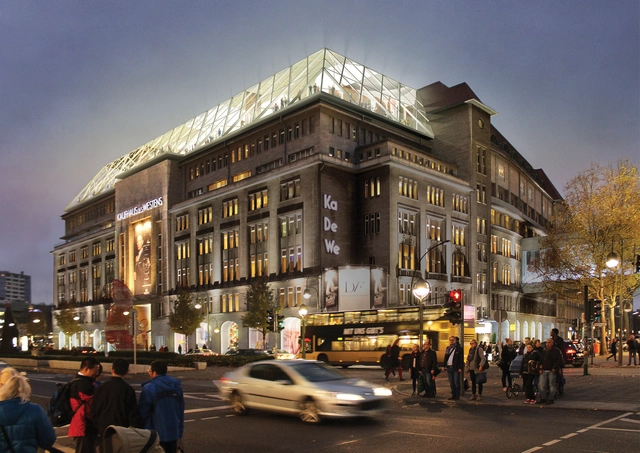
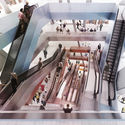
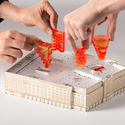
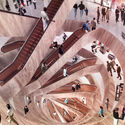
OMA has been selected to renovate Kaufhaus des Westens (KaDeWe), a historic department store in Berlin – and the biggest in continental Europe. Its giant size “makes it akin to a city: a three dimensional network of paths, squares, neighbourhoods, activitiies and views unfolding through its large extensions and providing opportunities for commercial, social and cultural encounters,” writes OMA.
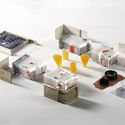
To address the size, their design divides the department store into four quadrants, breaking “the original mass into smaller, easily accessible and navigable components.” Each quadrant will target different audiences and act as an independent department store. Learn more about the design after the break.
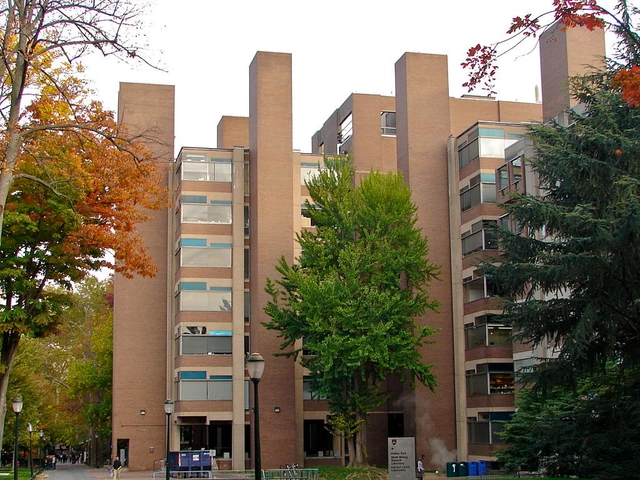
Louis Kahn's Richards Medical Research Laboratory at the University of Pennsylvania, once deemed "the most consequential building constructed in the United States" since World War II by MoMA, has been notoriously hated by its users; scientists claim the building lacks privacy, has too much exposure to sunlight and is not suitable for lab experiments. Thus, the University's architect has just completed a full renovation of Richards' four brick towers, converting them into offices and computer labs for researchers, while, as Philly.com reports, restoring the structure to its original essence.
"The renovation has pared Kahn's spaces down to their essence, restoring a Zenlike calm, and revealing the muscular concrete structure that made the design such a revelation in the early 1960s, when International Style glass towers were all the rage," says Philly.com. Read the complete article here.
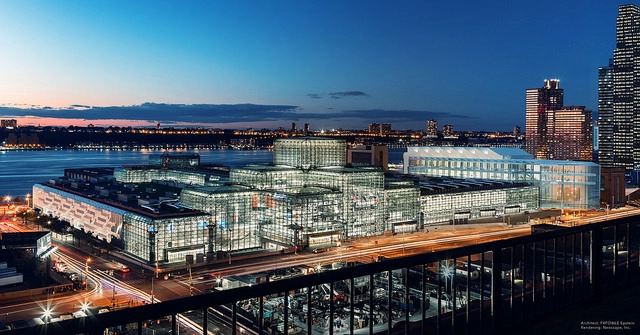
Alongside a series of 2016 proposals, including the plans to transform Penn Station, Governor Andrew Cuomo has announced that New York will be expanding its Jacob K. Javits Convention Center - the busiest convention center in the US. Originally designed by James Ingo Freed of Pei Cobb Freed & Partners in 1986, the structure has undergone a number of renovations since; this time, it will be expanded by 1.2 million-square-feet, totaling 3.3 million-square-feet, with the addition of "the largest ballroom in the Northeast," new exhibition space, a four-level truck garage, and a 34,000-square-foot solar array.
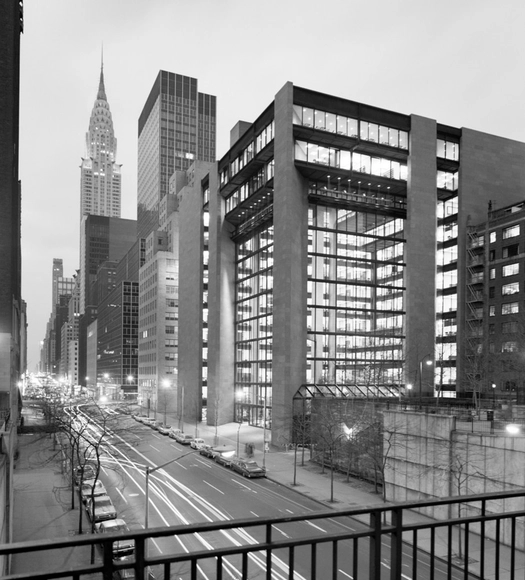
The Ford Foundation is about to undergo a massive $190 million renovation. Led by Gensler, the project will "modernize" the landmark building and expand its spaces "for convening and creating a global center for philanthropy and civil society."
Originally designed by Kevin Roche and John Dinkeloo, the Ford Foundation is considered to be one of modern architecture's most iconic buildings. "That rarity, a building aware of its world," New York Times architecture critic Ada Louise Huxtable once described, following the building's opening in 1967.