-
Architects: CARTA. Architecte + Designer
- Year: 2025
-
Manufacturers: Altek, CE.SI at Stonetile, Juste Du Pin, Kuzco Lighting, Luminaire Authentik, +3
-
Professionals: S.I.T. Construction, STP Ing.


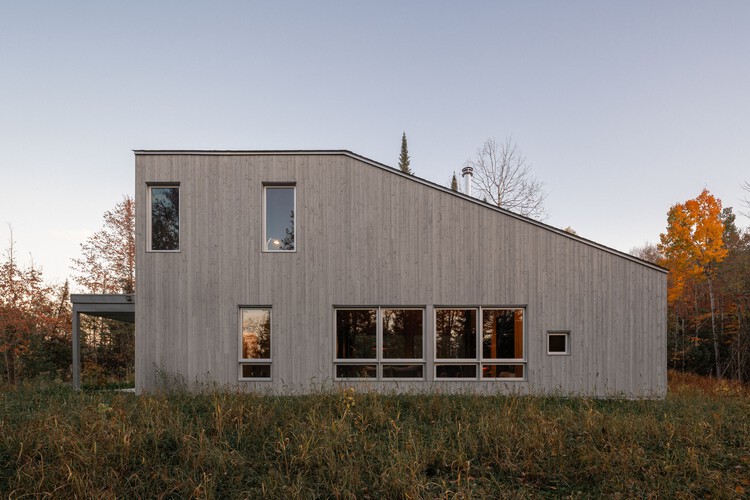
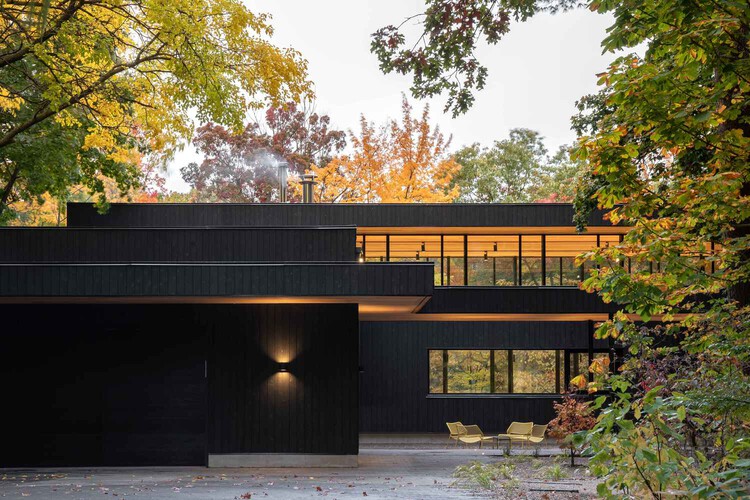
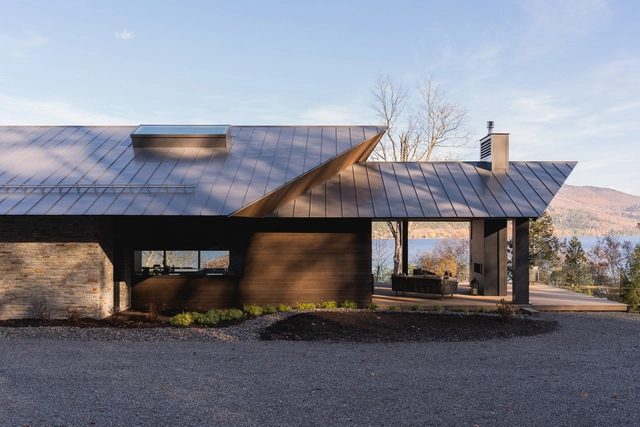
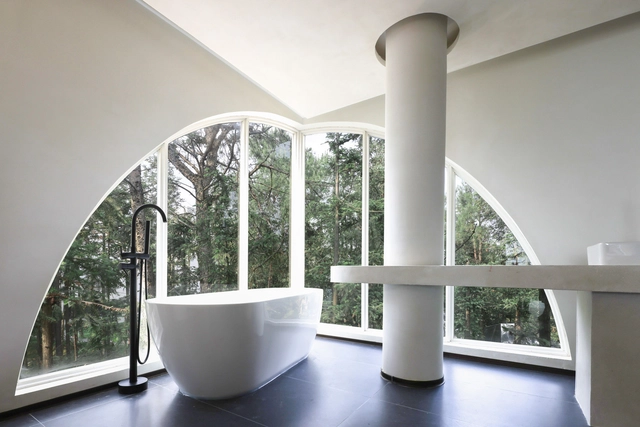
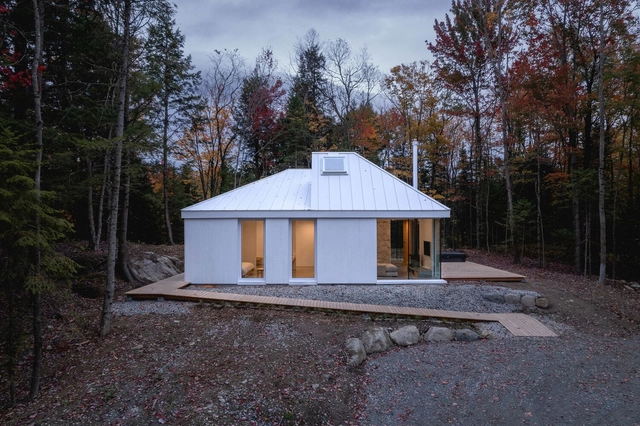
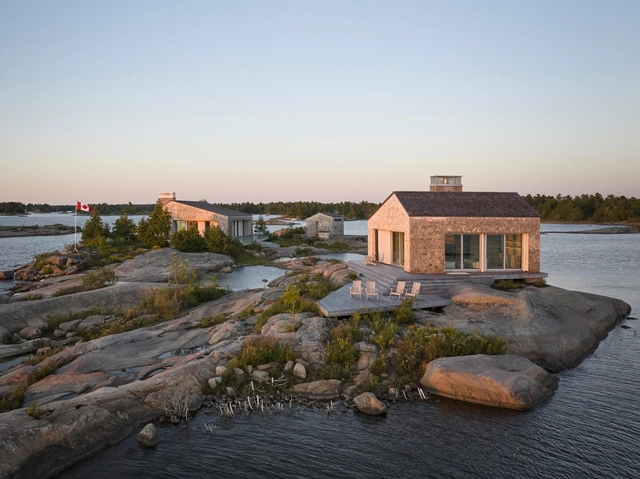
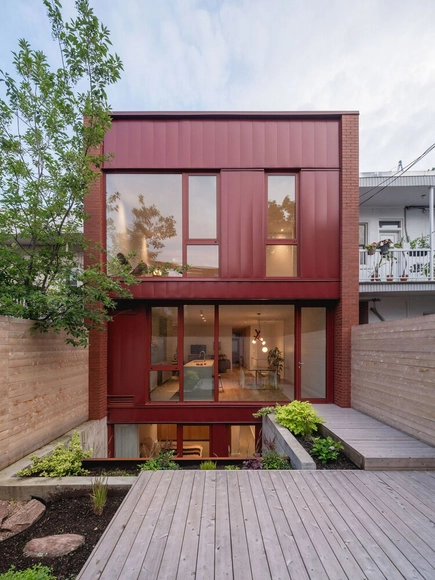
Shou Sugi Ban is a traditional Japanese technique for wood preservation that involves charring the surface of timber to create a protective layer. While its origins are rooted in practical durability, the method has been widely adapted into the modern built environment and shapes a unique and distinctive aesthetic. It is a material of contradiction: it remains bold in its visual language due to its dark tones, yet it simultaneously borrows from and complements its natural surroundings, allowing houses to settle quietly into their sites.
The charred finish among the 22 residences featured here across Canada and the United States serves as a common thread for navigating extreme climates. From humid lakefronts to dense forests, the carbonized skin acts as a resilient shield against diverse conditions. Beyond mere protection, these houses demonstrate how the material's texture changes with exposure to light, transforming from a flat matte in the shade to a silver-flecked, shimmering surface in direct sun. These projects also showcase the technique's ability to define architectural volumes, using the dark cladding to create sharp, monolithic silhouettes or to highlight the voids in a building's mass, such as recessed entryways and sheltered terraces.

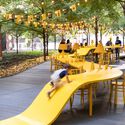
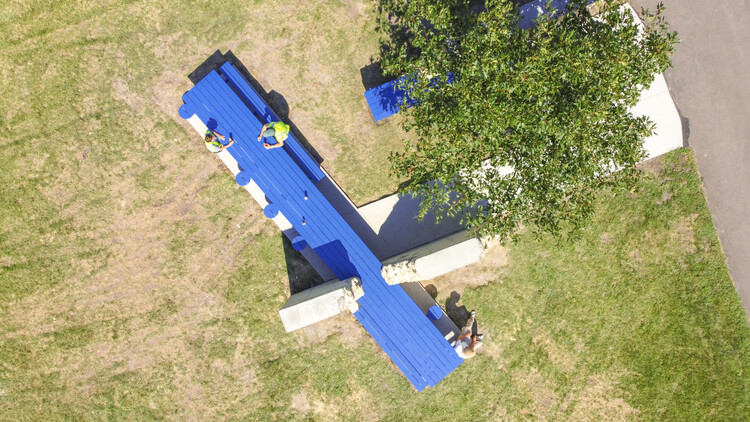
A long table can sit almost anywhere and still do the same work. It can stretch beneath a market canopy, run along a school dining hall, or occupy the center of a shared living room, and it immediately changes the room's temperature.
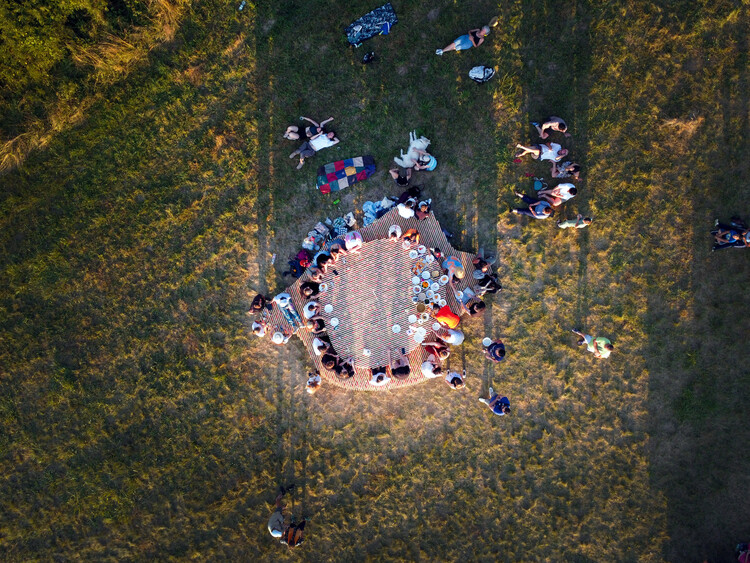
That is why the long table is less an object than a spatial instrument. It does not guarantee a connection, and it rarely looks "inclusive" by default. Instead, it sets conditions: a shared edge, a common rhythm of arrival, a field of mutual visibility, or a rule that turns eating into a scene with others. Food studies describe this practice as commensality, the act of eating together and the social order it can create, reinforce, or contest. But what matters here is not a specific dimension or the table's function, but the way a long surface holds difference, conversation, and silence; intimacy and distance; the decision to join and the right to hesitate.

In recent years, food has taken on a renewed role within architecture, not simply as a program or typology, but as a shared spatial practice. Beyond restaurants or dining design, communal eating spaces are increasingly understood as environments where presence, ritual, and time intersect, allowing people to gather, stay, and coexist. In these settings, eating does not just happen within space; it actively shapes it, temporarily transforming ordinary, borrowed, or improvised environments into places of exchange.
This shift is visible across a wide range of built projects, installations, and community spaces that use shared meals as a way of bringing people together. Initiatives such as Fondo Supper Club frame dining as a social platform, using food to connect artists, designers, and local communities through conversation and collaboration. Similarly, sit.feast, presented during Milan Design Week 2024, approached the table as a spatial installation, one where sitting and eating together became the primary means of collectively producing space.

Montreal, the second largest city in Canada is home to a wide array of heritage residential architecture, most of it dating to the 19th and early 20th-century. These are particularly abundant in some of its central neighborhoods like the Plateau Mont-Royal. Interestingly, their preservation is not accidental; it is the result of decades of advocacy by influential figures who recognized the value of the city's built environment, such as Phyllis Lambert and Blanche Lemco Van Ginkel. Efforts like theirs were instrumental in landmark preservation battles that helped to ensure current municipal support. Today, the city has implemented a set of comprehensive heritage protection laws designed to safeguard the integrity of the city's historic neighborhoods.

City Science, a rapidly expanding profession, is the scientific study and engineering of urban systems. It uses advanced technologies, big data, and complex systems physics to tackle challenges such as decarbonization, mobility, and livability. At its core, city science is about data-driven solutions. It employs statistics, modeling, and artificial intelligence to reveal the hidden dynamics of cities, from energy use to human movement. It employs strategies that reduce carbon emissions, enhance efficiency, and foster urban environments that are more sustainable and resilient.