
-
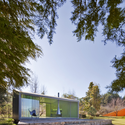
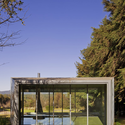
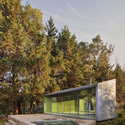
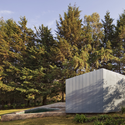
Architects: Studio Elmo Vermijs
- Year: 2011



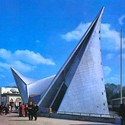
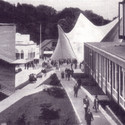
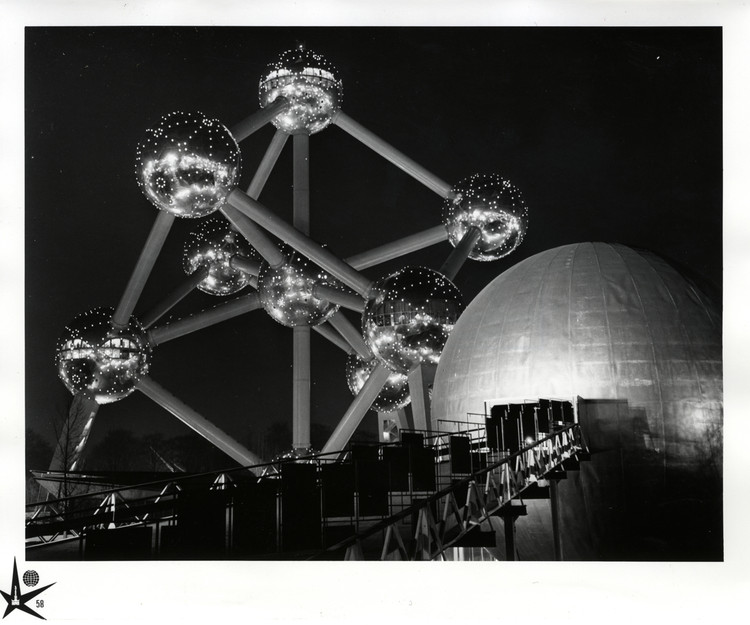
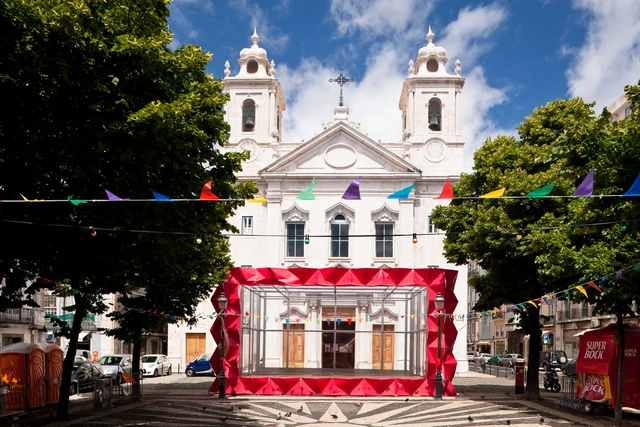
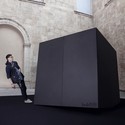
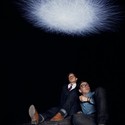
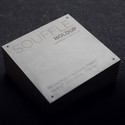
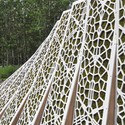
In 1956, preparations had begun for the 1958 World’s Fair in Brussels. This was to be the first World’s Fair held since the end of World War II, the concept behind the Expo was to celebrate the rejuvenation of civilization from the destruction of war through the use of technology. This World Fair is best known for the musical advances that was combined with architecture, creating a gestalt through an experiential encounter where body meets sound and space.

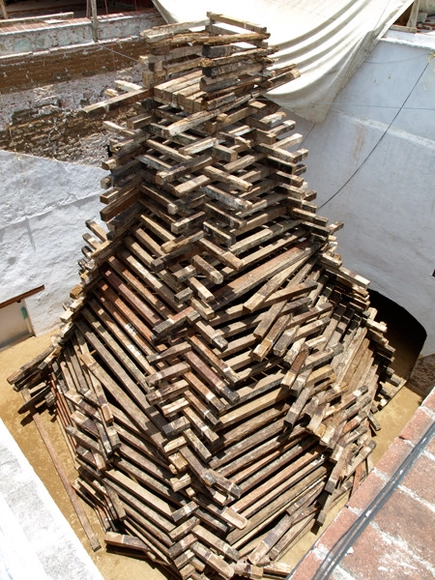

Designing a gathering point for the city of Timisoara, Prechteck’s main focus for the pavilion was to stand out as an attractor and fit in the context at the same time. Located within the green lung of the city with direct connection to its surrounding districts and due to its vertical orientation, the highseat has a great potential to serve as a cultural, social and urban focal point to attract people back to the park. More images and brief project description after the break.

The Australian architecture firm IAPA recently won the South Song Museum Heritage Park competition and has wished to share their winning design with out readers here at ArchDaily. Follow after the break for an accompanying description and images from the architects.
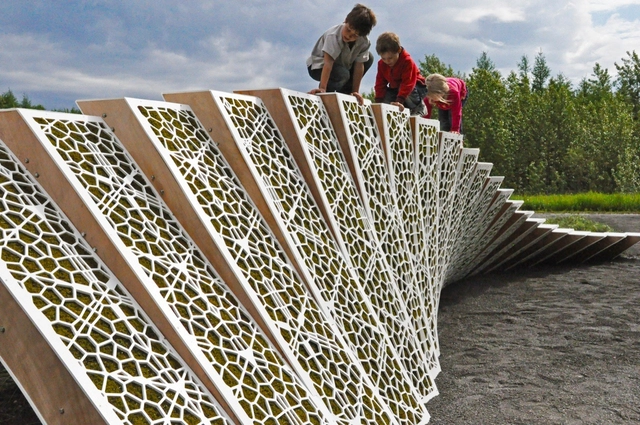
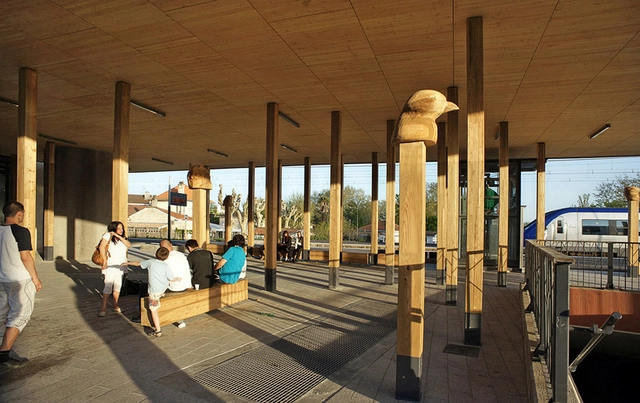

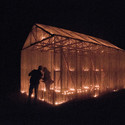
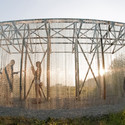
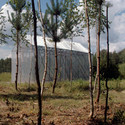
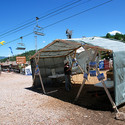
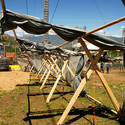
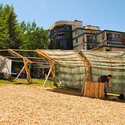
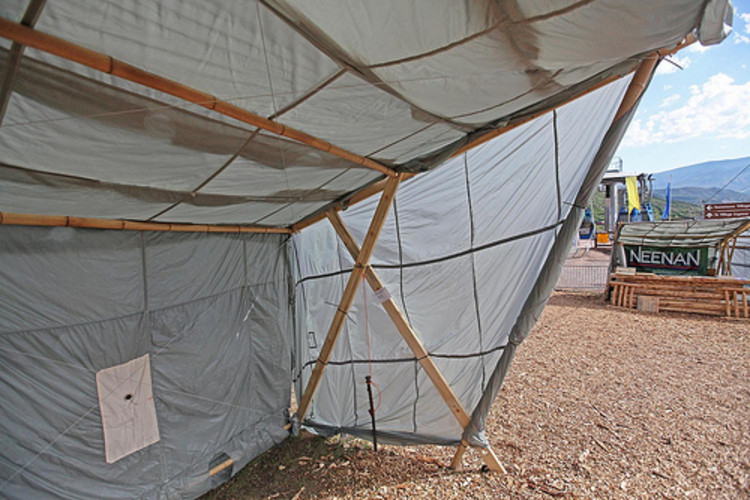
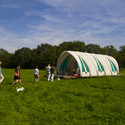
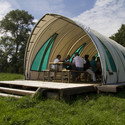
The Neenan Company, an integrated architecture and construction firm based in Fort Collins, Colorado, partnered with the EMU Festival, an eco-conscious music festival held in Snowmass, Colorado, to re-invent the traditional music festival tent.
Neenan employees were invited to participate in a contest to create the world’s first sustainable festival tent. The goal of the contest was to create a portable structure that could be installed on a city street as easily as it could at the top of a mountain. Materials for the tent were required to be biodegradable, recyclable, or have a sustainable end-of-life plan, so none of the pieces would end up in a landfill. In addition, the design needed to be easy-to-assemble, so that the tent could be put together by a few people with minimal or no tools.
Designer: Ben Shepard, 3D Animator, The Neenan Company Location: Fort Collins, Colorado, USA Collaborators: Randell Johnson, AIA, Vice President Business Development, The Neenan Company; Timothy Wooster, Founder, EMU Festival Project Year: 2011 Renderings: The Neenan Company Photographs: Yann Ropars and The Neenan Company

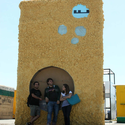
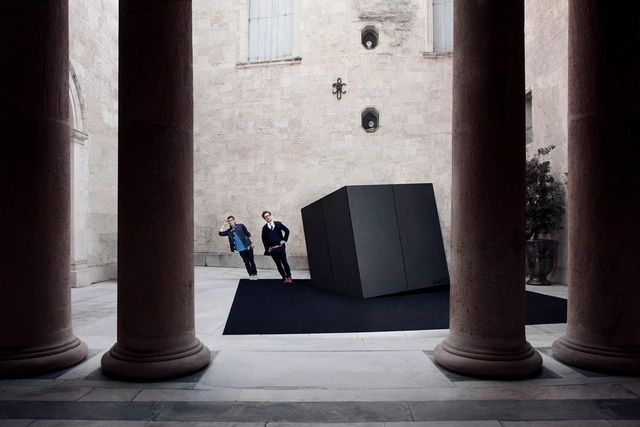
On June 23, 2001, in the residential neighborhood of Fužine in Slovenia, Ljubljana, Trimo officially handed over a public architectural installation “Life Stand” – the winning project of the Trimo Urban Crash competition for students of architecture and design which was created by Polish students, Wojciech Nowak from an architectural faculty in Gliwice, and Martynika Bielawska, from an art and design academy in Wroclaw.
“Life Stand” is the result of the Trimo Urban Crash competition, which encourages a creative transformation of the urban environment with the help of advanced building materials and technologies. The creative workshop was held by Professor Cyril Shing from the Chelsea College of Art and Design, University of Arts, London who also served as the mentor for the finalists. The event was opened by the General Manager of Trimo, Tatjana Fink, and the Deputy Mayor of Ljubljana prof. Janez Koželj.
Read on for more after the break.


Designers: Dimitrie Stefanescu, Patrick Bedarf, Bogdan Hambasan Location: Cluj, Romania Project Year: 2011 Workshop Team: Ciprian Colda, Anamaria Androne, Razvan Sencu, Madalin Gheorghe Assembly Team: Bogdan Badila, Vlad Pop, Georgiana Hlihor, Denisa Lula, Robert Veber, Zoltan Vaida, Imre Vekove, Ciprian Colda, Mihai Pascalau, Calin Negret, Bogdan Borbei, Iustin Nechiti, Dan Ioanici, Razvan Luca, Stefan Grosariu, Ioana Suceava, Alexandra Man, Andreea Darac, Irina Mates, Oana Bogatan, Andrei Varga, Radu Badila, Elza Sandor, Alex Greceniuc, Oana Matei, Alex Vladovici, Marcel Oprean, Ioan Pop, Vlad Rusu, Ioana Tomoioaga Photographs: Patrick Bedarf, Georgiana Hlihor, Daniel Bondas, Georgeta Macovei