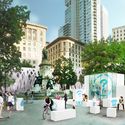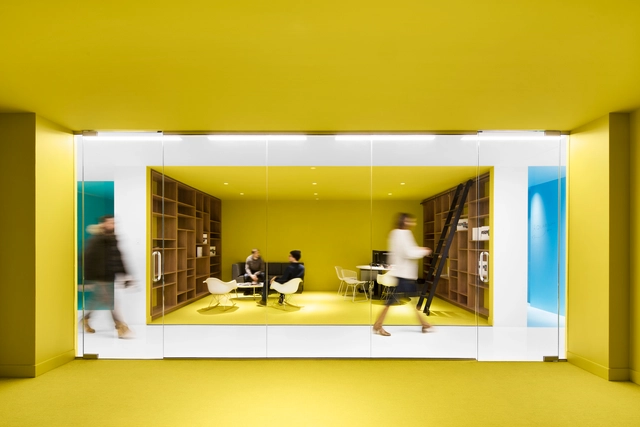





-
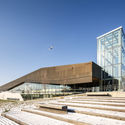
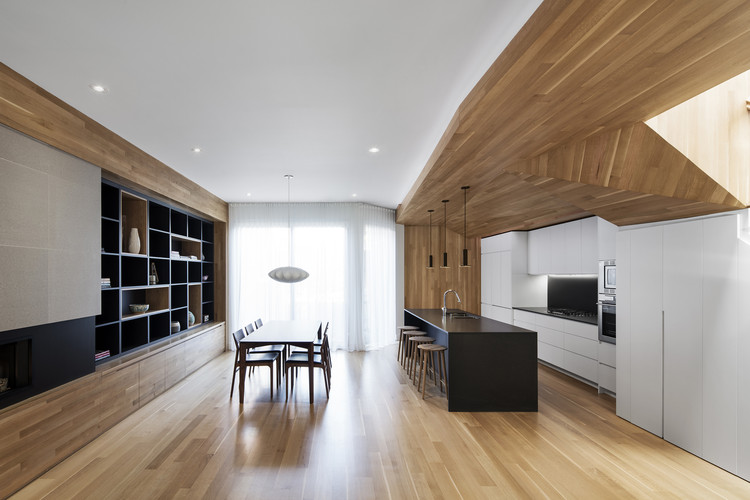
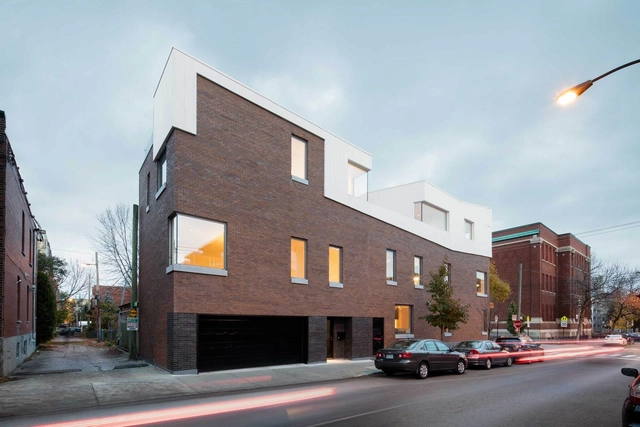
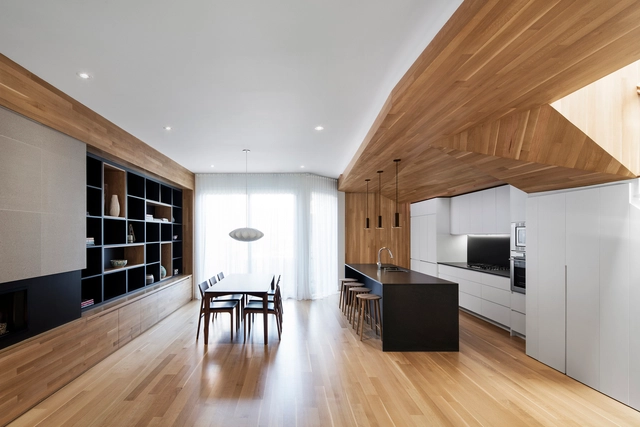
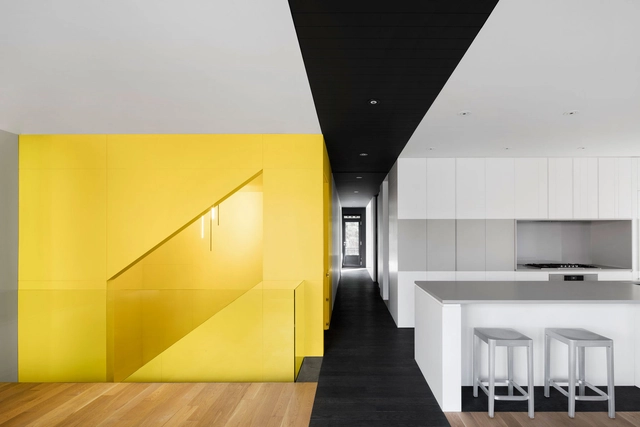
Architects: ACDF Architecture
- Area: 1670 m²
- Year: 2016
-
Manufacturers: LumiGroup, SICO, Shaw, Tandus Centiva
-
Professionals: Christian R. Roy Inc., Avicor, CBRE


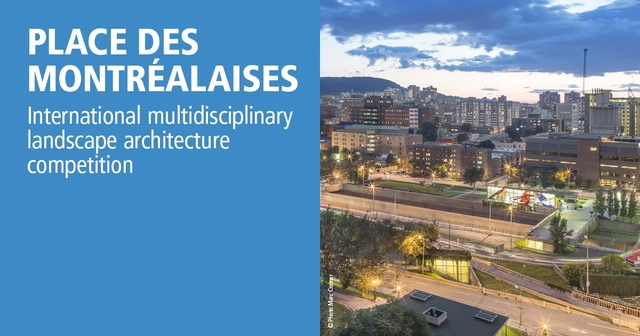
The Ville de Montréal (city of Montreal) wishes to source the most innovative and creative ideas for the permanent construction of Place des Montréalaises, a new public space adjacent to Champ-de-Mars métro station, including a pedestrian overpass.

Humanity always cherishes great works of art that stand the test of time. This June, for example, marks the 50th anniversary of The Beatles’ psychedelic Sgt. Pepper's Lonely Hearts Club Band, and the 20th anniversary of Radiohead’s dystopian Ok Computer. These psychologically satisfying birthdays have generated serious appreciation and nostalgia. Similarly, we also love to praise the longevity of innovative architecture. The AIA bestows an annual “Twenty-five Year Award” to acknowledge projects that have "stood the test of time” and “exemplify design of enduring significance.” But one project a year seems stingy. Below are 15 modern classics which, though not always given the easiest start in life, we’ve come to adore:

.jpg?1493587707&format=webp&width=640&height=580)
In honor of the 50th anniversary of the 1967 International and Universal Exposition or Expo 67 in Quebec, Canada Post, and renowned architect Moshe Safdie have revealed a celebratory stamp depicting Safdie’s iconic Habitat 67, which was unveiled as the Canadian Pavilion for the world fair.
The housing complex, commissioned by the Canadian government and the city of Montreal, now holds the status as a National Heritage Site and its commemorative stamp is the first of ten to be issued by Canada Post in celebration of the country’s 150th anniversary. Each stamp highlights a key moment in Canada’s history since its centennial in 1967.
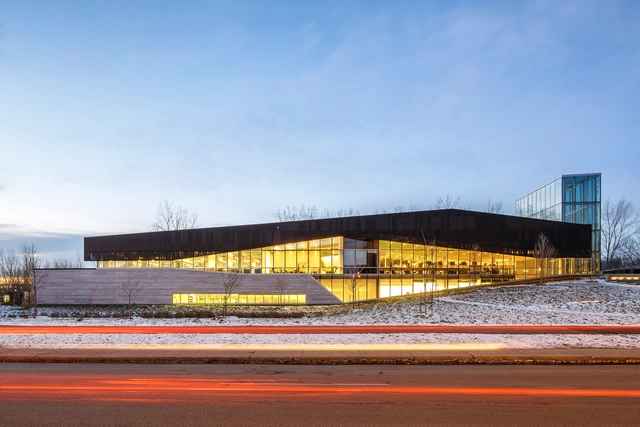
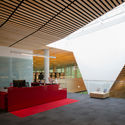
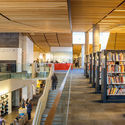
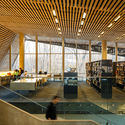
The Royal Architectural Institute of Canada (RAIC) and the Canada Green Building Council (CaGBC) have awarded Montreal’s Bibliothèque du Boisé with the annual Green Building Award for 2017. Designed by the trio of Consortium Labonté Marcil, Cardinal Hardy and Eric Pelletier architectes, the library is situated in the city’s Saint-Laurent district, and received the distinction as an example of “buildings that are environmentally responsible and promote the health and wellbeing of users.”
"The library offers a variety of beautifully lit and welcoming spaces throughout, maximizing daylight and views and the use of natural elements, such as wood, to create an environment that contributes to health and wellbeing,” said the jury. “Their approach to high-performance building through whole systems design and strategy has resulted in an impressive achievement.”

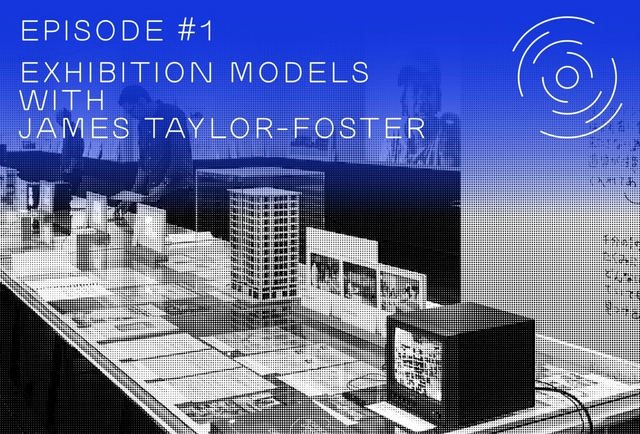
We are pleased to announce a new content partnership between ArchDaily and Columbia University's Graduate School of Architecture, Planning and Preservation (GSAPP) in New York City.
GSAPP Conversations is a podcast series designed to offer a window onto the expanding field of contemporary architectural practice. Each episode pivots around discussions on current projects, research, and obsessions of a diverse group of invited guests at Columbia, from both emerging and well-established practices. Usually hosted by the Dean of the GSAPP, Amale Andraos, the conversations also feature the school's influential faculty and alumni and give students the opportunity to engage architects on issues of concern to the next generation.

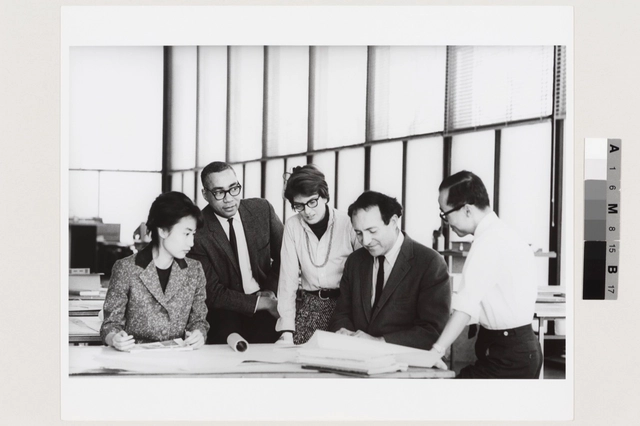
This week Phyllis Lambert, widely considered to be among the most influential figures in architecture, turned 90. Known primarily for founding the Canadian Centre for Architecture (CCA) in her hometown of Montrèal in 1979, she also acted as Director of Planning for the world-renowned Seagram Building in Manhattan (a tower commissioned by her family). The project is often cited as one of Mies van der Rohe's most important built works. As a practising architect, Lambert designed the Saidye Bronfman Centre (1967) – a performing arts center named after her mother.
In the latest edition of Section D, Monocle 24's weekly review of design, architecture and craft, the team speak to Moshe Safdie – the Israeli-Canadian architect whose "signature geometric style of lavish curves and green space has made the self-styled Modernist an influential voice" in the profession. The conversation, broadcast from Safdie's Marina Bay Sands complex in Singapore, reflects on his life and work – including Montréal's Habitat 67.


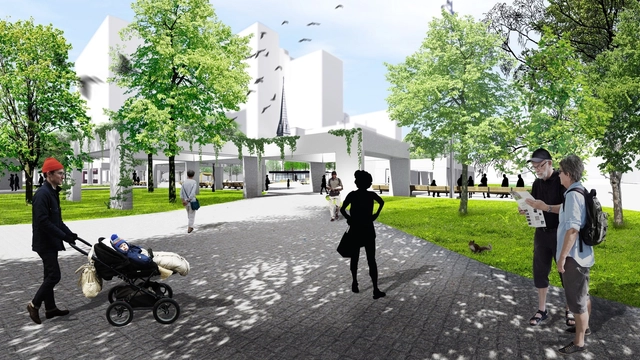
Viger Square, Montreal's first large square, is getting a makeover. The redevelopment project is being led by landscape architects NIPPAYSAGE, which will begin the first phase of redesign in 2017.
Historically, the 30,000 square foot center has always contributed to the liveliness of the city, and it was the largest square in Canada in the 19th century. Now coinciding with the adjacent redevelopment of retail and office spaces at the Viger Hotel, the city hopes for a major revitalization of the area.

The City of Montreal has selected KANVA's IMAGO as the winner of Vivre le Chantier Sainte-Cath, a competition seeking to maintain access to and usage of St. Catherine Street, downtown Montreal's primary commercial artery, as it undergoes a four-year construction period. The construction includes infrastructure developments—enhancements to underground infrastructure, new public transit systems, and increased pedestrian access—and while segments of the street will be closed to car traffic, pedestrian paths and all businesses will remain open during construction.
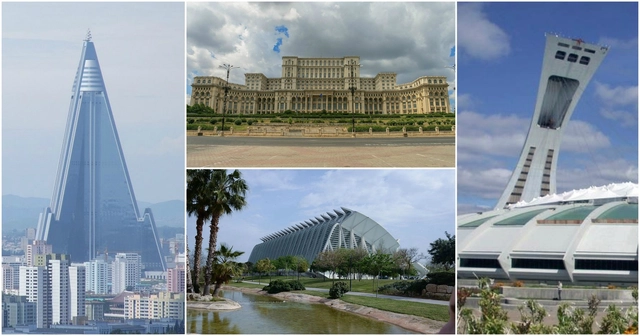
Not every piece of architecture can be an economic and social success. But there is one dreaded term reserved for only the mot wasteful of projects: "white elephants." The term comes from a story of the kings of Siam, now Thailand, who would reportedly gift sacred albino elephants to courtiers they didn't like. Refusing the gift from the king would have been unacceptable, but being sacred, these animals were forbidden from work, leading the courtier to financial ruin—a fact the kings knew all too well.
Of course, in architecture the term "white elephant" is used frequently to disparage certain projects, and whether a project is deserving of such infamy is usually a matter of perspective. Often eyesores or reminders of poorly spent funds, these projects refuse to be forgotten despite few wanting to remember them. Dotted around the world and across history, they all have the same thing in common: although they may (or may not) have once looked good on paper, they probably should have just stayed on paper.